
There are bad bosses, and then there are managers who hear “medical emergency” and somehow translate it into “minor scheduling inconvenience.” A viral Twitter thread invited workers to share the worst things their bosses had ever said, unleashing stories about ignored illnesses, interrupted funerals, workplace injuries, pregnancy discrimination, ruined family events, and managers whose empathy apparently remained pending approval from corporate. These 36 paraphrased stories are funny in the bleak, laugh-so-you-do-not-scream sensebut they also reveal how quickly careless leadership can destroy trust, morale, safety, and employee loyalty.
Editorial note: The following entries paraphrase publicly shared workplace stories from the viral thread and related coverage. They are not presented as verbatim quotations, and identifying details have been minimized. The broader analysis draws on workplace research and guidance from organizations including Gallup, the American Psychological Association, the U.S. Surgeon General, CDC, OSHA, EEOC, the Department of Labor, SHRM, and Harvard Business Review.
How One Bad-Boss Story Opened the Floodgates
The conversation began when comedian Kevin McCaffrey described telling a manager that his grandmother had died before a scheduled double shift. Instead of offering condolences, the manager reportedly asked whether he could still work half of it. The story became an irresistible invitation for other workers to open the dusty filing cabinet labeled “Things Management Said That Still Haunt Me.”
What followed was not merely a collection of awkward comments. Many replies described employers treating grief, illness, pregnancy, disability, education, injury, and family responsibilities as acts of workplace disobedience. The recurring message was remarkably consistent: your life may be collapsing, but have you considered collapsing after closing?
36 of the Worst Things Bosses Said or Did
-
1. Grandma’s Birthday Versus Band Practice
A band director refused to excuse someone from practice for a grandmother’s birthday because practice had been scheduled for months. The student replied that Grandma’s birthday had been scheduled since 1922. Calendar battle: decisively won.
-
2. Work While Delirious or Be Fired
One worker reportedly came in with the flu after being threatened with termination. She arrived visibly delirious, told customers she had been forced to work sick, and then quit.
-
3. Graduation Day Was Denied
A college student working in a store cafeteria requested graduation day off and was refused. The employee responded by reporting roach nests management had allegedly ignored, then attended graduation in peace.
-
4. No Compassion After a Miscarriage
A worker said her boss became angry when she needed a day off after a miscarriage. She returned the following day to a physically demanding shift. The manager, she added, was her own father.
-
5. “Which Is More Important: Work or Family?”
A high school employee needed one weekend away after her father suffered a serious accident. Her manager demanded that she choose between the summer job and her family, apparently unaware that this was not a difficult quiz question.
-
6. The Restaurant Was Hit by a Truckand Management Tried to Open
After a truck reportedly crashed into an Olive Garden, a manager still attempted to open the restaurant. Few sentences capture dysfunctional management better than, “Yes, the building has been struck by a vehicle, but who is covering lunch?”
-
7. Asked for Proof of Abuse
After being abused, an employee called in and requested a personal day. When pressured to explain, she shared what had happened. The response was reportedly a question about whether she had visible bruises.
-
8. “Go Home If You Are Only Here for Money”
A restaurant manager allegedly told the entire staff that anyone working merely for money could leave. The employees looked at one another, presumably wondering whether rent had recently begun accepting teamwork and enthusiasm.
-
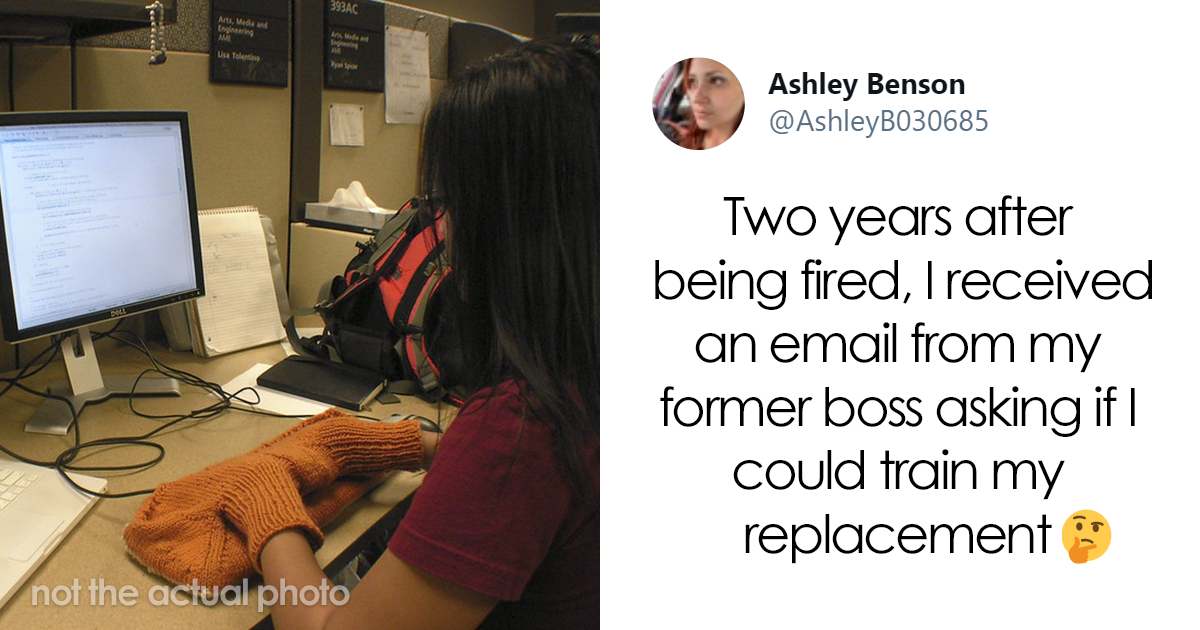
9. FiredThen Asked to Train the Replacement
Two years after being dismissed, a former employee received a message asking whether she could train the person replacing her. That is not networking. That is managerial amnesia with Wi-Fi.
-
10. The Boss Called the Doctor After a C-Section Was Postponed
One woman’s scheduled C-section was postponed after the baby changed position. Her workplace reportedly called her doctor to ask whether she could return that same day. Even the physician was stunned by the request.
-
11. A Funeral Was Described as a Vacation
An employee took time away for a grandmother’s funeral. The manager responded by asking whether the worker was taking “another vacation.” Nothing says leadership like confusing bereavement with a resort package.
-
12. Too Much Phone Use During a Risky Pregnancy
A boss complained that an employee used a personal phone too often while the employee’s spouse was experiencing a high-risk pregnancy. The same boss later complained about the amount of leave taken after the baby arrived.
-
13. Fired for Taking a Medical School Entrance Exam
A restaurant worker requested an exam date off four months in advance to take the MCAT. The owner allegedly scheduled the employee anyway and fired the worker for missing the shift.
-
14. A Teenager Was Asked Whether School Really Mattered
A 16-year-old retail worker was repeatedly called during school and pressured to accept extra shifts. When the teenager refused, management asked whether school was more important than the store. Spoiler: yes.
-
15. Written Up After Being Burned at Work
An employee burned a hand on the job and went to the hospital when nobody would cover the shift. Management reportedly responded with disciplinary action rather than concern.
-
16. A Sexist Complaint About Hiring Women
One manager allegedly complained openly about hiring “girls” after a female employee became pregnant. The story was recentnot an artifact discovered in a 1950s personnel manual.
-
17. Not Allowed to Leave With Norovirus
A supermarket employee repeatedly asked to go home while suffering from norovirus. Management refused until the worker vomited on a customer’s shopping, then criticized the employee for the mess.
-
18. “Just Move the Fallen Tree”
A teenage worker called after a major storm knocked a tree across the driveway and brought down power lines. The manager’s proposed solution was reportedly to move the tree.
-
19. Medical Advice Overruled by Staffing Needs
A warehouse employee with blood clots was medically instructed to stay off one leg for two weeks. Management reportedly allowed only one week. Later, after the employee’s father died, the same boss suggested returning after the funeral as a distraction.
-
20. Asked to Arrive Late to a Wedding
A worker was scheduled during a best friend’s wedding despite being the best man. The manager asked whether he could simply arrive lateeven though the ceremony was three states away.
-
21. Fired After Requesting Protective Gloves
A kitchen employee with Type 1 diabetes requested heat-resistant gloves because burns did not heal normally. The worker said the restaurant fired him instead of supplying the protection.
-
22. Sent to the Hospital, Then Denied Pay
An employee was transported from work by ambulance near the end of a ten-hour shift. The later paycheck reportedly excluded that entire day and two sick days because the employer did not believe the illness was genuine.
-
23. Kept at Work During a Parent’s Heart Surgery
A movie theater worker asked to leave when relief arrived because her father was undergoing quadruple-bypass surgery. Management kept her for four more hours, causing her to miss hospital visiting time.
-
24. Told to Serve Bacon That Fell on the Floor
A 16-year-old pizza-shop employee was told to return a box of raw bacon to the preparation area after it fell on the floor. The teenager walked out and never returnedan excellent early lesson in both food safety and boundaries.
-
25. Hourly Calls During the Flu
After calling out with a severe case of the flu, one worker received hourly calls from the manager asking whether she felt better and could return. Apparently, the employer believed influenza operated like a software update.
-
26. Three Days to Finish Grieving
A teacher reportedly received three bereavement days after her mother died. After that, additional time away meant losing pay, as though grief expires automatically at midnight on day four.
-
27. Mocked During an Autistic Meltdown
An autistic restaurant worker experienced sensory overload and a panic attack after being assigned several tables simultaneously. While the employee begged to leave, someone reportedly asked whether the worker had vomited yet.
-
28. Disciplined While Recovering From Oral Surgery
An employee used vacation time after having four wisdom teeth removed. Upon returning with lingering pain, numbness, and lockjaw, the worker was written up for underperforming.
-
29. Back at Work After Nine Stitches
A teenager suffered an on-the-job head injury requiring nine stitches. The boss persuaded the injured worker to return the next day and reportedly did not pay for the missed half-day.
-
30. Two Years of Sacrifice, One Misspelled Goodbye Cake
After years of covering shifts, working while sick, and surrendering personal time, an employee received a farewell cake with her name spelled incorrectly. Sometimes workplace appreciation arrives in frosting and still misses the point.
-
31. Management Invented a Reason to Fire Someone
An employee claimed management tried to fabricate grounds for dismissal. The worker disproved the accusation and regained the job, although hindsight suggested legal advice might also have been useful.
-
32. Another Applicant Was Hired During the Interview
A job candidate watched the employer hire somebody else directly in front of her. Management then promised to call, proving that some organizations begin the disappointing employee experience before employment even starts.
-
33. Forced to Work and Talk Through a Severe Cold
A sick retail employee who had nearly lost her voice was still required to work in a role involving frequent conversation. She later reported permanent damage to her voice.
-
34. A Worker With Hepatitis A Was Scheduled Anyway
A restaurant reportedly made an employee with hepatitis A work several shifts during a busy holiday period, leaving numerous coworkers and customers concerned about possible exposure.
-
35. An Ultimatum During Kidney Stones
After developing kidney stones, an employee was allegedly told that failing to report the next day meant never returning. The worker chose the second option and resigned.
-
36. A Personal Tragedy Became a Disciplinary Problem
One retail employee described working through major holidays and personal milestones before suffering a pregnancy loss during a shift. Emotional distress affected workplace relationships, and the employee was dismissed days later.
Why These Comments Are More Than Just Rude
A Manager’s Words Carry Institutional Weight
An insensitive remark from a stranger may ruin five minutes. The same remark from a supervisor can threaten income, health insurance, scheduling, promotion opportunities, and continued employment. That power difference turns a careless sentence into something much heavier.
Gallup has repeatedly found that managers account for a large share of the variation in team engagement. In practical terms, the person approving schedules and evaluating performance can either create a stable workplace or transform every shift into an anxiety-themed escape room.
Incivility Silences Employees
When workers expect mockery, retaliation, or disbelief, they stop raising problems. They may remain silent about unsafe equipment, dishonest practices, harassment, customer risks, or operational mistakes. Research on workplace incivility has linked disrespectful environments with lower trust, weaker performance, and reduced willingness to contribute ideas.
This silence can become expensive. A rude boss does not merely hurt feelings; that boss may prevent the organization from learning that food is contaminated, equipment is dangerous, a customer process is failing, or valuable employees are preparing to leave.
Forced Positivity Does Not Repair a Toxic Workplace
Some managers respond to legitimate concerns with slogans about resilience, gratitude, or team spirit. SHRM has warned that toxic positivity can suppress honest communication and make employees feel pressured to conceal stress or burnout. Telling an exhausted worker to “choose a better attitude” is not culture-building. It is emotional duct tape.
APA workplace surveys have likewise found strong connections between toxic culture, low psychological safety, poor mental health, and intentions to leave. A motivational poster cannot outperform a manager who consistently humiliates the people standing beneath it.
Some of These Situations May Raise Legal or Safety Issues
Not every foolish or heartless remark violates federal law. American employment protections depend on the employer, location, employee eligibility, circumstances, and reason for the conduct. Nevertheless, several stories touch areas covered by workplace safety rules, disability protections, pregnancy protections, anti-retaliation laws, or family and medical leave requirements.
OSHA states that workers have rights related to safe equipment, protective gear, reporting injuries, raising safety concerns, and seeking inspections without unlawful retaliation. Federal guidance also protects eligible workers taking qualifying family or medical leave, while pregnancy-related limitations may require reasonable accommodations from covered employers.
The restaurant stories are especially alarming. CDC guidance emphasizes that food workers experiencing vomiting or diarrhea should not handle food. CDC research found that employees sometimes work sick because of understaffing, financial pressure, lack of paid leave, or fear of losing their jobsthe exact pressures visible throughout the viral thread.
What Employees Can Do When a Boss Crosses the Line
Document the Pattern
Write down dates, locations, witnesses, exact instructions, schedule changes, and any effects on pay or discipline. Save relevant emails, messages, medical documents, and performance records where legally permitted. “My boss is awful” is understandable; a dated record is actionable.
Use the Safest Reporting Channel Available
Depending on the workplace, that channel may be HR, a higher-level manager, an ethics hotline, a union representative, a safety officer, or a government agency. Employees should avoid assuming HR is a personal attorneyHR represents the organizationbut a formal complaint can still create an important record.
Know When the Problem Is the System
A thoughtful conversation can sometimes correct one insensitive comment. It is less likely to fix repeated retaliation, falsified records, unsafe demands, discriminatory conduct, or a culture in which senior leaders reward cruelty. When the organization protects the behavior, the problem is no longer merely one difficult manager.
Protect Health Before Protecting a Schedule
A shift can be reassigned. A severe injury, infectious illness, mental health crisis, or dangerous medical complication cannot always be reversed. No employee should rely on a manager for medical judgment simply because the manager possesses a clipboard and unusually confident opinions.
What These Experiences Feel Like From the Inside
Viewed individually, each story can resemble one manager having one terrible moment. Viewed together, they reveal a recognizable employee experience: the slow realization that every personal need will be treated as a negotiation.
It often begins with something small. A worker requests a long-planned afternoon away and receives an exaggerated sigh. A manager jokes that nobody is truly sick unless an ambulance arrives. An employee checks a phone during a family emergency and is accused of lacking commitment. Each incident can be dismissed as stress, bad humor, or a busy day.
Then the pattern grows. The employee begins rehearsing ordinary requests before making them. How much medical detail is necessary? Will attending a funeral damage the next performance review? Should a parent answer a call from the hospital or wait until break? Can a teenager say no to a shift without being told that school demonstrates a poor work ethic?
The strangest part is how quickly unreasonable behavior becomes normal. A worker with a fever arrives because finding coverage has somehow become the patient’s responsibility. Someone stays after an injury because leaving would inconvenience the team. A grieving employee apologizes for not sounding enthusiastic. Colleagues exchange looks, recognize that the situation is wrong, and continue working because rent remains stubbornly monthly.
Humor becomes a survival tool. Employees create memes about restaurants opening during disasters. They joke about needing to schedule illnesses two weeks in advance. They refer to the staff group chat as an informal disaster-response center. The jokes are funny because they are accurate, but they also perform emotional first aid. Laughter helps workers confirm that they are not imagining the absurdity.
The consequences rarely remain inside the workplace. Employees carry conversations home and replay them at night. A brief comment from a manager can make a worker question whether taking care of a parent was selfish, whether an illness was serious enough, or whether declining unsafe work proves a lack of character. That is one reason toxic management can be so damaging: authority gives nonsense an undeserved appearance of truth.
Eventually, many workers stop asking for help. They call in only when physically incapable of standing. They hide disabilities, postpone appointments, avoid reporting injuries, or decline family events because confrontation feels more exhausting than sacrifice. From management’s perspective, the schedule appears stable. Underneath it, trust is disappearing one quiet compromise at a time.
The breaking point may seem surprisingly minor. It might be a misspelled farewell cake, a sarcastic message, one more rejected request, or an order to train a replacement after being fired. Yet that moment contains every earlier insult. The employee is not reacting only to the cake or message. The employee is responding to months or years of being treated as a replaceable piece of scheduling equipment.
Healthy management produces the opposite experience. Employees can report bad news without preparing for battle. Supervisors ask what support is needed, clarify priorities, and solve staffing problems rather than outsourcing them to the sickest person on the team. The workplace still has deadlines, emergencies, and accountability, but employees are treated as adults whose lives do not disappear when they clock in.
The U.S. Surgeon General’s workplace well-being framework centers physical and psychological safety, work-life harmony, mattering, connection, and opportunities for growth. Those principles may sound ambitious, but they often begin with an ordinary managerial skill: pausing before speaking and remembering that an employee is a human being, not a malfunctioning shift slot.
Conclusion: A Job Should Not Require Surrendering Your Humanity
The 36 tweets are entertaining because the bosses’ responses are spectacularly inappropriate. Beneath the comedy, however, is a serious record of workers being pressured to ignore grief, medical advice, education, disability, safety, and family responsibilities.
Great managers do not eliminate every scheduling conflict or approve every request. They explain decisions, plan for foreseeable absences, protect safety, communicate respectfully, and resist turning moments of vulnerability into loyalty tests. Employees remember that kind of leadership for years.
Unfortunately, they also remember the boss who heard “my grandmother died” and replied, essentially, “Finebut can you still cover lunch?”
Note: Workers facing urgent safety threats, suspected discrimination, retaliation, or medical-leave disputes should obtain guidance appropriate to their location and circumstances. Relevant resources may include OSHA, the EEOC, the U.S. Department of Labor, state labor agencies, unions, or a qualified employment attorney.











