
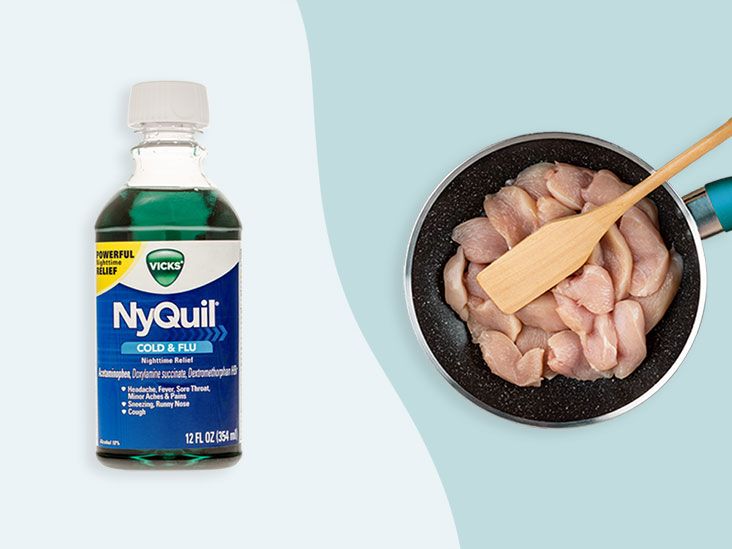
Every so often, the internet looks at common sense, politely asks it to leave the room, and then invents something like NyQuil Chicken. Also called “Sleepy Chicken” in some online corners, this viral TikTok trend involved people misusing over-the-counter cough and cold medicine in a way that made health experts, parents, pharmacists, and the FDA collectively clutch their clipboards.
On the surface, NyQuil Chicken sounds like another bizarre food trend created for views. But unlike whipped coffee or rainbow bagels, this one is not harmless kitchen theater. The U.S. Food and Drug Administration warned that social media challenges involving medicines can cause serious harm, especially when young people copy them because the video looks funny, edgy, or “not that serious.” Spoiler alert: medicine is not marinade, and your stovetop is not a pharmacy laboratory.
This article breaks down what the NyQuil Chicken trend was, why the FDA stepped in, what makes it medically risky, and how parents, teens, schools, and content creators can respond without accidentally giving the trend more oxygen than it deserves.
What Is NyQuil Chicken?
NyQuil Chicken refers to a social media trend in which people used an over-the-counter cough and cold medication in connection with cooking chicken, often presenting it as a joke, a dare, or a strange “recipe.” The phrase spread across TikTok and other platforms, partly because it sounded so absurd that people could not resist reacting to it.
That absurdity is exactly what made the trend travel. Social media rewards shock. A normal dinner gets a few likes. A dangerously bad idea wearing a clown wig can get millions of views, stitches, duets, and outrage-posts before breakfast. In other words, NyQuil Chicken was not only a food safety problem; it was an attention-economy problem.
NyQuil and similar cold medicines are designed to be used according to label directions. They may contain ingredients such as acetaminophen, dextromethorphan, and doxylamine, depending on the product. These ingredients can be useful when used correctly, but they can also be dangerous when misused, taken in excessive amounts, mixed with other substances, or consumed in unpredictable ways.
Why Did the FDA Warn People About It?
The FDA warned about NyQuil Chicken because it represented a broader issue: social media challenges that encourage medicine misuse. The agency pointed out that even if a trend seems silly or unappetizing, it can still be unsafe. That is the key lesson. A bad idea does not become safe just because it arrives with a laugh track.
Heating or misusing medicine can change the risk profile. The FDA and health experts have warned that cooking with medicine can concentrate ingredients, create harmful exposure through vapors, and make dosing impossible to predict. In plain English: the label directions are there for a reason, and once someone treats medicine like a cooking ingredient, all the safety rules have gone flying out the kitchen window.
The FDA’s concern was not limited to one strange chicken video. The agency has also warned about other dangerous medicine-related challenges, including trends involving excessive doses of antihistamines. The common thread is peer pressure, viral visibility, and the false impression that over-the-counter products are automatically harmless.
Why NyQuil Chicken Is Dangerous
1. Over-the-Counter Does Not Mean Risk-Free
One of the biggest myths around cold medicine is that “available without a prescription” means “safe no matter what.” Not true. Over-the-counter medicine can be safe and helpful when used exactly as directed, but it can be harmful when misused. Acetaminophen, for example, is common in many cold and flu products, yet taking too much can damage the liver. Dextromethorphan and sedating antihistamines can also cause serious side effects when consumed incorrectly.
Think of it like a swimming pool. Used properly, it is fun. Used recklessly, it becomes dangerous fast. The problem is not that the product exists. The problem is ignoring the instructions that keep people safe.
2. Heating Medicine Can Increase Risk
Cold medicine is not designed to be heated, reduced, inhaled, or absorbed through food. When a liquid medication is heated, the water and alcohol components may evaporate differently than the active ingredients. That can leave behind a more concentrated and uneven mixture. Nobody can reliably know how much medicine is present in a bite, a spoonful, or the surrounding vapors.
This unpredictability is why medical experts describe the trend as dangerous. A normal dose is measured carefully. A viral stunt is not. Your measuring cup should never be replaced by “whatever happened in the pan.”
3. Vapors Can Be Harmful
The FDA warned that even being near heated medication can create risk because vapors may expose a person to drug ingredients in unintended ways. Inhaling fumes from heated medicine can irritate the lungs and may allow drugs to enter the body without a person realizing how much they have absorbed.
That means the danger is not only in eating the final product. The process itself can be risky. This is one reason safety experts do not frame NyQuil Chicken as merely “gross.” Gross is licking a subway pole. Dangerous is using medicine in a way that can harm your breathing, nervous system, or organs.
4. Undercooked Chicken Is Still a Problem
As if the medication issue were not enough, there is also ordinary food safety. Chicken must be cooked properly to reduce the risk of foodborne illness. A chaotic viral stunt is not the place where safe cooking practices usually shine. If the chicken is undercooked, bacteria can cause illness. So now the situation has two hazards: medicine misuse and unsafe food preparation. That is not dinner; that is a group project where every member failed.
Why TikTok Trends Like This Spread So Quickly
NyQuil Chicken spread because social platforms are built for reaction. The weirder something is, the more people comment. The more people comment, the more platforms may show it. Then news outlets cover it, experts warn about it, and suddenly people who never would have searched for the trend now know its name.
This creates a tricky public health puzzle. If agencies stay silent, people may not understand the danger. If agencies speak up, they may accidentally make the trend more famous. That does not mean warnings are useless. It means warnings need to be clear, calm, and focused on safety rather than spectacle.
For teens and young adults, the pull can be especially strong. Social media can make risky behavior look funny, popular, or low-consequence. A video rarely shows the emergency room, the panicked parent, the poison control call, or the long-term embarrassment of becoming a cautionary tale with Wi-Fi.
The FDA’s Bigger Message: Talk About Medicine Safety
The FDA’s warning around NyQuil Chicken was really about a larger issue: many homes contain nonprescription medicines, and young people may not understand how dangerous misuse can be. Cold medicine, allergy medicine, sleep aids, pain relievers, and other household products should be stored safely and used only as directed.
Parents and caregivers can help by having direct conversations without turning the topic into a dramatic lecture. A teen who feels judged may shut down. A teen who feels respected may actually listen. The goal is not to say, “The internet is evil.” The goal is to say, “Some online challenges are designed to get attention, not protect your health.”
A useful question is: “What do you think the video is trying to make you feel?” Is it shock? Curiosity? Pressure? Fear of missing out? Once young people can recognize the emotional hook, they are less likely to bite it.
How to Respond If Someone Mentions NyQuil Chicken
If a friend jokes about trying NyQuil Chicken, the best response is short, firm, and non-dramatic: “That can actually poison you. Don’t do it.” You do not need a twenty-minute TED Talk. You do not need to debate whether the trend is real, fake, ironic, or “just for content.” The body does not care about irony.
If someone may have misused medicine or taken too much, it is important to get help right away. In the United States, Poison Control can be reached at 1-800-222-1222. For severe symptoms such as trouble breathing, confusion, fainting, seizures, or extreme sleepiness, call emergency services immediately. Do not wait for social media comments to diagnose the situation. The comment section does not have a medical license.
What Content Creators Should Learn From the Backlash
Creators have influence, whether they want it or not. A video that looks like a joke to one person may look like a dare to another. When medicine is involved, creators should avoid posting content that normalizes misuse, even as comedy. Satire can be misunderstood, clipped out of context, or copied by someone who does not catch the punchline.
Responsible creators can still be funny. They can roast the trend without demonstrating it. They can make reaction videos that emphasize safety. They can point out that some ideas deserve to remain in the drafts folder, quietly gathering dust next to that dance video from 2020.
What Parents Can Do Without Starting a Panic Parade
Parents do not need to interrogate every TikTok trend like a detective in a trench coat. But they should keep communication open. Ask what platforms your teen uses, what kinds of videos they see, and whether they have noticed dangerous challenges. Make it a normal conversation, not a surprise courtroom scene at dinner.
It also helps to store medicines securely, keep products in their original containers, read labels carefully, and model safe medicine habits. Teens notice what adults do. If adults casually mix medications, ignore dosing instructions, or treat OTC products like candy, the safety message gets blurry.
Schools and Communities Can Use This as a Teachable Moment
NyQuil Chicken may sound ridiculous, but it opens the door to serious lessons about media literacy, health literacy, and peer pressure. Schools can discuss how algorithms reward extreme content. Health teachers can explain why dosing matters. Community groups can remind families that poison prevention is not only for toddlers; adolescents also need guidance.
The best education does not shame young people for being online. It teaches them how to evaluate what they see. Before copying a challenge, they can ask: Who benefits if I do this? Is it safe? Is it legal? Could it hurt me or someone else? Would I still do it if nobody could record it? That last question is powerful. Many bad ideas collapse when applause is removed.
Specific Examples of Risky Social Media Logic
NyQuil Chicken follows a familiar internet pattern. First, someone posts something outrageous. Second, viewers argue whether it is real. Third, more people search for it. Fourth, reaction content spreads faster than the original. Finally, the trend becomes famous enough that people who never saw the first video now know the phrase.
This same pattern has appeared with other dangerous challenges involving household products, medicines, or risky physical stunts. The details change, but the psychology remains similar: shock value, peer approval, and the promise of attention. That is why the solution cannot be only “delete this one video.” The deeper solution is teaching people not to treat virality as evidence that something is worth doing.
Experience-Based Reflections: What NyQuil Chicken Teaches Us About Online Judgment
When people talk about NyQuil Chicken, the first reaction is usually laughter. It sounds too strange to be real, like a headline generated by a raccoon with a smartphone. But after the laughter fades, the trend reveals something important about modern online life: many people encounter risky ideas before they have the tools to evaluate them.
Imagine being a teenager scrolling late at night. You see a creator with thousands of likes doing something bizarre. The comments are full of jokes. Some people say it is fake. Others dare their friends. A few warn that it is dangerous, but those comments are buried under memes. In that moment, the platform is not a classroom. It is a carnival. Everything is loud, fast, emotional, and designed to keep your thumb moving.
That is why experience matters. People who have spent time around health care workers, pharmacists, teachers, or cautious adults may immediately recognize the danger. They understand that medicine has dosing rules, side effects, interactions, and risks. But someone without that background may only see a joke. They may think, “If it were really dangerous, the app would not show it,” which is unfortunately not how the internet works. Platforms can remove harmful content, but they are not perfect safety nets.
A practical lesson from this trend is that embarrassment should never stop someone from asking for help. If a person copies a dangerous trend and then feels unwell, they may be tempted to hide it because they do not want to get in trouble. That delay can make things worse. The better rule is simple: health first, explanations later. Adults can support this by making it clear that calling for help will always matter more than assigning blame.
Another experience-based takeaway is that humor can be useful when it points people toward safety. Saying “medicine is not seasoning” may sound silly, but it is memorable. A message does not have to be boring to be responsible. In fact, the best safety communication often uses plain language, relatable examples, and a little personality. The goal is not to scare everyone into logging off forever. The goal is to help people pause before turning a viral dare into a real-world emergency.
For content creators, the experience should be humbling. A joke made for attention can travel far beyond its original audience. A video posted as satire can be copied by someone who misses the satire. A trend that begins as “nobody would actually do this” can become a public health warning if enough people amplify it. That does not mean creators must become dull. It means they should understand the weight of visibility.
For parents and educators, NyQuil Chicken is a reminder that young people do not only need rules; they need reasoning. “Do not do stupid things online” is less useful than explaining why certain actions are dangerous, how algorithms reward shock, and what to do when a friend suggests something unsafe. Teens are more likely to make good choices when they understand the mechanics behind the risk.
Ultimately, NyQuil Chicken belongs in the internet hall of fame for terrible ideas, somewhere between “Who approved this?” and “Please put the phone down.” But it also gives families, schools, and platforms a chance to improve. The next risky trend will have a different name. The skills needed to reject it will be the same: pause, think, verify, and remember that no number of likes is worth your health.
Conclusion
NyQuil Chicken became famous because it sounded ridiculous, but the FDA’s concern was completely serious. Misusing cold medicine, heating it, inhaling vapors, or treating it as food can create unpredictable and potentially dangerous exposure. Add in the usual risks of undercooked chicken, peer pressure, and social media amplification, and the result is a trend that deserves a firm “absolutely not.”
The bigger lesson is not only about one strange TikTok moment. It is about how quickly dangerous ideas can spread when they are packaged as jokes. Medicine should be used only as directed, risky challenges should be questioned before they are copied, and anyone exposed to unsafe medication misuse should get help quickly. Viral fame fades. Health consequences can last much longer.












