
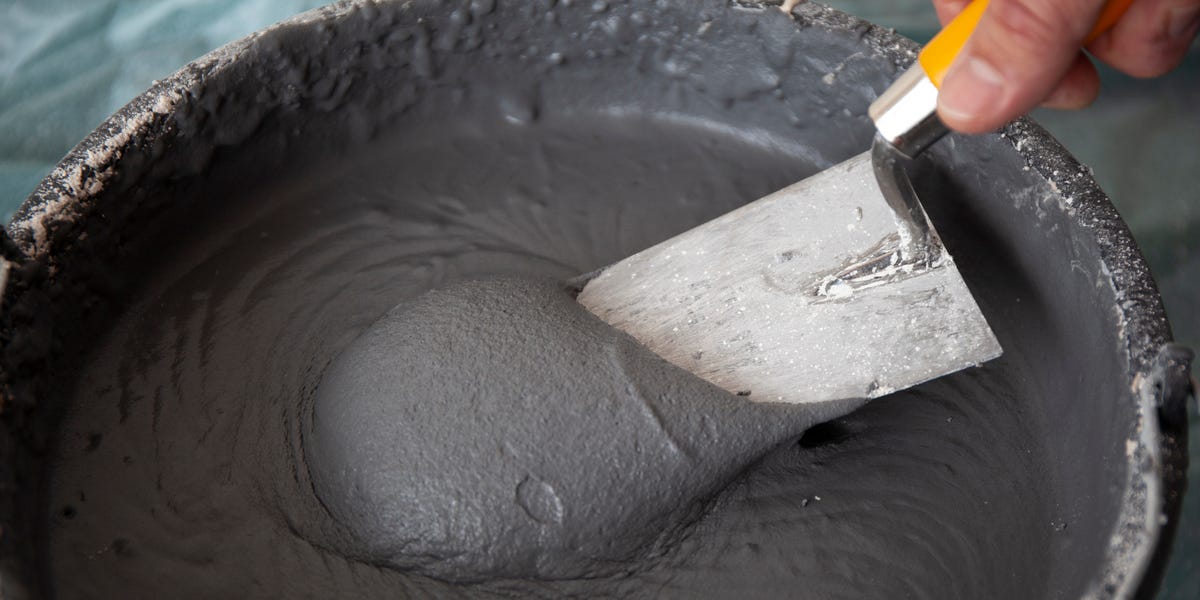
Concrete is not exactly famous for drama. It sits there. It hardens. It gets stepped on by everyone from toddlers to forklifts. Yet every so often, this gray workhorse of civilization pulls off a plot twist worthy of a science-fiction movie. The latest star of the show is a material nicknamed StarCrete, a new kind of concrete-like composite made with simulated Martian or lunar dust, potato starch, and a pinch of salt. Yes, potatoes. The same humble food that gave humanity fries, hash browns, and emotional support during exam week may also help build future homes on Mars.
The headline-grabbing claim is simple: this new material can be more than twice as strong as conventional concrete. Researchers reported that StarCrete made with simulated Martian soil reached about 72 megapascals of compressive strength, compared with around 32 megapascals for ordinary concrete. A lunar-dust version performed even better, reaching more than 91 megapascals. For a material made with starch and extraterrestrial dirt substitutes, that is not a cute science fair trick. That is a serious engineering eyebrow-raiser.
But the real story is bigger than “space potatoes make strong bricks.” StarCrete sits at the intersection of advanced materials, low-carbon construction, space exploration, and the urgent need to rethink how humans build. Concrete is everywhere because it is cheap, durable, moldable, and familiar. It is also tied to a massive carbon footprint, largely because cement production requires high-temperature kilns and releases carbon dioxide during limestone processing. A stronger, lower-energy concrete alternative could matter not only for Mars bases, but also for greener buildings, disaster-resilient shelters, and infrastructure that does not crumble every time weather decides to audition for a monster movie.
What Is This New Concrete?
StarCrete is a starch-based biocomposite developed by researchers at the University of Manchester. Instead of relying on Portland cement as the primary binder, the recipe uses ordinary potato starch to glue together particles of simulated Martian or lunar regolith. Magnesium chloride, a common salt, is added to improve the material’s strength. The result is a concrete-like material that can be formed into bricks or structural components without the heavy industrial process normally required for cement.
The reason this matters for space construction is obvious once you imagine the shipping bill. Sending building materials from Earth to Mars would be hilariously expensive, except nobody at a space agency is laughing when mass limits appear on the spreadsheet. Future missions will need to use local resources wherever possible. This idea is known as in-situ resource utilization, or ISRU. In plain English: do not bring everything with you; use what is already there.
On Mars, the local material is regolith, the dusty, rocky surface layer covering the planet. On the Moon, lunar regolith is similarly abundant. If astronauts can turn that dust into construction material using a lightweight binder such as starch, they reduce the amount of cargo launched from Earth. In spaceflight, every kilogram matters. A sack of dehydrated potatoes suddenly looks less like pantry filler and more like structural engineering equipment with a surprisingly delicious backstory.
How Can Potato Starch Make Concrete Stronger?
Traditional concrete gets its strength from cement hydration. Cement reacts with water, forming mineral products that bind sand and gravel into a hard mass. StarCrete works differently. Potato starch acts as a binder that coats and connects regolith particles, while magnesium chloride helps strengthen the matrix. Under compression, the particles and binder resist crushing in a way that can outperform ordinary concrete mixes.
The concept sounds strange because people tend to think of starch as something that thickens soup, not something that holds up walls. But starch is a polymer, and polymers can be very useful binders. When processed correctly, starch can form strong films and networks. Combined with mineral particles, it can create a composite material, much like fiberglass combines glass fibers with resin or reinforced concrete combines steel with cement paste.
There is also a practical advantage: StarCrete does not require kiln temperatures anywhere near those used to produce Portland cement. Researchers have described the material as being producible with oven-like or microwave-like heating rather than heavy cement-making infrastructure. That could be a big deal in space, where complex industrial equipment is hard to deliver, repair, and operate. It could also be meaningful on Earth if future versions prove scalable, durable, and safe for real-world building codes.
Twice as Strong: What the Numbers Really Mean
Strength in concrete is usually discussed in terms of compressive strength, which measures how much squeezing force a material can resist before failing. Concrete is excellent in compression but weak in tension, which is why steel reinforcement is used in buildings, bridges, slabs, and columns. A typical conventional concrete might fall around 20 to 40 MPa depending on mix design and use. In the StarCrete tests, the simulated Martian version reached 72 MPa, while the simulated lunar version exceeded 91 MPa.
That puts StarCrete in the territory of high-strength concrete, at least in laboratory compression tests. However, compressive strength is only one part of the engineering story. A material also needs durability, predictable behavior, resistance to moisture, freeze-thaw cycling, abrasion, chemical attack, and long-term deformation. On Mars, engineers would also worry about radiation, dust storms, extreme cold, pressure differences, and thermal cycling. On Earth, the checklist includes rain, heat, chlorides, traffic loads, fire resistance, pests, contractors with questionable coffee intake, and building inspectors who are paid to be unimpressed.
So, “twice as strong” is exciting, but it does not mean tomorrow’s apartment towers will be made of potato concrete. It means the material has passed an important early benchmark and deserves serious development. In engineering, laboratory success is the first audition, not the final contract.
Why Space Agencies Care About Concrete-Like Materials
Space habitats need shielding. Mars and the Moon lack Earth’s friendly atmosphere and magnetic protection, so astronauts must be protected from radiation, micrometeorites, temperature swings, and dust. Thick walls made from local regolith could help. But loose dust alone is not a house. It needs to be processed into stable blocks, panels, shells, berms, or 3D-printed structures.
NASA and other research groups have explored 3D printing, regolith-polymer composites, sulfur concrete, sintered regolith, and other construction techniques for off-world infrastructure. The goal is not merely to make pretty space cabins. Landing pads, roads, storage areas, blast shields, protective covers, and equipment shelters may be needed before humans can live and work safely for long periods away from Earth.
StarCrete fits neatly into this research landscape because it uses simple inputs. Regolith is local. Starch could be part of a food-production system. Magnesium chloride may be obtainable from Martian sources or transported in relatively small amounts. Compared with systems that need high temperatures, large reactors, or complicated chemistry, a low-energy binder is attractive.
Could StarCrete Be Used on Earth?
The biggest question for builders, architects, and civil engineers is whether StarCrete could become more than a Mars story. Could a version of this material be used for housing, pavers, panels, emergency shelters, or low-carbon building blocks on Earth?
The honest answer is: possibly, but not yet at mainstream construction scale. Earth has harsher moisture conditions than many people realize. A building material may look brilliant in a dry lab but behave differently when exposed to rain, groundwater, humidity, mold, salts, insects, or repeated heating and cooling. A starch-based binder must prove that it can resist biodegradation, swelling, softening, and long-term creep. If it cannot, it may still have niche uses, but it will not replace reinforced concrete in bridges or high-rise cores.
That said, the idea is valuable even if StarCrete never becomes a direct one-for-one replacement for Portland cement concrete. It expands the menu of possible binders. It also challenges the assumption that strong construction materials must always come from energy-intensive cement kilns. The future of concrete may not be one miracle material. It may be a toolkit: low-clinker cement, recycled aggregates, carbon-cured concrete, geopolymer binders, bio-based composites, ultra-high-performance concrete, and smarter structural design working together.
The Environmental Angle: Why Better Concrete Matters
Concrete is the backbone of modern infrastructure. Homes, hospitals, schools, roads, bridges, dams, ports, tunnels, and sidewalks all depend on it. The world uses so much of it that even small improvements in its carbon footprint can have large global effects. Cement, the key binding ingredient in conventional concrete, is responsible for a significant share of global carbon dioxide emissions because of both fuel combustion and the chemical process of turning limestone into clinker.
This is why low-carbon concrete has become one of the hottest areas in construction technology. Government agencies, universities, startups, and cement producers are exploring ways to reduce clinker content, capture carbon from kilns, use supplementary cementitious materials, electrify industrial heat, optimize mixes with software, and design structures that use less material without sacrificing safety.
StarCrete adds a playful but serious idea to that conversation: what if some building materials could be made from abundant minerals and plant-based binders? What if a brick could be strong without being born in a furnace hot enough to make your oven feel like a refrigerator? Those questions are not just for astronauts. They are for every city trying to build housing, repair infrastructure, and reduce emissions at the same time.
Specific Examples of Where Stronger Concrete Helps
1. Space Habitats and Landing Pads
On the Moon or Mars, strong regolith-based materials could be used for habitat shells, radiation shielding, equipment shelters, and landing pads. Landing pads are especially important because rocket exhaust can blast dust and debris at dangerous speeds. A stabilized surface could protect equipment and reduce dust contamination.
2. Disaster-Resilient Emergency Structures
If a StarCrete-like material could be adapted for Earth, it might be useful for rapidly made blocks or panels in disaster zones. Strong, low-energy materials could help rebuild after storms, earthquakes, or floods. Of course, any such use would require extensive testing for water resistance, fire behavior, code compliance, and safe installation.
3. Lightweight, High-Strength Components
Higher compressive strength can allow thinner components, which may reduce material consumption. In conventional construction, ultra-high-performance concrete is already used for bridge elements, façade panels, and specialized infrastructure. A bio-based high-strength composite could one day compete in certain precast applications if it proves durable.
4. Low-Carbon Masonry Products
The most realistic early Earth application may be non-structural or lightly loaded masonry products: blocks, tiles, pavers, landscaping units, or interior components. These markets often allow more experimentation than critical structural columns or bridge decks. If the material performs well, engineers can move gradually toward more demanding applications.
The Challenges Nobody Should Ignore
Every promising material eventually has to leave the press release and meet reality in a hard hat. For StarCrete, several questions remain. How does it perform after months or years of exposure? Can it survive wet-dry cycles? Does starch attract microbes or degrade in warm, damp climates? How does it behave in fire? Can it be reinforced? Can it be produced consistently at large scale? What happens at joints and connections? How easy is it to repair?
There is also the economics question. Potatoes are not rare, but food crops are not automatically cheap construction feedstocks. A building material must compete on cost, supply chain reliability, safety, and performance. Using agricultural byproducts or industrial starch streams may make more sense than using food-grade potatoes. Nobody wants affordable housing to get into a bidding war with mashed potatoes. That is how civilization loses morale.
Finally, building codes move slowly for good reason. New materials must be tested, certified, standardized, and accepted by engineers, insurers, contractors, and regulators. This process can feel painfully slow, but the alternative is letting unproven materials carry human lives. Strong lab samples are exciting. Safe buildings require evidence.
What This Innovation Says About the Future of Construction
The most important lesson from StarCrete is not that potatoes will replace cement. It is that construction materials are becoming smarter, more specialized, and more sustainable. The old recipe of “dig, burn, mix, pour, repeat forever” is being challenged. Researchers are looking at biology, nanotechnology, carbon chemistry, artificial intelligence, 3D printing, and local-resource manufacturing.
That future will probably be hybrid. Conventional concrete will remain essential for decades because it is proven, available, and supported by mature standards. But it will be improved. Cement content will be reduced where possible. Carbon capture and alternative fuels will grow. Supplementary materials will become more carefully selected. Digital mix design will make concrete less wasteful. And unusual materials like StarCrete will keep pushing the boundaries of what a “concrete” can be.
In other words, the future of concrete may look less like one gray substance and more like a family reunion: Portland cement concrete, geopolymer concrete, carbon-cured concrete, bio-concrete, printable concrete, ultra-high-performance concrete, and space-ready regolith composites all arguing politely over who gets the good chair.
Experience-Based Insights: What Builders and Designers Can Learn From StarCrete
Anyone who has worked around construction materials knows that strength numbers can be seductive. A product brochure says “high strength,” and suddenly everyone imagines thinner slabs, cheaper projects, and buildings that flex like superheroes. In practice, smart builders learn to ask better questions. How does the material handle moisture? How forgiving is it during installation? Does it crack without warning? Can ordinary crews work with it? Does it require special curing? What happens when the weather refuses to cooperate?
That practical mindset is useful when thinking about StarCrete. The material’s reported compressive strength is impressive, but construction is not a lab compression machine. Real projects involve transportation, storage, mixing, forming, curing, connection details, quality control, and maintenance. A material that performs beautifully under controlled conditions must still survive the delightful chaos of real job sites, where dust gets everywhere, schedules change hourly, and someone always asks whether the delivery truck can “just squeeze through” a space clearly designed for bicycles.
From a design perspective, StarCrete teaches an important lesson: local materials can change the entire economics of building. On Earth, that might mean using regional aggregates, recycled mineral waste, agricultural byproducts, or locally available binders. In space, it means using regolith instead of shipping bricks across millions of miles. The principle is the same. The best material is not always the strongest material in isolation. It is the material that delivers enough performance with the least waste, lowest transport burden, and best fit for the environment.
For architects, the experience takeaway is flexibility. New concrete alternatives may allow different shapes, textures, and manufacturing methods. If a material can be molded, printed, compressed into blocks, or cured at relatively low temperatures, it opens creative doors. Imagine emergency shelters made from local soil composites, modular blocks manufactured near remote sites, or interior panels with lower embodied carbon. These ideas require testing, but they show how material innovation can influence design language, not just engineering spreadsheets.
For homeowners and general readers, the lesson is simpler: do not fall for miracle-material hype, but do pay attention. Many technologies sound strange before they become normal. Fiber-reinforced concrete, engineered wood, insulated concrete forms, carbon-cured blocks, and 3D-printed homes all sounded unusual at some point. A starch-based concrete for Mars sounds funny because potatoes are familiar and Mars is not. Yet the science behind composites is real, and the construction industry needs fresh ideas.
For contractors, StarCrete is a reminder that tomorrow’s competitive edge may come from understanding materials, not just labor and equipment. Builders who learn about low-carbon mixes, curing requirements, new binders, and performance testing will be better prepared as codes and clients evolve. Developers are already asking for greener buildings. Public agencies are already testing low-carbon procurement. Engineers are already comparing embodied carbon alongside strength and cost. The person who understands both the concrete truck and the carbon report will be very useful.
For students, StarCrete is also a wonderful example of interdisciplinary thinking. It combines civil engineering, chemistry, space science, agriculture, sustainability, and manufacturing. The future of construction will need people who can move between these fields without getting lost. The next breakthrough may not come from simply adding more cement. It may come from asking a weird question, such as: “Could potato starch hold Martian dust together?” Apparently, yes. Sometimes innovation begins when someone treats a pantry ingredient like a structural material and has the courage to test it.
Conclusion
StarCrete is one of those rare innovations that sounds like a joke until the test results arrive wearing a serious expression. A concrete-like material made from simulated space dust, potato starch, and salt has shown compressive strength more than twice that of conventional concrete in laboratory tests. That does not mean it is ready to replace sidewalks, bridges, or skyscrapers next Tuesday. It does mean researchers have found a promising new path for strong, lower-energy construction materials.
The biggest impact may be conceptual. StarCrete proves that future building materials do not have to follow the same recipe forever. They can be local, bio-based, lower-energy, and designed for extreme environments. Whether humans are building a Mars habitat, a lunar landing pad, or a greener neighborhood on Earth, the same challenge remains: build stronger, waste less, and stop treating the planet like an unlimited materials closet.
If the next generation of concrete is smarter, cleaner, and maybe a little potato-powered, the construction industry should welcome it. After all, concrete has carried civilization for centuries. It deserves an upgrade.











