
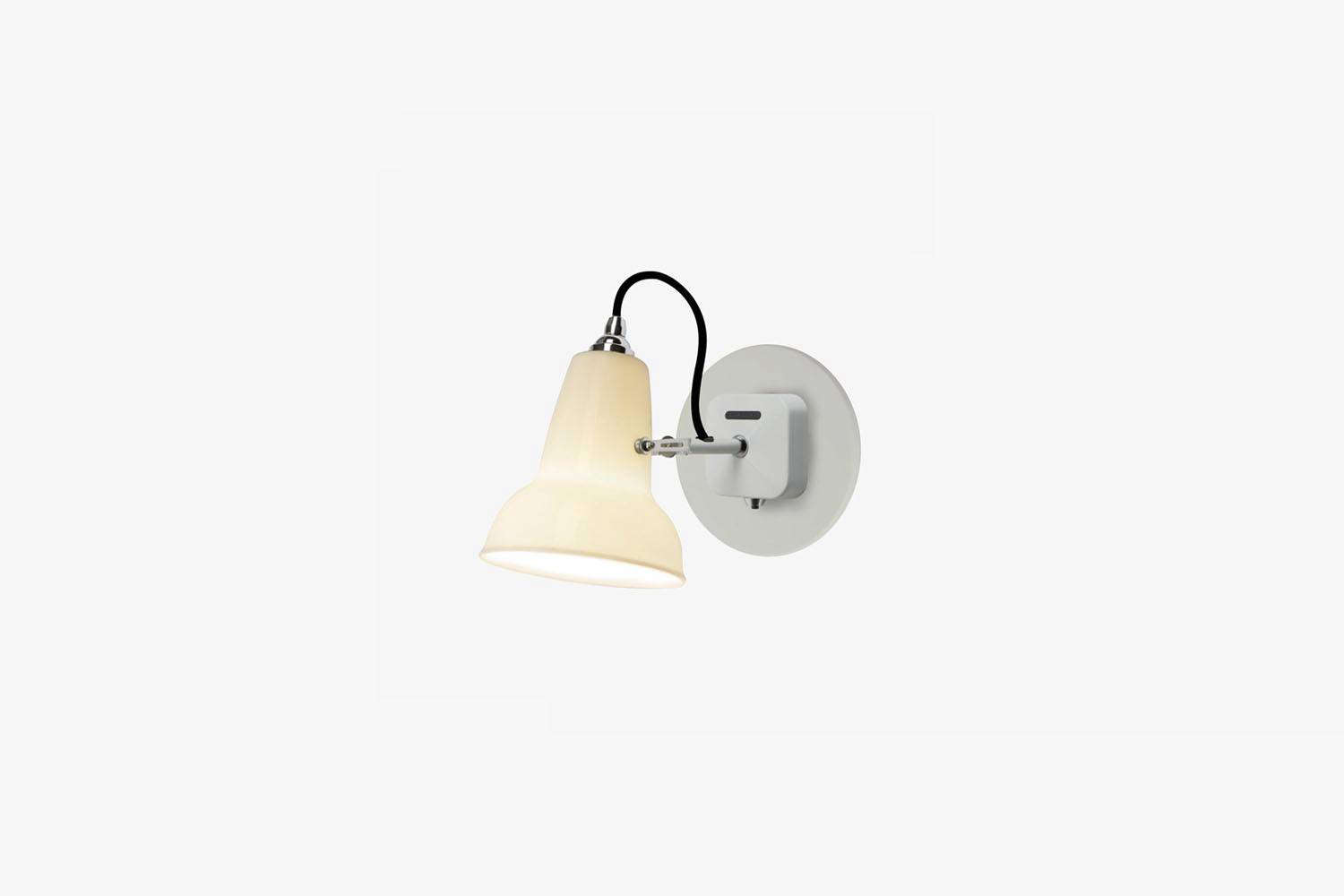
Some lamps illuminate a room. Others quietly convince you that your room has better taste than you do. The Anglepoise Original 1227 Mini Ceramic collection belongs firmly in the second category, pairing one of Britain’s most recognizable lighting silhouettes with glossy bone china shades that become softly translucent when illuminated.
Although the collection first attracted design-world attention in 2017, its combination of compact proportions, directional lighting, and diffused ambience remains remarkably current. The word “new” in the title refers to that original launch rather than a brand-new 2026 release. What still feels fresh is the central idea: take the practical character of an Anglepoise lamp, dress it in luminous ceramic, and let engineering and atmosphere share the same small shade.
Research basis:
Why the Anglepoise Bone China Lights Stand Out
The Original 1227 Mini Ceramic range is not simply a classic lamp painted white. Its bone china shade changes the way the fixture behaves. When switched off, the shade appears smooth, glossy, and sculptural. Switch it on, and light passes through the ceramic body, producing a milky glow around the shade while still directing useful illumination through its open end.
That two-part effect is the collection’s cleverest feature. You get focused light for reading, working, or highlighting a surface, but you also receive a gentler halo that keeps the fixture from feeling like a tiny interrogation lamp. Nobody wants their bedtime novel illuminated as though it is being questioned by federal agents.
Bone china is valued for its whiteness, strength, smooth surface, and natural translucency. These qualities allow the shade to look refined during the day and become visibly luminous at night. The material gives Anglepoise’s familiar industrial form a more delicate personality without turning it into something overly decorative.
Research basis:
A Softer Interpretation of the Original 1227
The Anglepoise story began in the early 1930s with automotive engineer George Carwardine. While working with suspension systems, Carwardine developed a spring-and-lever mechanism that could be repositioned easily and then remain stable. He recognized that the same principle could support a movable light source, leading to the first Anglepoise task lamps.
The Original 1227, introduced for domestic use in 1935, became the enduring expression of that idea. Its visible joints, mechanical balance, and purposeful shade made it a symbol of practical modern design. The lamp turned 90 in 2025, yet it still looks perfectly comfortable beside contemporary furniture, vintage pieces, art books, coffee cups, and the charging cable you promised yourself you would hide.
The ceramic collection keeps the recognizable profile but softens its visual language. Chrome-plated fittings add crisp highlights, while gray fabric-covered cables provide a subtle textural contrast. The result sits somewhere between an industrial task light and a piece of fine tablewarewhich is an oddly specific combination, but an effective one.
Research basis:
The Original Four Ceramic Lighting Styles
The launch collection was presented in four primary configurations: a table lamp, a wall light, a single pendant, and a cluster pendant. Not every version is necessarily stocked in every market today, so availability should be checked before planning an entire room around one model.
Original 1227 Mini Ceramic Table Lamp
The table lamp is the most immediately recognizable member of the family. It has a compact fixed arm, a weighted cast-iron base covered in steel, an integrated push switch, and an adjustable ceramic shade. The base provides stability while the shade can be aimed toward a book, notebook, keyboard, or other task area.
Its scale makes it especially suitable for a bedside table, narrow desk, console, or small reading corner. The official U.S. specifications list a shade approximately 5.1 inches in diameter and 5.5 inches high, with a base measuring roughly 5.1 inches square. Those petite proportions help it deliver visual character without consuming the entire nightstand.
Research basis:
Original 1227 Mini Ceramic Wall Light
The wall version replaces the weighted base with a compact die-cast aluminum wall plate. Its integrated switch makes it easy to operate beside a bed or reading chair, while the movable shade allows the beam to be directed where it is needed.
Because it frees the surface below, this model is useful in small bedrooms, hallways, home libraries, and apartments where every square inch has already been assigned three jobs. It can function as a bedside reading light, a focused accent above a shelf, or a compact alternative to a conventional sconce.
Research basis:
Original 1227 Mini Ceramic Pendant
The single pendant strips the design down to its most graceful elements: a bone china shade, polished fittings, and a fabric-covered cord. Hung low, it can replace a table lamp beside a bed or sofa. Installed in a row, several pendants can illuminate a kitchen counter, breakfast bar, or dining table while maintaining a light visual footprint.
The shade’s compact size is an advantage when multiple fixtures are used together. Instead of creating a heavy ceiling feature, a series of mini pendants adds rhythm and pools of light. The arrangement feels organized without looking as though the ceiling has developed a chandelier-related emergency.
Research basis:
Original 1227 Mini Ceramic Cluster Pendant
The cluster pendant combines several ceramic shades into a modern chandelier composition. Suspending the lights at different heights creates movement and allows the glowing shades to be appreciated individually. It works particularly well over a round dining table, in a stairwell, or within a double-height space where a single mini pendant might appear lonely.
This version shows how versatile the basic shade can be. One ceramic cone feels quiet and functional; several grouped together become sculptural. The underlying design remains simple, so the cluster can make a statement without behaving like a crystal chandelier that has arrived with its own publicist.
Research basis:
Key Materials and Design Details
| Feature | Design Purpose |
|---|---|
| Glossy bone china shade | Creates a polished daytime appearance and a translucent glow when illuminated |
| Chrome-plated fittings | Adds crisp contrast and complements the clean white ceramic |
| Adjustable shade | Directs useful light toward books, work surfaces, or display areas |
| Weighted table-lamp base | Improves stability while the shade is repositioned |
| Fabric-covered cable | Introduces texture and makes exposed wiring more visually appealing |
| Compact proportions | Allows the lights to work in smaller rooms and layered lighting plans |
The restrained palette is important. Pure white ceramic, chrome hardware, and gray cable can sit comfortably beside warm oak, walnut, painted cabinetry, marble, concrete, linen, leather, or colorful artwork. The fixture contributes texture and shape without demanding that the rest of the room dress to match.
Soft Glow Does Not Mean Weak Light
Diffused light and useful task light are not opposites. The ceramic body softens the brightness visible through the shade, while the open end still sends light toward the selected surface. This makes the table and wall models particularly effective for layered lighting, where one fixture provides focused illumination and another supplies general ambient light.
Bulb choice strongly influences the final effect. A warm-white LED around 2700K generally complements wood, textiles, and residential interiors, while a higher color-rendering rating helps artwork, books, food, and furnishings appear more natural. U.S. Department of Energy guidance notes that LEDs are available in a wide range of color qualities and that a CRI of at least 80 is generally recommended for interior lighting.
Always follow the current wattage, socket, and bulb-shape specifications provided for the exact Anglepoise model. A bulb that is too large may sit awkwardly inside the compact shade, while an excessively bright lamp can overwhelm the gentle effect that makes the ceramic design appealing in the first place.
Research basis:
Where These Ceramic Lights Work Best
Bedrooms
The table lamp and wall light are natural bedside choices. Their compact size suits smaller nightstands, and the directional shade can be aimed toward a book rather than toward a sleeping partner’s face. That is good lighting design and possibly good relationship maintenance.
Kitchens and Dining Areas
A row of mini pendants can define an island or counter without blocking sightlines. The glowing ceramic adds warmth to kitchens dominated by hard materials such as stone, tile, metal, and glass. Over a dining table, a cluster arrangement creates a focal point that looks polished when both illuminated and switched off.
Hallways and Transitional Spaces
The wall light can bring character to narrow areas where a floor or table lamp would be impractical. Its directional shade can highlight artwork, a console, or an architectural detail while contributing low-level ambient light.
Home Offices and Reading Corners
Although the Mini Ceramic table lamp is less articulated than a full-size spring-arm Anglepoise desk lamp, its flexible shade still supports focused reading and writing. It is a strong choice for compact workspaces where the owner wants functional light without creating the visual atmosphere of an accounting department at midnight.
How to Style Anglepoise Bone China Lighting
In Scandinavian-inspired interiors, pair the pure white shade with pale wood, wool textiles, and neutral walls. In a midcentury room, use it beside walnut furniture, graphic artwork, and warm leather. For an industrial setting, the polished ceramic provides a useful counterpoint to exposed brick, black steel, and concrete.
The design also works in traditional rooms. Bone china already carries associations with classic British craftsmanship, while the simple 1227 profile prevents it from feeling precious. Against paneled walls, vintage furniture, or patterned wallpaper, the lamp adds a clean modern note without starting an argument with the antiques.
Practical Considerations Before Buying
Bone china is stronger than its delicate appearance suggests, but it is still ceramic. The shade should be handled carefully during installation, bulb changes, moving, and cleaning. Use a soft dry or lightly dampened cloth and avoid harsh abrasive products that could damage the glossy finish.
For wall and pendant versions, confirm junction-box compatibility, installation requirements, ceiling height, and cord length before ordering. Fixtures intended for dry indoor locations should not be installed in wet or damp areas unless the exact model carries the appropriate safety rating.
Traditional bone china includes bone ash. Buyers who follow vegan purchasing standards or have concerns about material sourcing should request current composition information directly from Anglepoise or an authorized retailer rather than assuming all ceramic materials are identical.
Longevity, Replacement Parts, and Repair
Anglepoise emphasizes repair, reuse, and long-term product support. Current U.S. product pages advertise a lifetime guarantee for registered lights, subject to the company’s terms, and the brand sells replacement components for several models. Replacement ceramic shades and spring kits are especially relevant because they allow damage or wear to be addressed without discarding the complete fixture.
That approach suits the Original 1227’s history. A design that has remained useful for generations should not become disposable simply because one part has met an enthusiastic vacuum cleaner, a poorly aimed moving box, or an unexpectedly athletic cat.
Research basis:
Conclusion: A Classic Lamp with a More Atmospheric Side
The Anglepoise Original 1227 Mini Ceramic collection succeeds because it does not abandon the brand’s functional identity. The table and wall lights remain directional. The pendants still serve practical architectural roles. The proportions are compact, the controls are straightforward, and the materials are chosen with purpose.
What bone china adds is atmosphere. The shade does not merely contain the bulb; it participates in the illumination, becoming a softly glowing object after dark. That transformation makes the collection appealing to anyone who wants lighting to be useful, beautiful, and just a little magical without becoming theatrical.
It is an elegant update to a familiar design language: part task light, part ambient lamp, and part luminous ceramic sculpture. In other words, it is a lamp that can help you read a book while looking exceptionally good in the background of a photograph of that book.
Living with the Soft Glow: A Room-by-Room Experience
The experience of using an Anglepoise bone china light begins before it is switched on. During daylight hours, the glossy white shade reads as a small ceramic object rather than a piece of technical equipment. On a bedside table, it has the visual calm of a white vase. Mounted on a wall, it appears compact and deliberate, with enough mechanical detailing to keep the design from becoming bland.
As evening arrives, the change is gradual but noticeable. A conventional metal shade remains visually solid when illuminated; the ceramic shade begins to glow. The surface develops a warm inner brightness, softening the contrast between the bulb and the darker room. The light feels present without producing the hard, exposed glare associated with some small task fixtures.
Beside a bed, the adjustable shade is most useful when positioned slightly forward and angled downward. This concentrates illumination on the pages of a book while the translucent ceramic produces a secondary glow around the fixture. The room does not fall into total darkness beyond the reading area, yet the light is localized enough to preserve a relaxed nighttime mood. A warm LED is particularly effective here because it emphasizes the creamy character of the bone china.
In a living room, the wall model works best as part of a layered scheme rather than as the only source of illumination. Paired with a floor lamp or dimmed ceiling fixture, it can highlight a framed print, a stack of books, or the texture of a wall. Rotating the shade changes the emphasis immediately. Aim it downward for a reading chair, toward the wall for a reflected glow, or toward an object when you want your favorite ceramic bowl to receive the museum treatment it has clearly been requesting.
The pendant produces a different experience. Hung low over a counter, it creates a defined pool of light that makes the surface below feel more intimate. A row of pendants adds rhythm, especially in a long kitchen where one central fixture may leave the space visually flat. Because the shades are small, they do not dominate the view across the room. Instead, the glowing forms appear to float along the cable line.
Cleaning and maintenance are simple but encourage slightly more care than a metal lamp. Dust is visible on glossy white surfaces, and fingerprints can temporarily dull the finish. A soft cloth restores the shine quickly. Bulb replacement should be approached without rushing, since the ceramic shade deserves two hands and a clear surface below. This is not the moment to multitask while holding coffee.
Over time, the most satisfying aspect is the balance between familiarity and surprise. The 1227 profile feels recognizable, practical, and reassuring. The bone china changes its emotional character after sunset, when the lamp becomes warmer and less mechanical. It can support focused reading at one moment and contribute quiet ambience the next. That versatility is what makes the design easy to live with: it performs a real job, occupies little space, and improves the atmosphere without requiring the entire room to revolve around it.
Note: Product availability, pricing, included bulbs, electrical specifications, warranties, and replacement-part options can change. Confirm current U.S. details with Anglepoise or an authorized retailer before purchasing or publishing time-sensitive information.












