
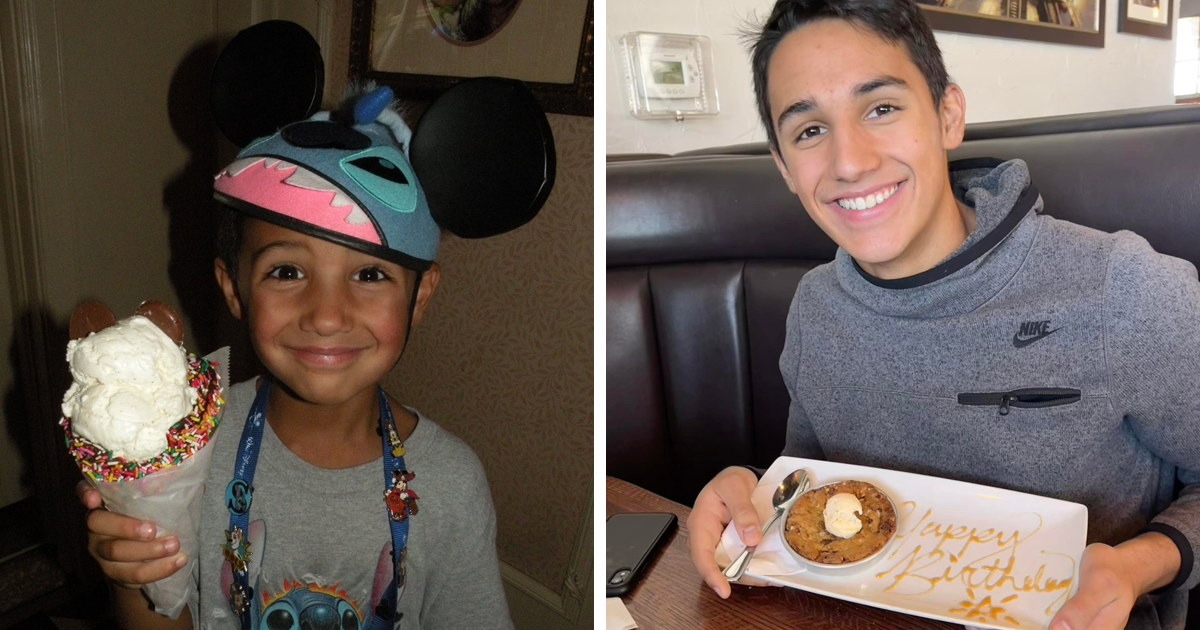
Most 12-year-olds would struggle to stay away from social media for a weekend. Sivert Klefsaas stayed away for six yearsand earned a four-figure payday for doing it.
In 2016, Minnesota mother Lorna Klefsaas presented her youngest child with an unusual proposition. If Sivert avoided social media until his 18th birthday, she would pay him $1,800. She called the deal the “18 for 18 challenge”: 18 years old, $1,800, and no Instagram, Snapchat, Facebook, Twitter, TikTok, or similar platforms along the way.
Sivert accepted almost immediately. At age 12, $1,800 sounded less like spending money and more like early retirement. Six years later, on February 19, 2022, he completed the challenge, received the promised check, and finally opened his first full social media accounts.
The story quickly went viral, creating a wonderfully modern piece of irony: a mother’s social media post about her son avoiding social media became a major social media success.
How the “18 for 18” Social Media Challenge Began
Lorna did not invent the idea entirely from scratch. She had heard a radio story about another parent offering a teenager $1,600 to remain off social media until age 16. She liked the concept but decided to extend both the deadline and the reward.
Her version required Sivert to wait until adulthood. In return, he would collect $100 for every year of his life.
The offer arrived at an ideal time. Sivert had briefly experimented with Snapchat, but he had used it for only about a day before deleting the app. He had not yet built a network of followers, accumulated years of photos, or become emotionally invested in likes, streaks, comments, and notifications.
Walking away was therefore much easier than it might have been a year or two later. He was not being asked to surrender a digital kingdom. At that point, his kingdom consisted of one nearly empty Snapchat account and perhaps a confused profile picture.
Why Lorna Wanted Her Son to Wait
Lorna’s concerns came partly from watching her three older daughters use social media. She said one daughter became deeply focused on maintaining Snapchat streaks, and the pressure affected her mood, friendships, and emotional well-being.
Rather than fight daily battles over phone use with her youngest child, Lorna tried a different strategy. She offered a positive incentive before social media became a deeply rooted habit. Sivert was free to reject the arrangement or end it later, but his competitive personality made him determined to finish what he had started.
What Happened During the Six-Year Challenge?
Staying off social media did not mean Sivert lived without technology. He could text, watch videos, use the internet for school, communicate with friends, and participate in ordinary digital life. The challenge targeted social networking platforms rather than every device with a glowing screen.
There was also one practical exception. When his basketball team relied on Snapchat to distribute schedules and team information, he was allowed limited access for that purpose. The goal was not to turn him into a digital hermit wearing homemade shoes and communicating exclusively by carrier pigeon.
For much of the six-year period, Sivert said the challenge was easier than outsiders might expect. His friends kept him informed about popular jokes, trends, and online events. They also did not treat his lack of social media as a major problem.
He sometimes felt tempted to quit, especially near the halfway point. However, after investing several years in the challenge, quitting would have meant losing both the money and the satisfaction of winning the bet.
The Reward Became Less Impressive Over Time
At 12, Sivert reportedly imagined that $1,800 might buy a car or permanently solve his financial needs. Adolescence eventually introduced him to the disappointing concept known as “prices.”
When he began working at a Dairy Queen, one of his early paychecks was nearly as large as the promised reward. By then, the money was no longer his primary motivation. Finishing the challenge had become a matter of pride.
He even remained off social media during the COVID-19 pandemic, when online communication became especially important for many teenagers. That period made the challenge harder, but he still maintained direct friendships through texting, sports, school, work, and other forms of contact.
Life Without Social Media Did Not Make Him Antisocial
One of Lorna’s biggest concerns was that her son might feel excluded. Teenagers often use group chats, private stories, photo sharing, and social platforms to organize plans. A child without access can occasionally become the last person to hear about an eventor never hear about it at all.
That risk is real, but it did not define Sivert’s experience. He remained active in football and basketball, developed close friendships, focused on academics, worked a part-time job, and prepared to attend college.
He later said that avoiding social media helped him invest more energy in face-to-face relationships. He also believed he missed much of the online conflict that affected friends at school. Arguments, gossip, screenshots, popularity rankings, and public breakups were still happening, but he was not carrying them around in his pocket every hour of the day.
In other words, he was not unaware of teenage drama. He simply received the edited highlights rather than the 24-hour live broadcast.
Why This Story Resonated With Parents
The challenge attracted national attention because it gave parents a simple answer to a complicated question: How can families prevent social media from dominating adolescence?
Teen social media use is now extremely common. Pew Research Center reported that nine in ten American teenagers use YouTube, while majorities use TikTok, Instagram, and Snapchat. In its 2024 survey, one-third of teens said they used at least one major platform almost constantly.
The U.S. Surgeon General has stated that available evidence is not sufficient to conclude that social media is safe for children and adolescents. The advisory also noted that young people spending more than three hours per day on social media faced twice the risk of certain negative mental health outcomes, including symptoms of anxiety and depression.
CDC analysis of the 2023 Youth Risk Behavior Survey found that 77 percent of U.S. high school students used social media at least several times each day. Frequent users were more likely to report electronic bullying, persistent sadness or hopelessness, and some forms of suicide risk. The CDC cautioned that these findings show associations rather than proving that social media directly caused every reported outcome.
Those concerns help explain why a six-year social media break sounds attractive. It removes algorithmic feeds, comparison pressure, endless notifications, and online drama during a sensitive developmental period.
Social Media Is Not Entirely Bad
Sivert’s story should not be interpreted as scientific proof that every teenager must avoid social media until adulthood. A single family’s successful experiment cannot settle a complex national debate.
Social media can help teenagers maintain friendships, explore interests, share art, discover educational content, and find supportive communities. These benefits can be particularly meaningful for young people who feel isolated or cannot easily find peers with similar experiences in their immediate communities.
A 2025 Pew Research Center survey found that 74 percent of teens said social media helped them feel connected to their friends’ lives. Sixty-three percent viewed the platforms as places to express creativity, while approximately half said social media could provide acceptance or support during difficult times.
At the same time, 45 percent said it hurt their sleep, 40 percent said it reduced productivity, and 19 percent believed it harmed their mental health. Many teenagers therefore experience social media as both useful and exhaustingsometimes during the same five-minute scrolling session.
The American Academy of Child and Adolescent Psychiatry likewise identifies both benefits and risks. Social media can support friendships, self-expression, creativity, and community. Potential dangers include cyberbullying, harmful content, predatory contact, privacy loss, inappropriate advertising, and oversharing personal information.
Why the $1,800 Incentive Worked
It Turned a Restriction Into a Choice
Lorna did not simply announce that social media was forbidden. She offered Sivert a voluntary deal with a clear reward. That distinction gave him a sense of ownership.
When teenagers believe a rule is entirely imposed on them, they may devote impressive creativity to breaking it. When they participate in creating the rule, following it can become part of their identity.
The Rules Were Easy to Understand
The finish line was specific: remain off social media until age 18. The reward was specific: receive $1,800. There was little room for daily arguments about whether 37 minutes of scrolling was acceptable but 43 minutes represented the collapse of civilization.
The Challenge Started Before a Strong Habit Formed
Because Sivert had barely begun using social platforms, he did not experience the same disruption that a highly active 16-year-old might experience after abruptly deleting every account.
The Reward Matched His Personality
Sivert was competitive. As the value of the money became less impressive, the desire to complete the challenge became more important. Another teenager might respond better to smaller milestones, additional freedom, travel, concert tickets, or a contribution toward a car or college expenses.
Should Parents Pay Their Children to Avoid Social Media?
Financial incentives can work, but copying the “18 for 18 challenge” exactly may not be realistic for every family. The amount must be affordable, the rules must be enforceable, and the child must genuinely agree to participate.
Parents should also consider the teenager’s social environment. Some schools, teams, clubs, and friendship groups rely heavily on particular apps. Removing a young person without providing alternative communication methods could lead to exclusion rather than healthier habits.
The American Academy of Pediatrics now emphasizes a broader, developmentally informed approach to media use. Families are encouraged to consider the child, the content, how media affects emotional regulation, what activities it replaces, and whether communication remains open. Current guidance focuses less on a magical universal number of minutes and more on the quality and context of digital experiences.
A complete ban may work for one child. Another child may benefit more from carefully managed access with privacy settings, time limits, parental supervision, and regular conversations.
Practical Alternatives to a Six-Year Social Media Ban
Create Phone-Free Times and Places
Families can keep phones away from the dinner table, homework area, family activities, and bedrooms at night. These boundaries protect sleep and relationships without demanding total disconnection.
Delay One Platform at a Time
Instead of allowing five accounts on the same birthday, parents might approve one carefully selected platform and evaluate how the teenager handles it before adding another.
Turn Off Nonessential Notifications
Most notifications are not emergencies. They are tiny digital doorbells rung by companies hoping the user will come back inside. Disabling them reduces interruptions and makes social media a chosen activity instead of a constant reflex.
Review Privacy and Location Settings
Accounts for younger users should generally be private. Location sharing, public contact information, and unnecessary app permissions should be disabled. Teens should understand that screenshots can make supposedly temporary content permanent.
Use a Written Family Media Plan
A family media plan can define approved platforms, time boundaries, privacy expectations, consequences, and situations in which a child should seek help. The American Academy of Pediatrics recommends choosing high-quality content, creating screen-free zones, discussing advertising, and reviewing privacy settings before introducing new platforms.
Model the Behavior Adults Expect
A parent cannot convincingly lecture a teenager about compulsive scrolling while checking three apps between every sentence. Children notice how adults use devices. Healthy digital habits are easier to teach when the whole household practices them.
What Happened When Sivert Finally Joined Social Media?
After receiving his money, Sivert downloaded Instagram and Snapchat. Years away from the platforms gave him maturity, but it did not give him technical fluency. He joked that learning how everything worked made him feel like an elderly beginner.
He quickly discovered the positive side of social networking. He could reconnect with people he had not seen in years and follow friends as they moved into college and adult life.
Importantly, Sivert did not emerge from the challenge believing social media was evil. He said people should feel free to use it while continuing to invest in sports, school, hobbies, work, and in-person relationships.
That balanced conclusion may be the most valuable part of the story. The goal was not permanent isolation from the internet. It was to develop a full life before adding social media to it.
Experiences and Lessons Families Can Take From the Challenge
Imagine a family attempting a similar challenge today. The first conversation would probably be easy. A 12-year-old hears “$1,800” and immediately pictures a gaming computer, a mountain of sneakers, or a sports car that apparently costs the same as four tires. The real work begins several months later, when friends start sharing jokes, photos, invitations, and school news through apps the child cannot access.
Families who experiment with delayed social media access often discover that the absence of an app is only part of the experience. The larger challenge is building alternative ways to communicate. A teenager may need reliable texting, direct phone numbers for teammates, access to school portals, and friends who remember to send invitations outside an Instagram group chat.
Parents may also need to explain the arrangement to coaches, relatives, and other adults. Without that communication, a teenager could miss schedule changes or team announcements. Sivert’s limited Snapchat exception for basketball information illustrates an important principle: healthy boundaries should support real life, not interfere with it.
Another common experience is the gradual decline of the original reward’s motivational power. A prize that seems enormous at 12 may look modest at 17. Families can address this by creating milestones. A child might receive a smaller annual reward, additional privileges, or matching contributions toward a long-term goal. The agreement should reward progress without encouraging constant negotiation.
The social benefits can be surprisingly strong. Without an online profile to maintain, teenagers may spend less time choosing photos, monitoring reactions, responding to streaks, and wondering why someone viewed a message without answering. That freed attention can move toward sports, music, reading, volunteering, part-time employment, creative projects, and direct friendships.
However, parents should not assume that every difficult emotion will disappear with social media. Adolescence included insecurity, comparison, gossip, and friendship conflicts long before anyone invented an infinite scroll. Removing an app can reduce certain pressures, but it does not eliminate the need for emotional support, communication, and professional care when a young person is struggling.
A successful challenge also requires trust. Secretly checking every device, setting traps, or treating the teenager as a suspect can damage the relationship the agreement was supposed to protect. Families should define what counts as social media, how necessary exceptions will work, and what happens if the rules are broken. Clear expectations are kinder than surprise enforcement.
Finally, the experience should include preparation for eventual access. A teenager who waits until 18 still needs to understand privacy, scams, misinformation, influencer marketing, cyberbullying, sexual exploitation, permanent digital footprints, and algorithmic recommendations. Delaying social media creates time to teach those skills; it does not replace them.
The strongest lesson from the Klefsaas family is therefore not that every parent should write an $1,800 check. It is that families can question the assumption that teenagers must immediately join every popular platform. Parents and children can make deliberate choices, experiment with boundaries, and decide what role social media deserves to play in their lives.
Conclusion
Lorna Klefsaas offered her son an unusual bargain, and Sivert followed through for six full years. He collected the $1,800, developed strong offline relationships, participated in sports and school, and eventually entered social media as an adult rather than as a middle-school beginner.
The experiment worked because it was voluntary, clearly defined, introduced early, and suited to Sivert’s competitive personality. It also included enough flexibility to prevent the challenge from interfering with school and team responsibilities.
Not every teenager needs a total social media ban, and not every family can or should recreate the same arrangement. Current research shows a complicated picture in which online platforms can provide friendship, creativity, information, and support while also increasing exposure to sleep disruption, bullying, unhealthy comparison, privacy threats, and emotional pressure.
The real takeaway is simpler: social media should be a tool that serves a young person’s lifenot the place where that life is permanently waiting for likes.












