
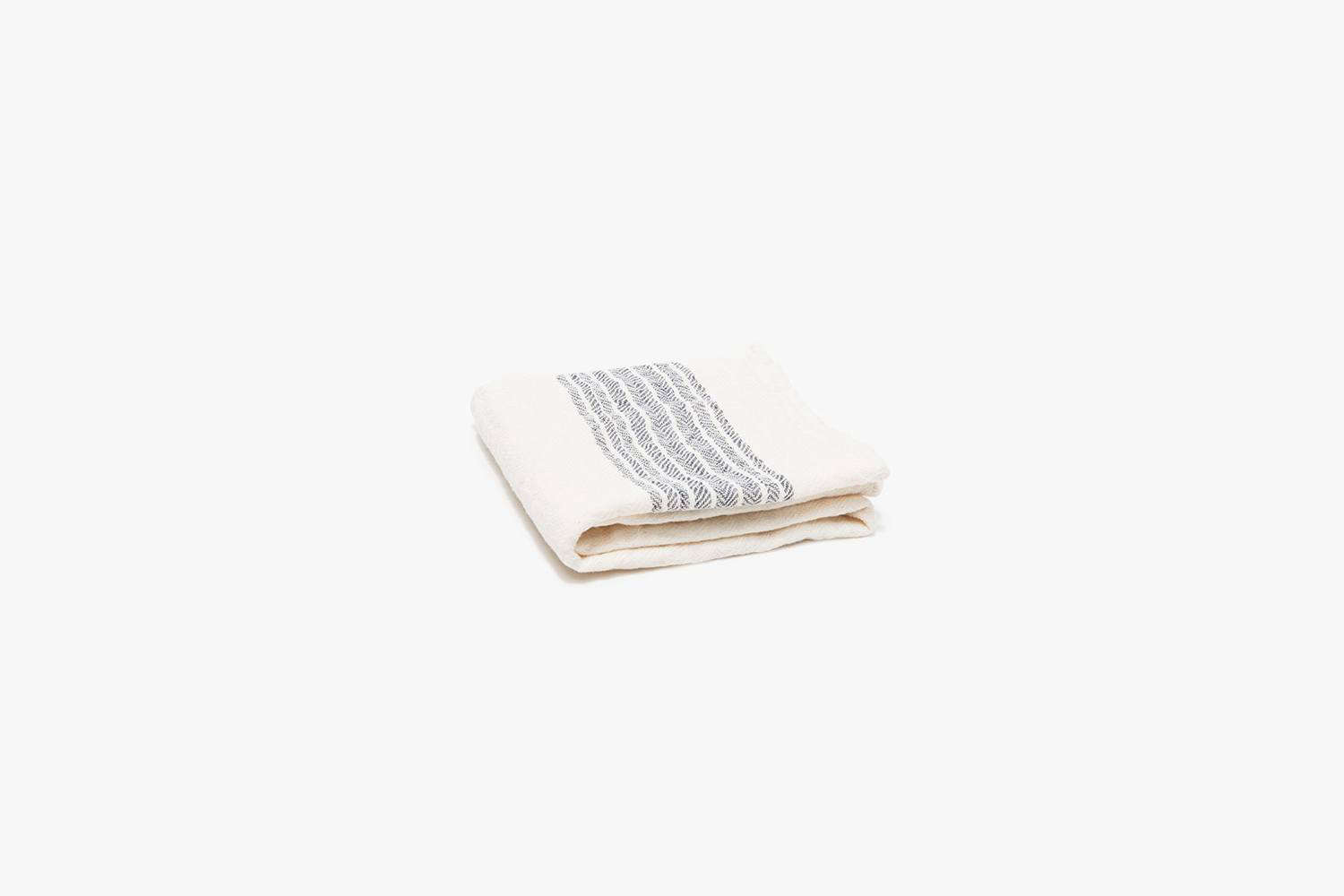
The Morihata Flax Line Hand Towel is proof that a household essential does notous. Slim, lightweight, and quietly stylish, this Japanese hand towel combines a smooth cotton-gauze surface with an absorbent terry-pile backing. The result is a towel that handles wet hands efficiently, dries without taking a small vacation, and looks polished enough to leave on display.
It is especially appealing to people who have grown tired of bulky towels that remain damp long after everyone has left the bathroom. With its compact Japanese proportions, subtle herringbone detail, and practical two-sided construction, the Flax Line towel favors thoughtful performance over unnecessary puffiness.
Before adding one to your bathroom, kitchen, gym bag, or travel kit, however, it helps to understand what the product actually contains, how it differs from conventional American towels, and whether its lightweight feel matches your expectations.
What Is the Morihata Flax Line Hand Towel?
The product is currently found within the Flax Line Organics collection associated with Japanese towel maker Kontex and distributed through Morihata. Kontex has produced textiles in Imabari, Japan, since 1934, using traditional slow-weaving methods designed to protect the softness and structure of the yarn.
Morihata commonly appears in the product name because the company introduces and distributes carefully selected Japanese goods to the American market. Kontex is the manufacturer behind the towel, while Morihata helps make it available to U.S. retailers and consumers.
The Name Can Be Slightly Misleading
Despite the words “Flax Line,” this particular towel is not primarily made from flax linen. The name refers to the collection rather than the towel’s fiber content. Its front is woven from cotton gauze, while the reverse uses an organic cotton terry pile.
This distinction matters when shopping online. Someone searching for a linen hand towel may expect the crisp texture and extremely rapid drying associated with flax fibers. The Morihata Flax Line Hand Towel instead delivers the softer touch and stronger water absorption typically associated with cotton.
In other words, the name says flax, but the towel says cotton. Household textiles occasionally enjoy keeping shoppers alert.
Materials and Construction
The most distinctive feature of the Morihata Flax Line Hand Towel is its dual-layer design. Rather than using the same thick terry construction on both sides, it combines two different surfaces, each performing a specific job.
Cotton-Gauze Front
The front has a smooth, loosely woven cotton-gauze texture. Gauze requires less material than dense terry cloth, allowing air to circulate more freely through the fabric. That openness contributes to the towel’s low weight and comparatively fast drying time.
The gauze face also gives the towel its refined appearance. Instead of looking like a standard utility towel, it resembles a carefully woven textile that can complement natural wood, stone, ceramic, and minimalist bathroom fixtures.
Organic Cotton Terry Back
The reverse side features looped organic cotton terry pile. Terry loops create additional surface area, giving water more fiber to cling to when the towel touches wet skin. This is the side that performs most of the heavy lifting when drying hands, faces, dishes, or countertops.
Combining gauze and terry helps address a familiar towel dilemma. Thick terry cloth can absorb plenty of water but may remain damp for hours. Thin woven cloth dries quickly but may not collect moisture as efficiently. The Flax Line construction sits between those extremes.
Herringbone Detailing
A subtle herringbone accent adds texture without overwhelming the design. Herringbone is recognized by its repeating V-shaped or broken-zigzag pattern. Beyond its decorative appeal, this style of weave can help create a stable, durable fabric structure.
The pattern is understated rather than flashy. There are no giant logos, novelty slogans, or decorative tassels waiting to fall into the sink. The towel’s visual personality comes from texture, craftsmanship, and muted color combinations.
Size and Proportions
The medium hand towel measures approximately 33.5 inches long by 13.2 to 13.25 inches wide. These dimensions make it noticeably longer and narrower than many square American hand towels.
The shape works well when folded over a towel bar, looped near a sink, wrapped around damp hair, or carried in a tote. It provides useful drying area without producing a thick bundle in the laundry basket.
Other sizes in the Flax Line Organics collection generally include:
- Washcloth: Approximately 13.2 inches square
- Hand towel: Approximately 33.5 by 13.2 inches
- Compact bath towel: Approximately 49.2 by 23.7 inches
Shoppers accustomed to oversized bath linens should check these measurements carefully. Japanese towels are frequently designed around efficiency, portability, and fast drying rather than maximum coverage.
Why Japanese Towels Feel Different
Many mainstream American towels emphasize thickness and plushness. A heavy towel can feel comforting immediately after a shower, but the extra material also holds more water and restricts airflow. That may mean longer dryer cycles, crowded storage shelves, and a damp towel greeting you again several hours later.
Japanese towel design often prioritizes a different combination of qualities:
- Efficient water absorption
- Low bulk
- Faster drying
- Soft yarn rather than excessive thickness
- Easy storage and portability
The Morihata Flax Line Hand Towel reflects those priorities. It may not provide the cloudlike volume of a luxury resort towel, but it is far easier to manage in a small bathroom, humid climate, busy kitchen, or travel bag.
Absorbency and Drying Performance
Cotton is naturally well suited to towels because its cellulose-based fibers attract and retain water. Terry loops improve that ability by increasing the amount of exposed fiber available to contact moisture.
The Flax Line towel does not cover both sides with deep terry loops, so it may hold less total water than a very thick, high-pile towel. That is not necessarily a weakness. Hand towels are used repeatedly throughout the day, making drying speed nearly as important as maximum capacity.
Its gauze front allows more airflow, while its relatively thin profile prevents moisture from becoming trapped deep inside a dense pile. In a reasonably ventilated room, the towel should dry more efficiently than a conventional plush towel of similar length.
This balance makes it particularly useful in bathrooms shared by several people. The towel can absorb water during repeated hand washing without immediately turning into a cold, soggy rectangle of regret.
Texture and Comfort
New owners should not expect the exaggerated fluffiness associated with thick spa towels. The Flax Line Hand Towel feels lighter and more textile-like. Its gauze side is smooth, while the terry side offers a softer, more familiar drying surface.
The towel may become more relaxed and comfortable after washing. Slow-woven cotton textiles often develop their best hand feel through regular use rather than arriving with an artificial showroom softness created by heavy finishing treatments.
For drying freshly washed hands, the terry side offers effective contact without feeling abrasive. The gauze side can be useful when gently patting the face or handling delicate items. People who dislike thick towels rubbing against sensitive skin may appreciate this controlled, lightweight texture.
Color and Interior Design Appeal
The collection is known for calm, natural combinations such as Navy-Ivory, Blue-Ivory, Brown-Beige, and Pink-Beige, although exact availability may vary. These colors work particularly well in Japanese-inspired, Scandinavian, coastal, farmhouse, and minimalist interiors.
The striped and herringbone details add interest while remaining neutral enough to coordinate with other linens. A Navy-Ivory towel can provide contrast in a white bathroom, while beige-based versions soften spaces filled with wood, clay, rattan, or warm stone.
Because the towel is narrow and lightweight, it hangs neatly rather than collapsing into a bulky mound. That makes it a practical styling tool for small powder rooms where every visible object becomes part of the decor, including the soap dispenser that somehow always rotates its label toward the wall.
Best Uses for the Morihata Flax Line Hand Towel
Bathroom Hand Towel
This is its most obvious role. The elongated shape fits neatly on a towel bar and provides enough surface area for repeated use without occupying much space.
Face Towel
The soft cotton construction and manageable weight make it suitable for gently patting the face after cleansing. As with any face towel, it should be washed frequently and kept separate from towels used for cleaning surfaces.
Kitchen Towel
The combination of absorbent terry and quick-drying gauze works well near a kitchen sink. It can dry hands, collect minor splashes, or handle clean dishes. Avoid using the same towel for hands, raw-food spills, and dish drying unless it is washed between tasks.
Travel Towel
Its compact construction occupies less luggage space than a thick terry towel. It can serve as a personal hand towel in hotels, guest houses, gyms, or shared restrooms.
Hair Towel
The long, narrow dimensions can work for short or medium-length hair. It will not contain as much water as an oversized hair wrap, but its light weight places less pressure on the head and neck.
Guest Towel
The elegant pattern makes it presentable for visitors without feeling overly formal. Place a clean towel beside the sink, and the powder room instantly looks more consideredeven when the cabinet beneath it contains an avalanche of half-used toiletries.
How It Compares With Other Towel Types
| Towel Type | Absorbency | Drying Speed | Bulk | Typical Feel |
|---|---|---|---|---|
| Morihata Flax Line | High for its weight | Fast | Low | Smooth gauze with soft terry backing |
| Thick cotton terry | Very high | Slow | High | Plush and fluffy |
| Cotton waffle towel | Moderate | Fast | Low | Textured and lightweight |
| Linen towel | Moderate | Very fast | Very low | Crisp at first, softer with use |
| Microfiber towel | Varies | Very fast | Very low | Smooth, synthetic, sometimes clingy |
How to Wash and Care for It
Correct care protects the towel’s absorbency, shape, and woven details. The manufacturer and retailers generally recommend washing it in cold water with mild detergent.
- Machine wash using cold water.
- Select a gentle cycle when possible.
- Use a mild detergent in the recommended amount.
- Consider a mesh laundry bag to protect the gauze and loops.
- Avoid chlorine bleach.
- Skip fabric softener and dryer sheets.
- Hang dry or tumble dry on low heat.
- Do not aggressively stretch or reshape the towel while wet.
Why Fabric Softener Is Discouraged
Traditional fabric softeners can leave lubricating residue on fibers. That coating may make a textile feel smoother temporarily, but it can also interfere with the cotton’s ability to attract water. For an absorbent hand towel, that is rather like polishing a raincoat and asking it to behave like a sponge.
Preventing Snags
Wash the towel separately from clothing with exposed zippers, hooks, hook-and-loop fasteners, or sharp decorative hardware. Terry loops and open gauze weaves can catch on these items. A mesh laundry bag offers extra protection without preventing normal cleaning.
Preventing Musty Odors
Spread the towel completely after each use. Do not leave it folded over itself, crumpled on a counter, or trapped under damp clothing. Even a quick-drying towel needs access to moving air.
Use only the required amount of detergent. Excess detergent may remain in the fibers, creating stiffness and trapping odors. The towel should also be fully dry before being folded and stored.
Who Will Appreciate This Towel?
The Morihata Flax Line Hand Towel is an especially good match for:
- People living in apartments or homes with limited linen storage
- Anyone who dislikes towels that remain damp between uses
- Travelers seeking a lightweight cotton towel
- Fans of Japanese and minimalist design
- Households in warm or humid climates
- Shoppers who value organic cotton components
- People who prefer refined texture over oversized fluffiness
Who May Prefer Something Else?
This towel may not satisfy someone whose definition of luxury begins and ends with maximum thickness. Those who want a dense, cushiony hand towel may find its compact profile surprisingly thin.
It is also a more specialized product than a basic multipack towel. Buyers focused only on the lowest possible price per towel may find conventional cotton sets more practical. The Flax Line towel is aimed at shoppers who value design, construction, portability, and drying performance.
Is the Morihata Flax Line Hand Towel Worth It?
Its value depends on what you expect from a hand towel. It is not intended to win a contest for maximum fluff per square inch. Instead, it offers carefully balanced performance: useful absorbency, low bulk, quicker drying, attractive detailing, and Japanese craftsmanship.
For a frequently used sink, those qualities can matter more than dramatic plushness. A towel that dries efficiently may stay fresher, require less storage space, and feel more pleasant during repeated use. Its understated appearance also allows it to function as part of the room rather than as a purely disposable-looking utility item.
Buyers should confirm current colors, pricing, and availability before ordering, since product listings can change. They should also verify the dimensions rather than assuming the word “hand towel” refers to standard American proportions.
Final Verdict
The Morihata Flax Line Hand Towel delivers a thoughtful alternative to the thick, slow-drying towels found in many American bathrooms. Its cotton-gauze front promotes airflow and visual refinement, while its organic cotton terry backing supplies the absorbency needed for everyday use.
It is compact without feeling flimsy, decorative without becoming fussy, and soft without relying on excessive pile. The towel makes the most sense for people who appreciate efficient objectsespecially objects that quietly perform their job and then dry before becoming a science experiment.
Just remember the naming detail: the Flax Line towel is a cotton towel, not a linen one. Once that expectation is clear, its combination of Japanese design, practical dimensions, and two-sided construction becomes much easier to appreciate.
Daily-Life Experience With the Morihata Flax Line Hand Towel
A realistic way to evaluate this towel is to imagine it through a full week of ordinary household use rather than judging it during a ten-second squeeze in a store. On the first day, the biggest surprise is usually its weight. It feels noticeably thinner than the standard plush hand towel many American households keep near the sink. That initial lightness can create doubt: will this narrow textile actually absorb enough water?
After the first few hand washings, the two-sided construction begins to make sense. The terry side collects moisture quickly, while the gauze surface keeps the towel from feeling like a thick, saturated pad. Instead of rubbing the hands repeatedly, a few firm pats are generally enough. The towel does not provide the enveloping softness of deep-pile terry, but it feels gentle and controlled.
The more meaningful difference appears an hour later. A conventional thick hand towel may still feel cool and damp where it hangs folded over a bar. The Flax Line towel, when spread properly, tends to feel substantially drier. In a busy household, that can improve the experience for the next person who uses it. Nobody enjoys discovering that the communal hand towel has become a miniature wet blanket.
During kitchen use, the long shape proves practical. It can hang from an oven handle or narrow rail without creating a bulky fold. The terry side handles wet hands, while the smooth side is convenient for lighter drying tasks. Because it is not excessively thick, it does not swing heavily into cabinet doors or drag against the floor when placed on a lower handle.
The muted pattern also hides minor visual disorder better than a solid white towel. A small water mark does not immediately make the textile look untidy, although food stains should still be treated promptly. Navy and ivory combinations feel crisp and architectural, while beige tones create a softer, more relaxed effect.
After laundering, the towel may emerge slightly textured rather than artificially silky. Shaking it out before air drying helps the fabric settle naturally. Low tumble drying can make the terry loops feel softer, but prolonged high heat is unnecessary and may place extra stress on the fibers. The towel generally becomes more comfortable as it is used and washed, developing a relaxed softness instead of a heavily processed finish.
Travel is another situation where the design becomes convincing. Rolled into a suitcase, it occupies little more space than a T-shirt sleeve. It can be used as a personal face towel, gym towel, or backup bathroom towel without creating the thick bundle associated with conventional terry cloth. After use, its faster-drying profile makes packing less awkward, although any damp textile should be completely dried before being sealed in luggage.
The main adjustment is psychological. Many shoppers have been trained to associate weight with quality, so a lighter towel can initially feel less luxurious. After several days, however, convenience becomes part of the luxury. The towel dries sooner, fits neatly on the bar, takes up less room in the washer, and avoids the swampy feel that develops in dense towels.
For someone who values enormous softness above every other quality, the Flax Line Hand Towel may still feel too restrained. For someone who wants a well-designed towel that remains useful throughout the day, it can become the quiet favoritethe textile equivalent of a dependable coworker who finishes the job without scheduling a meeting about it.
Note: Product specifications, color selections, stock status, and care labels may change. Confirm the current retailer listing and the sewn-in care instructions before purchasing or laundering the towel.












