
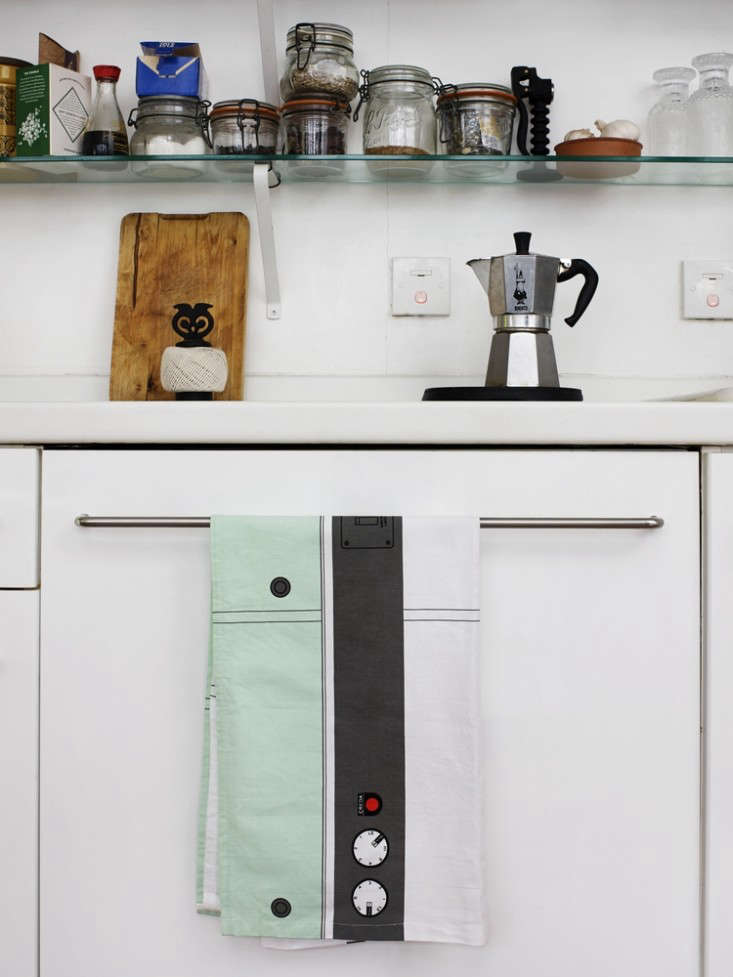
A tea towel is rarely the loudest object in a kitchen. It usually hangs there quietly, doing the domestic equivalent of holding the elevator: drying glasses, covering rising dough, rescuing hands from suspiciously hot pan handles, and pretending not to notice when someone uses it to wipe tomato sauce off the counter. But the Modernist KitchensBarbican Tea Towel is not just another rectangle of cotton waiting for dish duty. It is a small, useful tribute to one of the most fascinating intersections in design: modernist architecture, everyday cooking, and the strangely emotional power of a well-drawn kitchen.
Inspired by the original kitchens of London’s Barbican Estate, this kind of design object speaks to people who love clean lines, concrete drama, functional interiors, and homeware that does more than match the toaster. It turns a humble kitchen textile into a conversation starter. Hang it over an oven rail and suddenly your kitchen has opinions about postwar urban planning. Fold it beside the sink and it looks like it might ask whether your cabinets are truly optimized for workflow.
For design lovers, the appeal is obvious. The Barbican is a landmark of Brutalist and modernist thinking: dense urban living, elevated walkways, sculptural concrete, gardens, cultural spaces, and a belief that architecture could shape daily life. A tea towel based on Barbican kitchens brings that big architectural ambition down to the scale of coffee mugs, countertops, and Monday-night pasta. It is design history you can use to dry a plate. That is practical magic, with a side of lint-free charm.
What Is the Modernist KitchensBarbican Tea Towel?
The Modernist KitchensBarbican Tea Towel is best understood as both a functional kitchen textile and a miniature design print. It is commonly associated with illustrator and modernist architecture enthusiast Stefi Orazi, whose work often celebrates modernist housing, interiors, and architectural landmarks. The design depicts kitchens from the Barbican Estate, translating fitted cabinetry, compact layouts, and architectural details into a graphic composition suitable for everyday use.
Unlike a generic towel covered in lemons, roosters, or motivational slogans about wine, this tea towel belongs to the world of architecture-inspired homeware. It is for the person who can appreciate a clever floor plan, a beautifully proportioned cabinet front, and the fact that a kitchen can be both highly practical and deeply expressive. The towel usually appears as a screen-printed cotton piece, often described as being made in the United Kingdom, with dimensions close to a traditional tea towel format. In other words, it is useful enough to live in the kitchen, but attractive enough that some owners may hesitate before letting it anywhere near beet juice.
Its subject is especially clever because the Barbican is not just famous for its exterior. Many people recognize the estate through its towers, terraces, lake, conservatory, and textured concrete. But the kitchens matter, too. Modernism was never only about facades. It was about systems, routines, materials, efficiency, and how people actually live. A kitchen is where those ideas become extremely real. If the countertop is too small, the ideology collapses somewhere between chopping onions and draining pasta.
Why the Barbican Still Fascinates Design Fans
The Barbican Estate in London was designed by the architectural firm Chamberlin, Powell and Bon. Built on a site heavily damaged during World War II, the complex was imagined as more than a group of buildings. It was a complete urban environment, combining housing, cultural venues, pedestrian routes, gardens, water features, and shared amenities. The result is bold, layered, and not exactly shy. The Barbican does not whisper, “Notice me.” It stands there in concrete and says, “I have arranged an entire city-within-a-city; please use the elevated walkway.”
Brutalist architecture often gets reduced to raw concrete, but the Barbican shows why that is too simple. Yes, there is concrete. A heroic amount of concrete. Concrete with texture, rhythm, shadow, and personality. But there are also planted terraces, carefully framed views, domestic interiors, and a strong belief in community-oriented urban living. Its design combines severity and softness in a way that feels surprisingly modern today. It is monumental, yet lived-in. It looks like a fortress from some angles and a secret garden from others.
That tension explains why Barbican-inspired objects have become so appealing. A mug, print, tote bag, or tea towel allows people to carry a little piece of that architectural world into their own homes. The Modernist KitchensBarbican Tea Towel is especially charming because it does not simply celebrate the estate’s dramatic skyline. It celebrates the domestic engine room: the kitchen. That makes it more intimate, more human, and much easier to justify buying than a full-scale concrete tower for your breakfast nook.
The Modernist Kitchen: Where Efficiency Met Everyday Life
Modernist kitchen design grew from serious questions about space, labor, hygiene, storage, and technology. In the early 20th century, designers and architects began treating the kitchen not as a leftover room but as a machine for daily living. The famous Frankfurt Kitchen, designed by Austrian architect Grete Schütte-Lihotzky in the 1920s, became one of the most influential examples. It used compact planning, built-in storage, standardized elements, and an efficient workflow to make cooking easier in urban apartments.
That idea changed the kitchen forever. Instead of a loose collection of furniture and appliances, the modern kitchen became fitted, measured, and intentional. Cabinets had jobs. Work surfaces had logic. Storage was placed within reach. The room became a controlled environment for movement, preparation, washing, and cooking. You can see echoes of that thinking in almost every contemporary kitchen, from tiny studio apartments to open-plan homes with islands large enough to host a diplomatic summit.
The Barbican kitchens fit into this broader story. They were part of a modern housing vision, where interiors had to support compact urban living without feeling careless or cramped. A tea towel illustrating these kitchens taps into the beauty of that thinking. It says: design is not only the dramatic exterior shot. It is also the drawer pull, the wall cabinet, the sink position, the tile grid, the way a room helps someone make breakfast before work.
Why a Tea Towel Is the Perfect Canvas for Architectural Design
At first glance, a tea towel may seem too modest for architectural storytelling. But that modesty is exactly the point. Tea towels live in the kitchen, and kitchens are where design proves whether it is useful or merely photogenic. A beautiful chair can sit in a corner and be admired. A kitchen towel must work. It must dry, fold, hang, survive washing, and occasionally deal with coffee accidents of mysterious origin.
Historically, tea towels were made from linen or cotton and valued for their smooth, lint-free texture. They were used for drying delicate dishes, covering baked goods, lining trays, and assisting with tea service. Over time, they also became decorative souvenirs, family keepsakes, recipe carriers, and affordable pieces of art. That evolution makes them ideal for design-led illustration. A tea towel can be practical, collectible, and personal without becoming precious.
The Modernist KitchensBarbican Tea Towel works because the format matches the subject. A kitchen textile showing a kitchen is wonderfully self-aware. It is like a map printed on a suitcase or a cookbook that opens directly to the page for “What to cook when you forgot people need dinner daily.” The object belongs exactly where its subject belongs. It is not architecture trapped behind glass; it is architecture doing the dishes with you.
Design Details That Make the Barbican Kitchen Theme Work
The strongest architecture-inspired homeware does not merely copy a building. It translates the feeling of that building into pattern, line, color, and proportion. With a Barbican kitchen tea towel, the success lies in the combination of precision and warmth. Modernist interiors can sometimes seem clinical when photographed empty, but illustration can bring out their personality. It can emphasize rhythm, geometry, and utility while still feeling playful.
Clean Lines and Ordered Composition
Modernist design favors clarity. In a kitchen illustration, that can appear through simplified cabinet fronts, straight counters, repeated handles, stacked shelves, and carefully arranged appliances. The eye moves through the image the way a cook moves through the kitchen: from storage to prep, from sink to stove, from kettle to cup. Good design makes that movement feel natural.
Domestic Scale
The Barbican’s exterior can feel huge, but the kitchen brings everything back to human scale. A towel based on the kitchens reminds us that iconic architecture is not only experienced by critics, tourists, or photographers. It is experienced by residents making toast, rinsing cups, and wondering where the good scissors went. This is where the design becomes relatable.
Functional Beauty
Modernist kitchens are not ornate in the traditional sense. Their beauty comes from proportion, logic, material honesty, and restraint. The tea towel celebrates that quiet beauty. It does not need roses climbing around the border. The cabinets are the decoration. The layout is the ornament. The sink, brave little square of civilization, gets its moment.
How to Style a Modernist Kitchen Tea Towel
One of the best things about a design-forward tea towel is that it can change the mood of a kitchen with almost no effort. No renovation crew. No dust cloud. No moment where someone says, “We found a pipe where the wall was supposed to be.” Just hang the towel and enjoy an instant hit of graphic character.
Hang It Where It Can Be Seen
If the towel features a strong illustration, display it on an oven handle, wall hook, peg rail, or cabinet pull. In a minimalist kitchen, it can act as the one patterned element that keeps the room from feeling too sterile. In a colorful kitchen, it can add a smart architectural note, like a tiny design professor standing near the dishwasher.
Pair It With Simple Materials
The Barbican look works beautifully with wood, stainless steel, stone, ceramic, glass, and matte finishes. If your kitchen has open shelving, place the towel near plain white dishes, a French press, a stack of cutting boards, or a simple enamel pot. The goal is not to create a museum display. The goal is to make useful things look intentionally chosen.
Use It as a Framed Print
Some owners frame tea towels, and honestly, nobody should judge them. If the illustration is special and the towel feels too nice for daily spills, framing it can turn it into affordable kitchen art. A simple wood or black frame can make the graphic quality stand out. This is especially effective in a breakfast nook, pantry wall, or hallway near the kitchen.
Why Modernist Kitchen Design Still Feels Fresh
Modernist kitchens remain relevant because they were built around needs that have not disappeared. People still want efficient storage, durable surfaces, natural light, easy cleaning, and layouts that reduce unnecessary steps. Even when styles change, those goals stay useful. That is why clean-lined cabinetry, integrated appliances, open shelving, compact work zones, and multifunctional surfaces continue to appear in contemporary kitchen design.
Today’s modern kitchens may look warmer than their earlier ancestors. Designers often combine flat-front cabinets with natural wood, handmade tile, veined stone, sculptural lighting, and carefully chosen textiles. The result is less “laboratory with a fruit bowl” and more “calm, functional room where people actually want to linger.” A Barbican-inspired tea towel fits perfectly into that shift. It brings modernist intelligence without draining the room of humor or personality.
It also reflects a broader decorating truth: accessories matter. You do not always need to remodel to make a kitchen feel more designed. Textiles, lighting, hardware, plants, stools, art, and ceramics can change the atmosphere dramatically. A tea towel is one of the easiest upgrades available. It is affordable, washable, movable, and emotionally safer than choosing a backsplash tile you must look at for the next 17 years.
The Appeal of Architecture-Inspired Gifts
The Modernist KitchensBarbican Tea Towel makes a particularly good gift because it feels specific. Generic gifts are fine, but specific gifts say, “I noticed your interests and did not panic-buy a candle called Ocean Accountant.” For architects, design students, London lovers, modernist fans, and people who collect unusual kitchen textiles, this tea towel has a clear point of view.
It works for housewarmings, birthdays, holiday gifts, hostess gifts, or small thank-you presents. It is useful enough not to feel like clutter, but distinctive enough not to disappear into the drawer of forgotten linens. It also carries a story. The recipient does not just receive cotton; they receive a tiny doorway into postwar architecture, urban design, and the surprising elegance of a well-planned kitchen.
For people who enjoy the Barbican, the towel can feel like a souvenir without being cheesy. It avoids the usual tourist-object problem, where an item screams “I visited a place!” in a font last seen on a refrigerator magnet. Instead, it feels considered, graphic, and connected to the design language of the estate itself.
Practical Care Tips for a Design Tea Towel
If you plan to use the towel rather than worship it from a safe distance, a few simple habits will help it last. Wash it before first use to improve absorbency and soften the fabric. Use mild detergent, avoid harsh bleach, and let it air-dry when possible. Cotton tea towels often become better with use, developing a softer hand while still holding their shape.
For screen-printed designs, washing inside a gentle laundry routine helps preserve the artwork. Avoid using the towel for heavy grease cleanup if you want it to remain display-worthy. Keep a few hardworking backup towels for messy jobs, and let the Barbican towel handle lighter duties: drying glassware, covering bread, lining a tray, or looking intelligent beside the kettle.
That said, do not be too afraid of using it. A tea towel is happiest when it is part of daily life. Modernism was not about hiding good design in a drawer. It was about making everyday living better. Let the towel do some work. Just maybe keep it away from turmeric unless you are emotionally prepared for permanent artistic collaboration.
How the Barbican Tea Towel Fits Into Modern Kitchen Decor
Modern kitchen decor often walks a fine line between clean and cold. Too many sleek surfaces can make a room feel like nobody has ever made toast there. Textiles help solve that problem. They soften hard edges, introduce color, and create a lived-in feeling. A Barbican tea towel adds warmth without undermining a modern aesthetic.
In a white kitchen, it becomes a graphic focal point. In a wood kitchen, it emphasizes the connection between modernism and natural materials. In an industrial kitchen, it complements metal, concrete, and exposed shelving. In a small apartment kitchen, it can make the space feel curated rather than cramped. The towel says, “Yes, this kitchen is compact, but so was some of the smartest design of the 20th century.”
It also pairs well with other modernist touches: peg rails, simple stools, enamelware, glass storage jars, stackable dishes, modular shelving, and pendant lights with clean silhouettes. You do not need to turn your kitchen into a full Barbican tribute. A little restraint is wise. Once you start labeling your pantry “residential tower A,” friends may become concerned.
Experience Notes: Living With the Modernist KitchensBarbican Tea Towel
There is a certain pleasure in owning a kitchen object that feels smarter than it needs to be. A plain towel dries a plate. A Modernist KitchensBarbican Tea Towel dries a plate while quietly suggesting that domestic space deserves better planning. After using and styling architecture-inspired towels in real kitchens, one thing becomes clear: they work best when they are allowed to be both practical and decorative. Treat them too preciously and they become stiff little museum pieces. Treat them too carelessly and, well, the tomato soup wins.
The first experience is visual. Hang the towel in a kitchen, and it immediately changes the room’s tone. It brings in line work, story, and structure. In a rental kitchen with basic cabinets and a suspiciously shiny countertop, the towel can make the space feel more intentional. It gives the eye somewhere interesting to land. Instead of focusing on the landlord-special cabinet handles, visitors notice the illustration and ask about it. Suddenly you are talking about the Barbican, modernist interiors, and why good design belongs in ordinary rooms. This is much better than discussing why the overhead light makes everyone look like they are being interviewed in a grocery store.
The second experience is tactile. A cotton tea towel has a different role from a thick terry dish towel. It is smoother, lighter, and better for glassware, hands, and display. It folds neatly. It hangs elegantly. It does not look like it was designed exclusively for absorbing panic. When used for everyday kitchen tasks, it brings a small sense of ceremony to ordinary routines. Drying a mug feels slightly more civilized. Covering a bowl of dough feels almost poetic. Even wiping a clean counter has a pleasing rhythm when the towel itself has a strong graphic identity.
The third experience is emotional, and this may be the real reason design objects matter. Kitchens are full of repetition. Make coffee. Rinse cups. Chop vegetables. Wash hands. Look for the spatula that somehow migrated to the wrong drawer again. A thoughtful object interrupts that routine in a good way. It reminds you that the everyday environment is worth noticing. The Barbican tea towel does not need to be expensive or monumental to do that. Its power is in the combination of usefulness and meaning.
In small kitchens, the towel is especially effective. Modernist design has always had a strong relationship with compact living, and the Barbican theme reinforces that. If counter space is limited, a beautiful towel on a hook can provide personality without taking up room. If storage is tight, it can be folded and rotated with other linens. If the kitchen lacks architectural character, the towel lends some. It is a tiny design intervention with zero demolition required, which is the best kind of intervention unless you enjoy dust in your cereal.
For gift-giving, the experience is also strong. People remember gifts that connect to a real interest. If someone loves architecture, London, modern interiors, or unusual home goods, this towel feels thoughtful without being overly formal. It is not another object destined for the “miscellaneous” drawer. It has a function, a story, and a point of view. That combination is surprisingly rare in small gifts.
The only caution is that a beautiful tea towel can trigger a mild identity crisis: use it or display it? The best answer is both. Use it for gentle tasks, display it between washes, and enjoy the way it ages. A kitchen object should gather a little life. After all, the original modernist dream was never about perfection frozen in place. It was about better living through better design. A tea towel that can dry dishes, start conversations, and make a kitchen feel more considered is doing its job beautifully.
Conclusion
The Modernist KitchensBarbican Tea Towel proves that great design does not have to arrive as a chair, building, or museum piece. Sometimes it arrives as cotton, folded neatly, ready to hang beside the sink. Its charm comes from the way it connects modernist kitchen history, Barbican architecture, and everyday domestic life. It is useful, graphic, witty, and quietly educationalthe rare kitchen accessory that can dry a glass and improve the intellectual atmosphere of your countertop.
For anyone drawn to Brutalist architecture, compact kitchen design, modernist interiors, or meaningful homeware, this tea towel offers more than decoration. It is a reminder that the kitchen is one of the most important designed spaces in the home. It is where theory meets toast, where layouts prove themselves, and where even a small textile can carry a big architectural story.
Note: This article is written as original, publication-ready editorial content based on real design, architecture, and kitchen-textile context, with no copied source text or unnecessary reference markers.













