
Note: This article contains spoilers for Fire Country Season 4, including the aftermath of Vince Leone’s death.
In Fire Country, smoke is never just smoke. Sometimes it is danger, sometimes it is redemption, and sometimes it is the emotional fog a character has to crawl through before figuring out who he is supposed to become. That is exactly where Bode Leone finds himself after the devastating death that shook Station 42 and the Leone family to their core.
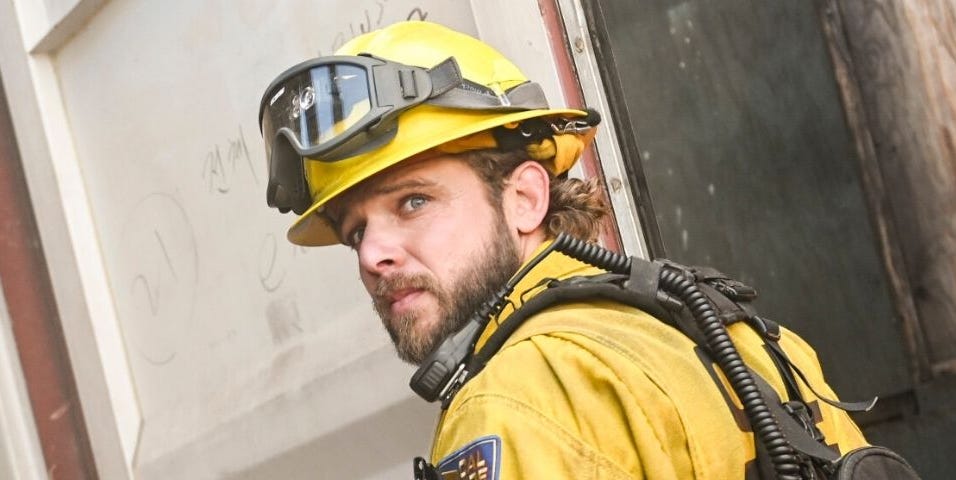
Max Thieriot, who stars as Bode and also helped create the CBS drama, has been open about how deeply this loss changes the direction of his character. Vince Leone’s death is not treated like a quick television twist designed only to make fans gasp into their popcorn. It becomes a turning point for Bode’s identity, career, family relationships, and long-running struggle to prove he is more than the worst chapters of his past.
For viewers who have followed Bode from inmate firefighter to free man to full-time Cal Fire hopeful, this moment feels like the show throwing him into the hottest blaze yet. And no, this time he cannot just grab a hose and muscle his way through it. Bode has to face grief, legacy, guilt, ambition, and the terrifying question of what comes next when the person who helped define your future is gone.
Vince Leone’s Death Changes the Emotional Map of Fire Country
Vince Leone was not just Bode’s father. He was a battalion chief, Sharon’s husband, a mentor to firefighters across Edgewater, and one of the emotional anchors of Fire Country. His death leaves a professional vacancy at Station 42, but the bigger wound is personal. Bode loses the man whose approval he craved, resisted, misunderstood, and slowly began to earn.
That is why the death lands with such force. It does not simply remove a respected firefighter from the call sheet. It forces every major character to ask who they are without Vince holding the center together. Sharon must grieve her life partner. Jake must navigate leadership pressure. Station 42 has to function without the figure who represented stability. And Bode, naturally, gets handed the messiest emotional backpack of them all.
Max Thieriot has described Bode as someone standing at a crossroads. That word matters. Bode has spent much of the series trying to escape labels: convict, screw-up, danger magnet, the Leone who burned bridges instead of building them. After Vince’s death, he cannot avoid the Leone name anymore. He has to decide whether legacy is a weight on his shoulders or a tool in his hands.
How Max Thieriot Sees Bode’s Future After the Loss
Thieriot has suggested that Bode’s next chapter is not about suddenly becoming perfect. Good television rarely works that way, and frankly, Bode making flawless decisions overnight would be more suspicious than a perfectly calm day in Edgewater. Instead, the future is about watching him fight through grief while trying to keep his purpose intact.
The actor has emphasized that Vince’s death leaves Bode with serious questions about his career and his emotional stability. Bode has always struggled with impulse, guilt, and the need to prove himself. Losing his father intensifies all of those traits. The audience is likely to see him push too hard, doubt himself, clash with authority, and maybe look at a perfectly reasonable decision and think, “What if I made this dramatically more complicated?” Classic Bode.
Still, that is what makes the character compelling. Bode’s future is not interesting because he is guaranteed to rise. It is interesting because he might fall first. The show has always been about redemption, and redemption is not a straight staircase. It is more like hiking uphill during a windstorm while carrying emotional luggage and pretending you packed light.
Bode’s Career Path Is Suddenly More Complicated
Before Vince’s death, Bode’s dream of building a future with Cal Fire already came with plenty of obstacles. His past still followed him. His relationships were complicated. His sense of self-worth had cracks big enough to park a fire engine in. But Vince’s absence adds a new question: does Bode want to follow his father’s path, or does he only feel responsible for filling the empty space Vince left behind?
That distinction is important. Stepping into a legacy can be powerful. Rushing into one out of grief can be dangerous. If Bode chases leadership too quickly, he risks turning mourning into a mission he is not ready to carry. If he avoids the challenge entirely, he risks letting fear decide his future.
Season 4 positions Bode in a painful middle ground. He wants to honor Vince, but he also worries he is not qualified to become the kind of firefighter his father was. That insecurity has always been part of Bode’s emotional DNA. He can run into danger without hesitation, but asking whether he deserves a stable future? That is the scarier call.
Why Station 42 Matters So Much
Station 42 is more than a workplace in Fire Country. It is a family system, a pressure cooker, and occasionally a group therapy session with turnout gear. Vince helped shape that culture. Without him, the station has to redefine its leadership and emotional rhythm.
For Bode, staying connected to Station 42 means staying close to his father’s world. It also means being constantly reminded of what he lost. That is both healing and painful. Every call, every locker-room conversation, every leadership decision becomes a mirror. Bode is not just asking, “What would Vince do?” He is asking, “Who am I if I stop running from being his son?”
The Leone Legacy Is No Longer Optional
One of the most interesting parts of Bode’s development is his uneasy relationship with the Leone name. He has often acted like being a Leone is something he can reject, outgrow, or outrun. Vince’s death makes that impossible. Legacy becomes unavoidable, not because someone gives Bode a speech about family honor, but because grief brings the truth to the surface.
Bode is part Sharon, part Vince, and fully responsible for what he does with that inheritance. From Sharon, he carries toughness, emotional fire, and stubborn survival instincts. From Vince, he carries bravery, service, and the burden of wanting to protect everyone even when the odds are terrible. Mix those traits together and you get a man who can become extraordinaryor self-destruct while trying to be.
That tension is exactly where Fire Country thrives. The series works best when the firefighting emergencies reflect the emotional emergencies happening inside the characters. A collapsing building is dramatic. A grieving son trying not to collapse under expectations is even better drama.
What Vince’s Death Means for Bode and Sharon
Bode and Sharon’s relationship may become one of the richest parts of the post-Vince era. Both are grieving the same person, but not in the same way. Sharon lost her husband. Bode lost his father. They share pain, but their emotional languages are different.
Sharon may want Bode to be careful, steady, and honest about his limits. Bode may interpret that caution as doubt. That is where sparks can fly, and not the cozy fireplace kind. The kind that makes viewers lean forward because everyone is hurt, everyone is right in some way, and everyone is saying the wrong thing with excellent timing.
Yet this shared grief also gives them a chance to rebuild. Bode has often carried shame around his family. Vince’s death could push him to be more vulnerable with Sharon, especially as they both confront what the Leone family becomes without its longtime center. If the show handles it carefully, their scenes could become some of the most emotionally honest material in the series.
Bode, Jake, and the Pressure of Leadership
Vince’s death also complicates Bode’s bond with Jake. Jake has his own history with the Leone family, his own ambitions, and his own relationship to leadership. When a major figure dies, grief does not distribute itself neatly. It collides with career paths, old wounds, and the awkward fact that someone still has to run the station.
Bode may feel jealousy if Jake appears closer to the professional future Vince represented. Jake may feel pressure to lead while also mourning. Their friendship has survived a lot, but this kind of emotional and professional tension can stretch even the strongest bond.
The best version of this storyline would avoid making either character a villain. Jake is not wrong for growing into leadership. Bode is not wrong for feeling lost. The drama comes from two men trying to honor the same legacy while standing in different places around the same fire.
Could Bode’s Romantic Future Change Too?
Of course, no Fire Country discussion would be complete without asking what all this means for Bode’s heart. Because apparently fighting wildfires is not enough stress; this man also has to navigate romance like it is a hazardous materials incident.
Gabriela’s exit and the changing shape of Bode’s personal life open the door for new emotional dynamics. The show has already moved Bode into a different romantic and personal phase, and grief can either deepen a relationship or reveal that someone is not ready for one. After Vince’s death, Bode may crave connection, but connection requires honesty. Historically, Bode and honesty have had a complicated little dance.
If the writers give him a new love story, it should not erase his grief. Instead, it should challenge him to show up as a fuller version of himself. Bode does not need romance as a bandage. He needs relationships that force him to communicate before his feelings turn into five-alarm chaos.
Why This Death Makes Sense for the Show’s Bigger Theme
Some fans were understandably upset by Vince’s death. That reaction makes sense. He was beloved, steady, and central to the show’s emotional foundation. But from a storytelling perspective, the loss pushes Fire Country back toward its core theme: what does a person do after life burns down the version of the future they thought they had?
Bode began the series as a man seeking redemption through fire service. He was trying to shorten his sentence, but the work gave him something deeper: purpose. Vince’s death tests whether that purpose can survive without the man who embodied so much of it.
This is where the title Fire Country becomes more than a setting. The characters live in a world where fire destroys, clears, reveals, and sometimes makes room for regrowth. Bode’s future after Vince’s death is not about escaping the flames. It is about learning what kind of person he becomes after walking through them.
What Fans Can Expect From Bode Moving Forward
Fans should expect a Bode who is more emotional, more conflicted, and possibly more unpredictable. He may take risks. He may resist help. He may make a few choices that cause viewers to yell at the television with the passion of someone coaching from the couch. But underneath the turbulence, the direction is clear: Bode is being pushed toward growth.
His future likely involves three major battles. First, he must process grief without letting it define every decision. Second, he must decide what kind of firefighter he wants to be without simply copying Vince. Third, he must learn that legacy is not about replacing someone. It is about carrying what they taught you into choices only you can make.
If Bode can do that, Vince’s death will not just be a tragedy. It will become the painful event that forces Bode to become more honest, more mature, and more prepared for the life he says he wants.
Analysis: Why Bode’s Future Is the Heart of Fire Country
The reason this storyline works is because Bode’s future has always been the show’s central question. The fires are exciting, the rescues are intense, and Edgewater has enough drama to make a small-town bulletin board spontaneously combust. But at its core, Fire Country asks whether a person with a damaged past can build a meaningful future.
Vince’s death sharpens that question. Bode can no longer define himself only by what he is escaping. He has to define himself by what he is building. That is a much harder task. Escaping the past is dramatic. Building a future is daily work. It is showing up, listening, apologizing, training, leading, grieving, and choosing not to explode every time life pokes an old wound.
Thieriot’s performance is crucial here because Bode is not a simple hero. He is brave, but not always wise. Loving, but not always easy. Determined, but sometimes reckless enough to make common sense file a complaint. That complexity gives the show room to explore grief without turning Bode into either a saint or a disaster.
The smartest path forward is one where Bode earns progress slowly. He should stumble. He should learn. He should have moments that remind viewers of Vince, and moments that prove he is not Vince at all. That is how legacy becomes character development instead of imitation.
Experience Section: Watching Bode’s Journey Feels Like Seeing Grief in Real Time
One of the most relatable parts of Bode’s storyline after Vince’s death is the way grief does not arrive neatly. In real life, loss rarely behaves like a tidy three-act structure. One day a person feels strong enough to handle everything; the next day, a familiar song, an old jacket, or an empty chair can knock the wind out of them. Fire Country captures that uneven rhythm through Bode’s struggle to keep functioning while the emotional ground keeps shifting under his boots.
Watching Bode after the death of his father feels familiar to anyone who has ever tried to be “fine” too soon. He wants action because action is easier than sitting still. He wants purpose because purpose feels safer than sadness. He wants to honor Vince, but he also wants to outrun the pain of losing him. That is a very human response. Many people throw themselves into work, family obligations, or big new goals after a loss because being busy can feel like being healed. Of course, those are not the same thing, and Bode’s story understands the difference.
The workplace element also makes the storyline hit harder. Losing a loved one is already painful. Losing someone whose identity is tied to your workplace, your ambitions, and your community adds another layer. Bode cannot simply grieve in private. Vince’s memory is everywhere: in Station 42, in the chain of command, in the way people look at Bode, and in the unspoken expectation that he will somehow carry the family name forward. That kind of pressure can make grief feel like a public performance.
Many viewers may connect with the feeling of wanting to make a lost parent proud while not knowing exactly how to do it. Do you follow their path? Do you become the person they hoped you would be? Do you reject the pressure and choose your own way? Bode’s answer will probably be messy, but that messiness is what makes it believable. Real growth usually looks less like a motivational poster and more like a person trying, failing, apologizing, and trying again.
There is also something powerful about seeing a male character process grief without the show pretending toughness is the same as healing. Bode is physically brave. That has never been in question. But emotional bravery is different. It means admitting fear, accepting help, and letting pain exist without turning it into anger every time. If Fire Country continues to explore that side of him, Bode’s future could become one of the show’s most meaningful arcs.
For longtime fans, Vince’s death may still feel unfair. That is understandable. But the best television losses do not simply remove a character; they reveal everyone else. Vince’s absence reveals Bode’s insecurity, Sharon’s heartbreak, Jake’s pressure, and Station 42’s fragility. It makes the whole world of the show feel changed. And for Bode, it creates the ultimate test: can he become a firefighter, a son, a friend, and a man who carries grief without being consumed by it?
That is why Bode’s future after this Fire Country death is so compelling. It is not only about who gets promoted, who falls in love, or who responds to the next emergency. It is about whether Bode can finally stop seeing himself as a man trying to make up for the past and start seeing himself as someone capable of building a future. Vince may be gone, but the lessons, love, and complications he left behind are still burning bright.
Conclusion
Max Thieriot’s comments about Bode’s future after Vince Leone’s death point toward a season built on grief, legacy, and hard-earned growth. Bode is not being handed an easy heroic upgrade. He is being tested emotionally, professionally, and personally. That is exactly where Fire Country is strongest.
Vince’s death leaves a hole in Station 42 and in Bode’s life, but it also forces Bode to confront the question he has avoided since the beginning: what kind of Leone does he want to be? If he can face that question honestly, his future may become more powerful than anything he imagined before the fire.











