
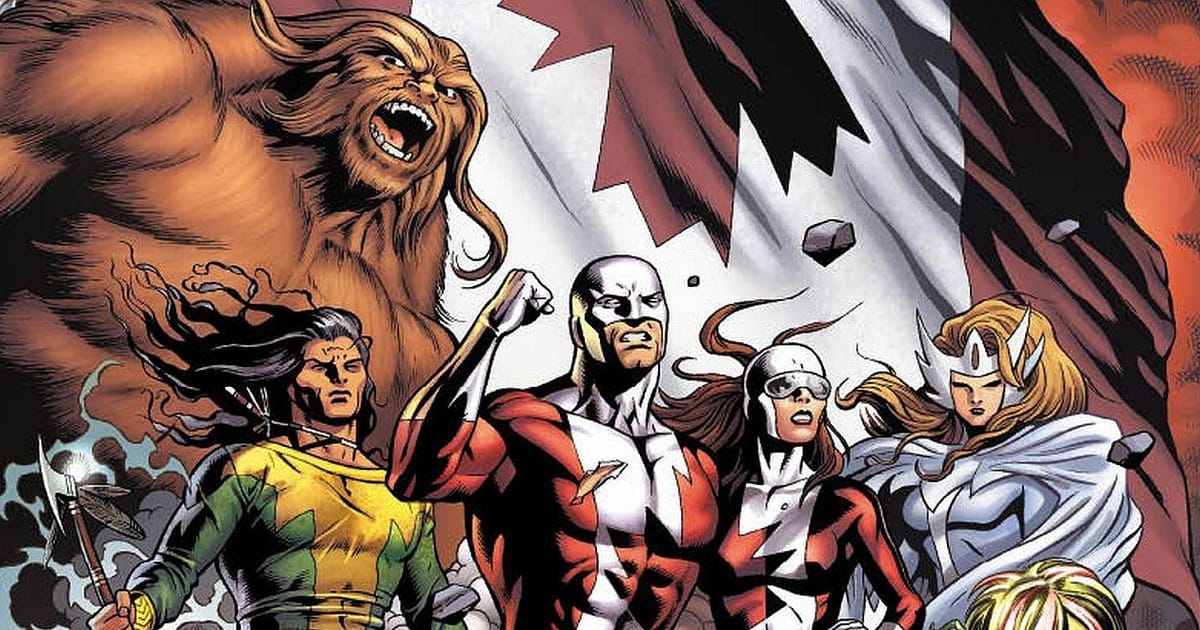
Alpha Flight is what happens when Marvel Comics looks north, sees Canada, and says, “Yes, but what if the national superhero team included a maple-leaf power suit, mutant twins, a mystical doctor, a snow goddess, a giant orange furball, and the occasional deeply confusing government program?” Created by John Byrne and introduced through Wolverine’s backstory, Alpha Flight began as Canada’s answer to the X-Men and quickly became one of Marvel’s strangest, most charming superhero squads.
This guide lists Alpha Flight members in order of their first major appearance as part of the Alpha Flight story, focusing on the main Marvel Earth-616 continuity and the core Department H version of the team. Because Alpha Flight has a famously messy historywith Beta Flight, Gamma Flight, Omega Flight, time-displaced copies, government replacements, space-station versions, and enough codename swapping to make a spreadsheet crysome entries are grouped when they appeared in the same issue.
In other words, this is not just a roll call. It is a guided tour through the weirdly wonderful history of Canada’s premier Marvel super-team, from Guardian’s first flight to the later recruits who prove that Alpha Flight membership is less a job title and more a long-term relationship with chaos.
What Counts as an Alpha Flight Member?
For clarity, this list emphasizes characters who served directly on Alpha Flight or were treated as official Alpha Flight recruits in major Marvel continuity. Related groups such as Beta Flight, Gamma Flight, Omega Flight, and the Alpha Flight Space Program are discussed where they matter, but the main ranking is built around the Department H superhero team most readers mean when they search for “all Alpha Flight members.”
That distinction is important because Marvel has used the “Flight” name for several teams. Beta Flight usually functions as a training squad. Gamma Flight has sometimes been a reserve or replacement team. Omega Flight has been both a villainous mirror and a government-backed successor. The Alpha Flight Space Program, meanwhile, moved the brand into cosmic territory under characters like Captain Marvel and Abigail Brand. Fun? Absolutely. Simple? Not even remotely.
Alpha Flight Members in Order of Appearance
| Order | Member | Real Name | First Major Alpha Flight Appearance | Why They Matter |
|---|---|---|---|---|
| 1 | Guardian / Weapon Alpha / Vindicator | James MacDonald Hudson | The Uncanny X-Men #109 | The founder and original leader of Alpha Flight, Hudson gives the team its government-tech identity and iconic maple-leaf look. |
| 2 | Northstar | Jean-Paul Beaubier | The Uncanny X-Men #120 | A speedster, Olympic-level athlete, and one of Marvel’s most important openly gay superheroes. |
| 3 | Aurora | Jeanne-Marie Beaubier | The Uncanny X-Men #120 | Northstar’s twin sister, sharing light-based and speed powers while bringing a more emotionally complex edge to the team. |
| 4 | Shaman | Michael Twoyoungmen | The Uncanny X-Men #120 | A physician and mystic whose medicine pouch and spiritual power make him Alpha Flight’s magical backbone. |
| 5 | Snowbird | Narya / Anne McKenzie | The Uncanny X-Men #120 | A northern demigoddess and shapeshifter, Snowbird gives the team its mythic, Arctic soul. |
| 6 | Sasquatch | Walter Langkowski | The Uncanny X-Men #120 | A scientist who transforms into a massive orange powerhouse, Sasquatch is Alpha Flight’s muscle and one of its most recognizable members. |
| 7 | Marrina | Marrina Smallwood | Alpha Flight #1 | A Plodex alien raised in Newfoundland, Marrina adds sci-fi mystery and amphibious power to the early roster. |
| 8 | Puck | Eugene Judd | Alpha Flight #1 | An acrobatic brawler with a sharp tongue, Puck is the team’s compact chaos engine and fan-favorite scrapper. |
| 9 | Vindicator / Guardian | Heather MacNeil Hudson | Alpha Flight #17 | Heather evolves from support figure to leader, eventually wearing a battle suit and becoming one of Alpha Flight’s defining heroes. |
| 10 | Talisman | Elizabeth Twoyoungmen | Alpha Flight #20 | Shaman’s daughter becomes a powerful mystic whose abilities often surpass expectations. |
| 11 | Box | Roger Bochs | Alpha Flight #24 | A brilliant inventor who operates the Box armor, blending robotics, disability representation, and tragedy. |
| 12 | Box / Transmutator | Madison Jeffries | Alpha Flight #28 | A technopath able to reshape metal, glass, and machinery, Jeffries becomes one of the team’s most useful powerhouses. |
| 13 | Diamond Lil | Lillian Crawley-Jeffries | Alpha Flight #73 | Known for near-invulnerable skin, Diamond Lil connects Alpha Flight to its Gamma Flight training roots. |
| 14 | Windshear | Colin Ashworth Hume | Alpha Flight #95 | A later recruit whose hard-air constructs gave the team a flexible battlefield power set. |
| 15 | Wild Child / Weapon Omega | Kyle Gibney | Alpha Flight #102 | A feral mutant with ties to Gamma Flight, Weapon X, and several darker corners of Marvel’s mutant world. |
| 16 | Nemesis | Jane Thorne | Alpha Flight #125 | A sword-wielding mystery figure whose name would later pass to other characters. |
| 17 | Wyre | Unknown / Wyre | Alpha Flight #125 | A shadowy figure tied to Weapon X-style experimentation and the team’s more sinister background lore. |
| 18 | Guardian / Vindicator Clone | James Hudson duplicate | Alpha Flight Vol. 2 #1 | The 1997 relaunch introduced a younger version of Hudson, later revealed to be artificial. |
| 19 | Flex | Adrian Corbo | Alpha Flight Vol. 2 #1 | A mutant who can turn his limbs into blade-like weapons, Flex represents the late-1990s new-recruit era. |
| 20 | Manbot | Bernie Lachenay | Alpha Flight Vol. 2 #1 | A cybernetic team member whose human-machine story fits the relaunch’s government-lab atmosphere. |
| 21 | Murmur | Arlette Truffaut | Alpha Flight Vol. 2 #1 | A Quebecois mutant with mind-control and teleportation abilities. |
| 22 | Radius | Jared Corbo | Alpha Flight Vol. 2 #1 | Flex’s half-brother, Radius generates a force field that complicates both combat and personal contact. |
| 23 | Sunfire | Shiro Yoshida | Alpha Flight Vol. 2 #4 | Best known as an X-Men ally, Sunfire briefly joins Alpha Flight during the team’s second volume. |
| 24 | Ghost Girl | Lilli Stephens | Alpha Flight Vol. 2 #20 | A young mutant with phasing powers who joins after being tied to secret Department H programs. |
| 25 | Earthmover | Charles “Chuck” Moss | Uncanny X-Men #421 | Shaman’s apprentice, Earthmover represents the mystical legacy side of the team. |
| 26 | Centennial | Rutherford Princeton | Alpha Flight Vol. 3 #2 | A 97-year-old hero awakened into superhuman power, because Alpha Flight does not believe in boring recruitment. |
| 27 | Major Mapleleaf | Louis Sadler Jr. | Alpha Flight Vol. 3 #2 | A proudly Canadian legacy hero whose mount may be more impressive than he is. |
| 28 | Nemesis | Amelia Weatherly | Alpha Flight Vol. 3 #2 | A later bearer of the Nemesis identity, bringing mystery and blade-based heroics to the 2004 team. |
| 29 | Puck | Zuzha Yu | Alpha Flight Vol. 3 #2 | Eugene Judd’s daughter takes the Puck name, adding a new generation to the team. |
| 30 | Yukon Jack | Yukotujakzurjimozoata | Alpha Flight Vol. 3 #2 | A strange and theatrical recruit from a hidden civilization, perfectly suited to Alpha Flight’s oddball tradition. |
| 31 | Mar | Mar | Alpha Flight Vol. 3 #7 | A young Plodex connected to Marrina’s alien heritage and the 2004 team’s Plodex storyline. |
| 32 | Fang | Akihiro | Alpha Flight Vol. 5 #1 | Wolverine’s son joins the Fall of X-era conflict alongside Northstar, Aurora, and Nemesis. |
| 33 | Vindicator | Agent Arsenault | X-Men Vol. 7 #11 | A Department H agent who takes on the Vindicator role in the post-Fall of X status quo. |
The Original Alpha Flight Lineup
The original team is still the version most fans picture first: Guardian, Northstar, Aurora, Shaman, Snowbird, and Sasquatch. They debuted as a unit in The Uncanny X-Men #120, chasing Wolverine on behalf of the Canadian government. That first mission tells you almost everything you need to know about Alpha Flight. They are patriotic, professional, slightly under-explained, and absolutely willing to turn an airport into a superhero traffic jam if Department H says so.
Guardian is the anchor. His battle suit, leadership role, and government connection make Alpha Flight feel like a national project rather than a random collection of heroes. Northstar and Aurora give the team its mutant connection and speed-based spectacle. Shaman and Snowbird bring the mystical and mythological sides of Canada into Marvel continuity. Sasquatch, meanwhile, adds science-gone-wrong energy with a creature-feature twist. If the Avengers are a corporate boardroom with capes, early Alpha Flight is a government office where someone accidentally opened a portal to folklore.
The Early Recruits: Puck, Marrina, Heather, and the Team’s Heart
When Alpha Flight received its own ongoing series in 1983, the roster expanded fast. Marrina and Puck appeared in Alpha Flight #1, and both immediately gave the book more personality. Marrina’s Plodex origin pushed the team into alien science fiction, while Puck brought street-level grit, acrobatics, and a personality big enough to make his height irrelevant within three panels.
Heather Hudson’s rise is one of the best long-form developments in the series. She begins as James Hudson’s wife and a key supporting character, but after Guardian’s apparent death she becomes the person who keeps Alpha Flight from flying apart. Her leadership is not based on flashy powers at first. It comes from discipline, trust, and the ability to keep this group of beautiful disasters pointed in roughly the same heroic direction.
Later, when Heather becomes Vindicator and then Guardian, she completes one of the strongest character arcs in the franchise. She is not simply “the spouse who takes over.” She becomes the emotional center of Alpha Flight, proving that leadership in comics is not always about who can punch hardest. Sometimes it is about who can read the room, rally the weirdos, and file the government paperwork afterward.
The Mystic and Mechanical Expansion
Alpha Flight’s middle years brought in characters who widened the team’s toolbox. Talisman added a more direct magical force through Elizabeth Twoyoungmen, whose complicated relationship with her father Shaman gave the stories emotional bite. Roger Bochs and Madison Jeffries expanded the technology side through the Box armor and technopathic powers. Diamond Lil, Windshear, and Wild Child brought in connections to Gamma Flight, training programs, and mutant experimentation.
This era is where Alpha Flight becomes less of a clean superhero team and more of a family tree drawn during an earthquake. Members leave, return, change names, move between training squads, and occasionally become examples of why government superhero programs should come with more therapy and fewer secret laboratories.
The 1997 Relaunch and the New Department H
The second volume of Alpha Flight introduced a darker, more suspicious Department H. The new roster included Flex, Manbot, Murmur, Radius, and a younger Guardian who was not exactly what he appeared to be. This version of the team leaned into paranoia, manipulation, and the question of whether Alpha Flight was protecting Canada or being used by the people claiming to protect it.
Flex and Radius brought sibling tension and mutant drama. Murmur added a quietly dangerous power set. Manbot represented the human cost of cybernetic experimentation. Sunfire’s brief membership connected the team back to the broader X-Men world, while Ghost Girl and Earthmover continued the tradition of young recruits being pulled into a very strange national legacy.
The 2004 “All-New, All-Different” Team
By 2004, Sasquatch was recruiting a new Alpha Flight roster, and the results were wonderfully odd. Centennial was an elderly man awakened into superhero life. Major Mapleleaf had the patriotic branding of a breakfast cereal mascot and the confidence of someone who absolutely believed in the bit. Zuzha Yu became the new Puck. Yukon Jack arrived with one of the most gloriously difficult names in Marvel team history. Nemesis returned in a new form, adding sharp-edged mystery to the lineup.
This team is divisive among readers, but it deserves credit for understanding one key Alpha Flight rule: the team should never feel generic. Even when the story gets silly, it is silly in a very Alpha Flight wayearnest, strange, Canadian-coded, and always about two steps away from becoming a cult favorite.
Fall of X and the Modern Alpha Flight
The 2023 Alpha Flight miniseries brought the team into the mutant politics of the Fall of X era. Guardian, Puck, Snowbird, and Shaman were placed on one side of a Department H mission, while former teammates Aurora, Northstar, Nemesis, and Fang appeared on the other. The setup looked like a civil war inside the team, but Alpha Flight has always specialized in plots where government orders and personal loyalty collide like two moose on an icy road.
Fang’s involvement connected the team more directly to Wolverine’s family tree, which feels appropriate because Alpha Flight originally grew out of Wolverine’s Canadian past. Later, Agent Arsenault’s emergence as a new Vindicator showed that Department H still sees Alpha Flight as a name worth controlling. That may be the most consistent theme in the team’s history: heroes want to help people, governments want to manage heroes, and Alpha Flight gets stuck in the middle wearing very dramatic uniforms.
Where Do Beta Flight, Gamma Flight, Omega Flight, and the Space Program Fit?
Readers often see additional names attached to Alpha Flight because Marvel’s “Flight” structure is bigger than the core team. Wolverine, Groundhog, Saint Elmo, Smart Alec, Stitch, Snowbird, and Wild Child were later shown as part of the earlier team known as the Flight. Beta Flight introduced or trained characters such as Puck, Marrina, Flashback, Purple Girl/Persuasion, Manikin, Goblyn, Pathway, Talisman, Witchfire, Feedback, Flinch, and Ouija. Gamma Flight included figures such as Diamond Lil, Madison Jeffries, Smart Alec, Wild Child, Auric, Silver, and a version of Nemesis.
Omega Flight is another related branch, especially after Alpha Flight was devastated by Michael Pointer. Members connected to Omega Flight include Arachne, U.S. Agent, Beta Ray Bill, Sasquatch, Michael Pointer as Guardian or Weapon Omega, and Shroud. These characters are important to the larger Flight Program, but they are not always counted as main Alpha Flight members in the same way as Guardian, Puck, Northstar, Aurora, Shaman, Snowbird, or Sasquatch.
The Alpha Flight Space Program complicates the name even more. In that version, the title shifts from Canadian superhero response team to orbital defense organization, with characters such as Captain Marvel and Abigail Brand playing major leadership roles. It is a fascinating reinvention, but it is best understood as a related brand extension rather than the classic Department H roster.
Why Alpha Flight Still Matters
Alpha Flight matters because it does something superhero comics often struggle to do: it gives a national team a personality beyond flags and slogans. The team is proudly Canadian, but not in a flat postcard way. Its members represent different regions, languages, identities, myths, scientific ambitions, and political tensions. Northstar and Aurora bring Quebecois identity and mutant themes. Shaman and Snowbird connect the team to Indigenous and northern mythic traditions. Guardian and Heather show the pressure of public service. Puck proves that every team needs someone who looks at cosmic danger and says, “Fine, I’ll punch it.”
The best Alpha Flight stories are not just about defeating villains. They are about whether a team built by a government can still act like a family. They are about heroes who are constantly being reorganized, defunded, revived, replaced, and dragged into other people’s agendas. Somehow, they keep coming back. That stubbornness is part of their charm.
Reader Experience: What It Feels Like to Explore Alpha Flight in Order
Reading Alpha Flight in order is a little like opening a filing cabinet and finding a superhero soap opera, a mythology textbook, a government conspiracy thriller, and a hockey bag full of unresolved trauma. At first, the team seems simple enough. Guardian leads. Northstar complains beautifully. Sasquatch smashes things. Shaman does mystical doctor work. Snowbird turns into northern animals. Aurora adds emotional lightning. Then the ongoing series begins, and suddenly you realize this is not just “Canadian Avengers.” It is stranger, moodier, and much more personal.
The first experience many readers have is surprise. Alpha Flight does not behave like a standard Marvel team. The book often sends members into solo stories instead of keeping everyone in one big team fight. That can feel unusual, especially if you expect every issue to be a clean mission. But it also lets characters breathe. You learn that Sasquatch is not just the big guy, Puck is not just comic relief, and Heather Hudson is not just waiting around for the plot to need her. Everyone has baggage. In Alpha Flight, baggage practically qualifies you for membership.
The second experience is confusion, but the good kindthe comic-book kind where you pause and ask, “Wait, which Vindicator is this?” Codenames change. Guardian becomes Vindicator. Heather becomes Vindicator, then Guardian. Nemesis is not always the same person. Puck can mean Eugene Judd or Zuzha Yu. Box can mean Roger Bochs or Madison Jeffries. If you enjoy continuity puzzles, Alpha Flight is a buffet. If you hate continuity puzzles, Alpha Flight may politely hand you a headache and a maple cookie.
The third experience is appreciation. Once you accept the weirdness, Alpha Flight becomes one of Marvel’s most rewarding secondary teams. The roster is full of characters who feel specific rather than factory-made. Marrina’s alien tragedy, Northstar’s sharp pride, Aurora’s inner conflict, Shaman’s difficult family legacy, Snowbird’s mythic distance, and Heather’s leadership arc all give the team emotional variety. Even the sillier additions, such as Major Mapleleaf or Yukon Jack, show that Marvel was willing to let Alpha Flight be odd instead of sanding it down into generic superhero furniture.
For new readers, the best approach is to treat the list of Alpha Flight members like a map rather than homework. Start with the original X-Men appearances, move into the 1983 ongoing series, and then sample later eras based on which characters interest you. If you love Wolverine lore, follow Guardian, Department H, Weapon X, and Fang. If you like mystical Marvel stories, track Shaman, Snowbird, Talisman, and Earthmover. If you prefer team politics and government drama, Heather Hudson and the later Department H stories are essential. Alpha Flight rewards curiosity, especially the kind that says, “This is weird, but I need to know what happens next.”
Conclusion
The full list of Alpha Flight members tells the story of a team that has never been allowed to stay simple. From James Hudson’s first appearance as Weapon Alpha to the original lineup in The Uncanny X-Men #120, from Puck and Marrina’s arrival to Heather Hudson’s rise, from the 1997 recruits to the Fall of X lineup, Alpha Flight has always mixed heroism with identity, government pressure, family drama, and delightful comic-book weirdness.
That is why fans still care. Alpha Flight is not Marvel’s biggest team, but it is one of its most distinctive. The roster is messy because the history is rich. The codenames are confusing because the legacy keeps moving. And the team keeps returning because, somehow, Canada’s strangest superhero program still has stories worth telling.












