
Editor’s note: The furniture brand was officially styled as “Les Basic,” while the requested title uses “Les Basics.” The standard American English spelling of the generation is “millennials.”
Furniture has traditionally expected people to settle down. Buy a sofa, point it toward the television, place a coffee table in front of it, and try not to move anything until the next presidential administration. Les Basic approached the relationship differently. Instead of asking people to adapt their lives to their furniture, the collection asked furniture to keep up with the people using it.
Created by Argentinian-born Australian designer Alexander Lotersztain, Les Basic was introduced in 2017 as a collection of adaptable furniture, lighting, and accessories for a generation increasingly comfortable with working remotely, renting apartments, changing cities, and blending professional and personal space. Its pieces were simple without being dull, playful without behaving like novelty objects, and practical without looking as though they had escaped from an office-supply catalog.
That combination gave Les Basic an unusually clear identity: modern furniture for people whose homes, jobs, and daily routines were still evolving. In other words, it was furniture designed for life before life had finished making up its mind.
What Was the Les Basic Furniture Collection?
Les Basic was a furniture and lifestyle brand developed by Lotersztain through his Brisbane-based multidisciplinary studio, Derlot. The collection appeared during New York Design Week in 2017 and included modular sofas, lounge chairs, stools, tables, shelving, lighting, clocks, hooks, vessels, and small accessories.
Lotersztain had already built an international reputation through work spanning furniture, interiors, hospitality concepts, branding, and art direction. After studying design in Australia, he worked in Japan and Europe before establishing Derlot. His projects consistently emphasized the experience of the person using a space rather than forcing every product into one recognizable visual signature.
Les Basic grew from that human-centered approach. Lotersztain studied the behavior of younger professionals and observed that they were traveling, relocating, socializing, and working in ways that differed from those of earlier generations. A room might be a living room in the morning, an office after lunch, a dinner space at night, and an emergency guest room when a friend missed the last train.
The collection responded with pieces that could move between those roles without requiring a toolbox, a renovation crew, or a minor emotional breakdown.
Research basis:
Why Millennials Needed a Different Kind of Furniture
Calling something “designed for millennials” can sound like marketing shorthand for adding a phone charger and painting one surface avocado green. Les Basic went further by addressing several genuine changes in how younger adults were living.
Homes Were Becoming Less Permanent
Millennials entered adulthood amid high housing costs, student debt, delayed household formation, and the economic consequences of the Great Recession. Compared with earlier generations at the same age, many remained renters longer, moved between cities for work, or shared homes with partners and roommates.
For a renter, a giant sectional shaped specifically for one living room can become an expensive puzzle during the next move. Modular seating makes more sense because individual components can be separated, rearranged, or expanded. A straight sofa in one apartment can become an L-shaped conversation area in another.
One Room Often Had Several Jobs
Even before hybrid work became a standard phrase, laptops had begun dissolving the boundary between home and office. People answered email from sofas, held meetings in cafés, and completed projects from shared tables. Les Basic recognized that work was no longer confined to a desk under fluorescent lights.
Its designs incorporated writing surfaces, power access, portable tables, and seating that looked comfortable in either a residential or professional environment. The result was not office furniture disguised with throw pillows. It was furniture that acknowledged that the office and the living room were already exchanging identities.
Experiences Were Competing With Possessions
Many younger consumers prioritized travel, dining, technology, and social experiences over accumulating formal household goods. That did not mean they disliked well-designed objects. It meant each object had to earn its floor space.
A table that could work beside a bed, near a sofa, or during a gathering offered more value than a highly specialized piece used twice a year. Les Basic turned versatility into a design feature rather than treating it as a compromise.
Research basis:
The “Anti-Loud” Design Philosophy
Lotersztain described the collection through an “anti-loud” philosophy. The goal was not to create furniture that begged for attention from across the room. Les Basic pieces were intended to become comfortable companions: familiar, useful, and easy to live with.
Visually, the collection favored uncomplicated silhouettes, rounded edges, slim metal frames, natural wood surfaces, and upholstery in both restrained and cheerful colors. The products had personality, but the personality was closer to a clever dinner guest than a man playing the trumpet in your kitchen.
This restraint also supported longevity. A heavily themed sofa may look exciting during one trend cycle and strangely theatrical during the next. Les Basic avoided excessive ornamentation so that owners could change rugs, artwork, wall colors, and accessories without replacing the largest objects in the room.
Customization was another part of the strategy. Seating could be ordered in different configurations, colors, and finishes. Owners were not buying a completely finished room; they were choosing components capable of joining whatever room came next.
Key Pieces in the Les Basic Collection
The Homework Seating System
The Homework collection was the clearest expression of the brand’s purpose. It consisted of modular upholstered seating that could be configured for a home, office, educational building, hotel, or coworking environment.
Wooden surfaces could be attached to the seating to function as side tables or compact work areas. Power outlets could also be incorporated, allowing someone to open a laptop, charge a device, and work without stretching a cable across the room like a low-budget obstacle course.
Low-backed versions created an open, informal setting, while higher-backed components offered greater visual privacy. Individual seats could be combined into sofas, corners, or larger communal arrangements. The same system could support focused work, an informal meeting, or an evening of doing absolutely nothing productive.
The Homework name was a neat summary of the design. It brought the comfort of home into the workplace while making the home more capable of supporting work. Derlot continues to describe the collection as customizable and suitable for changing residential and commercial needs.
The Troika Desk and Shelving System
Troika addressed storage with stackable modular elements that could be added, removed, or rearranged. Rather than functioning as one fixed wall unit, it acted as a collection of building blocks.
That adaptability was particularly useful for renters and small households. A modest shelf could grow into a larger storage system as a book collection, business, or family expanded. During a move, the components could be transported separately instead of being maneuvered through a stairwell while three friends reconsidered the value of friendship.
Hoop Tables
The Hoop tables used clean circular forms and were produced in multiple sizes. Their restrained design allowed them to serve as side tables, coffee tables, informal work surfaces, or occasional tables in commercial settings.
Their usefulness came partly from what they did not do. They did not dictate a particular decorating style or demand a permanent location. A Hoop table could sit beside a sofa today, hold drinks during a party tomorrow, and become a temporary laptop station on Monday.
Volar Stools and Portable Seating
The Volar stool combined a powder-coated steel frame with a timber or plastic seat. Its cantilevered appearance made it look visually light even though the structure stood on four legs. Versions suitable for indoor and outdoor use extended the stool’s role beyond the kitchen counter.
Les Basic also included seating such as the Whitsunday chair, which was conceived for flexible indoor-outdoor living. That crossover suited apartments with balconies, hospitality spaces, and homes where furniture regularly migrated outside whenever the weather behaved itself.
Small Accessories With Large Practical Value
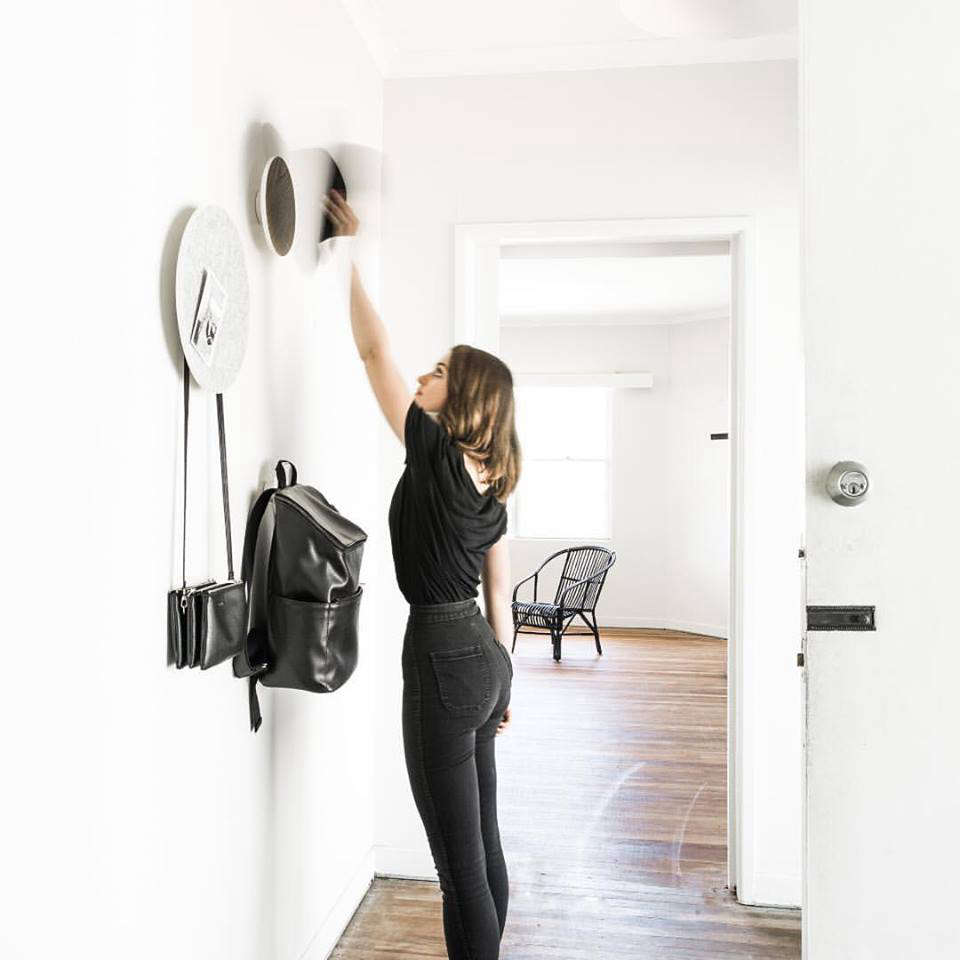
The collection did not stop with sofas and tables. Halo wall hooks, the Ledger organizer, portable valet surfaces, clocks, lamps, and vessels extended the same practical language to smaller household objects.
These accessories helped create continuity without requiring an owner to purchase an entire matching suite. A few hooks or an organizer could introduce the Les Basic aesthetic into an entryway, bedroom, or workspace without making the home resemble a furniture showroom.
One of the collection’s most memorable objects was a plush wombat produced from textile offcuts left by upholstered furniture manufacturing. The project reduced waste, and a percentage of sales supported Australia’s RSPCA. It was sustainable design with a face, four legs, and considerably more charm than the average recycling bin.
Research basis:
How Les Basic Anticipated Hybrid Living
The collection appeared several years before the pandemic accelerated remote and hybrid work. Looking back, its central idea feels less like a niche response to millennials and more like a preview of where interiors were heading.
Contemporary workplace research now emphasizes movable furniture, accessible power, adaptable layouts, and a mix of settings for concentration, collaboration, socializing, and relaxation. Les Basic had already bundled many of those ideas into a softer residential vocabulary.
The Homework system, for example, anticipated the demand for seating that supports both conversation and screen-based work. Its attached surfaces reduced the need for a separate desk, while high-backed modules could create a sense of separation in an open room.
That makes the collection relevant beyond one generation. A college student, remote employee, small-business owner, hotel guest, or downsizing retiree can all benefit from furniture that performs more than one function. Flexibility is not a millennial quirk. It is a practical response to expensive space and changing routines.
Research basis:
What Les Basic Got Right
Adaptability Was Built Into the Product
Some furniture is marketed as flexible simply because it is small enough to pick up. Les Basic made adaptability structural. Components could be added, rearranged, customized, and used across residential and commercial settings.
Technology Was Integrated Without Dominating the Design
Power access was useful, but it was not the visual identity of the furniture. The collection looked like furniture first and a device-support system second. That distinction matters because charging standards change faster than upholstery trends.
The Collection Avoided Disposable Styling
Simple forms and durable materials supported longer use. This is environmentally important because the most sustainable piece of furniture is often the one that does not need to be replaced every time a new color becomes popular on social media.
The U.S. Environmental Protection Agency places reuse above recycling and disposal in its materials-management hierarchy. Modular products can support that principle when they are durable, repairable, and capable of adapting to a new space instead of being discarded.
It Allowed Work Furniture to Feel Human
Traditional office systems frequently communicate efficiency at the expense of comfort. Les Basic offered a softer alternative. Upholstery, timber details, rounded forms, and varied configurations made work settings feel less institutional without turning them into distracting theme parks.
Research basis:
Where the Concept Had Limitations
Les Basic was not inexpensive flat-pack furniture. Archival listings placed major seating pieces firmly in the premium design category. Although the products addressed renters and mobile professionals, their prices could be difficult for younger consumers already managing high housing costs.
Modular furniture also depends on continued access to compatible components. A system is most useful when owners can purchase an extra seat, replacement cover, table attachment, or power module years later. If a brand changes ownership, discontinues a product, or revises its dimensions, the system’s promise can weaken.
Integrated technology introduces another challenge. Power outlets are practical, but electrical standards, charging connectors, and user habits evolve. The smartest long-term designs make technological components replaceable rather than permanently embedding soon-to-be-obsolete hardware.
Finally, describing a collection as “for millennials” risks reducing a huge, diverse generation to a tidy consumer profile. Not every millennial lived in a downtown apartment, worked from a laptop, or wanted minimalist furniture. The collection succeeded where it focused on real behaviorsmobility, limited space, and flexible workand became less convincing when those behaviors were treated as universal generational traits.
The Legacy of Les Basic
Les Basic was eventually consolidated into the broader Derlot brand, and designs such as Homework continued under the Derlot name. That transition makes sense because the collection’s strongest ideas were not dependent on a temporary generational label.
Its legacy can be seen in today’s abundance of modular sofas, movable work tables, compact shelving systems, integrated charging options, and furniture designed for both domestic and professional environments. Many newer companies now promote couches that arrive in manageable boxes, expand through add-on modules, and move easily between apartments.
Les Basic did not invent modularity, but it packaged modular thinking around the lifestyle shifts of the late 2010s with unusual clarity. It understood that a modern home might not be a final destination. It might be one stop in a career, relationship, city, or evolving idea of adulthood.
Experience Notes: Living With a Les Basic-Inspired Setup
The following experience is a practical design scenario rather than a claim of personal product testing. Imagine a one-bedroom apartment occupied by a freelance designer who works from home three days a week. The living room measures roughly 12 by 15 feet and must support work, relaxation, dining, entertaining, and the occasional overnight guest.
On Monday morning, one end of a modular Homework-style sofa becomes the office. A wooden attachment holds a laptop and coffee, while a nearby power outlet keeps cables contained. The user sits upright against a high-backed section that provides enough visual separation to signal “work mode,” even though the kitchen is six steps away.
The setup is not a substitute for a fully ergonomic desk during eight uninterrupted hours of work. However, it is useful for shorter sessions, video calls, reading, and tasks that benefit from a change of posture. The furniture supports work without permanently turning the living room into corporate territory.
On Wednesday evening, two friends visit. The laptop disappears, the table attachment becomes a surface for snacks, and one modular seat is rotated toward the rest of the group. No heavy sofa needs to be dragged across the floor. The room changes from linear television seating into a small conversation area in a few minutes.
A portable stool moves in from the balcony when an extra seat is needed. Because the stool works indoors and outdoors, it is not condemned to spend most of its life waiting beside a plant. After dinner, it returns outside and resumes its second career as a side table.
By Friday, the resident is preparing for an overnight guest. Two lightweight tables move aside, an ottoman aligns with the sofa, and spare bedding comes from a modular shelving unit. The apartment still cannot magically add another bedroom, but the flexible furniture makes the existing square footage work harder.
The most noticeable benefit during this imagined week is not any single function. It is the absence of conflict between functions. The work surface does not require a permanent desk. Extra seating does not consume floor space every day. Outdoor furniture is not restricted to one season or location. Storage can grow without replacing an entire cabinet.
There are frustrations, too. Reconfiguring modules may become annoying if connectors are difficult to access. A writing surface attached at the wrong height can cause shoulder strain. Upholstered pieces need durable, cleanable fabric if they are expected to survive coffee, meals, pets, and home-office life. Flexibility is valuable only when changing the furniture is easier than tolerating the old arrangement.
The scenario also shows why measurements matter. Modular does not automatically mean compact. Buyers must calculate the dimensions of every likely configuration, check doorway and elevator clearances, and consider how the components will be stored when not in use. A spare module occupying half a bedroom is not flexibility; it is a very expensive roommate.
When planned carefully, however, a Les Basic-inspired interior feels calm rather than crowded. Each piece has a clear role, but few pieces have only one role. The room remains visually consistent even as its layout changes, and the owner can respond to new routines without starting over.
That may be the collection’s most enduring lesson. Good furniture does not merely fill a room. It leaves room for life to change.
Conclusion
Les Basic translated major lifestyle changes into approachable design. Its modular sofas, integrated work surfaces, portable tables, adaptable storage, and understated accessories recognized that modern rooms rarely perform one function all day. Although its premium pricing limited accessibility, the collection anticipated hybrid work, compact urban living, and growing demand for furniture that can be reused and rearranged.
More importantly, it rejected the idea that practical furniture had to look anonymous. Les Basic was functional, but it also had warmth, humor, and enough personality to make flexibility feel like a benefit rather than a sacrifice.











