
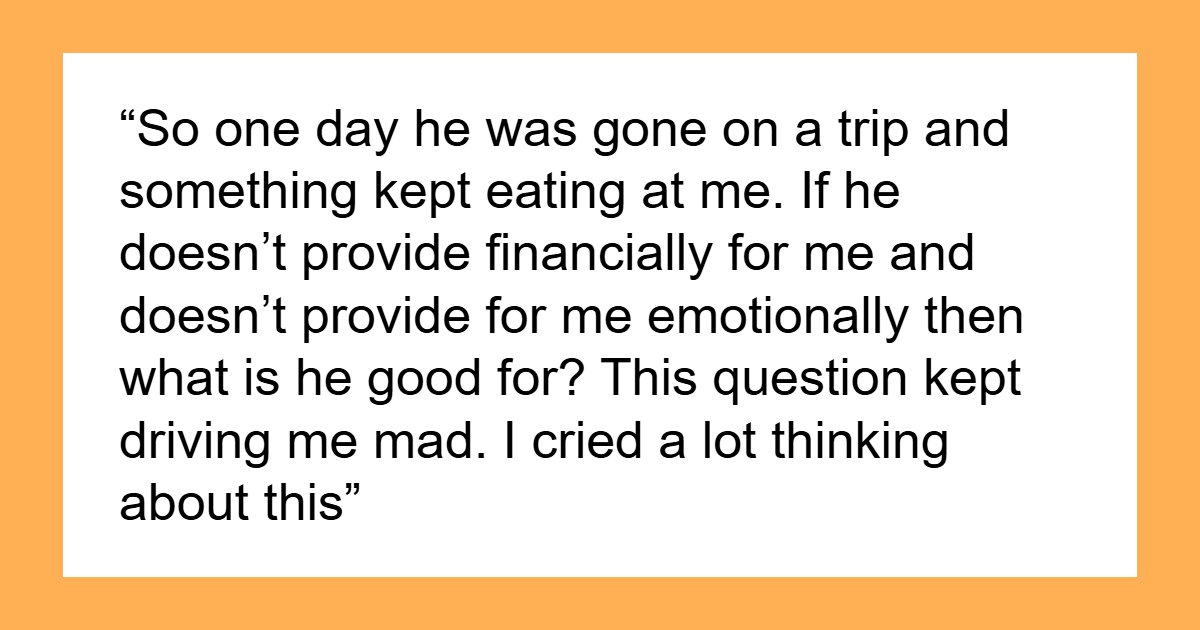
Marriage is supposed to be a partnership, not a subscription plan where one person pays monthly and the other enjoys unlimited benefits. Yet one woman found herself in exactly that situation: after years together and a recent marriage, she expected her husband to eventually contribute financially. Instead, he spent four years unemployed and apparently treated the job hunt like a mysterious ancient ritual he would study “someday.”
The story struck a nerve online because it is not only about money. It is about effort, promises, emotional labor, resentment, and the awkward moment when love starts sounding a lot like an unpaid invoice. Many couples survive temporary unemployment, career changes, business failures, health issues, and financial setbacks. What is harder to survive is one partner quietly deciding that the other partner’s paycheck is the household’s entire economic strategy.
This situation also reflects a larger modern relationship problem: couples are renegotiating what fairness means. In many marriages, both spouses work. In others, one partner earns more while the other contributes through childcare, homemaking, caregiving, studying, or building a new career. None of that is automatically unfair. What becomes unfair is when the agreement is unclear, one-sided, and never updated while bills continue arriving with the emotional sensitivity of a brick through a window.
When “I’ll Figure It Out” Becomes a Four-Year Lifestyle
According to the viral story, the wife had been with her partner for seven years and had been married for six months. The problem was not that her husband had a short period of unemployment. The problem was the length of it, the lack of visible effort, and the fact that she was carrying the household while waiting for him to act like a teammate.
Four years is not a “rough patch.” Four years is an Olympic training cycle. A child can learn to read in four years. A houseplant can become emotionally attached to a window in four years. If someone spends that long not looking for work, the issue stops being bad luck and starts looking like avoidance, entitlement, fear, or a comfortable arrangement that benefits one person at the expense of the other.
To be fair, unemployment can be brutal. The job market can be discouraging, especially when applications disappear into online portals that seem powered by ghosts. Long-term unemployment can drain confidence and make people feel ashamed. But there is a major difference between struggling to find work and doing nothing to find work. The first deserves support. The second deserves a serious conversation, preferably before resentment starts redecorating the entire marriage.
Why Financial Imbalance Hurts More Than the Budget
Money problems in marriage rarely stay in the spreadsheet. They creep into dinner conversations, grocery decisions, birthday plans, vacation dreams, and even small daily choices like whether ordering takeout feels relaxing or mildly illegal. When one partner is the only financial contributor, the pressure can become exhausting.
The working spouse may feel trapped between compassion and anger. On one hand, they may want to support their partner through a difficult season. On the other hand, they may wonder why “a difficult season” has turned into a full climate system. Every paycheck becomes a lifeboat. Every unexpected expense becomes a personal attack. Every promise to “start looking soon” lands with the credibility of a gym membership bought on January 1.
Financial imbalance also affects respect. Most people do not need their spouse to be rich. They need their spouse to care. A partner who applies for jobs, takes temporary work, learns a skill, contributes at home, or communicates honestly can still feel like a partner. A partner who avoids responsibility while enjoying the benefits of someone else’s labor starts to feel less like a spouse and more like a dependent with strong opinions.
The Modern Breadwinner Marriage Is More Common Than People Think
Old stereotypes still whisper that men should automatically be providers and women should automatically be nurturers. Real life is much messier and, frankly, more interesting. Many wives now earn as much as or more than their husbands. Some husbands stay home with children. Some couples trade roles depending on career opportunities, health, or family needs.
The key word is agreement. A wife being the breadwinner is not the problem. A husband earning less is not the problem. A spouse staying home is not the problem. The problem is when one person becomes the default engine of the household while the other person offers no clear plan, no meaningful contribution, and no urgency. That is not equality. That is one adult quietly boarding another adult’s financial canoe and refusing to paddle.
In healthy relationships, roles may differ, but effort should not disappear. If one spouse is not earning income, they can still contribute through cooking, cleaning, childcare, scheduling, errands, emotional support, home maintenance, or active career preparation. Contribution is not always a paycheck. But contribution must be real enough that the working partner does not feel abandoned.
Temporary Unemployment vs. Weaponized Inactivity
Not every unemployed spouse is taking advantage. People lose jobs. Industries change. Disabilities happen. Mental health struggles can make even basic tasks feel like climbing a mountain while wearing wet jeans. A compassionate marriage makes room for those realities.
But compassion should not mean pretending nothing is wrong. A spouse who is truly unable to work should be willing to discuss treatment, benefits, accommodations, retraining, or a realistic division of household labor. A spouse who is able to work but refuses to search, refuses temporary options, refuses household duties, and refuses accountability is creating a different problem.
That kind of inactivity can become weaponized because it forces the responsible partner to choose between confrontation and survival. If she pushes him, she may be called unsupportive. If she stays quiet, she pays for everything. If she asks for a plan, he may say she is pressuring him. Suddenly, the person carrying the load is also expected to carry the guilt. That is not love; that is emotional accounting with terrible math.
Why Online Readers Reacted So Strongly
Stories like this explode online because they tap into a universal fear: waking up one day and realizing you have been patient far longer than the situation deserved. Many readers likely saw themselves in the wife’s frustration. Others may have remembered a parent, friend, ex, sibling, or roommate who always had a dream but never had a deadline.
The internet can be harsh, of course. Comment sections sometimes swing a sword when a flashlight would do. Still, the public reaction makes sense. Most people can forgive unemployment. They have a harder time forgiving passivity. A person who is trying may be unlucky. A person who is not trying is making a choice, even if they dress that choice in vague language like “I’m exploring options” or “I just need the right opportunity.”
Readers also tend to notice patterns quickly. If someone has had four years to look for a job and still has no plan, the issue is probably not a missing résumé template. It may be fear, depression, entitlement, immaturity, avoidance, or a belief that the current arrangement works well enough because someone else absorbs the consequences.
The Money Talk Couples Avoid Until It Explodes
Many couples talk about bills without truly talking about money. They say things like, “Did you pay the electric bill?” or “We need groceries,” but avoid deeper questions: What are our financial goals? What happens if one of us loses work? How long can one person support both of us? What counts as fair contribution? What changes if resentment starts building?
Those questions may feel uncomfortable, but silence is not a budget strategy. Silence simply lets assumptions grow in the dark like emotional mold. One partner assumes patience means consent. The other assumes promises will eventually become action. Then months become years, and the relationship is suddenly full of unpaid emotional interest.
A practical money conversation should include timelines, numbers, and responsibilities. For example: “We can live on one income for three more months, but after that we need either a job, part-time income, gig work, training with a deadline, or a serious discussion about whether this marriage is financially sustainable.” That may sound blunt, but clarity is kinder than slow-burning resentment.
What Fair Contribution Can Look Like
Fair contribution does not always mean splitting bills 50/50. In fact, a strict half-and-half arrangement can be unfair when incomes are very different. Some couples split expenses proportionally. Some combine income. Some keep separate accounts and share household costs. Others have one earner and one stay-at-home partner. There is no universal formula that works for everyone.
However, fair contribution usually includes three things: transparency, effort, and mutual benefit. Transparency means both partners know the real numbers. Effort means both partners are actively helping the household survive and improve. Mutual benefit means one partner is not constantly sacrificing so the other can remain comfortable.
In this case, the wife’s frustration appears to come from the absence of effort. She was not demanding luxury. She was expecting financial participation from a grown adult spouse. That is not unreasonable. Marriage vows may include “for richer or poorer,” but they do not include “for richer or poorer while you play hide-and-seek with employment forever.”
How a Spouse Can Rebuild Trust After Years Without Work
If the unemployed partner wants to repair the situation, words are not enough. After four years, “I’ll try harder” has the structural integrity of a paper umbrella. Rebuilding trust requires visible, measurable action.
1. Create a job-search schedule
A serious job search should have structure: applications sent, networking messages, résumé updates, interviews tracked, and follow-ups completed. Even a simple spreadsheet can turn vague intention into visible effort.
2. Take bridge work seriously
The dream job may take time. Meanwhile, temporary work, part-time work, freelancing, delivery work, seasonal roles, or contract projects can bring in money and rebuild momentum. Pride is expensive; groceries are more expensive.
3. Contribute heavily at home
If one spouse is earning all the income, the other should not be lounging like a retired duke. Cooking, cleaning, errands, repairs, laundry, budgeting, and scheduling are real contributions that reduce the working partner’s burden.
4. Address mental health honestly
If depression, anxiety, burnout, or shame is blocking the job search, that deserves care. But avoiding the issue helps no one. Therapy, medical support, career counseling, or support groups can be part of the plan.
5. Accept accountability without turning into a victim
The unemployed spouse may feel embarrassed, but the working spouse is allowed to be tired. Accountability means hearing that pain without immediately making the conversation about wounded pride.
When Love Needs Boundaries
Boundaries are not punishments. They are instructions for how a relationship can continue without destroying one person’s peace. A wife in this situation might say, “I love you, but I cannot be the only financial adult in this marriage. I need to see consistent effort by this date, or we need to reconsider our living arrangement.”
That does not mean she is cruel. It means she is honest. In fact, boundaries may be the most loving thing left when gentle hints have failed. They tell the truth before contempt takes over. And contempt, once it moves in, tends to unpack quickly.
A boundary should be specific. “Get your act together” is emotionally satisfying but too vague. “Apply to five jobs per week, meet with a career counselor, take temporary work if nothing comes through in 60 days, and take over household tasks immediately” gives the couple something concrete to evaluate.
Experiences and Lessons From Similar Relationship Situations
People who have lived through financially one-sided relationships often describe the same emotional timeline. At first, they are supportive. They tell themselves, “Everyone has hard times.” They cover a few extra bills, help polish a résumé, offer encouragement, and try not to make their partner feel small. This stage can be loving and healthy when both people are working toward a solution.
Then comes the bargaining stage. The working partner starts creating invisible deadlines: “Maybe by summer,” “Maybe after the holidays,” “Maybe once his confidence comes back.” They avoid direct confrontation because they do not want to sound harsh. Meanwhile, the unemployed partner may become comfortable with the arrangement or too ashamed to change it. Either way, the household remains stuck.
Next comes resentment. This is when every small purchase becomes symbolic. A coffee is no longer a coffee; it is proof that one person is spending money they did not earn. A nap is no longer a nap; it is evidence that one partner is exhausted while the other floats through the day. Even innocent behavior starts looking suspicious because the larger imbalance has poisoned the atmosphere.
Many people say the breaking point is not one dramatic fight. It is a quiet moment. Maybe the car needs repairs. Maybe rent increases. Maybe the working spouse gets sick and realizes there is no backup plan. Maybe she watches her partner spend another afternoon “thinking about options” and suddenly understands that thinking has replaced doing. That is when love begins to feel less like devotion and more like self-abandonment.
The healthiest recoveries usually happen when both partners stop defending their roles and start facing reality. The unemployed spouse says, “I have avoided this, and I see how it hurt you.” The working spouse says, “I need action, not promises.” Together, they build a timeline. They review bills. They define minimum income needs. They agree on what happens if the plan fails. It may not be romantic, but neither is crying over a credit card statement at midnight.
In less healthy situations, the unemployed partner reacts with anger, blame, or guilt-tripping. They may say their spouse cares only about money, ignoring the fact that money is what keeps lights on, food in the fridge, and panic from becoming a permanent houseguest. When a partner refuses both employment and accountability, the working spouse may need outside support from a therapist, financial adviser, trusted family member, or attorney. That is not overreacting. That is gathering information before making life-changing decisions.
The biggest lesson is simple: support should have movement. It should help a person get from crisis to stability, not help them build a couch inside the crisis and call it home. A spouse can be patient, kind, generous, and loving while still saying, “This cannot continue.” In fact, that sentence may be the first honest step toward either repairing the marriage or recognizing that the marriage has become a one-person operation.
Conclusion: A Marriage Needs More Than Promises
The story of a wife expecting her husband to eventually contribute financially after four years without a job is not just online drama. It is a sharp reminder that love cannot replace responsibility. A marriage can survive unemployment. It can survive financial stress. It can survive one spouse temporarily carrying more than the other. But it struggles to survive when one person carries the load while the other refuses to pick up anything at all.
The issue is not whether a husband must always be the provider. Modern marriages are more flexible than that, and they should be. The real issue is whether both partners are contributing in honest, visible, mutually agreed ways. When there is no paycheck, no household labor, no job search, no plan, and no urgency, the relationship becomes dangerously unbalanced.
For couples facing a similar situation, the answer is not immediate blame. Start with truth. Talk about the numbers. Name the resentment. Set a timeline. Ask for help if mental health or confidence is part of the problem. But do not confuse patience with permission. A partner who truly wants the marriage to work will not only promise change; they will participate in it.
Note: This article is an original, fully rewritten editorial piece based on public relationship, employment, and household-finance information. It does not copy forum text, and it contains no source-reference placeholders.












