
If you’ve ever wished history came with a “Skip Intro” button, the Jack the Ripper story is the opposite: 130+ years of foggy alleys, messy paperwork,
sensational headlines, and theories that multiply faster than Victorian rumors. So when a headline screams that the killer’s identity has finally been
“revealed” thanks to DNA testing, it feels like someone just turned on the lights in Whitechapel.
But here’s the catch: DNA can be a flashlight… or a disco ball. It depends on the sample, the science, the chain of custody, and whether the evidence
has been handled by approximately one million curious hands since 1888. This is the story behind the claimwhy it went viral, what the testing
actually suggests, what critics dispute, and why the “case closed” vibe is still more complicated than a London street map.
What Bored Panda Reported (and Why It Hit the Internet Like a Thunderclap)
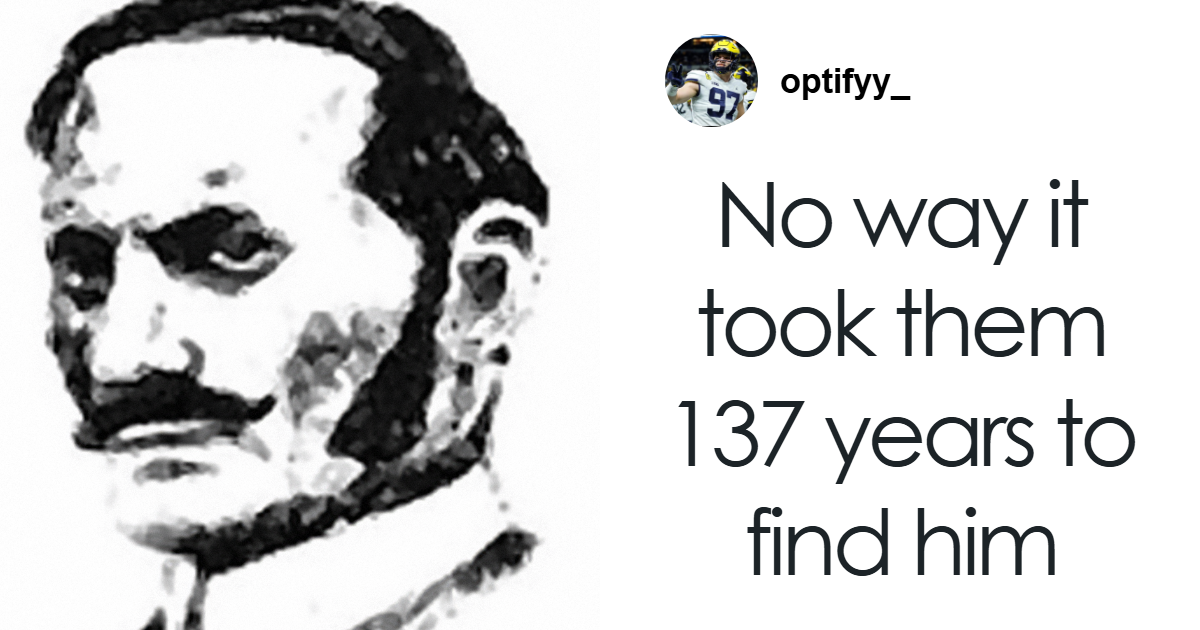
Bored Panda’s piece frames a tantalizing possibility: a forensic study and subsequent media coverage point to a long-discussed suspectAaron Kosminski,
a Polish immigrant barber living near the murder sitesas the likely man behind the “Jack the Ripper” name. The hook is irresistible: a century-old
garment linked to one victim, biological stains, and DNA results that appear to connect a suspect’s family line to the evidence.
The story’s popularity makes sense. We love mystery closures. We love science. And we really love science closing mysteries. Add a dash of courtroom-style
drama (victims’ descendants calling for an inquest) and you’ve got a headline that practically shares itself.
Quick Refresher: The Whitechapel Murders and the “Canonical Five”
The murders attributed to “Jack the Ripper” took place in London’s East End in 1888, a period shaped by poverty, overcrowding, and limited policing tools.
Historians and investigators have long debated which killings belong in the same series, but the best-known setoften called the “canonical five”includes:
Mary Ann Nichols, Annie Chapman, Elizabeth Stride, Catherine Eddowes, and Mary Jane Kelly.
The brutality of the crimes, plus the public panic fueled by newspapers, helped create a mythic villain. Meanwhile, the victims’ lives were frequently
reduced to stereotypes. Modern historians and writers have pushed back, emphasizing that these were real peoplenot props in an ongoing guessing game.
The DNA Claim: A Shawl, Two Stains, and a Familiar Suspect
The modern “DNA solved it” storyline centers on a shawl (often described as a garment associated with Catherine Eddowes, murdered on September 30, 1888).
In the popular retelling, the cloth is said to have been connected to the crime scene and later acquired by researcher Russell Edwards, who pursued forensic
testing with collaborators including Dr. Jari Louhelainen.
The basic claim goes like this:
- The garment contains a blood stain attributed to Eddowes (supported by matching to a maternal-line descendant).
- It also contains a suspected semen stain attributed to the killer (reported as matching a maternal-line descendant of Aaron Kosminski).
- Because Kosminski was already a historical suspect, the match is presented as a powerful confirmation.
A peer-reviewed publication in the Journal of Forensic Sciences described forensic work on a shawl linked to the murders and reported
mitochondrial DNA (mtDNA) profile comparisons, along with additional analysis techniques. That publication is often cited in media summaries of the claim.
Why This Isn’t a Typical “CSI Moment”
If your mental image of DNA evidence is a lab tech dropping a single hair into a machine and instantly printing the culprit’s driver’s license,
you’ve been emotionally sponsored by television.
Mitochondrial DNA (mtDNA) is not a unique fingerprint
Much of the discussion around the Ripper shawl involves mtDNA, which is inherited through the maternal line. That makes it useful in certain situations
(especially with degraded samples), but it also means mtDNA usually cannot uniquely identify one individual the way standard nuclear DNA profiling can.
In plain English: lots of people can share the same mtDNA typeespecially maternal relatives, but sometimes unrelated individuals too, depending on how
common the profile is in the population.
DNA can’t tell you when it got there
Even when a DNA profile is reliable, it does not automatically prove a person committed a crime. DNA can’t timestamp itself. A biological trace might
have arrived through innocent contact, later handling, transfer, or contaminationespecially when an item has traveled through decades of private
ownership, display, storage, and testing.
The Biggest Scientific and Historical Objections
1) Provenance: Is the shawl truly from the crime scene?
The most important question isn’t “What did the DNA say?” It’s “What, exactly, are we testing?” If the garment’s documented history is incomplete,
disputed, or reconstructed through anecdote, then conclusions get shaky fast. Critics argue that without an airtight chain of custody from 1888 onward,
the garment’s connection to the murder scene is not proven to a standard that would satisfy either modern forensic practice or serious historical method.
2) Contamination risk: 130 years is a long time for fingerprints
Environmental degradation (heat, moisture, microbes) can destroy DNA, while modern handling can introduce new DNA. A nineteenth-century textile may have
passed through collectors, auction houses, researchers, journalists, and curious onlookers. Each step is an opportunity for DNA transfer. With old evidence,
the scientific question becomes not only “Can we get a profile?” but also “Can we be confident it’s original, relevant, and not a souvenir left by time?”
3) What kind of match is being claimed?
Headlines love “100% match,” but forensic meaning matters. Some reports describe extremely high match percentages when comparing segments, strands, or
partial sequences. That language can be confusing outside the lab, and it may be interpreted as “unique identification,” even when the underlying method
is not designed to be uniquely identifying.
4) Transparency and peer review concerns
Scientists don’t just want conclusionsthey want the recipe. What regions were sequenced? How were samples collected? What controls were used?
How were alternative explanations tested? Without sufficient detail, independent experts can’t properly assess the strength of the claim.
Notably, the Journal of Forensic Sciences record for the shawl paper has drawn additional scrutiny in recent years, including an
Expression of Concern posted by the journal. When a journal issues that kind of notice, it signals that there are significant questions
that readers should be aware of while the publication record is evaluated.
So… Did DNA “Solve” Jack the Ripper?
The most responsible answer is: DNA may add weight to one historical theory, but it does not conclusively close the case.
The evidence discussed publicly is not the same thing as a court-tested, chain-of-custody-verified, independently replicated forensic identification.
Think of it like this: if a modern detective brought a 130-year-old textile with uncertain provenance into court and said, “The DNA proves it,”
the first response wouldn’t be a gavel slam. It would be a long, weary conversation about handling, controls, population frequency, statistics,
and the fact that the object has had more owners than a used bicycle.
What’s New in 2025: The Inquest Push and the Search for “Legal Naming”
The story flared again in 2025 because it wasn’t only about scienceit was about closure. Descendants of Catherine Eddowes and other victims publicly
supported renewed calls for a legal inquest, arguing that an official proceeding could evaluate the evidence and formally name a suspect.
This is emotionally understandable. For families, the “Jack the Ripper” myth can feel like a brand that swallowed real lives. A legal finding, even
posthumous, could shift the narrative from folklore to accountabilityat least in a symbolic sense.
Still, a legal inquest isn’t a magic wand. Even if reopened, it would likely hinge on whether the “new evidence” meets an acceptable standard:
reliable methods, credible provenance, and enough scientific clarity to withstand adversarial scrutiny.
What a Stronger Scientific Case Would Look Like
If the goal is to move from “interesting” to “convincing,” a more robust pathway would involve:
- Independent replication: Separate labs analyzing samples with strict contamination controls.
- Clear documentation: Detailed chain-of-custody evidence for the garment’s history.
- More discriminating genetic data: If possible, nuclear DNA markers that provide far greater individual specificity than mtDNA alone.
- Population statistics: Transparent reporting on how common the observed mtDNA profile is in relevant populations.
- Open methods: Enough published detail for forensic geneticists to evaluate and challenge the analysis.
That’s not “moving the goalposts.” That’s how forensic science avoids turning a compelling story into a fragile one.
Why This Story Keeps Coming Back (Even When Experts Say “Not So Fast”)
Jack the Ripper sits at the intersection of true crime, media mythology, and historical uncertainty. DNA adds a modern sheenlike upgrading a candle
lantern to a flashlightbut it doesn’t automatically rewrite the past. Old evidence is messy, and history rarely offers clean endings.
There’s also a broader lesson: the public often hears “DNA” and assumes “certainty.” But forensic experts regularly emphasize limitationsespecially with
aged, handled, or context-poor samples. DNA evidence can be powerful, but it isn’t psychic, and it’s not immune to the problems of the object carrying it.
Key Takeaways (Without the Victorian Fog)
- The “identity revealed” claim most often points to Aaron Kosminski via DNA associated with a shawl linked to Catherine Eddowes.
- Much of the public discussion involves mtDNA, which is generally better for exclusion than unique identification.
- Provenance and contamination are central disputeswhat you’re testing matters as much as what you find.
- In 2025, renewed attention focused on calls for a legal inquest, not a criminal trial (which isn’t possible posthumously).
- Even strong-sounding headlines don’t replace independent verification, transparent methods, and rigorous standards.
Experiences: Following the Ripper DNA Trail Today (Without Becoming a “Ripperologist” Stereotype)
If you’re curious about the Jack the Ripper DNA controversy, the experience often starts the same way: you see a headline, you click, and suddenly you’re
deep in a maze where science, history, and public storytelling all argue with each other like relatives at Thanksgiving.
One surprisingly common “aha” moment comes when you try to trace the claim backward. You’ll find that modern coverage often begins with a punchy summary:
“DNA confirmed it.” Then you realize the real experience is in the footnoteswhat kind of DNA, what object, what assumptions, and how much is being inferred
versus demonstrated. Reading a forensic paper summary (even just abstracts and critiques) feels a bit like watching a magic trick from behind the curtain.
The rabbit is still there, but now you notice the trap door.
Another experience many readers share is emotional whiplash. On one hand, it’s thrilling to imagine a 19th-century mystery being narrowed by 21st-century
tools. On the other hand, you quickly run into the limits of those tools: mtDNA’s lower power to uniquely identify, the inability of DNA to time-stamp itself,
and the simple reality that historical artifacts aren’t stored like modern evidence. That tension can be frustratinglike finally finding the “answer key”
and discovering someone spilled tea on it in 1892.
If you ever visit London (or even take a virtual tour), the physical setting changes the experience again. Whitechapel today is busy and modern, which makes
it harderbut also more importantto remember that the murders occurred in a vastly different social landscape. Many people describe an odd mix of curiosity
and discomfort: the streets are real, the victims were real, but the legend has turned tragedy into entertainment. A more grounded experience is to focus on
the women’s biographies and the socioeconomic conditions of the East End, rather than treating the case like a scavenger hunt for a villain.
The DNA angle adds its own kind of modern pilgrimage. Some readers go down a rabbit hole learning the difference between nuclear DNA and mitochondrial DNA,
what “maternal inheritance” means, why “match” isn’t synonymous with “guilty,” and how forensic labs use controls to detect contamination. It’s a strangely
empowering experience: you start by trusting the headline, and you end by evaluating the evidence like a skeptical juror. (Congratulationsyou’ve just
evolved from “true-crime consumer” to “person who asks annoying but necessary questions.”)
There’s also the experience of watching how narratives compete. A tabloid-style summary may declare the case solved. A science-focused piece may say,
“This is interesting, but the data and provenance issues are serious.” A victims’ descendant may say, “We want a formal acknowledgment.” All of those can be
true at the same time. The human experience here isn’t only about identifying a suspectit’s about how society negotiates truth, proof, and closure when the
courtroom is long gone but the story refuses to die.
Finally, there’s a quieter experience that tends to stick with people: realizing that the most ethical way to engage with this topic is to make room for
uncertainty. It’s okay to be fascinated by forensic advances and still say, “I’m not convinced.” It’s okay to hope for answers and still insist on rigorous
standards. And it’s especially important to remember that “Jack the Ripper” is a nickname that became a brandwhile the victims’ names are the part of the
story that deserve to be remembered without quotation marks.











