
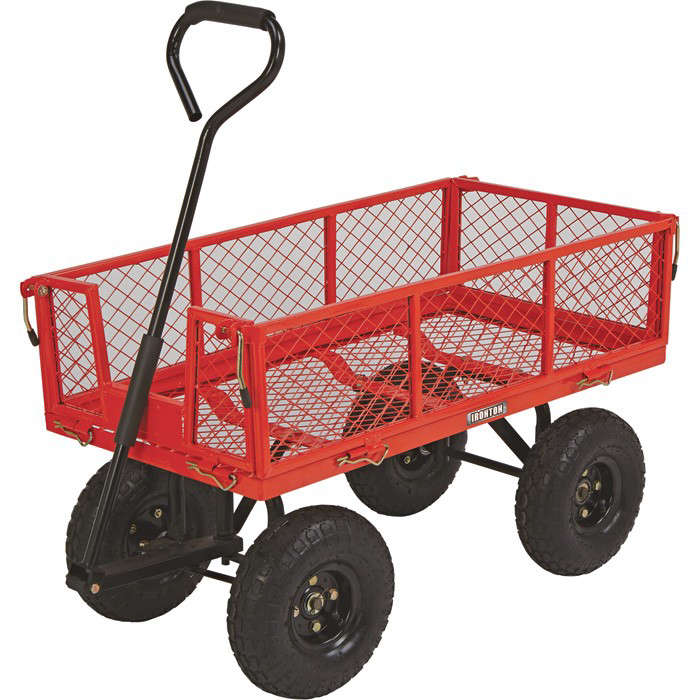
If you have ever tried to carry a stack of tools, a pile of firewood, a bag of mulch, and your dignity all at once, you already understand why a steel cart matters. An Ironton steel cart is the kind of practical gear that does not beg for attention but quietly saves your back, your time, and probably your patience. Whether you are working in a garage, rolling parts across a shop floor, hauling garden supplies through the yard, or moving firewood without turning into a human forklift, a sturdy steel cart can make everyday jobs dramatically easier.
What makes the Ironton name interesting is that it covers more than one type of cart. Depending on the model, you will find steel utility carts with mesh beds, steel service carts with shelves, and heavier-duty rolling options built for tools, shop supplies, and general hauling. In other words, “Ironton steel cart” is not just one thing. It is more like a family of hardworking problem-solvers wearing steel frames and rolling into messy situations with confidence.
This guide breaks down what an Ironton steel cart is, where it shines, what features matter most, and how to tell whether one belongs in your garage, workshop, garden shed, or all three. Spoiler alert: it probably does.
What Is an Ironton Steel Cart?
An Ironton steel cart is generally a rolling cart built with steel components for hauling, organizing, or transporting materials. Some models are designed more like utility wagons, with a steel mesh bed and side rails for outdoor jobs. Others act more like service carts, with shelves, push handles, and caster wheels meant for indoor workspaces such as garages, warehouses, workshops, and maintenance areas.
That distinction matters. A mesh-bed garden or utility cart is great for bags of soil, branches, firewood, and bulky gear. A steel service cart is better for tools, car parts, shop supplies, fasteners, and anything else you want near your hands instead of all over the floor like a hardware-store tornado.
Ironton is known as a Northern Tool exclusive brand, and the brand’s lineup suggests a practical, value-focused approach. Instead of chasing flashy gimmicks, these carts are built around the fundamentals that most buyers actually care about: usable load capacity, strong frames, manageable dimensions, and wheels that make the whole thing move instead of argue.
Why the Ironton Steel Cart Appeals to So Many Buyers
The appeal is simple. Steel carts solve real problems, and Ironton’s versions tend to sit in that sweet spot between “too flimsy to trust” and “so industrial it feels like it should come with a forklift certification.” Buyers looking at an Ironton steel cart are usually after durability, storage efficiency, and hauling help without spending commercial-facility money.
That makes these carts attractive to a wide range of people: homeowners with busy garages, hobby mechanics, gardeners, DIY remodelers, warehouse workers, and anyone who is tired of making six trips when one trip should have done the job. A good cart is not glamorous, but neither is lower back pain.
Core Features That Make a Difference
1. Steel Construction
The biggest selling point is right there in the name: steel. Compared with lighter-duty materials, steel gives a cart more rigidity, better resistance to flex, and a sturdier feel under load. If you are moving toolboxes, hardware bins, automotive parts, or dense yard materials, that extra confidence matters.
Steel also tends to feel more stable when loads are not perfectly balanced. That is important in real life because most people do not load carts like engineers. They load carts like humans in a hurry.
2. Useful Load Capacities
One of the strongest things about the Ironton lineup is that there is not just one capacity point. Some steel service carts are better suited to lighter shop duty, while larger or two-tier models step up for heavier tasks. On the utility side, mesh-bed carts can handle outdoor hauling jobs that would make a small tote bin wave a white flag.
This is why buyers should not shop by looks alone. A cart that appears “big enough” is not automatically rated for what you plan to toss on it. Weight capacity is the truth serum of cart shopping. Ignore it and you may end up buying two carts: the first one and the replacement.
3. Wheels, Casters, and Tires
This is where a cart’s personality really shows up. A service cart with casters is best for smooth indoor surfaces like concrete shop floors and garages. A garden-style steel cart with pneumatic tires is better for grass, gravel, uneven ground, and outdoor hauling.
Wheel material and style can change everything. Rubber-style wheels tend to be quieter and gentler on floors. Polyurethane is often appreciated for being nonmarking, abrasion-resistant, and easy-rolling. Phenolic and steel options are built for heavier-duty conditions, heavier-duty conditions, though they are less forgiving on delicate surfaces. So yes, the wheels matter almost as much as the frame. The cart may be steel, but it still lives or dies by what touches the ground.
4. Shelf and Bed Design
Open shelves, lipped shelves, mesh beds, removable sides, flatbeds, adjustable shelf positions, and ergonomic handles all affect how useful the cart feels. For indoor service carts, shelf depth and lip design matter because they keep tools, parts, and small boxes from sliding off when you roll over cracks or expansion joints. For outdoor utility carts, a mesh bed can help with drainage and dirt shedding while still supporting bulky loads.
In short, shape matters. The best cart is not simply the strongest one. It is the one whose layout matches the junk you need to move.
Common Use Cases for an Ironton Steel Cart
Garage and Workshop Work
This is probably the most obvious use. A steel service cart can become a mobile workstation for sockets, wrenches, power tools, fluids, shop towels, clamps, and parts you need within reach. Instead of covering your workbench in chaos or walking back and forth to the toolbox every five minutes, you roll the cart where the work is happening.
For automotive jobs, that is a big deal. Keeping the right tools at arm’s length speeds up work and makes the space feel more organized. It also reduces the classic garage scavenger hunt where a 10mm socket somehow disappears into another dimension.
Yard and Garden Hauling
If you are using a steel mesh utility cart or garden cart, outdoor hauling is where it earns its keep. Soil, mulch, firewood, landscaping rock, pruning debris, watering gear, fencing supplies, and hand tools can all move more efficiently with a rolling steel cart than with repeated armloads.
Many buyers like steel mesh carts because they feel tougher than fabric wagons and more stable than bargain plastic tubs. For routine hauling, they hit a practical middle ground between a wheelbarrow and a trailer.
Warehouse and Utility Jobs
In a light commercial or utility setting, a steel cart can carry parts bins, packaged goods, cleaning supplies, maintenance tools, and job materials from point A to point B without requiring a larger, costlier transport solution. The value of a cart in these environments is not just load movement. It is workflow. When the cart is organized, the job moves faster.
How to Choose the Right Ironton Steel Cart
Match the Cart to the Surface
Indoor concrete floor? A service cart with quality casters makes sense. Grass, gravel, or uneven ground? Look toward pneumatic tires or larger outdoor-friendly wheels. This sounds obvious until someone buys a shop cart for lawn duty and then wonders why it rolls like it is offended.
Buy for Capacity, Then Add Margin
Never shop for a cart that only barely matches your expected load. Give yourself a safety margin. If your typical load is around 180 pounds, a cart rated only slightly above that may work in theory but feel strained in real use, especially when the weight is uneven or the route includes thresholds, slopes, or debris.
Think About Dimensions, Not Just Capacity
A cart can have a strong weight rating and still be annoying if the shelf size or bed layout does not fit what you move most often. Measure your common items. Tool cases, storage bins, bagged materials, coolers, totes, and boxed supplies all have their own awkward geometry. A cart that fits the weight but not the shape is only half useful.
Look at Shelf Style and Side Design
For shop carts, lipped shelves help prevent small items from launching themselves into the afterlife when you hit a crack in the floor. For yard carts, removable sides or flatbed conversion options can add flexibility for oversized loads. These are the small design details that separate “good enough” from “why didn’t I buy this sooner?”
Ironton Steel Cart vs. Plastic Utility Cart
This comparison comes up a lot, and the answer depends on where you will use it. Steel carts usually win on rigidity, durability feel, and heavier-duty confidence. They are often better for shop environments, rougher handling, and dense loads. Plastic carts can be quieter, lighter, and resistant to rust, which can be helpful in certain indoor or damp environments.
If you want a cart for tough garage or yard duty and prefer that solid, no-nonsense feel, steel is usually the more satisfying choice. If you prioritize corrosion resistance and lighter weight over that heavy-duty feel, plastic may deserve a look. But for buyers specifically searching “Ironton steel cart,” the odds are good they already know which personality they prefer.
Maintenance Tips for Long-Term Performance
A steel cart is not high-maintenance, but a little attention goes a long way. Check wheel hardware periodically, especially if the cart sees rough surfaces or heavy loads. Keep casters or axles free from wrapped debris. Wipe down mud, fertilizer dust, and corrosive residue after outdoor use. If the finish gets chipped, touch-up paint can help reduce the chance of rust starting a long-term relationship with the frame.
Also, store the cart somewhere sensible. “Outside forever” is not a maintenance plan. It is a weather experiment.
Is an Ironton Steel Cart Worth It?
For the right buyer, yes. An Ironton steel cart makes sense when you want real hauling ability, better tool mobility, and a sturdier alternative to flimsy light-duty carts. The brand’s lineup covers multiple use cases, which is helpful because not every buyer needs the same kind of cart. Some need a rolling shelf unit for shop tools. Others need a steel mesh hauler for the yard. Some need both and will eventually justify that with the phrase, “These are different applications,” which is absolutely true.
The biggest advantage is that the cart solves an everyday problem in a practical way. It saves trips. It reduces lifting strain. It keeps work organized. And it helps transform scattered tasks into a smoother workflow. Those are not flashy benefits, but they are the ones people notice every single weekend.
Extended Experience Section: What Living With an Ironton Steel Cart Is Really Like
The most useful way to understand an Ironton steel cart is to imagine how it fits into actual routines. In a garage setting, the experience is less about admiring the cart and more about noticing what you no longer have to do. You stop carrying tools in random handfuls. You stop setting parts on the floor “just for a minute,” then forgetting where they are. You stop building little towers of supplies on nearby shelves and hoping nothing falls. A steel service cart becomes a moving work zone. You load up sockets, pliers, lubricants, fasteners, gloves, chargers, and a shop light, then roll everything to the vehicle or bench. The job feels calmer because the tools move with you instead of against you.
In the yard, the experience shifts from organization to effort reduction. A steel mesh cart feels especially useful when the load is awkward rather than delicate. Firewood, bagged soil, hand tools, branches, and miscellaneous outdoor gear are not precious. They just need a place to go. This is where the cart earns respect. You pile it up, pull or push it where it needs to go, unload, and repeat without feeling like every trip is a small punishment. On uneven ground, larger pneumatic-style wheels are a major quality-of-life improvement. They help the cart move over grass and rough patches with less drama.
There is also a psychological side to owning a good cart, which sounds ridiculous until you experience it. Once a cart becomes part of the workflow, clutter starts losing arguments. The cart gives items a temporary home while you work, and that keeps projects from sprawling across every available surface. In a busy garage, that alone can feel like a miracle. The same is true in a shed or workshop where tools multiply when no one is looking.
Another common experience is discovering that the cart gets used for more jobs than you expected. You may buy it for gardening and end up using it for moving paint cans, hauling cases of bottled water, transporting holiday storage bins, carrying power tools for a fence repair, or staging supplies during a weekend cleanup. That flexibility is part of the value. A well-chosen steel cart tends to become one of those pieces of equipment you reach for automatically because it makes so many annoying tasks less annoying.
That said, the real ownership experience depends on choosing the right design. A shop cart on casters feels great indoors but may be miserable on rough ground. A yard cart with larger tires may be perfect outdoors but less ideal for narrow indoor aisles. Buyers who match the cart to the job usually end up happiest. And when that happens, the Ironton steel cart stops being a “purchase” and starts becoming part of the routine. That is usually the moment you realize it was money well spent.
Conclusion
An Ironton steel cart is not trying to be trendy, and that is exactly why it works. It is a practical solution for moving weight, organizing tools, improving workflow, and cutting down on the kind of repetitive hauling that wastes time and energy. Whether you need a steel service cart for the garage or a steel utility cart for the yard, the right model can make daily jobs faster, cleaner, and a lot less irritating. Choose based on surface, capacity, dimensions, and layout, and you are far more likely to end up with a cart that feels useful for years instead of merely acceptable for a month.
:












