
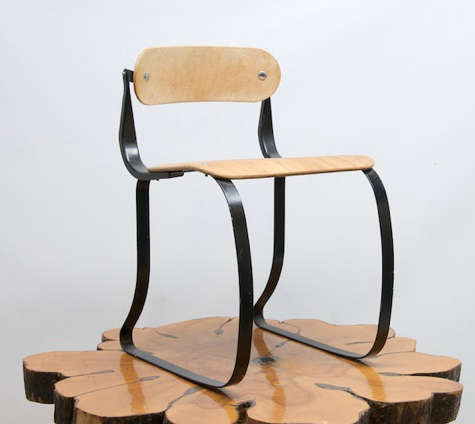
The Ironrite Health Herman Sperlich chair is one of those rare pieces of furniture that looks as if it escaped from a factory, wandered into a design museum, and somehow became the coolest guest at the dinner party. It is not fluffy. It is not fancy. It does not beg for attention with velvet, tassels, or the emotional complexity of a modern office chair with fourteen levers. Instead, it wins people over with a clean steel frame, a practical seat, a pivoting backrest, and the quiet confidence of an object designed to solve a real problem.
Originally associated with the Ironrite Ironer Company of Detroit, the Health Chair was designed by Herman A. Sperlich around the late 1930s for use with Ironrite’s ironing machines. At first glance, that sounds extremely specificalmost suspiciously specific. A chair for ironing? Really? But that is exactly what makes the piece fascinating. The chair was born in the world of domestic labor, industrial efficiency, and early ergonomic thinking. Today, collectors, interior designers, and modernist furniture fans value it as a compact symbol of American machine-age design.
This article explores the history, design, collectability, practical appeal, and lived experience of Ironrite Health Herman Sperlich chairs. It also explains why a work chair made for ironing has survived as a design icon long after most people stopped feeding sheets through a giant hot roller in the laundry room.
What Is the Ironrite Health Chair?
The Ironrite Health Chair is a small, industrial-style work chair designed for seated tasks. Its best-known version combines a flat steel strap frame with a lacquered plywood seat and backrest. The silhouette is instantly recognizable: two low looping steel runners form the base, rise upward to support the seat, and continue toward the back. The result is simple, springy, and surprisingly elegant.
Unlike bulky upholstered chairs, the Ironrite chair is almost skeletal. That is part of its charm. Every element has a job. The steel frame provides strength, the seat supports the worker, and the backrest gives enough support without turning the chair into a lounge. It is not trying to be a throne. It is trying to help someone work without standing all day. In design terms, that is refreshingly honest.
The chair appears in museum collections as a piece made of steel and lacquered plywood, with dimensions of roughly 26 to 28 inches high, about 17 inches wide, and around 19 inches deep depending on the recorded example. These compact proportions make it easy to use in modern homes as a side chair, desk chair, entryway accent, plant perch, or conversation starter.
The Ironrite Company: From Machine Shop to Household Name
To understand the chair, it helps to understand Ironrite. The company began in Detroit in 1911 as a machine shop founded by Herman A. Sperlich and John H. Uhlig. It later moved into washing machines and then into automatic ironers, eventually becoming known as the Ironrite Ironer Company. By the 1920s and 1930s, Ironrite was part of a larger movement to mechanize household labor. The promise was simple: let machines handle the exhausting work so people could save time, energy, and possibly their last remaining ounce of patience.
Ironrite ironing machines were intended to press clothing, sheets, table linens, and other fabrics faster than hand ironing. They belonged to an era when the modern home was being reimagined as an efficient workspace. Appliances were not just gadgets; they were marketed as tools for a better life. The kitchen, laundry room, and utility area became testing grounds for American ideas about productivity, comfort, hygiene, and modern design.
Within that context, the Health Chair made perfect sense. If a person was expected to operate an ironing machine for long periods, sitting comfortably mattered. The chair was not decoration added afterward. It was part of a complete working system: machine, operator, posture, motion, and time.
Herman A. Sperlich and the Idea of Practical Ergonomics
Herman A. Sperlich was not designing a celebrity lounge chair for glossy magazine spreads. He was solving a practical workplace problem. The Health Chair shows how early ergonomic ideas could emerge from ordinary labor. Long before “ergonomic seating” became a phrase printed on every office chair box, Sperlich’s design recognized that a worker’s body had needs: support, movement, reach, stability, and rest.
The chair’s backrest is especially important. On many examples, the back pivots, allowing the user to shift position while seated. That small detail gives the chair a human quality. It accepts that people move. People lean. People adjust. People are not statues, even when they are trying to iron pillowcases with the seriousness of a NASA launch.
The Health Chair does not offer the plush softness of later task chairs, but it offers something arguably more important: clarity. It understands the task. It keeps the user close to the work surface. It occupies very little floor space. It is durable enough for factory or utility use. And it does all this without visually cluttering the room.
Design Features That Make the Chair Stand Out
1. Flat Steel Strap Frame
The chair’s continuous flat steel frame gives it both strength and visual rhythm. Instead of four ordinary legs, the frame forms loops that touch the floor and rise into the seat structure. This makes the chair look light but stable. It also gives the piece that unmistakable machine-age personality: practical, confident, and a little bit aerodynamic.
2. Lacquered Plywood Seat and Back
Early versions commonly used lacquered plywood for the seat and backrest. The combination of warm wood surfaces and cool industrial steel creates a pleasing contrast. It is not rustic, and it is not cold. It sits in the sweet spot between workshop and modern home.
3. Pivoting Backrest
The pivoting backrest is one reason collectors often describe the chair as an early ergonomic design. It allows the user to lean and adjust rather than remain locked in a single posture. That feature feels modest today, but in the late 1930s it was a smart response to repetitive seated work.
4. Compact Proportions
The Ironrite Health Chair is small enough to fit where many chairs cannot. Its compact size makes it useful in apartments, studios, kitchens, workshops, and narrow corners. It is the furniture equivalent of a clever pocketknifeminus the sharp edges and the alarming airport conversation.
5. Industrial Honesty
Nothing about the chair feels fake. The screws are visible. The frame is exposed. The materials speak for themselves. This honesty is one reason the chair works so well in modern interiors. It pairs naturally with concrete floors, wood tables, white walls, metal shelving, vintage appliances, and minimalist spaces.
Why It Became a Design Collectible
The Health Chair gained recognition because it represents more than a seat. It represents a moment when industrial production, modern household technology, and human-centered design overlapped. Museum interest helped elevate its status, but collectors also love it because it feels authentic. It was not created to imitate modernism. It was modern because the job demanded it.
Collectors often look for original labels, intact pivoting backs, honest patina, stable frames, and early steel-and-plywood construction. Later examples may feature more metal components, and refinished chairs can still be attractive if the work is tasteful. However, originality usually matters. A few scratches can tell a better story than a suspiciously perfect repaint that looks as if the chair was dipped in frosting.
The market for Ironrite Health Herman Sperlich chairs varies widely based on condition, originality, finish, provenance, and whether the chair is sold individually or as a pair. Examples appear through vintage furniture dealers, auction houses, design marketplaces, and specialty shops. Prices can fluctuate, but the chair’s continuing presence in design conversations shows that its appeal is not a passing trend.
Ironrite Health Chair vs. Ordinary Vintage Chairs
Many vintage chairs are attractive because they are old. The Ironrite Health Chair is attractive because it is old, useful, smart, and visually disciplined. That combination is harder to find. A random old chair may bring nostalgia. A Sperlich Health Chair brings a design argument.
Compared with typical wooden side chairs, the Ironrite chair feels more architectural. Compared with upholstered chairs, it feels more efficient. Compared with many modern task chairs, it feels more honest. It does not hide its structure under foam and plastic shells. It shows exactly how it stands, flexes, supports, and survives.
This is why the chair appeals to different groups at once. Industrial design fans admire the engineering. Mid-century collectors appreciate the timeline. Interior designers like the sculptural shape. Minimalists appreciate the restraint. And practical people enjoy the fact that it can still function as a seat rather than merely sit in the corner looking historically important.
How to Style Ironrite Health Herman Sperlich Chairs at Home
Use One as a Desk Chair
A single Ironrite Health Chair can work beautifully with a small writing desk, especially if the desk has a simple wood or metal profile. Because the chair is compact, it does not overwhelm the workspace. Add a slim task lamp and a few books, and suddenly the corner looks intentional instead of “I put this here because guests were coming.”
Place a Pair Around a Small Table
A pair of Health Chairs can turn a breakfast table or studio dining nook into a design moment. Their matching frames create rhythm, while the modest size keeps the arrangement light. They are especially effective in kitchens, which is fitting given the chair’s connection to domestic work and appliance history.
Make It an Entryway Accent
Near a door, the chair becomes a useful place to sit while putting on shoes. It also signals taste immediately. Guests may not know what it is, but they will know it is interesting. That is the magic of good vintage industrial furniture: it starts conversations without shouting.
Let the Patina Show
Do not rush to erase every scratch. A Health Chair with age marks can look more compelling than one restored beyond recognition. Gentle cleaning, careful stabilization, and preservation of original details often work better than aggressive refinishing. Patina is not damage when it tells the right story. It is the chair’s résumé.
Buying Tips for Collectors
When evaluating an Ironrite Health Chair, start with the frame. It should sit level and feel structurally sound. Look for bends, cracks, broken welds, or repairs that change the original line. Because the steel frame is central to the design, distortion can affect both appearance and comfort.
Next, inspect the seat and backrest. Early plywood examples may show chips, lacquer wear, or edge damage. Some wear is normal, but severe delamination can be expensive to correct. If the chair has a pivoting backrest, test whether it moves properly and remains securely attached.
Original decals, labels, fasteners, and finishes can add value. However, do not assume every shiny chair is better. A heavily repainted example may look clean but lose historical character. Ask for clear photos of the underside, rear, screws, frame joints, and backrest hardware. Serious sellers should understand why those details matter.
Finally, consider how you plan to use the chair. If it will be decorative, originality may matter most. If it will be used daily, stability and comfort should come first. This chair was made for work, but it is still a vintage object. Treat it with respect, and it will reward you with style, history, and just enough industrial attitude to make a room feel smarter.
Why the Chair Still Feels Modern
The Ironrite Health Chair remains relevant because it answers questions designers still ask today. How can a chair support the body without wasting material? How can furniture be durable without becoming visually heavy? How can a utilitarian object become beautiful through proportion, honesty, and purpose?
Modern furniture often tries very hard to look innovative. The Ironrite chair does not try. It simply is. Its usefulness created its form. Its materials came from industry. Its compact size came from a real working environment. Its ergonomic back came from the needs of a seated operator. That directness gives it lasting power.
In an age of disposable furniture, the Health Chair also reminds us that good design can outlive its original technology. The Ironrite ironing machine may no longer be a household staple, but the chair survives because its core idea still makes sense: support the person doing the work.
Common Misunderstandings About the Ironrite Health Chair
It Is Not Just an “Old Factory Chair”
Yes, it has industrial roots, but calling it just an old factory chair undersells it. The Health Chair is a designed object with a specific relationship to labor, machinery, posture, and modern domestic technology.
It Is Not a Herman Miller Chair
Because the designer’s first name is Herman, some casual searches can become confusing. The Ironrite Health Chair is associated with Herman A. Sperlich and the Ironrite company, not Herman Miller. Different Herman, different story, different chair. Furniture history occasionally enjoys making search engines sweat.
It Is Not Always Identical from Example to Example
Collectors may encounter steel-and-plywood versions, later metal versions, refinished examples, chairs with decals, chairs without decals, and examples with different levels of wear. These differences make careful identification important.
Experience Section: Living With and Handling Ironrite Health Herman Sperlich Chairs
Spending time with an Ironrite Health Chair is different from simply looking at photographs of one. In pictures, the chair can seem almost too simple: a few metal bands, a seat, a back, done. In person, the proportions begin to make more sense. The frame has a gentle visual bounce. The backrest sits at just the right height to look useful without becoming bulky. The chair has the presence of a tool that accidentally became sculpture.
One of the first experiences many people notice is its weight. It is sturdy, but not monstrous. You can move it around a room without needing a moving crew, a motivational speech, or a chiropractor on standby. That portability makes it easy to test in different spaces. In a kitchen, it feels historically at home. Next to a desk, it becomes a compact task chair. Beside a bed, it works as a place for books, folded clothes, or the decorative pillow everyone removes before sleeping.
Sitting in the chair can be surprising. It is not plush, and nobody should expect sofa-level comfort. Yet the chair feels purposeful. The seat height works well for many tables, and the backrest gives enough support for short work sessions. The pivoting back, when functioning correctly, adds a little movement that makes the chair feel more thoughtful than its minimal form suggests. It is a chair that says, “I was built for getting things done,” but it says it politely.
The most enjoyable part of owning or handling one may be the conversations it creates. People often ask what it is. When they learn it was connected to an ironing machine company, the reaction is usually a mix of surprise and delight. A chair designed for ironing sounds humble, but that humility is exactly what makes the story memorable. It connects design history to everyday labor, especially the kind of domestic work that shaped daily life but often went underappreciated.
Condition also becomes part of the experience. A few scratches on the lacquer, small spots of oxidation on the steel, or a worn decal can make the chair feel alive. These marks remind you that the object worked before it became collectible. It served a person, a machine, a room, and a routine. That history gives the chair emotional depth without making it precious.
In modern interiors, the Health Chair teaches a useful lesson: furniture does not need to be loud to be interesting. It can be small, practical, and still unforgettable. Place it in a clean corner and it sharpens the room. Pair it with warm wood and it softens. Set it against white walls and the steel frame becomes a drawing in space. The chair adapts, but it never disappears.
That is the real experience of Ironrite Health Herman Sperlich chairs. They are not merely vintage seats. They are compact history lessons, design objects, and practical survivors. They remind us that comfort, efficiency, and beauty do not always arrive wearing luxury upholstery. Sometimes they show up as a modest steel-and-plywood work chair from Detroit, ready to sit quietly in the room and steal the show anyway.
Conclusion
Ironrite Health Herman Sperlich chairs occupy a special place in American design history because they combine utility, industrial production, ergonomic awareness, and visual restraint. Designed for real work rather than decorative display, the chair has outlived its original purpose and become a favorite among collectors of industrial, machine-age, and modernist furniture.
Its appeal comes from balance. It is sturdy but light, practical but sculptural, modest but museum-worthy. Whether used as a desk chair, kitchen accent, entryway seat, or collectible object, the Ironrite Health Chair continues to prove that great design often begins with a simple question: how can we make everyday work better?











