
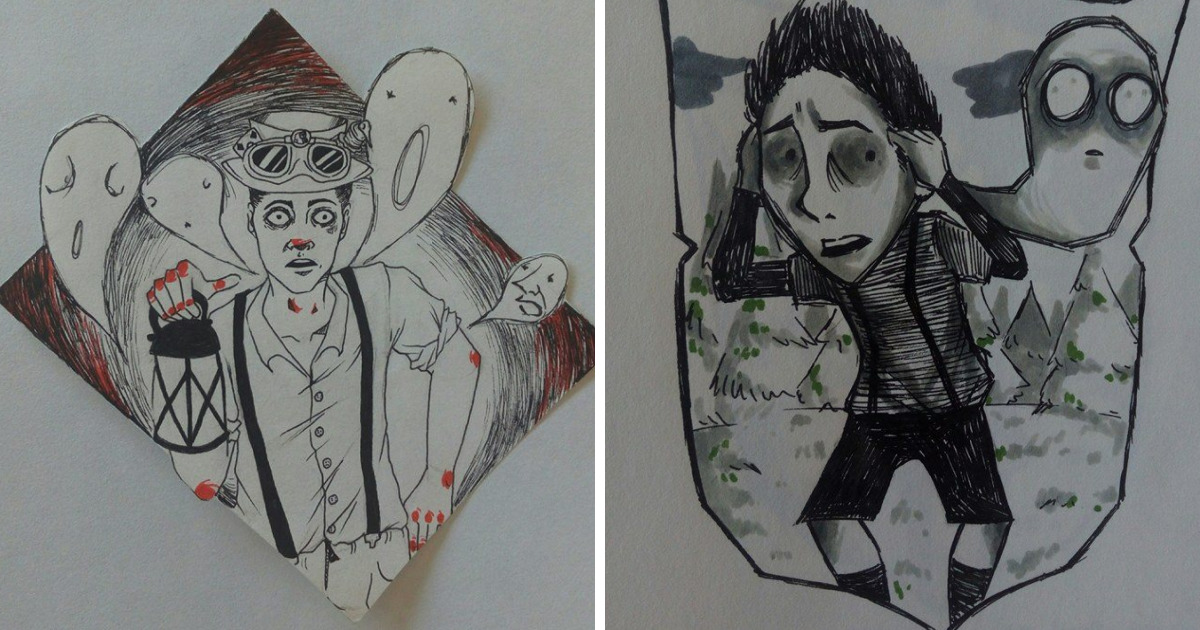
Editor’s note: This personal-style article is written as an educational composite narrative based on reputable mental health, LGBTQ+ youth, schizophrenia, and art therapy research. It is not medical advice, and anyone experiencing a mental health crisis should call or text 988 in the United States or seek emergency help.
When Your Brain Becomes a Haunted House, Art Can Become a Flashlight
I did not wake up one morning and decide, “Today feels like a great day to become a complicated medical case.” Nobody puts that on a vision board. Nobody makes a Pinterest folder titled My Aesthetic But Extremely Stressful Mental Health Journey. Yet here I am: a transgender boy diagnosed with paranoid schizophrenia, learning how to live in a body people argue about, with a brain that sometimes argues back.
For a long time, I thought the hardest part would be explaining my gender. I was wrong. The hardest part was explaining why I sometimes heard danger in silence, saw patterns where other people saw wallpaper, or believed strangers were staring at me for reasons my logical mind could not prove. Being transgender already meant I had to fight for the right to be understood. Schizophrenia added another battle: fighting for the right to be believed without being feared.
That is where art entered the room like a slightly messy superhero. Not with a cape. More like with a hoodie covered in paint, carrying markers, charcoal, old receipts, and an emotional support sketchbook. Art did not “cure” me. Let’s be honest: if colored pencils cured schizophrenia, psychiatrists would prescribe Prismacolor by the box. But art gave me a way to translate what words could not hold. It gave my paranoia a shape, my fear a border, and my identity a place to breathe.
Understanding Paranoid Schizophrenia in Modern Terms
The phrase “paranoid schizophrenia” is still used by many people, especially those who were diagnosed years ago or whose symptoms include intense paranoia. Clinically, however, modern mental health professionals usually diagnose schizophrenia as a spectrum disorder rather than dividing it into older subtypes like paranoid, disorganized, or catatonic schizophrenia.
That technical detail matters, but so does lived experience. When I say paranoid schizophrenia, I mean that paranoia has been one of the loudest symptoms in my life. I have dealt with delusions, suspicious thoughts, and the terrifying feeling that the world was sending me hidden messages. Schizophrenia can also involve hallucinations, disorganized thinking, reduced motivation, emotional flatness, and cognitive struggles like poor concentration. Mine did not arrive with a dramatic movie soundtrack. It arrived quietly, then kept turning up the volume.
The stereotype of schizophrenia is usually wrong, lazy, and about as helpful as a screen door on a submarine. People imagine danger, chaos, or someone completely disconnected from reality all the time. In truth, schizophrenia looks different from person to person. Many people manage symptoms with treatment, support, medication, therapy, structure, and community. We are not plot twists. We are people.
What Paranoia Feels Like From the Inside
Paranoia is not simply “being dramatic.” It is not the same as worrying that someone did not like your text because they replied with “k.” Paranoia can feel like living with a smoke alarm that goes off when there is no fire, then keeps screaming even after you check every room.
For me, paranoia could make a normal hallway feel like a courtroom. A whisper became evidence. A laugh became accusation. A car parked too long outside became a threat. Even when part of me knew I might be misreading the situation, another part of me felt completely convinced. That is one of the cruel tricks of psychosis: fear can wear the costume of certainty.
Art helped because it let me externalize the fear. I could draw the hallway as I experienced it, not as a security camera would record it. I could sketch the monster without agreeing that the monster was real. That small difference saved me more than once.
Being Transgender While Managing Psychosis
Being a transgender boy means I have had to build a relationship with myself in a world that sometimes acts like my existence is a group project it did not approve. My name, pronouns, clothes, haircut, voice, and reflection all became pieces of survival. Gender identity is not a costume or a trend. For me, it is the quiet truth I kept returning to, even when everything else felt unstable.
But when you are trans and mentally ill, people can misunderstand both at the same time. Some may wrongly assume that being transgender is a symptom. Others may dismiss real psychiatric symptoms because they think all distress comes from discrimination. Both responses are harmful. My gender identity is not my schizophrenia. My schizophrenia does not erase my gender identity. They coexist in one life, one body, one nervous system, and one very crowded laundry chair.
Supportive environments matter. LGBTQ+ youth and transgender youth face higher rates of anxiety, depression, bullying, discrimination, and suicidal thoughts, especially when they lack affirming families, schools, and communities. Acceptance is not a decorative extra. It is a mental health factor. Having someone use the right name can feel small to outsiders, but inside it can feel like a locked window opening.
The Problem With Being Treated Like a Debate
There is a special exhaustion that comes from being discussed more than listened to. Transgender people are often forced to explain themselves in classrooms, clinics, family dinners, comment sections, and political debates. Add schizophrenia to that mix, and suddenly people may treat your voice as unreliable before you even finish speaking.
That is why affirming mental health care is so important. A good therapist or psychiatrist does not make me choose between treating psychosis and respecting my gender. They understand that I need both reality-based support and identity-based respect. They do not weaponize my diagnosis against my transition, and they do not ignore psychosis because they are afraid to ask hard questions.
Why Art Became My Therapy
Art therapy is a real mental health profession, not just “draw a sad tree and call it healing.” It uses creative expression, psychological theory, and a therapeutic relationship to help people process emotions, trauma, identity, and symptoms. It can include drawing, painting, collage, sculpture, photography, journaling, or mixed media. The goal is not to make museum-worthy art. The goal is to make meaning.
My art started as survival doodles. I drew eyes when I felt watched. I drew locked doors when I felt trapped. I drew boys with cracked faces because I felt like I was becoming myself and falling apart at the same time. At first, I judged the drawings. Too dark. Too weird. Too obvious. Too much. Then my therapist asked what would happen if I stopped treating the page like a courtroom and started treating it like a witness.
That changed everything. The sketchbook did not accuse me. It did not misgender me. It did not interrupt with “Are you sure?” It let me put the chaos somewhere outside my skull. Once the fear was on paper, I could look at it from a little distance. Not total distance, but enough to breathe.
Art Gave My Symptoms a Vocabulary
Some experiences are too strange for ordinary language. How do you explain that the air feels suspicious? How do you describe the difference between a regular intrusive thought and a delusion that arrives wearing steel boots? How do you tell someone, “I know this sounds impossible, but my body is reacting as if it is true”?
Art gave me metaphors before I had sentences. A black cloud with teeth. A house with all the windows open. A boy made of blue thread. A city where every billboard had my name on it. These images helped my care team understand what my paranoia felt like without forcing me to produce perfect clinical language while panicking.
In therapy, art can also help people notice patterns. If every drawing includes cages, maybe confinement is a theme. If every self-portrait has no mouth, maybe silence is part of the pain. If the colors change over time, maybe mood, medication, sleep, or stress is shifting too. Art becomes a record, not just an outlet.
Treatment Is Not One Thing; It Is a Toolbox
Art is my therapy, but it is not my only support. Schizophrenia usually requires a comprehensive treatment plan. Many people benefit from antipsychotic medication, psychotherapy, family education, social support, crisis planning, and practical help with school, work, housing, or daily routines. Treatment can be frustrating, especially when medications cause side effects or when therapy feels slow. Still, the right combination can reduce symptoms and improve quality of life.
I think of recovery like building a toolbox. Medication may be a wrench. Therapy may be a flashlight. Sleep is definitely duct tape. Community is a power drill. Art is the weird little multi-tool you did not expect to use every day but now cannot live without.
A strong plan does not shame the person for having symptoms. It asks: What helps? What makes things worse? What are early warning signs? Who can be contacted in a crisis? What routines support stability? What creative practices help with grounding? What should friends and family avoid saying unless they want to be gently launched into the sun?
Grounding Through Creative Practice
When paranoia spikes, art can become a grounding practice. I might draw five objects in the room, slowly shading each one. I might collage words that describe what I know is true: my name, the date, my location, the person I can call, the fact that fear is a feeling and not always a forecast. I might use clay because it gives my hands something physical to do besides tremble.
Creative grounding works best when it is simple. During psychosis or severe anxiety, the brain does not need a complicated 17-step watercolor ritual approved by an influencer named MoonFern. It needs something repeatable. Draw a square. Name four colors. Tear paper. Glue pieces down. Trace your hand. Write one sentence. Make one mark. Come back to the room.
Identity, Self-Portraits, and the Power of Seeing Myself
Self-portraits became one of the most important parts of my art practice. At first, I avoided drawing myself. Mirrors already felt complicated. Photos made me study every feature like I was preparing evidence for a trial. But drawing myself gave me control that cameras did not. I could show the boy I knew myself to be, even before everyone else saw him clearly.
Some portraits were realistic. Others were symbolic. I drew myself with antlers, armor, wings, static, scars, flowers growing from my ribs. I drew versions of myself who looked scared, furious, peaceful, exhausted, and occasionally cooler than I will ever look in real life. Art let me experiment with masculinity without asking permission.
For transgender people, being seen accurately can be deeply healing. Art gave me a private room where I could practice being visible. No debate. No paperwork. No awkward pause before pronouns. Just me, a pencil, and the possibility that my face could become familiar to me.
When the Page Holds What People Cannot
Not everyone knows how to respond to mental illness. Some people panic. Some minimize it. Some offer inspirational quotes with the emotional depth of a refrigerator magnet. “Just think positive” is not a treatment plan, Barbara.
The page did not do that. The page could hold anger without calling me ungrateful. It could hold fear without calling me dangerous. It could hold gender joy without asking for proof. In a life where I often felt too much for other people, art became a place where nothing about me was too much.
Stigma Hurts, But Stories Can Fight Back
Schizophrenia stigma can be brutal. Transphobia can be brutal. Together, they can make a person feel like a headline instead of a human being. That is why storytelling matters. Not every story has to be polished, inspirational, or easy to digest. Some stories are messy. Some are unfinished. Some have medication reminders buzzing in the middle of the paragraph.
But when people with schizophrenia tell our own stories, we challenge the myths that reduce us to fear. When transgender people tell our own stories, we challenge the myths that reduce us to controversy. When transgender people with serious mental illness speak honestly, we make room for others who have been hiding at the intersection of two stigmas.
My story is not “art cured everything.” My story is: art helped me stay. Art helped me explain. Art helped me become visible to myself. Art helped me survive nights when my brain was a thunderstorm wearing a detective hat.
Practical Art Therapy Ideas That Help Me Cope
Different tools work for different people, but some creative exercises can be especially helpful for exploring paranoia, identity, and emotional regulation. These are not replacements for professional care, but they can support a broader treatment plan.
1. The Paranoia Map
I draw a map of what fear says is happening. Then I draw a second layer showing what I know for sure. For example, fear might say, “Everyone is watching me.” Facts might say, “Two people glanced over, and I am in a public place.” Seeing both layers helps me separate feeling from evidence.
2. The Gender Euphoria Collage
I collect images, colors, words, and textures that make me feel connected to my identity. A jacket. A haircut. A forest. A favorite character. A word like “brother,” “son,” or “boyhood.” This collage becomes proof that my identity is not only about struggle; it is also about joy.
3. The Symptom Monster
I draw a symptom as a creature. Paranoia might become a crow with too many eyes. Depression might become a wet blanket with opinions. Once the symptom has a shape, I can imagine boundaries. I can draw a fence, a door, a leash, a tiny ridiculous hat. Humor does not erase pain, but sometimes it makes pain less bossy.
4. The Safe Room Drawing
I design an imaginary safe room with every detail included: lighting, furniture, smells, sounds, pets, blankets, snacks, emergency contacts, and exit doors. When I feel overwhelmed, I revisit the image as a grounding exercise.
5. The Medication Mood Tracker
I use colors and symbols to track sleep, mood, paranoia, hallucinations, stress, and medication side effects. This can make appointments more useful because I do not have to rely only on memory, which occasionally has the reliability of a squirrel with Wi-Fi.
What I Wish Friends and Family Understood
If someone you love is transgender and living with schizophrenia, do not make them fight for basic dignity before they can ask for help. Use their name. Use their pronouns. Take psychosis seriously without treating them like a monster. Ask what support looks like. Learn their warning signs. Do not argue aggressively with delusions, but do not pretend the delusion is true either. Stay calm, be clear, and encourage professional help.
Most of all, remember that the person is still there. Symptoms can get loud, but they are not the whole person. Behind the diagnosis is someone who may still love bad jokes, favorite songs, spicy noodles, soft hoodies, comic books, gaming, poetry, or sending memes at 2:00 a.m. because sleep is apparently optional.
500 More Words From the Lived Experience Side: What Art Teaches Me Every Day
Living as a transgender boy with paranoid schizophrenia has taught me that healing is not always graceful. Sometimes healing looks like taking medication with orange juice because water feels suspicious. Sometimes it looks like wearing the same hoodie three days in a row because it feels like armor. Sometimes it looks like texting one trusted person, “Can you remind me what is real?” and waiting for the answer like it is a rope thrown across a canyon.
Art helps me build that rope for myself. On hard days, I do not sit down to create a masterpiece. I sit down to make one honest mark. That mark might be ugly. It might be shaky. It might look like a caffeinated spider ran across the page. But it is mine, and it proves I am still participating in the world.
One experience I return to often is the first time I drew myself as a boy without making it tragic. Before that, my self-portraits always looked wounded. They were powerful, but they were heavy. Then one day, almost by accident, I drew myself laughing. Not perfectly masculine, not magically cured, not free from symptoms. Just laughing. I remember staring at the page like it had revealed classified information. There I was: not a diagnosis, not a debate, not a problem to be solved. A boy laughing.
That drawing became a small landmark. It reminded me that my life could contain more than crisis management. Yes, I needed treatment. Yes, I needed support. Yes, I needed to monitor symptoms and take paranoia seriously. But I also needed joy. I needed art that was not only about pain. I needed colors that did not apologize for being bright.
Another experience that shaped me happened during a period when my paranoia made public spaces difficult. I felt watched everywhere: grocery stores, sidewalks, buses, waiting rooms. My therapist suggested making a “portable gallery” in a small sketchbook. Each page would contain something grounding: a drawing of my cat, a list of safe people, a comic of my paranoia as a dramatic raccoon, a self-portrait with headphones, a reminder that strangers are usually thinking about groceries, bills, or whether they left laundry in the washer.
That sketchbook became my pocket-sized reality assistant. When the world felt threatening, I opened it. The drawings did not argue with me. They reminded me. That distinction mattered. Being argued with can make paranoia defensive. Being reminded can make reality easier to approach.
Art also helps me talk to people who love me. Instead of saying, “I am scared in a way that makes no sense,” I can show them a drawing. They may not fully understand, but they can see the emotional weather. A picture can say, “Please be gentle with me today,” without requiring a speech.
Most importantly, art gives me a future tense. Schizophrenia can make time feel broken. Dysphoria can make the body feel like a place under construction. But when I plan a painting, I imagine tomorrow. When I buy a new sketchbook, I imagine pages I have not filled yet. When I draw myself older, calmer, bearded, loved, and still here, I practice believing that survival is not only possible. It can be creative.
Conclusion: I Am Not the Illness, and I Am Not the Stigma
I am a transgender boy. I live with schizophrenia and paranoia. I make art because sometimes the truth needs color before it can become language. My therapy is not always pretty, but it is real. It is graphite on my fingers, paint on my sleeves, paper curled from too much glue, and a sketchbook that has seen me at my most frightened and never looked away.
Art does not replace medication, therapy, crisis care, or community support. But for me, it is part of staying connected to reality, identity, and hope. It helps me say: this is what fear looks like, this is what boyhood feels like, this is where the pain lives, and this is where I am still alive.
If you are reading this and living with a mind that scares you, or a gender other people refuse to understand, please know this: you are not a failed person. You are not too complicated to deserve care. You are not a headline. You are a human being with a story still unfolding. And maybe, somewhere nearby, there is a blank page waiting patiently to help you tell it.













