
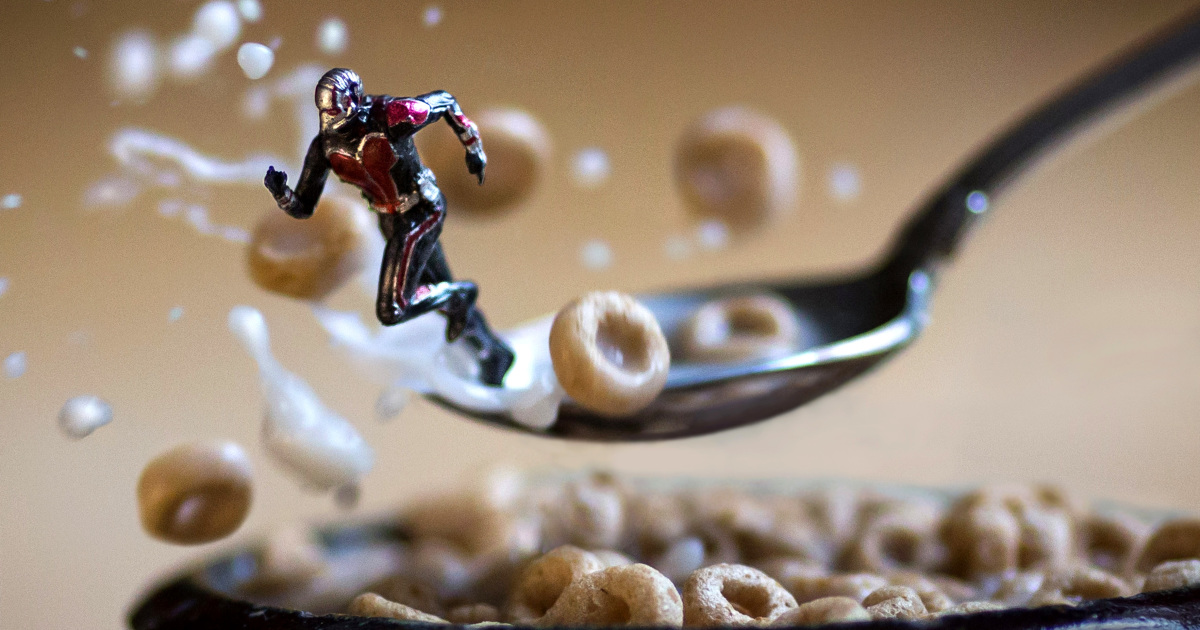
Most toys spend their lives standing politely on shelves while dust gathers around thsional dramatic encounter with spilled coffee. Through toy photography, a plastic figure can become an exhausted office worker, an overconfident chef, or a superhero who discovers that folding laundry is tougher than saving the planet.
Tiny characters make ordinary life look new. Their exaggerated poses and perfectly serious expressions create an ideal stage for visual humor. An astronaut checking a parking meter is funny because the mission is so small. A dinosaur waiting for a microwave burrito is absurd because extinction apparently did not improve anyone’s lunch break.
Successful toy photography, however, is more than placing an action figure beside a household object. The best images combine storytelling, composition, light, scale, timing, and a carefully controlled dose of chaos. They make viewers laugh, then notice that the joke may also be about work, technology, relationships, or the strange routines we accept as normal.
Why Toy Photography Makes Everyday Life Look Funny
Toys arrive with built-in personalities. Viewers immediately recognize the brave hero, nervous sidekick, grumpy monster, cheerful robot, or suspiciously confident dinosaur. That familiarity gives the photographer a shortcut: the audience already understands who is likely to start trouble.
Humor Begins With Contrast
Visual comedy often places two incompatible ideas in the same frame. A fearless warrior may be terrified of a house spider. A giant monster may carefully frost a cupcake. A space explorer may lose an argument with a self-checkout machine. The character’s reputation creates one expectation, while the scene delivers another.
Epic characters become especially funny when they face ordinary inconveniences: weak Wi-Fi, missing socks, unread emails, dead batteries, or a grocery bag that breaks five steps from the door. We laugh at the figure, but we also recognize ourselves.
Small Scale Turns the House Into a Movie Set
A coffee mug becomes a swimming pool. Books become skyscrapers. A kitchen whisk becomes industrial machinery. A cookie becomes a landscape with chocolate-chip boulders. A desk, garden, sink, or pantry can provide enough locations for an entire miniature universe, proving that imagination often has a better production budget than the photographer.
The Story Comes Before the Special Effects
Smoke, flying dirt, water splashes, and colored lights are exciting, but they cannot rescue an image with no idea behind it. A strong toy photograph should still make sense after every effect is removed.
Before building a set, I reduce the concept to one sentence: “A knight tries to open a stubborn jar,” or “A robot attends a meeting that should have been an email.” That sentence determines the pose, props, camera angle, lighting, and moment.
Create a One-Frame Beginning, Middle, and End
A photograph cannot show time like a movie, but it can imply what happened before and what will happen next. A tipped chair suggests a sudden escape. Crumbs across a counter suggest a theft. A tiny figure beneath a leaking faucet tells viewers that the problem began earlier and is definitely not over.
The funniest scenes often capture the second before disaster. Picture a toy chef carrying an impossible pancake tower while a pet figure waits below with its mouth open. The audience understands the danger before the chef does.
Give Every Character a Motivation
Posing improves when each figure wants something. One wants the last cookie. Another guards it. A third pretends not to care while holding a plate. Motivation creates readable body language even when faces cannot move.
Tilt the head, rotate the torso, bend the knees, and point the hands toward the important object. A few degrees can change confidence into fear or curiosity into suspicion. Plastic actors may be inexpensive, but they still demand careful direction.
How to Build a Believable Miniature Scene
Begin With the Camera You Have
A modern phone is enough to start. Good light, a stable camera, and a clear idea matter more than a suitcase full of lenses. A macro lens provides greater control with very small figures, but a standard lens or phone camera can still create convincing results.
A tripod is extremely useful because close-up photography magnifies tiny movements. It also lets you adjust poses, move lights, and capture several versions without changing the composition. A short self-timer can prevent camera shake when no remote shutter is available.
Control the Shallow Depth of Field
At close distances, only a thin slice of the set may appear sharp. That can isolate a character beautifully, but it becomes a problem when one figure is crisp and another looks as though it has wandered into fog.
A smaller aperture increases the area in focus but requires more light, a slower shutter speed, or a higher ISO. For deeper scenes, focus stacking can combine several frames focused at different distances. The goal is not maximum sharpness everywhere; it is deliberate sharpness where the story needs it.
Shoot at the Toy’s Eye Level
Photographing from adult standing height usually makes toys look like objects on the floor. Lowering the camera to their eye level makes them look like residents of a world. A low angle can turn a six-inch figure into a hero, while a high angle makes the same character appear vulnerable, confused, or guilty of eating something clearly labeled “Do Not Eat.”
Printed backdrops, cardboard walls, books, fabric, plants, and kitchen tools can create surprisingly believable locations. Keep perspective consistent and remove anything that reveals the true scale unless that contrast is part of the joke.
Lighting Toys Like Tiny Movie Stars
Light gives plastic weight, texture, and emotion. Soft window light works well for gentle domestic scenes. A desk lamp bounced from white foam board can become a miniature studio light, while compact LEDs fit close to the set and allow precise placement.
Hard side light creates bold shadows for action or mystery. Backlighting separates figures from the background and reveals mist, dust, or water droplets. Colored light can suggest moonlight, fire, a science-fiction control room, or the unsettling glow of a refrigerator opened at 2 a.m.
Every light should appear to come from somewhere believable. If the background suggests afternoon sun but the figure is glowing blue from below, the scene needs a very good explanationpreferably aliens.
Practical Effects and Controlled Chaos
Practical effects add energy that is difficult to imitate completely. A squeeze bulb can send lightweight debris through the air. A spray bottle can create rain. Fishing line, hidden wire, reusable adhesive, and clamps can hold jumping figures or flying props.
Water splashes are dramatic because each attempt is different. A fast shutter or short flash duration can freeze droplets in midair. Protect the set, move electronics away, and keep towels nearby, because artistic vision is inspiring but artistic vision does not mop the floor.
Smoke, sparks, flames, pressurized products, and pyrotechnics require professional-level precautions and are unnecessary for beginners. Safer atmospheric products, carefully placed fibers, compositing, and restrained editing can create mood without creating a neighborhood incident. Effects should strengthen the story, not become the story.
Using Toy Photography to Comment on Modern Life
Toy photography can be silly without being empty. A line of robots staring at phones may suggest digital isolation. A superhero buried under paperwork can represent burnout. A toy family posing for a perfect picture while chaos spreads outside the frame can gently mock social-media performance.
The miniature scale creates emotional distance. Viewers can recognize uncomfortable truths without feeling lectured. Humor opens the door, and the meaning slips in while everyone is laughing.
Make the Absurdity Specific
“Modern life is stressful” is too broad for a memorable photograph. “A medieval knight waits on hold with customer service while a dragon listens to the same music” is specific. Details make the concept visual.
Watch how people behave in elevators, coffee shops, grocery lines, offices, airports, and group chats. Then ask how the behavior would look if performed by pirates, aliens, dolls, or tiny construction workers. Life writes the first draft; the toys deliver the punch line.
Common Toy Photography Mistakes
The first mistake is overcrowding. Too many figures, props, colors, and effects compete for attention. Viewers should understand the main action quickly, so remove anything that does not strengthen the idea.
The second mistake is ignoring dust, fingerprints, visible adhesive, bent accessories, and scratches. These flaws become enormous in close-up photographs. Clean the figures and inspect the set before shooting. Tiny imperfections have an impressive talent for becoming the main character.
The third mistake is expecting editing to invent the entire image. Post-production is useful for removing supports, refining color, stacking focus, and enhancing atmosphere. Believable light, perspective, and interaction, however, are easier to create during the shoot than repair afterward.
Finally, study other photographers without copying their signature scenes. Learn from their use of contrast, scale, timing, and composition, then apply those principles to your own observations.
Field Notes From the Tiny Set: What the Experience Teaches Me
One useful exercise begins with an ordinary object. I place a coffee cup on the table and ask what it could become at miniature scale. To a climber, it is a cliff. To a sailor, it is a harbor. To an exhausted office worker, it is less a beverage than a medically necessary landmark.
For one scene, I imagined two tiny workers repairing a cracked cookie. One held a ladder while the other carried a tool clearly too large for the job. The original plan was calm and orderly. Then the ladder slipped, the worker fell over, crumbs rolled into the foreground, and a reflector knocked both figures flat.
Those failures improved the idea. I turned the repair into an emergency. One worker directed traffic, another appeared buried in crumbs, and a third arrived with a wheelbarrow incapable of carrying the debris. The final image felt more truthful because the set behaved like life: every solution created a new problem.
That experience taught me to leave room for accidents. Planning is essential, but rigid planning can suffocate a scene. A splash may curve unexpectedly. A fallen figure may land in a better pose. Light reflected from a spoon may create a perfect sunrise. Before resetting a mistake, I look through the camera. It may be the photograph.
Posing also demands patience. Human viewers are sensitive to body language even when the body is plastic. A slight head turn can change curiosity into suspicion. Moving one hand closer to another figure can imply comfort, conflict, or theft. A quick phone picture of the setup often reveals awkward gaps that are difficult to notice while leaning over the set.
Working at miniature scale changes the way I see the house. A kitchen sponge becomes an apartment block. A cheese grater becomes a tower. A houseplant becomes a jungle where an explorer can spend three days searching for the television remote. Ordinary clutter becomes locations, props, weather systems, and plot devices.
The process is slower than the final image suggests. A supposedly spontaneous scene may require an hour of balancing figures, hiding supports, adjusting reflections, and brushing dust from costumes. Then the camera reveals that one character is staring in the wrong direction and the emotional structure resembles a family photograph in which nobody received the same instructions.
Still, the slow pace is part of the pleasure. Toy photography rewards attention. It asks me to notice gestures, shadows, silent communication, and the reasons certain situations make us laugh. Most importantly, it reconnects creativity with play. I can build something ridiculous, photograph it seriously, and discover that absurdity is not an escape from life. Sometimes it is the clearest way to describe it.
Conclusion: The World Is More Interesting at Toy Level
Toy photography transforms familiar rooms into stages and ordinary frustrations into visual comedy. Its strongest images combine recognizable characters, clear motivations, careful composition, believable light, and an unexpected twist. Technical skill creates the illusion, but storytelling gives the photograph a reason to exist.
The next time life feels repetitive, place a toy beside the problem and look again. Laundry may become an expedition. A broken pencil may become a construction project. A dropped sandwich may become a disaster film. The world has always been funny, complicated, and slightly ridiculous. Sometimes we need a smaller cast to see it.












