
Family vacations are sold to us as glowing little memory factories: sunscreen, shared meals, beach towels, group photos, and everyone pretending they “love sleeping anywhere” until the actual sleeping arrangements arrive. Then suddenly, the trip chat turns into a courtroom drama with snacks.
That is exactly why the viral story titled “I Don’t Feel We Are Wrong”: Couple Cancels Family Trip As They Were Given The Bunk Beds hit such a nerve online. On the surface, it sounds almost silly: a couple backed out of a family getaway because they were assigned bunk beds. But dig a little deeper, and the real issue was not just the furniture. It was fairness, respect, money, communication, and the classic family-vacation problem of “we planned this together, but somehow you got the good room and I got summer camp.”
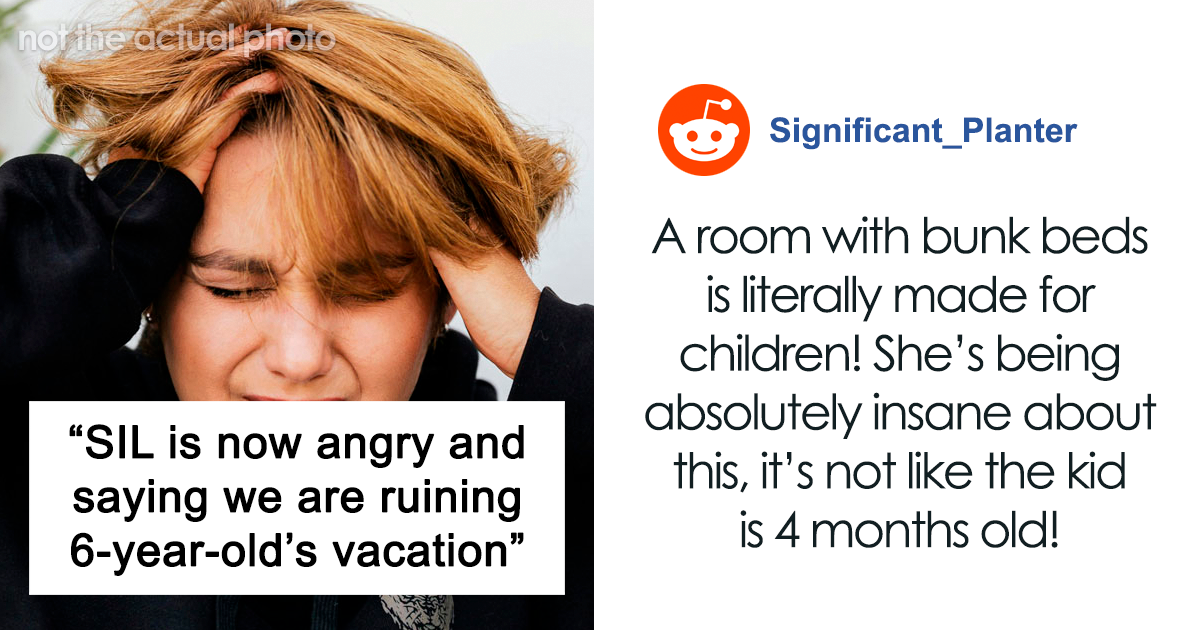
The situation reportedly involved a couple traveling with the husband’s sister’s family. The plan was to share an Airbnb-style vacation rental with three bedrooms. The couple expected a reasonable setup, especially because they were being asked to pay a major share of the cost. Instead, they learned they would be sleeping in a smaller bunk-bed room while a six-year-old child would get a queen bedroom. That detail transformed a normal family trip into a debate about adult comfort, children’s needs, and whether paying adults should accept whatever room is left over “because family.”
For many readers, the couple’s decision to cancel made sense. For others, it looked like an overreaction. But the reason this story keeps circulating is because it captures something painfully familiar: group travel only works when expectations are clear before anyone books, pays, packs, or emotionally commits to wearing linen pants near water.
The Real Conflict Was Not Just About Bunk Beds
Let’s be honest: bunk beds are not evil. They are useful, space-saving, and beloved by children who enjoy climbing things their parents quietly fear. In vacation rentals, bunk rooms can be perfect for kids, teenagers, cousins, or flexible guests who do not mind a cozy setup. Some adult-friendly bunk rooms even come with full-over-full or queen-over-queen beds, sturdy ladders, and enough headroom that nobody wakes up feeling like they spent the night inside a filing cabinet.
But not all bunk beds are created equal. A small bunk room designed for children is very different from a comfortable adult sleeping space. When a married couple is expected to pay half the rental cost while being assigned the least comfortable bedroom, the issue shifts from “Are bunk beds acceptable?” to “Why are the paying adults being treated like afterthoughts?”
That is the heart of the debate. If the family had agreed in advance that the couple would take the bunk room in exchange for a lower cost, fewer responsibilities, or some other trade-off, the situation might have been fine. Instead, the couple appeared to discover the arrangement after the plans were already underway. Surprise is wonderful for birthday cakes. It is less wonderful when it involves sleeping arrangements and hundreds or thousands of dollars.
Why Room Assignments Matter So Much on Family Trips
Room assignments are not just logistics. They are social signals. On group vacations, the biggest bedroom can imply status. The smallest room can imply sacrifice. A pullout couch can imply, “We forgot you had a spine.”
When people travel as a group, they often assume everyone shares the same definition of fairness. Some believe costs should be split evenly by person. Others believe each family unit should pay by room. Some think adults should pay more than children. Others think the person who found the rental gets first pick. A few brave souls believe “we’ll figure it out when we get there,” which is how vacations become hostage negotiations with beach bags.
A fair system depends on the group. However, the system must be discussed before booking. If one couple gets a private queen room and another couple gets bunk beds, equal payment may not feel equal. If one family uses two bedrooms and another uses one, a 50/50 split may feel lopsided. If a child gets a queen room while two adults get bunks, people will naturally wonder whether comfort, cost, and respect were considered.
Should the Couple Have Canceled?
There is no universal answer, but their frustration is understandable. Canceling a family vacation is a big move. It can disappoint relatives, create tension, and make future gatherings awkward. But agreeing to a trip while feeling disrespected can create a different kind of tension: the slow simmer of resentment that appears on day two when someone says, “Can you watch the dog for a minute?” and suddenly everyone remembers the bunk beds.
The couple’s decision looks less dramatic when viewed as a boundary. They were not simply saying, “We hate bunk beds.” They were saying, “We do not want to pay an equal or major share for unequal accommodations that were not clearly discussed.” That is a reasonable concern.
Could they have tried one more conversation before canceling? Possibly. A calm message such as, “We are not comfortable paying half while taking the bunk room. Could we either switch rooms or adjust the cost split?” might have clarified whether the arrangement was flexible. But if similar issues had happened before, as the viral story suggested, the couple may have felt that discussion would only lead to pressure, guilt, or the famous family phrase: “Don’t make this a big deal.”
What Makes a Fair Vacation Rental Split?
A fair vacation rental split should consider three things: who is going, what space each person uses, and how comfortable that space is. Equal division sounds simple, but simple is not always fair.
1. Split by bedroom quality
If one room has a king bed, ensuite bathroom, balcony, and ocean view, while another has bunk beds next to the laundry machines, those rooms should not cost the same. A bedroom-based split gives each room a value based on comfort and privacy.
2. Split by adult share and child share
In many family trips, adults count as a full share and children count as a smaller share. This works well when kids use shared spaces, eat food, take showers, and contribute to the overall headcount but do not need the same level of private accommodation as adults.
3. Adjust for special rooms
Master suites, private bathrooms, ocean views, and larger beds can carry a premium. Less desirable rooms, bunk rooms, sofa beds, or shared spaces should cost less. Nobody wants to pay champagne prices for a sleeping setup that says “middle school field trip.”
4. Decide before money changes hands
The most important rule is simple: settle the room plan before anyone pays. The moment money is sent, people become emotionally invested. If someone then discovers they are sleeping in the least desirable room, the trip begins with irritation instead of excitement.
Why the Six-Year-Old’s Queen Room Bothered People
The most controversial detail was not merely that the couple got bunk beds. It was that a young child reportedly got a queen bedroom while two adults were assigned bunks. Many readers saw that as backward. In most family vacation setups, kids are the natural fit for bunk rooms because they are smaller, often enjoy the novelty, and usually have fewer privacy needs than adult couples.
Of course, parents may have reasons for wanting a child nearby or in a certain room. Maybe the queen bedroom was closer to their room. Maybe the child had sleep issues. Maybe the parents felt safer with that arrangement. But if those needs affect another paying adult’s comfort, they should be explained and negotiated, not quietly imposed.
Good family travel planning requires transparency. If one family has a non-negotiable need, they should say so early: “Our daughter needs to sleep near us, so we would like these two rooms. Since that leaves you with the bunk room, we should pay more.” That kind of sentence can prevent twelve future arguments and at least three passive-aggressive coffee pours.
The Hidden Problem: Family Roles Follow Adults on Vacation
Family trips often drag old roles into new settings. The youngest sibling may still be treated like the flexible one. The child-free couple may be expected to adapt. The in-law may be expected to “go along to get along.” The person who dislikes conflict may be handed the worst option because everyone knows they are least likely to object.
That is why a bedroom assignment can feel bigger than a bedroom. It may represent a pattern. If someone is always asked to sacrifice comfort, pay equally, babysit, compromise, or stay quiet, the bunk-bed moment becomes symbolic. It says, “Here we go again.”
In this case, the wife reportedly felt the arrangement was part of a broader pattern with her sister-in-law. That context matters. One unfair room assignment might be solved with a quick conversation. A repeated pattern of being sidelined may require a firmer boundary.
How the Family Could Have Solved It
This vacation did not have to collapse. A few practical steps could have saved it before anyone reached the cancellation stage.
First, share the listing early
Everyone paying should see the full listing, including bedroom photos, bed sizes, bathroom locations, and any “creative” sleeping arrangements. A couch is not a bed just because someone put a pillow on it and believed in themselves.
Second, assign rooms before booking
Room assignments should be written in the group chat before payment. Not hinted. Not assumed. Written. “Family A gets the king room and twin room. Couple B gets the queen room. Costs are split 60/40.” Clear beats awkward every time.
Third, match payment to comfort
If one party gets more rooms or better rooms, they should pay more. If someone accepts a less comfortable room, they should pay less. Fairness does not mean everyone pays the same; fairness means everyone understands the trade-off.
Fourth, build in an exit option
Before booking, the group should agree on what happens if someone is unhappy with the arrangement. Can they book a nearby hotel? Can they opt out before the cancellation deadline? Can the group choose a different rental? Options reduce drama.
What This Story Teaches About Boundaries
Boundaries are often misunderstood as punishments. They are not. A boundary is a statement of what someone is willing to accept. In this story, the couple’s boundary was: “We will not pay for a trip where we feel unfairly assigned the worst sleeping arrangement.”
That boundary may disappoint others, but disappointment does not automatically mean the boundary is wrong. Families sometimes confuse cooperation with compliance. A person can love their relatives and still say no to an arrangement that feels unfair.
The healthiest version of this situation would not involve insults, guilt, or accusations about “ruining” a child’s vacation. It would involve adults discussing practical facts: rooms, costs, comfort, and expectations. If the trip depends on one couple accepting a bad deal, then the trip was not as well-planned as everyone wanted to believe.
How to Avoid the “Bunk Bed Fight” on Your Own Family Trip
If you are planning a group vacation, do not wait until arrival day to reveal the sleeping setup. That is how people end up silently unpacking in a room with nautical wallpaper and resentment.
Start with a simple planning message:
“Before we book, let’s agree on bedrooms and cost. Here are the rooms: king suite, queen room, twin bunk room, and sofa bed. Who wants what, and how should we split the rental fairly?”
That one message can save the vacation. It invites discussion before emotions harden. It also protects the person organizing the trip from being accused of favoritism later.
Families should also remember that child-free adults, younger siblings, in-laws, and “easygoing” relatives are not automatic overflow guests. They deserve comfortable sleeping arrangements if they are paying adults. Flexibility is kind. Exploiting someone’s flexibility is not.
Experiences Related to the Topic: When the Room Becomes the Whole Trip
Almost everyone who has traveled with extended family has a version of this story. Maybe it was not bunk beds. Maybe it was the basement room with no windows, the sofa bed with a metal bar across the spine, the “private room” that turned out to be a loft, or the air mattress that slowly deflated like it had given up on life. The details change, but the feeling is the same: you paid to be included, but the arrangement made you feel secondary.
One common experience happens when one person organizes the trip and assumes that everyone else will accept whatever is easiest. The organizer may not be malicious. They may simply be focused on booking quickly before the rental disappears. But quick decisions can create long memories. If Aunt Linda gets the master suite because she clicked the link first, and a paying couple gets the bunk room because they answered the group chat an hour later, the vacation begins with a fairness problem disguised as logistics.
Another familiar experience involves families with children assuming that adults without kids can adapt more easily. Child-free couples are often told, directly or indirectly, that they “only need one room,” “do not have to worry about bedtime,” or “can sleep anywhere.” But being child-free does not mean being comfort-free. Adults still need privacy, rest, and a bed that does not require climbing down a ladder at 2 a.m. like a firefighter responding to a bladder emergency.
There is also the experience of paying equally but receiving unequally. This is where many group trips go wrong. People may be generous in theory, but once they compare rooms, bathrooms, parking spots, and mattress sizes, equal payment can feel unfair. Someone in a king suite with an attached bathroom is having a different vacation from someone sharing a hallway bathroom and sleeping near the water heater. If both paid the same, resentment is not petty; it is predictable.
Some families solve this beautifully. They create a room draft, draw names, rotate who gets the best room each year, or price rooms differently. They ask older relatives about mobility needs, parents about child safety, and couples about privacy. They treat the vacation rental like a shared project instead of a prize grab. Those trips tend to feel calmer because everyone knows the deal before arrival.
The best lesson from the bunk-bed story is not “never sleep in bunk beds.” The lesson is “never let assumptions book the room.” A bunk room can be perfectly fine when everyone agrees it is fair. It becomes a problem when it is assigned without respect, priced like a queen room, and defended with guilt. Family vacations should create memories, not evidence folders.
Conclusion
The story of “I Don’t Feel We Are Wrong”: Couple Cancels Family Trip As They Were Given The Bunk Beds is funny on the surface, but its popularity comes from a very real issue. Group vacations are emotional because they combine money, comfort, family history, and limited bathrooms. That is a powerful cocktail, and not the cute kind with an umbrella.
The couple’s cancellation may seem dramatic to some, but the larger point is hard to ignore: paying adults deserve clear expectations and fair treatment. If a family wants everyone to enjoy the trip, the planning must be transparent. Discuss the rooms. Discuss the costs. Discuss children’s needs. Discuss adult comfort. And for the love of peaceful vacations, do it before anyone sends a deposit.
In the end, bunk beds were only the symbol. The real issue was whether family means mutual consideration or automatic sacrifice. A good trip requires the first one.
Note: This article is original, rewritten in a natural editorial style, and synthesized from real online reporting, travel-planning guidance, consumer safety information, and family-relationship analysis. It contains no copied source text and no unnecessary citation placeholders.












