
Note: Copy-ready HTML body only. This article is written for web publication and does not include source-link placeholders or contentReference tags.
Anxiety is a talented interior decorator. Unfortunately, its favorite design style is “haunted attic with a deadline.” It rearranges your thoughts at 2 a.m., paints every possible future in emergency-red, and somehow convinces your stomach to host a tiny thunderstorm. For many people, anxiety is not just a feeling; it is an entire weather system moving through the body, the mind, and sometimes the group chat.
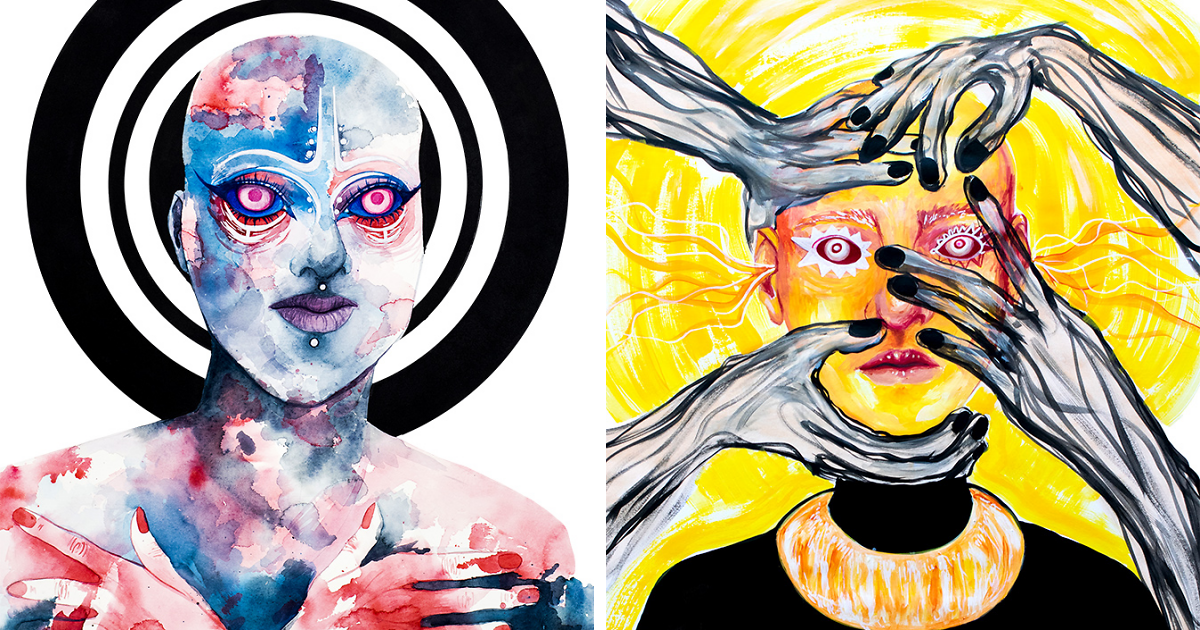
That is why illustrations about anxiety can feel so powerful. A single image can say what a hundred explanations struggle to capture: the tight chest, the racing thoughts, the strange loneliness of appearing “fine” while an invisible marching band stomps through your nervous system. When artists create illustrations based on anxiety and other inner experiences, they give shape to the unseen. They turn private fog into something people can point at and say, “Yes. That. That is what it feels like.”
This article explores the emotional language behind an eight-picture illustration series about anxiety, self-awareness, overstimulation, vulnerability, and the odd little comedy of being human. It also looks at why visual storytelling can be meaningful for mental health, how symbolic art helps people process feelings, and how artists can portray difficult emotions without making the work feel heavy enough to require its own gym membership.
Why Anxiety Makes Such Strong Visual Art
Anxiety is naturally visual. Even before we talk about it, many of us picture it. Some people imagine a knot. Others see a storm cloud, a maze, a shadow, a swarm of bees, a cracked mirror, or an inbox with 9,482 unread messages. Anxiety often shows up through sensations and mental images before it becomes clear language.
That is one reason anxiety illustrations connect so quickly with viewers. They bypass the stiff little receptionist in the brain who says, “Please explain your emotional state in a neat paragraph,” and go straight to recognition. An anxious person may not have the words for dread, rumination, or emotional exhaustion, but they may instantly understand a drawing of a tiny figure carrying a mountain-sized thought bubble.
Mental health experts often describe anxiety as involving intense worry, fear, tension, difficulty controlling thoughts, trouble sleeping, and physical symptoms like a fast heartbeat or restlessness. But art adds the missing layer: the atmosphere. It shows anxiety not merely as a list of symptoms but as a lived experience. A medical explanation tells us what happens. An illustration shows us how it feels to be inside it.
The Power of Turning Inner Experiences Into Pictures
Inner experiences are tricky creatures. They do not always walk politely into conversation wearing name tags. Sometimes sadness disguises itself as irritability. Sometimes fear pretends to be perfectionism. Sometimes burnout announces itself as “I’m just tired,” then proceeds to steal every spoon in the emotional kitchen.
Illustration gives those experiences a body. A messy feeling can become a character. A repeating thought can become a spiral. Emotional pressure can become a room with walls slowly moving inward. Once a feeling has a shape, it becomes easier to observe. The artist can step back and ask, “What is this thing? Why is it here? Does it need a cup of tea, a boundary, or a dramatic exit?”
Creative expression is not the same as therapy, and it should not be treated as a replacement for professional mental health care when someone needs support. Still, drawing, painting, journaling, and other creative practices can help people slow down, notice patterns, and communicate emotions that are difficult to say out loud. In other words, art can become a bridge between the private interior world and the outside world, where other people are trying their best to understand without accidentally saying, “Have you tried just not worrying?”
The Eight Illustrations: A Visual Tour Through Anxiety
Below is a conceptual reading of eight illustrations based on anxiety and other inner experiences. Each picture can stand alone, but together they form a visual diary: not a perfect explanation, but a sincere map of emotional terrain.
1. The Thought Swarm
The first illustration might show a person sitting quietly while a cloud of tiny scribbled creatures circles their head. From the outside, nothing dramatic is happening. They may even look calm. Inside, however, the brain has opened twenty-seven browser tabs, and one of them is playing panic music that cannot be located.
This image works because it captures the invisible labor of anxiety. Many anxious people spend enormous energy managing thoughts that others cannot see. The swarm represents worry, overthinking, second-guessing, and mental noise. The humor comes from its accuracy: anxiety rarely arrives as one polite concern. It brings luggage, cousins, snacks, and a full PowerPoint presentation about worst-case scenarios.
2. The Heavy Backpack
The second picture may portray a small figure carrying an oversized backpack labeled with words like “expectations,” “memories,” “deadlines,” “what if,” and “things I should have said differently in 2019.” The figure keeps walking, but every step looks harder than the last.
This illustration speaks to emotional weight. Anxiety is not always sudden panic; sometimes it is the quiet accumulation of pressure. Responsibilities, family expectations, school or work stress, social comparison, and unresolved feelings can pile up until daily life feels like hiking uphill while carrying a washing machine. The drawing reminds viewers that people who look functional may still be carrying more than anyone realizes.
3. The Room That Shrinks
Another illustration could show a person inside a room whose walls are slowly closing in. The window is visible, but hard to reach. The door exists, but the handle is strangely far away. The person is not trapped by chains; they are trapped by perception, pressure, and fear.
This is a strong metaphor for panic, overwhelm, and avoidance. Anxiety can make options feel smaller. Simple tasks may appear enormous. A phone call becomes a dragon. An email becomes a court summons. A social event becomes a three-act survival drama with snacks. By showing a shrinking room, the artist gives visual form to the feeling that life is becoming narrower, even when escape routes technically exist.
4. The Mask With a Smile
The fourth illustration may show a character holding a smiling mask in front of their face while their real expression behind it is tired, uncertain, or tense. This is one of the most relatable anxiety images because many people become excellent performers. They answer “I’m good!” with the confidence of a game-show host while their inner world is quietly chewing on the furniture.
This picture explores the gap between appearance and experience. Anxiety is often hidden because people fear being misunderstood, judged, or seen as dramatic. The mask is not fake in a cruel way; it is protective. It says, “I want to belong. I do not want to make things awkward. I am trying to get through this conversation without my nervous system doing jazz hands.”
5. The Tangled String
In the fifth picture, anxiety might appear as a massive knot of string wrapped around a person’s hands, chest, and feet. The person is trying to untangle it, but pulling one loop tightens another. Anyone who has tried to “solve” anxiety by thinking harder may recognize this immediately.
The tangled string represents rumination: the mental loop where one thought leads to another, then another, until the original problem has multiplied like rabbits with Wi-Fi. The beauty of this metaphor is that it suggests patience. Knots are not solved by yanking. They require gentleness, time, and sometimes admitting that scissors exist in the form of rest, support, boundaries, or professional help.
6. The Ocean Inside
The sixth illustration may show a person with waves inside their body. On the outside, they are standing in a grocery store, classroom, office, or bus stop. Inside, there is an entire ocean. The waves rise and fall, carrying fear, sadness, hope, embarrassment, memory, and that random song lyric that has been living rent-free in the brain since Tuesday.
This image broadens the theme beyond anxiety. Inner experiences are layered. People can feel nervous and hopeful, lonely and loved, exhausted and determined, all at once. The ocean metaphor allows complexity. It does not reduce the person to a diagnosis or mood. Instead, it shows emotional life as deep, moving, and sometimes inconveniently splashy.
7. The Tiny Safe Place
The seventh picture may show a small glowing shelter inside a dark landscape. Perhaps the shelter is made of books, blankets, plants, music, or soft light. A character sits inside it, not completely free from anxiety, but protected enough to breathe.
This illustration matters because anxiety art does not have to be only dark. Healing often begins with tiny safe places: a supportive friend, a familiar routine, a sketchbook, a walk, a pet, a quiet corner, a playlist, a therapist’s office, or the sacred American ritual of sitting in a parked car for five extra minutes before going inside. The safe place does not erase the storm. It reminds the viewer that shelter can exist within it.
8. The Open Door
The final illustration could show a person standing before an open door, with light spilling through. They are not sprinting into a perfect future. They are simply looking. Maybe one foot is forward. Maybe one hand still holds the old fear. That is enough.
This is a hopeful ending because it respects the pace of real growth. Anxiety rarely disappears because someone reads an inspirational quote in a pretty font. Progress is often smaller and less cinematic: sending the message, asking for help, naming the feeling, resting without earning it, trying again after a rough day. The open door symbolizes possibility, not instant transformation.
How Anxiety Illustration Helps Viewers Feel Less Alone
One of the most meaningful effects of anxiety illustration is recognition. A viewer sees an image and realizes that someone else has visited the same strange mental neighborhood. That recognition can reduce shame. It can turn “What is wrong with me?” into “Oh, this is a human thing. A difficult human thing, but still human.”
Illustrations are especially helpful because they invite interpretation. Two people can look at the same drawing and see slightly different stories. One might see social anxiety. Another might see burnout. Another might see grief, sensitivity, or the pressure to perform. This flexibility makes visual art emotionally inclusive. It does not demand one correct answer. It opens a door and lets people bring their own context inside.
In online spaces, this kind of art can travel quickly because it is shareable, immediate, and emotionally clear. A well-drawn anxiety metaphor can become a conversation starter between friends, families, classmates, coworkers, or communities. It can say gently, “This is what I have been trying to explain,” without requiring a person to deliver a TED Talk about their nervous system.
Why Humor Belongs in Art About Anxiety
Humor does not make anxiety less serious. It makes the conversation more breathable. When used kindly, humor can soften the edges of a difficult subject and make it easier for people to engage. A drawing of anxiety as a tiny goblin with a clipboard may be funny, but it also captures something true: anxious thoughts can be bossy, repetitive, and weirdly administrative.
The key is not to laugh at people who struggle. The key is to laugh with recognition. Humor says, “This is hard, and also, wow, the brain can be ridiculous.” That combination can feel freeing. It allows the artist to portray anxiety honestly without making every image feel like a locked basement. Sometimes the anxious mind is tragic. Sometimes it is absurd. Often, it is both before breakfast.
Creating Your Own Anxiety-Inspired Illustrations
Artists who want to draw anxiety or inner experiences can begin with questions rather than finished ideas. What shape does this feeling have? Is it sharp or soft? Heavy or electric? Does it whisper, shout, buzz, freeze, or follow? What color does it seem to be? If it were an animal, object, room, weather pattern, or monster, what would it look like?
There is no need to create polished artwork immediately. Sketching emotional thumbnails can be more useful than chasing perfection. A rough drawing of a tangled line may contain more truth than a technically perfect image that says nothing. Anxiety already loves perfectionism; do not hand it a tiny crown and let it supervise your sketchbook.
Try visual metaphors. Draw worry as a balloon tied to your wrist. Draw burnout as a phone battery stuck at one percent. Draw social anxiety as a spotlight that follows you into rooms where no one else even knows the lighting department is open. Draw hope as a stubborn houseplant growing through concrete. The more specific the metaphor, the more universal it often becomes.
What These Illustrations Teach About Emotional Honesty
Anxiety illustrations remind us that emotional honesty is not always dramatic. Sometimes it is quiet. Sometimes it looks like admitting, “I am overwhelmed,” or “I need a break,” or “I do not know why I feel this way, but I do.” Art creates room for that honesty without forcing it into a tidy conclusion.
The best illustrations about anxiety do not simply say, “Anxiety is bad.” They show texture. Anxiety can be protective, annoying, exhausting, embarrassing, motivating, isolating, and occasionally so oddly specific that it deserves its own sitcom. Portraying that complexity helps viewers understand themselves more gently.
These images also challenge the idea that mental health struggles must remain invisible. By drawing the inner world, the artist makes it shareable. Not simple. Not solved. Shareable. And sometimes that is the first step toward connection.
Personal Experiences Related to Creating Illustrations About Anxiety and Inner Worlds
Creating illustrations about anxiety often begins long before pencil touches paper. It starts in those small, private moments when a feeling becomes too loud to ignore. Maybe it happens while lying awake at night, replaying one sentence from the day like it is a suspicious security-camera clip. Maybe it happens while sitting in a crowded room and feeling oddly distant from everyone else. Maybe it happens when the body is tired, the mind is busy, and the heart seems to be trying to send a message using Morse code.
For many artists, drawing anxiety is not about making sadness look beautiful. It is about making confusion visible. The process can feel like opening a cluttered closet and carefully naming what falls out. Here is the fear of disappointing people. Here is the pressure to be productive. Here is the old memory that still makes noise. Here is the tiny hope hiding behind the laundry basket. When these pieces become images, they are easier to examine with compassion.
One common experience is discovering that the first sketch is rarely the final truth. An artist may begin by drawing a monster, only to realize the monster is actually a guard dog. It looks frightening, but it is trying to protect something tender. Another drawing might start as a storm and slowly become a map. This is the strange magic of visual self-reflection: the artwork talks back. Not literally, of course, unless the coffee is much too strong, but emotionally. It reveals what words skipped over.
There is also relief in exaggeration. Anxiety often feels enormous, so making it enormous on the page can be satisfying. A tiny person under a giant alarm bell. A head filled with bees wearing business suits. A calendar growing teeth. These images are playful, but they tell the truth. Exaggeration allows the artist to say, “Yes, this is how ridiculous and intense it feels,” without needing to apologize for the size of the emotion.
Another meaningful part of the process is sharing the work. Posting an anxiety illustration can feel vulnerable because it turns an internal confession into a public object. But the response is often surprising. People may comment that they feel the same way, that they never knew how to describe it, or that the drawing helped them explain their feelings to someone else. At that moment, the illustration stops being only personal. It becomes a small meeting place.
Creating these eight pictures can also teach patience. Some days, the work flows easily. Other days, even drawing a circle feels like negotiating with a stubborn moon. That inconsistency is part of the experience. Anxiety may affect focus, confidence, and energy, so the creative process has to make room for pauses. Rest is not failure. A blank page is not an enemy. Sometimes the most honest artistic decision is to step away, drink water, and return later without treating the unfinished sketch like a moral crime.
Over time, illustrating anxiety can build a private visual vocabulary. A certain shade may come to represent tension. A repeated character may become the anxious self. A doorway may symbolize change. A thread may represent overthinking. These symbols become familiar companions, helping the artist track emotional patterns. The sketchbook becomes less like a performance and more like a weather journal for the inner life.
Most importantly, creating art about anxiety can make the artist kinder toward their own mind. Instead of seeing anxiety only as an enemy, the artist can observe it as a signal, a story, or a frightened part that needs attention. That does not make anxiety pleasant. Nobody is inviting it to brunch. But it can make the relationship less hostile. Through illustration, the artist can say, “I see you. I understand you a little better. You do not get to drive the whole bus, but you can sit down and stop honking.”
Conclusion
Illustrations about anxiety and inner experiences matter because they make the invisible visible. They translate nervous energy, emotional weight, rumination, hidden exhaustion, and fragile hope into images that people can recognize. In an eight-picture series, each illustration becomes a window into a different corner of the inner world: the swarm of thoughts, the shrinking room, the smiling mask, the tangled string, the ocean inside, the safe place, and the open door.
The result is more than attractive artwork. It is emotional storytelling. It helps viewers feel less alone, gives language to complicated feelings, and reminds us that mental health conversations can be honest, creative, and even gently funny. Anxiety may be loud, dramatic, and terrible at respecting office hours, but art gives us a way to answer backwith lines, colors, symbols, and courage.












