
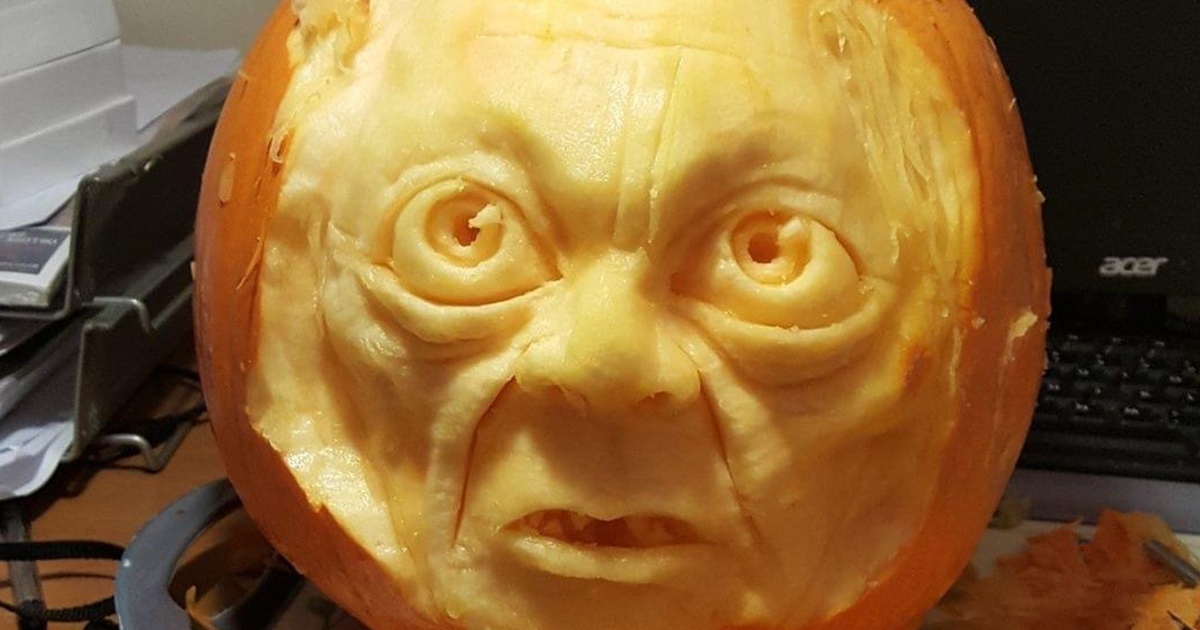
Some people look at a pumpkin and see pie. Others see a cheerful porch decoration. A rare and slightly pumpkin-dusted group of artists looks at one and thinks, “Yes, that orange vegetable definitely contains Albert Einstein’s cheekbones.” That is the delightful magic behind I Carve Pumpkins Into Famous Faces (12 Pics), a creative Halloween art project where ordinary pumpkins become glowing portraits of famous faces, pop culture icons, fantasy characters, and expressive personalities.
Pumpkin carving has come a long way from triangle eyes and a gap-toothed grin. Today, talented artists are using carving knives, clay tools, linoleum cutters, photo references, shading techniques, and a heroic amount of patience to turn pumpkins into temporary sculptures. The result is part Halloween decor, part fine art, and part “How on earth did they do that without the whole thing collapsing?”
The charm of famous face pumpkin carving is simple: it combines recognition with surprise. We already know the faces, characters, and cultural references. But seeing them emerge from pumpkin flesh, lit from within like a tiny orange theater, makes them feel fresh, funny, and oddly alive. Whether the subject is a wizard, a monster, a movie character, a baby-faced meme, or a historical genius, the pumpkin gives every portrait a warm, mischievous glow.
The Art Behind Famous Face Pumpkin Carving
Carving a famous face into a pumpkin is not the same as cutting out a basic jack-o’-lantern. A traditional carving uses empty space to create simple shapes. Portrait carving relies on depth, shadow, texture, and controlled translucency. In other words, the artist is not just removing pumpkin; they are sculpting light.
A pumpkin’s flesh behaves like a natural lampshade. The thinner the carved area, the brighter it glows when illuminated from inside. Thick areas stay darker. Medium-depth areas create warm midtones. With enough control, a carver can create the illusion of eyebrows, cheekbones, wrinkles, hairlines, teeth, robes, glasses, and even recognizable expressions. It is basically painting, except the paint is squash, the brush is sharp, and the canvas starts decomposing the moment you finish. Very dramatic. Very Halloween.
Artists who carve portraits often work from photographs. A strong reference image matters because a recognizable face depends on contrast. Photos with bold highlights, deep shadows, and clear silhouettes translate better than soft, blurry, low-contrast pictures. A celebrity with distinctive hair, glasses, facial hair, or a famous expression is usually easier to carve than someone whose face depends on subtle details. That is why wizards, monsters, comedians, villains, babies, and historical figures can make such fantastic pumpkin subjects.
Why Famous Faces Work So Well on Pumpkins
There is something wonderfully absurd about putting a famous person’s face on a pumpkin. A serious historical figure suddenly becomes porch decor. A beloved movie character becomes a glowing gourd. A fantasy wizard looks like he has been summoned from a fall harvest festival. That humorous contrast is part of the appeal.
Famous face pumpkin carving also rewards the viewer instantly. With abstract designs, people may admire the craftsmanship but not always connect emotionally. With a recognizable face, the reaction is immediate: “Waitis that who I think it is?” That tiny moment of discovery makes the carving memorable. It invites people to look closer, take photos, share the image, and argue with friends about whether the pumpkin’s nose is more accurate than the actor’s actual nose.
From Jack-O’-Lanterns to Pumpkin Portraits
The jack-o’-lantern tradition has roots in older Celtic customs, where people carved faces into root vegetables such as turnips before pumpkins became the preferred canvas in North America. Pumpkins were larger, softer, brighter, and much easier to hollow out than turnips. Anyone who has tried to carve a turnip can confirm that it feels less like crafting and more like negotiating with a stubborn rock.
Over time, pumpkin carving became a major part of American Halloween culture. What started as spooky faces and simple lanterns has expanded into a full creative universe: painted pumpkins, etched pumpkins, drilled patterns, fantasy creatures, horror scenes, celebrity portraits, and sculptural masterpieces. The modern pumpkin is no longer just a decoration. It is a seasonal art medium with a short shelf life and a flair for drama.
How Artists Turn a 2D Photo Into a 3D Pumpkin Face
The biggest challenge in famous face pumpkin carving is translation. A photo is flat. A pumpkin is round, uneven, ridged, moist, and occasionally determined to betray you. The artist must convert a two-dimensional image into a three-dimensional surface while keeping the face recognizable from the front.
First, the carver studies the image for the main shapes: the shadow under the nose, the curve of the mouth, the eye sockets, the forehead, the hairline, and any signature features. Then the design is sketched, transferred, or drawn directly onto the pumpkin. Some artists use stencils or digital editing to simplify the image into light and dark zones. Others work more freely, using the pumpkin’s natural shape as part of the design.
After the layout is finished, the carving begins in layers. Large background areas may be removed first. Then the artist refines the facial structure, shaving the pumpkin skin and flesh little by little. The deepest cuts create the brightest highlights. Shallow scrapes create softer glows. Uncut skin remains dark and gives the face definition. A good portrait pumpkin is not carved in one heroic slash. It is built gradually, like a sculpture that smells faintly of soup.
The Tools That Make the Magic Happen
Basic pumpkin carving kits can handle simple designs, but portrait carving usually calls for more precise tools. Artists may use clay loop tools, linoleum cutters, wood-carving gouges, craft knives, rotary tools, scrapers, pins, washable markers, and small saws. A spoon or scoop removes the seeds and stringy pulp, while smaller tools refine the surface.
Lighting is just as important as cutting. Many portrait pumpkins are designed to be viewed with a light inside or behind them. LED lights, battery-operated candles, glow sticks, or small floodlights can bring out details without overheating the pumpkin. Real candles may look nostalgic, but they can dry out the flesh, speed up decay, and create fire risks. The pumpkin may be temporary, but your curtains should not be.
Choosing the Right Pumpkin for a Famous Face
Not every pumpkin is ready for its close-up. A good portrait pumpkin should have a smooth carving surface, firm skin, a stable base, and enough thickness to allow shading. Deep ridges can distort facial features, so artists often look for pumpkins with one relatively flat side. A pumpkin that stands upright is also helpful because no one wants a celebrity portrait slowly rolling off the table like it is leaving the awards show early.
Freshness matters. Avoid pumpkins with soft spots, cracks, punctures, mold, or bruises. A strong stem can be a good sign, but pumpkins should be lifted from the bottom rather than carried by the stem. For carving, size also matters. Larger pumpkins offer more working space, which is helpful for faces with complex features such as glasses, beards, wrinkles, or dramatic hair.
Why Temporary Art Feels So Special
One of the most poetic things about pumpkin carving is that it does not last. A finished portrait may take hours, but eventually the pumpkin softens, sags, and returns to nature. This temporary quality can feel frustrating, especially after carving tiny wrinkles into a wizard’s forehead with surgical concentration. But it also gives the art its emotional punch.
Temporary art asks us to enjoy the moment. Like sand sculptures, ice carvings, chalk murals, or elaborate cakes, pumpkin portraits are meant to be admired now. They invite photos, laughter, conversation, and then acceptance. The pumpkin will not last forever, and that is part of the fun. It is Halloween’s gentle reminder that even the most impressive gourd-based masterpiece is still, underneath all that artistry, a vegetable with a deadline.
What Makes the 12 Pics So Fun to Look At
The famous face pumpkin collection stands out because each piece plays with recognition. The titles alone add humor and personality, turning familiar names and characters into pumpkin-themed puns. That playful naming style makes the project feel approachable rather than overly serious. It says, “Yes, this took skill, but also, please enjoy the fact that a pumpkin is pretending to be famous.”
Some carvings lean into fantasy and pop culture. Others highlight exaggerated expressions or iconic features. The best ones do not need perfect realism; they need enough visual clues for the viewer’s brain to complete the image. A beard, a hat, a pair of round glasses, a wrinkled forehead, or wide baby eyes can do more than a hundred tiny details. In pumpkin portraiture, suggestion is often stronger than perfection.
Beginner Tips for Carving a Famous Face Pumpkin
Start With a High-Contrast Image
Choose a photo where the face is easy to recognize even in black and white. Strong shadows around the eyes, nose, mouth, and hairline will make the carving easier to read when lit.
Pick a Pumpkin With a Smooth Side
Look for a firm pumpkin with minimal ridges on the area you plan to carve. The smoother the surface, the less your celebrity portrait will accidentally look like it aged 200 years overnight.
Thin the Inside Wall
After removing the seeds and pulp, scrape the inner wall behind the design area. A thinner wall allows light to pass through more evenly and helps create better highlights.
Use Layers Instead of Holes
For portrait carving, avoid cutting everything all the way through. Try shaving the skin and flesh at different depths. This creates shadows, midtones, and highlights.
Light as You Go
Place a light inside the pumpkin during the process to check your progress. Details that look flat in daylight may glow beautifully in the dark, while other areas may need deeper carving.
Preserve the Finished Pumpkin
Clean tools before carving, remove as much pulp as possible, and keep the finished pumpkin cool. Some carvers use a diluted disinfecting solution and seal exposed edges with petroleum jelly to slow drying. Battery-operated lights are safer and gentler than open flames.
Creative Ideas Inspired by Famous Face Pumpkins
If you want to create your own gallery of famous face pumpkins, choose a theme. A movie night lineup could include classic villains, beloved heroes, or animated characters. A music-themed display might feature singers with iconic hairstyles or stage looks. A history-inspired porch could include presidents, inventors, artists, or scientists. A family-friendly display could use cartoon characters, cute monsters, or pets dressed as celebrities.
You can also build a “guess the face” Halloween game. Place the carved pumpkins on a table or porch, number each one, and let guests write down their guesses. Add prizes for the most correct answers, the funniest wrong answer, and the person who insists every pumpkin looks like Nicolas Cage. There is always one.
Why This Kind of Pumpkin Art Goes Viral
Famous face pumpkin carving is made for the internet. It is visual, seasonal, surprising, and easy to share. People love seeing everyday materials transformed into something extraordinary. The contrast between a humble pumpkin and a recognizable face creates a scroll-stopping effect. Add a clever pun or a glowing nighttime photo, and suddenly the pumpkin has more personality than half the people at a costume party.
Another reason this art spreads online is that it feels achievable and impossible at the same time. Viewers can imagine buying a pumpkin and trying it themselves, but they can also appreciate the skill required. That combination inspires admiration without feeling distant. It is not marble sculpture in a museum. It is a pumpkin on a porch, carved by someone with patience, creativity, and possibly a very understanding kitchen table.
Experiences Related to Carving Pumpkins Into Famous Faces
The first experience most people have with pumpkin carving is wonderfully messy. There is usually a kitchen table covered in newspaper, a bowl full of seeds, a marker that refuses to write on pumpkin skin, and at least one person saying, “This will be easy,” shortly before discovering that pumpkin anatomy has opinions. But when the goal is to carve a famous face, the experience becomes more focused, more artistic, and much funnier.
One of the most memorable parts is choosing the subject. You quickly learn that not every famous face is pumpkin-friendly. Some people have subtle features that disappear once translated into orange flesh. Others are perfect because they have strong silhouettes, wild hair, expressive eyes, famous glasses, or a dramatic mouth. Characters with hats, beards, scars, helmets, or exaggerated expressions are especially satisfying. A plain portrait can be difficult, but a wizard with a beard? The pumpkin practically asks for it.
Transferring the image is where confidence often meets reality. On paper, the design looks brilliant. On the pumpkin, the face suddenly stretches around curves and ridges like it has been reflected in a funhouse mirror. This is the moment when many beginners realize that pumpkins are not flat posters. They are bumpy orange planets. The trick is to simplify. Focus on the features that matter most. If the eyes, mouth, and signature outline are recognizable, the viewer will forgive small distortions.
The carving process itself can be strangely relaxing. Scraping away thin layers feels almost meditative. You begin to understand how light will move through the flesh. A deeper cut brightens the cheek. A shallow scrape softens a wrinkle. Leaving the skin untouched creates a dramatic shadow. It becomes less about cutting and more about controlling glow. When the face finally appears under the light, it feels like a tiny Halloween miracle.
There are also plenty of mistakes, and most of them are funny after the panic fades. Cut too deep and a nostril becomes a crater. Shave too much from the forehead and your celebrity looks permanently surprised. Forget to support a thin section and an eyebrow may fall off like it resigned from the project. The best solution is usually creativity. A broken edge can become a scar. A strange shadow can become dramatic lighting. A failed portrait can become “abstract horror,” which is just art with better marketing.
Displaying the finished pumpkin is the reward. Turn off the lights, place the LED inside, and suddenly the carving has personality. Friends and family lean in, guess the face, laugh at the title, and take pictures. Even if the pumpkin is not perfect, it becomes a conversation piece. That is the real joy of carving famous faces into pumpkins: it brings people together around something handmade, seasonal, and delightfully unnecessary.
The final experience is letting go. A carved pumpkin will not stay flawless. The edges dry. The surface softens. The glow changes. But that short lifespan makes the project feel more special. You carve, you share, you enjoy, and then you start thinking about next year’s subject. Maybe a movie legend. Maybe a singer. Maybe a historical genius. Maybe your neighbor, if you want things to get weird at the homeowners’ association meeting.
Conclusion
I Carve Pumpkins Into Famous Faces (12 Pics) celebrates everything that makes Halloween creativity so addictive: humor, skill, surprise, and a little bit of chaos. These pumpkin portraits show how a simple seasonal tradition can become expressive art when an artist pays attention to light, shadow, texture, and character. From fantasy icons to famous personalities, each carved face proves that pumpkins are more than porch decorations. They are temporary canvases waiting for someone brave enough to give them eyebrows.
Whether you are an experienced carver or a curious beginner, famous face pumpkin carving is a playful way to push beyond the classic jack-o’-lantern. Start with a strong photo, choose a smooth pumpkin, carve in layers, use safe lighting, and do not panic if the result looks slightly haunted. It is Halloween. Slightly haunted is practically the assignment.











