
Note: This guide explains Horse Race as a social, point-based card game using chips, candies, tokens, or scorekeeping only. It is not gambling advice and does not require real-money betting.
If you like card games that create instant drama with almost no setup, the Horse Race card game deserves a spot at your table. It has everything: suspense, loud cheering, dramatic comebacks, and one unlucky “horse” that refuses to leave the gate like it forgot its shoes. Best of all, you only need a standard 52-card deck, a few players, and enough table space to build a tiny racetrack out of cards.
Horse Race is a fast party-style card game where the four Aces act as racehorses. Each suithearts, diamonds, clubs, and spadescompetes to cross the finish line first. Players choose a horse, place friendly point bets, and watch as the dealer flips cards one by one. Whenever a suit appears, the matching Ace moves forward. The rules are simple, but the excitement builds quickly because every flipped card can change the race.
This guide covers how to play Horse Race card game, the basic rules, safe point-based betting ideas, common variations, hosting tips, and real table experience so you can run a game that feels like a miniature Kentucky Derby without needing a hat, a horse, or a suspiciously expensive mint julep.
What Is the Horse Race Card Game?
The Horse Race card game is a race simulation played with a regular deck of cards. The four Aces are removed from the deck and placed at the starting line. Each Ace represents one horse. The rest of the cards determine which horse advances. If the dealer flips a heart, the Ace of Hearts moves forward. If the dealer flips a club, the Ace of Clubs moves forward. The first Ace to pass the final track card wins the race.
The game works well because it is easy to understand in under a minute. New players do not need to memorize rankings, hand values, or complicated scoring charts. The only thing that matters during the race is the suit of each card. That makes Horse Race a great choice for family game night, casual parties, game clubs, classroom math demonstrations, or any group that enjoys dramatic nonsense in card form.
What You Need to Play
Basic Equipment
- One standard 52-card deck
- Three or more players, although two can play casually
- Tokens, chips, coins, candies, or a score sheet for point-based bets
- A table or flat surface
- One person to act as dealer and announcer
Jokers are usually removed for the classic version. You can add them later for special variations, but beginners should start with a clean 52-card deck. Fewer surprises at the beginning means fewer arguments about whether a Joker is a meteor, a banana peel, or “clearly a turbo boost.”
Horse Race Card Game Setup
Step 1: Remove the Four Aces
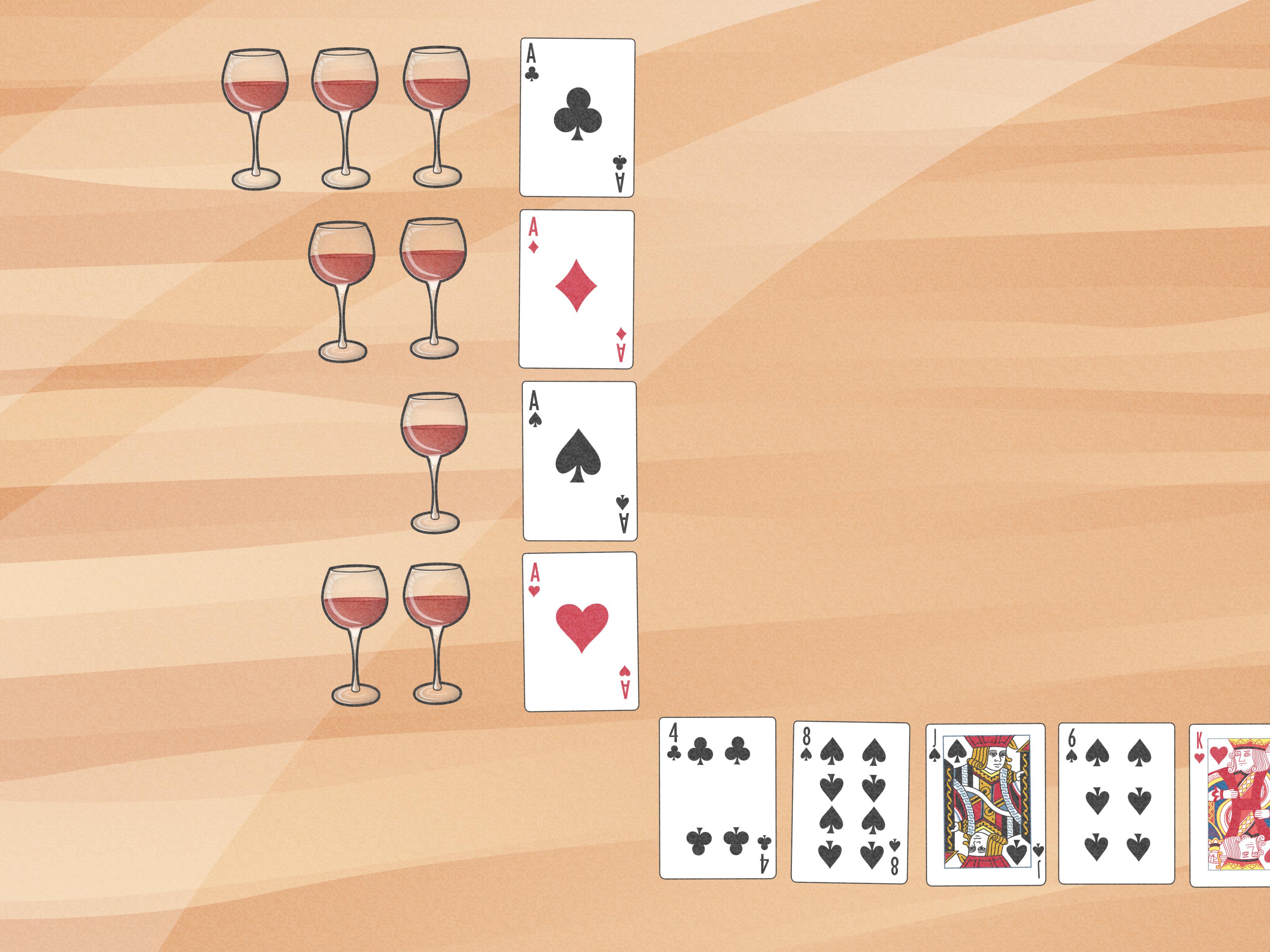
Take the Ace of Hearts, Ace of Diamonds, Ace of Clubs, and Ace of Spades out of the deck. Place them face up in a vertical or horizontal row. These are your horses. Each suit is one competitor.
Step 2: Build the Racetrack
Shuffle the remaining cards. Then place six to eight cards face down in a line beside the Aces to form the racetrack. Many players use seven track cards because it creates a good balance between quick play and suspense. A shorter track produces faster races; a longer track gives more room for comebacks.
The layout often looks like an “L.” The Aces start at the bottom or side, and the face-down track cards stretch away from them. To win, a horse must move past the last card on the track.
Step 3: Choose the Dealer and Announcer
The dealer flips the cards during the race. The announcer narrates the action. These can be the same person, and honestly, the announcer is half the fun. A good announcer can turn “the Ace of Clubs moved one space” into “Clubs bursts forward like it just heard the dinner bell.”
Step 4: Place Friendly Point Bets
Before the race starts, players choose which horse they think will win. Keep the stakes casual and non-monetary. Use points, tokens, candies, or bragging rights. For example, each player might place five tokens on Hearts, three on Spades, or one dramatic all-in prediction on Diamonds because “red cards feel lucky today.”
How to Play Horse Race Card Game
Step 1: Start Flipping Cards
The dealer flips the top card from the remaining deck and places it face up in a discard pile. Only the suit matters. The rank does not matter in the basic version. A 2 of Hearts and a King of Hearts both move the Ace of Hearts one space forward.
Step 2: Move the Matching Horse
After each card is flipped, move the Ace of the matching suit one space along the track. If the dealer flips a spade, the Ace of Spades advances one space. If the next card is another spade, Spades moves again. This is how a horse can suddenly break away from the field.
Step 3: Continue Until One Horse Wins
The dealer keeps flipping cards and moving horses until one Ace passes the final track card. That Ace wins the race. Players who backed the winning horse receive points according to the scoring system chosen before the race began.
Example Round
Imagine the track has seven spaces. The players choose their horses: Ava picks Hearts, Ben picks Clubs, Mia picks Spades, and Jordan picks Diamonds. The dealer flips the first card: 9 of Clubs. Clubs moves one space. Next card: Queen of Hearts. Hearts moves. Then comes 3 of Hearts, so Hearts moves again. Suddenly Ava is yelling like she personally trained this imaginary horse since birth.
As the race continues, Spades catches up with three quick moves, Diamonds lags behind, and Clubs sits in the middle looking respectable but not inspiring. Then the dealer flips four diamonds over the next few turns, and Diamonds charges from last place to first. That is the charm of Horse Race: the game can look decided, then change completely in seconds.
Basic Rules at a Glance
- The four Aces are the horses.
- The remaining cards create the draw deck.
- Six to eight face-down cards form the racetrack.
- Players choose a horse before the race begins.
- The dealer flips one card at a time.
- The suit of the flipped card moves the matching Ace forward one space.
- The first Ace to pass the finish line wins.
- Use points, tokens, or scorekeeping instead of real-money betting.
Point Bets and Scoring Options
The word “bet” in Horse Race does not have to mean money. In fact, the game is often more fun when the stakes are silly. Think plastic chips, pretzels, stickers, score points, or the right to choose the next playlist song. The goal is excitement, not financial heartbreak over the Ace of Clubs having a lazy afternoon.
Simple Win Bet
This is the easiest format. Each player chooses one horse to win. If that horse wins, the player earns a fixed number of points. For example, every correct pick earns 10 points. This version is perfect for beginners because nobody has to calculate odds.
Token Bet
Give each player 20 tokens at the beginning of the session. Before each race, players may place one to five tokens on any horse. If their horse wins, they receive double their token amount in points. If the horse loses, the tokens are removed from their score pile. Keep the limits small so everyone can stay involved for multiple rounds.
Place Bet
In a place bet, players choose a horse to finish first or second. Because this is easier than picking the exact winner, the reward should be smaller. For example, a correct win pick earns 10 points, while a correct place pick earns 5 points.
Exact Order Bet
For experienced players, allow an exact order prediction. A player might predict: first Hearts, second Spades. This is harder, so it can pay more points. However, decide before the race how to determine second place. The simplest method is to continue flipping cards after the winner crosses the finish line until another horse finishes.
First Out of the Gate
This quick side bet rewards the first horse to move. Before the dealer flips the first card, players predict which suit will appear first. It adds instant excitement and gives everyone something to cheer for right away.
Last Horse Standing
For comedy value, players can also predict which horse will be in last place when the winner crosses the finish line. This is especially fun because people begin cheering for failure with alarming enthusiasm. Poor Diamonds may be losing by four spaces, and suddenly it has fans.
How Odds Work in Horse Race
Some traditional versions use a visible track and set different odds based on how many cards of each suit appear on the course. The idea is simple: if several cards of one suit are already outside the draw deck, fewer cards of that suit remain to move that horse forward. That horse becomes less likely to win, so it may receive a bigger point reward.
For casual play, you can use a friendly scoring table like this:
| Cards of That Suit Visible on Track | Suggested Point Reward |
|---|---|
| 0 cards | 5 points |
| 1 card | 8 points |
| 2 cards | 12 points |
| 3 cards | 18 points |
| 4 cards | 25 points |
This system rewards players who take a bigger chance on a horse with fewer remaining cards in the deck. For younger players or casual groups, skip odds entirely and use fixed scoring. The simpler the table, the faster the laughter arrives.
Popular Horse Race Card Game Variations
1. Face-Down Track Variation
In this version, the track cards remain face down. Players do not know which suits have already been removed from the deck, so every horse feels equally mysterious. This is great for casual games because nobody needs to calculate anything. It is pure suspense.
2. Face-Up Track Variation
For a more strategic game, place the track cards face up. Players can see how many cards of each suit are unavailable. If four hearts are visible on the track, the Ace of Hearts has fewer heart cards left to push it forward. That horse becomes a long shot. Players who enjoy probability will love this version; players who hate math may stare at the table like it owes them money.
3. Faltering Horse Rule
The faltering rule adds chaos. When a horse reaches a new track card for the first time, reveal that track card. The suit shown on the track card moves backward one space. For example, if a face-down track card is revealed as a diamond, the Ace of Diamonds moves back one space. A horse at the starting gate cannot move backward beyond the start.
This rule creates hilarious reversals. A horse can be leading confidently, only to falter at the wrong moment and give the rest of the field a chance. It is the card-game equivalent of tripping over a dramatic soundtrack.
4. Joker Stumble Variation
Add one or two Jokers to the draw deck. When a Joker appears, trigger a special event. A common rule is that the leading horse moves back one space. Another option is that all horses except the leader move forward one space. Choose one Joker rule before the race begins so nobody negotiates mid-chaos.
5. Long Track Derby
Use nine or ten track cards instead of six or seven. This creates a longer race with more lead changes. It is best for groups that want a bigger event rather than a quick filler game. The long track also gives the announcer more time to develop completely unnecessary horse backstories.
6. Sprint Race
Use only four or five track cards. This version is fast, loud, and unpredictable. It works well when many people are waiting to play or when you want several races in a short time.
7. Tournament Mode
Play five races and keep score across all rounds. Award points for first, second, and third place predictions. At the end, the player with the most points becomes the stable champion, racing commissioner, or whatever ridiculous title your group agrees sounds official.
8. Auction Horse Race
In an auction-style variation, players bid points to “own” a horse before the race. The owner of the winning horse receives a larger reward, and the owner of the runner-up may receive a smaller bonus. Use pretend points only, and keep bids capped so one enthusiastic player does not spend their entire score on Spades before the first card is flipped.
Strategy Tips for Friendly Play
Horse Race is mostly luck, but a few smart habits can make the game more interesting. In face-up track games, pay attention to which suits are already visible. A horse with fewer remaining suit cards has a tougher path. In face-down games, spread your predictions across different horses during a tournament instead of backing the same suit every race. The deck has no loyalty, no memory, and absolutely no respect for your “lucky hearts” theory.
Also, watch the scoring format. If the reward for a risky horse is much higher, it may be worth choosing a long shot. If every winning horse pays the same, simply pick the suit you like and enjoy the ride. Horse Race is not a serious strategy game; it is a suspense machine wearing a card-game costume.
Common Mistakes to Avoid
Changing Rules Mid-Race
Decide the rules before the first card is flipped. Do not add Joker powers, bonus points, or “my horse gets a motivational speech” halfway through. Clear rules keep the game fair and funny.
Using Too Many Variations at Once
Beginners should start with the basic version. Add faltering, Jokers, auctions, or side predictions later. Too many twists can make a simple game feel like a tax form with hooves.
Making the Track Too Long
A long track can be fun, but it may slow the pace. Six to eight cards is usually the sweet spot. Use shorter tracks for younger players or quick party rounds.
Forgetting Which Horse Moved
Move the Ace immediately after each flip. If the table gets loud, the dealer should announce the suit clearly: “Seven of Clubs, Clubs moves!” This prevents confusion and suspicious accusations from the Hearts fan club.
Best Group Size for Horse Race
Horse Race works best with three to eight players. With only two players, the game is still playable, but the cheering energy is lower. With a big group, the game becomes a full event. More players means more predictions, more noise, and more people acting personally betrayed by the 4 of Diamonds.
For larger gatherings, assign one dealer and one announcer. The dealer handles cards, while the announcer keeps the race entertaining. Rotate these roles every few races so everyone gets a chance to control the table.
Why Horse Race Is So Fun
The magic of Horse Race is that it turns random card flips into a story. At the beginning, all four horses are equal. A few cards later, one horse becomes the favorite, one becomes the underdog, and one appears to have stopped for snacks. People naturally create narratives around the suits. Hearts becomes “the beauty queen.” Spades becomes “the dark horse.” Clubs becomes “the reliable worker.” Diamonds becomes “the rich cousin who shows up late but somehow wins.”
Because the game is quick, losing does not feel painful. You simply reshuffle and run another race. That makes Horse Race ideal as an opener before a longer game night or as a casual activity when people want something easy but energetic.
Experiences and Practical Hosting Tips
After playing Horse Race with different types of groups, one lesson becomes obvious: the announcer matters almost as much as the cards. A quiet dealer can run the game correctly, but a lively announcer turns it into a mini sporting event. Even simple phrases like “Spades takes the outside lane!” or “Hearts is making a late push!” make players more invested. The cards are random, but the storytelling is where the table comes alive.
Another useful experience is to keep the first race extremely simple. Do not start with auctions, odds, face-up probability, faltering, and Jokers all at once. New players should learn the rhythm first: flip, announce, move, cheer. Once everyone understands that flow, you can add one variation at a time. The best first upgrade is usually the faltering rule because it creates big reactions without requiring much extra explanation.
For family-friendly play, tokens are better than complicated score sheets. Give each player the same number of chips or candies at the start. Let them place one to three tokens per race. This creates the feeling of a friendly wager without turning the game into anything serious. If children are playing, use stickers, buttons, or paper points. The prize can be something harmless, like choosing the next game, picking dessert, or receiving the highly prestigious title of “Barnyard Boss.”
Table layout also matters. Leave enough space between the Aces and the track cards so each horse can clearly move forward. If the Aces overlap or crowd the track, players may lose track of who is winning. For a cleaner setup, place the four Aces in a row and put the track cards above them. Move each Ace upward as its suit appears. This makes the race easy to read from every seat.
One common hosting mistake is letting the race drag too long. A ten-card track sounds epic, but it can feel slow if the group is new. Seven cards is usually the best starting point. It provides enough time for lead changes without turning the race into a documentary. If players are laughing and asking for rematches, then try a longer “championship race” at the end.
For competitive groups, tournament mode is the most satisfying format. Play five races, award 10 points for picking the winner, 5 points for picking second place, and 3 points for predicting the first horse out of the gate. This gives players multiple ways to score and keeps everyone interested even if their main horse loses. It also creates fun rivalries. Someone will absolutely claim they have a “system.” They do not. But let them enjoy the illusion.
Finally, keep the tone light. Horse Race is at its best when the table treats every comeback as legendary and every loss as comedy. The game is not about deep strategy or perfect odds. It is about building suspense from a deck of cards and watching normal adults become emotionally attached to the Ace of Clubs. That is the real win.
Conclusion
The Horse Race card game is simple, fast, and surprisingly entertaining. With four Aces as horses and the remaining deck as the engine of movement, every flipped card pushes the race closer to a dramatic finish. Beginners can learn the rules in minutes, while experienced players can spice things up with point bets, side predictions, faltering horses, Jokers, long tracks, and tournament scoring.
The best way to play is to keep it friendly, use non-monetary points or tokens, and focus on the fun of the race. Whether you are hosting a game night, planning a party activity, or teaching probability through cards, Horse Race delivers suspense without needing complicated rules. Shuffle the deck, line up the Aces, pick your horse, and prepare to cheer for cardboard like it has a championship bloodline.












