
At first glance, a Savannah cat can look like a tiny leopard that got bored of the jungle and decided your sofa had better lumbar support. With its tall legs, bold spots, huge ears, and confident runway-walk energy, this breed is one of the most recognizable domestic cats in the world. Still, identifying a Savannah cat is not always as simple as pointing at a spotted feline and shouting, “Aha! Mini cheetah!” Bengals, Egyptian Maus, Ocicats, and even some mixed-breed cats can wear spots beautifully.
A true Savannah cat is a hybrid breed developed from the African serval and domestic cats. That ancestry gives the breed its exotic appearance, athletic body, alert expression, and famous “dog-like” personality. However, Savannah cats vary by generation, from early-generation F1 and F2 cats that tend to show stronger serval influence to later-generation cats that may look and behave more like energetic domestic companions.
This guide explains how to identify a Savannah cat in eight practical steps, using physical traits, coat pattern, body shape, behavior, documentation, and legal considerations. Whether you are researching a possible pet, checking a rescue listing, or simply trying to determine whether your neighbor’s “very tall tabby” is actually a designer athlete in a fur coat, these steps will help you look closely and think clearly.
What Is a Savannah Cat?
A Savannah cat is a domestic cat breed created by crossing a domestic cat with an African serval, a wild cat known for long legs, oversized ears, and a spotted coat. The goal of responsible Savannah breeding is to produce a domestic companion with an elegant, serval-inspired look while preserving a manageable temperament.
The breed is known for a tall, lean, graceful body; dark spotting; long legs; large upright ears; a medium-length tail; and a curious, active personality. Savannah cats are often described as intelligent, loyal, adventurous, and highly athletic. Many enjoy climbing, puzzle toys, leash training, and interactive play. Some even like water, which is a delightful surprise until your cat decides the sink is now a private swimming pool.
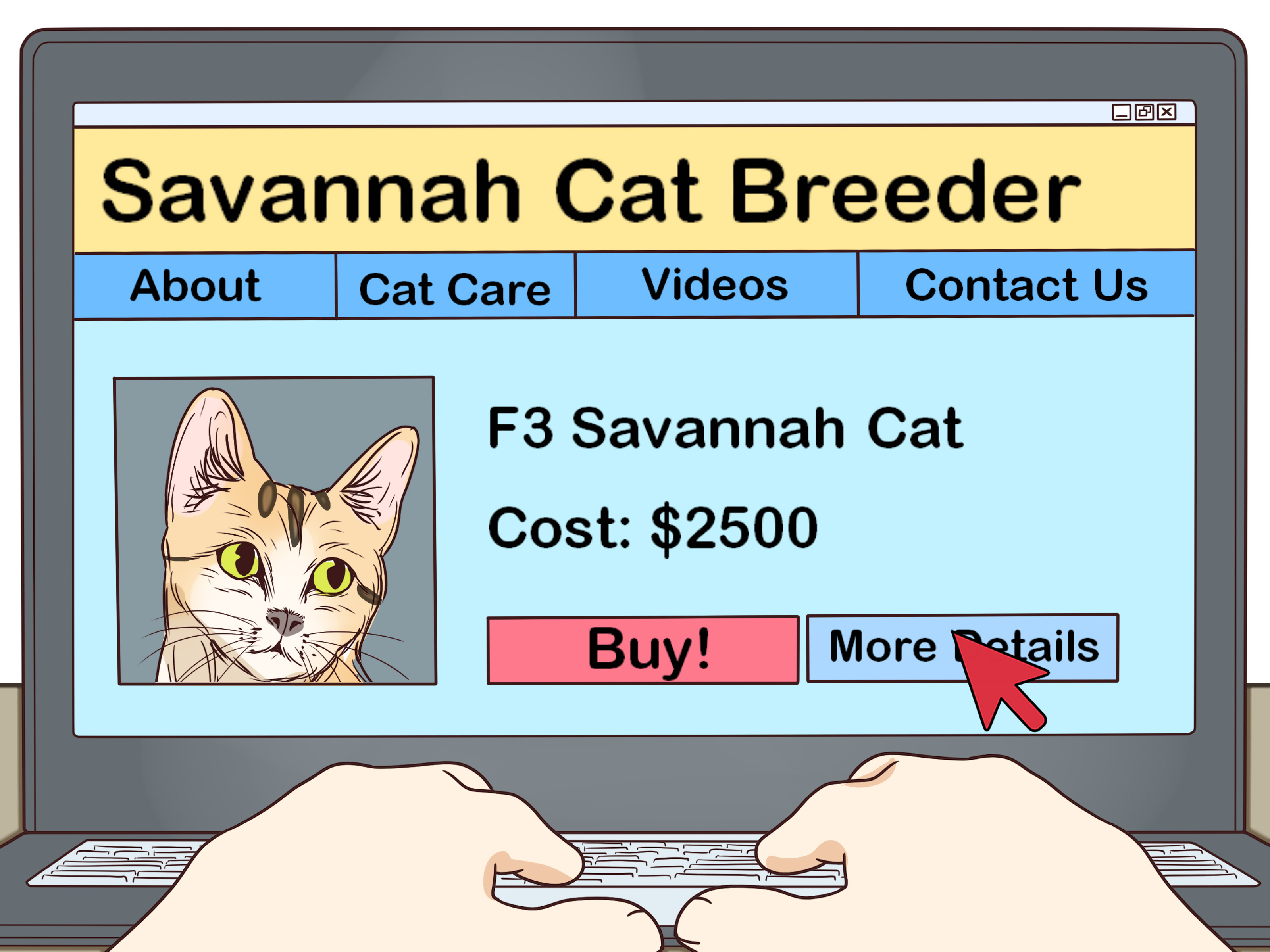
Because the breed has hybrid ancestry, Savannah cats are often described using filial generation labels. An F1 Savannah has one serval parent. An F2 has a serval grandparent. F3 means the serval is a great-grandparent, and so on. The generation can influence size, appearance, behavior, availability, and legal status.
How to Identify a Savannah Cat: 8 Steps
Step 1: Look for a Tall, Lean, Athletic Body
The first clue is overall body shape. Savannah cats usually appear taller and longer than the average domestic cat. Their legs are noticeably long, their torso is lean, and their build is muscular without looking bulky. Instead of the round, plush shape of many house cats, a Savannah often has a stretched, elegant outline.
A Savannah cat may look larger than its actual weight because of its height and leg length. Early-generation Savannahs are often the largest, while later generations may be closer in size to other large domestic breeds. Males are commonly larger than females, though individual size varies widely.
When observing the body, look for:
- A long, lean torso
- Long legs, especially in proportion to the body
- Firm, athletic muscle
- A graceful but powerful stance
- A high-hipped, alert posture
If the cat looks compact, round, fluffy, or heavily built like a Maine Coon or Persian, it is probably not showing classic Savannah type. A Savannah should look like it was designed for sprinting, leaping, and judging your furniture arrangement from the highest shelf in the room.
Step 2: Check the Coat Pattern for Bold Spots
The coat is one of the most important identification features. Savannah cats are best known for bold, dark spots. The spots may be round, oval, or slightly elongated, and they usually appear clearly across the body. A proper Savannah look is not a blurry tabby pattern or classic marble swirl. The spotting should be distinct and dramatic.
Recognized Savannah coat colors include brown spotted tabby, black silver spotted tabby, black, and black smoke. Brown spotted tabbies may range from warm golden tones to cooler tan shades, with dark brown or black markings. Silver Savannahs have a pale silver background with dark spots. Black Savannahs and black smoke Savannahs can be harder to identify because the spots may appear more subtle, especially in low light.
Look for these coat clues:
- Clear dark spots rather than rosettes or marbling
- Short to medium coat length
- A coat that lies relatively flat against the body
- A slightly coarse texture with softer spots
- Possible striping on the legs, face, and tail
Do not rely on spots alone. Bengals also have spotted or rosetted coats, and some mixed-breed cats have natural spots or broken mackerel tabby markings. Savannah identification works best when the coat pattern matches the body shape, ears, head, tail, and behavior.
Step 3: Study the Ears
Savannah ears are one of the breed’s signature features. They are typically large, tall, and set high on the head. The ears may look wide at the base and rounded at the tips, giving the cat an alert, radar-dish expression. A Savannah often appears as if it can hear a treat bag opening three neighborhoods away.
One especially interesting feature is the presence of ocelli, or light markings on the backs of the ears. These markings are sometimes called “eye spots.” They are inspired by the serval’s wild appearance and can help distinguish a Savannah from many ordinary spotted cats.
When checking the ears, notice:
- Large size compared with the head
- High placement on the skull
- Rounded ear tips rather than sharp points
- Possible pale markings or ocelli on the back
- An alert, upright expression
If a cat has small, low-set, or heavily tufted ears, it may not match the classic Savannah profile. Ear shape is not absolute proof, but it is a strong visual clue.
Step 4: Examine the Head and Face
The Savannah head should look somewhat small in proportion to the body, especially when compared with the cat’s long legs and tall ears. The face often has a distinctive exotic expression: alert, curious, and slightly serious, as though the cat is calculating whether the top of your refrigerator is reachable in one jump.
The muzzle is generally moderate, and the nose may appear broad. Many Savannahs have dark tear-stain markings running from the inner corners of the eyes down toward the whisker pads. These facial markings can create a dramatic look similar to wild spotted cats.
Key facial features include:
- A relatively small head compared with body size
- A long neck that adds to the tall silhouette
- Dark tear markings near the eyes
- An alert, intelligent gaze
- A balanced face rather than an extremely flat or round one
Eye color can vary, so it is not the most reliable identification point. Instead, focus on the overall head shape, ear size, facial markings, and expression.
Step 5: Notice the Tail Length and Markings
A Savannah cat’s tail is usually medium in length rather than extremely long. It may look a bit shorter than expected when compared with the cat’s long legs and body. The tail often has dark rings or bands and a dark tip. This detail helps complete the serval-inspired look.
Check whether the tail appears:
- Medium length
- Thick enough to look balanced but not fluffy
- Marked with dark rings or bars
- Finished with a dark tip
- In proportion with the cat’s athletic frame
A very long, thin, whip-like tail or a huge plume tail may suggest another breed influence. Again, tail traits should be considered with the whole cat, not as a single yes-or-no test.
Step 6: Observe the Cat’s Movement and Energy
Savannah cats are famous for being active, curious, and athletic. They are often excellent jumpers and climbers. A Savannah may leap onto high furniture, investigate cabinets, follow people around, play fetch, or show interest in water. This breed does not usually specialize in being decorative couch garnish.
Behavioral clues may include:
- High energy and strong curiosity
- Confident exploration of new spaces
- Interest in climbing and high perches
- Willingness to learn leash walking or fetch
- Strong bonding with familiar people
- Possible fascination with running water
However, behavior is not proof of breed. Plenty of domestic cats are energetic, and some Savannahs are calmer, especially later-generation cats. Personality depends on generation, socialization, training, environment, and individual temperament. A shy cat is not automatically “not a Savannah,” and a wild little curtain-climber is not automatically one.
Step 7: Understand Savannah Generations
Generation labels are essential when identifying a Savannah cat. The “F” number tells you how many generations the cat is removed from the serval ancestor. F1 cats are closest to the serval, while F5, F6, F7, and later generations are further removed and generally more domestic in size and temperament.
Here is a simple breakdown:
- F1 Savannah: One serval parent and one domestic cat parent.
- F2 Savannah: A serval grandparent.
- F3 Savannah: A serval great-grandparent.
- F4 and later: Further removed from the serval line.
Earlier generations often show stronger serval-like traits, such as larger size, longer legs, bigger ears, and more intense energy. Later generations may still look very Savannah-like, especially when carefully bred, but they may be smaller and easier for many households to manage.
One important point: generation percentage is not the same as quality of appearance. A well-bred later-generation Savannah may look more breed-typical than a poorly bred earlier-generation cat. That is why visual identification should focus on structure, coat, ears, markings, and documentation rather than numbers alone.
Step 8: Confirm with Registration, Breeder Records, or a Veterinarian
The most reliable way to identify a Savannah cat is documentation. Visual clues are helpful, but papers are stronger. A registered Savannah should have breeder records, pedigree information, and possibly registration through a recognized cat association. If you are adopting from a rescue or private owner, ask for any available veterinary records, purchase documents, microchip information, or breeder details.
Helpful confirmation methods include:
- Pedigree or registration papers
- Breeder records showing filial generation
- Veterinary records identifying the breed
- Microchip registration details
- Professional evaluation by an experienced breeder or veterinarian
DNA tests may provide ancestry clues, but they may not always confirm breed identity with the precision people expect. For a breed like the Savannah, paperwork and expert evaluation are usually more meaningful than guessing from photos.
Savannah Cat vs. Bengal Cat: Common Confusion
The Savannah and Bengal are often confused because both can have spotted coats and exotic appeal. However, they are different breeds with different ancestry and body type. Bengals usually have a more compact, muscular body and may display rosettes, which are two-toned markings that look like leopard spots. Savannahs usually have a taller, leggier frame and solid dark spots rather than rosettes.
Here is a quick comparison:
- Savannah: Tall, lean, long-legged, large ears, solid spots, serval ancestry.
- Bengal: Muscular, lower-slung, often rosetted coat, Asian leopard cat ancestry.
- Egyptian Mau: Naturally spotted domestic breed, usually smaller and less extreme in ear and leg length.
- Ocicat: Spotted domestic breed with no wild ancestry, generally more moderate in type.
If the cat looks like a spotted athlete standing on stilts, think Savannah. If it looks like a muscular little jungle panther with rosettes, think Bengal. If it looks like it simply won the tabby-pattern lottery, keep investigating.
Legal and Ethical Considerations Before Identifying or Buying One
Identifying a Savannah cat is not just a fun visual puzzle. In some areas, ownership may be restricted by state, county, or city law, especially for early generations. Laws can vary widely, and they can change. Before buying, adopting, transporting, or breeding a Savannah cat, always check local regulations.
Ethical ownership also matters. Savannah cats are intelligent and active. They need enrichment, climbing space, interactive play, secure housing, and responsible veterinary care. Many do best with experienced cat owners who understand high-energy breeds. A bored Savannah can become a four-legged home renovation committee, and unfortunately, its design choices may involve shredded blinds.
Responsible owners should provide:
- Large cat trees and vertical climbing space
- Daily interactive play
- Puzzle feeders and enrichment toys
- Secure windows, doors, and outdoor enclosures if used
- Veterinary care from a cat-savvy professional
- Legal ownership documentation where required
Quick Identification Checklist
Use this checklist when evaluating whether a cat may be a Savannah:
- Does the cat have a tall, lean, athletic body?
- Are the legs noticeably long?
- Are the ears large, upright, and high-set?
- Is the coat short to medium and clearly spotted?
- Are the spots solid and dark rather than classic tabby swirls?
- Does the tail have dark rings and a dark tip?
- Does the cat show high energy, curiosity, and climbing ability?
- Is there paperwork confirming Savannah ancestry or generation?
If you can answer yes to most of these questions, the cat may be a Savannah or Savannah mix. If you also have registration or pedigree records, the identification becomes much stronger.
Common Mistakes When Identifying a Savannah Cat
Mistake 1: Assuming Every Spotted Cat Is a Savannah
Spots are exciting, but they are not exclusive to Savannah cats. Several breeds and mixed-breed cats can display spots. Always evaluate body type, ears, tail, behavior, and records.
Mistake 2: Judging by Size Alone
Some Savannahs are large, but not all are enormous. Later-generation Savannahs may be much closer to ordinary domestic cats in size. A giant cat could also be a Maine Coon mix, a large domestic shorthair, or simply a feline who has never missed dinner.
Mistake 3: Ignoring Local Laws
Savannah cat ownership is regulated in some places. Early-generation cats may be restricted even where later generations are allowed. Always verify legal requirements before bringing one home.
Mistake 4: Confusing Energy with Wildness
Savannah cats are active, but activity level alone does not confirm the breed. A domestic kitten at 2 a.m. can also perform advanced parkour with no serval ancestry whatsoever.
Real-Life Experience: What Identifying a Savannah Cat Feels Like in Practice
The first time you try to identify a Savannah cat, the process can feel a little like being a detective in a very furry mystery novel. You start with the obvious clue: the spots. They are usually the first thing that catches your eye. But after a few minutes, you realize the spots are only Chapter One. The real story is in the proportions.
Imagine visiting a friend who says, “I think my cat might be part Savannah.” The cat walks into the room, and immediately you notice the legs. They are long enough to make the coffee table look nervous. The body is lean, not round. The neck has an elegant stretch, and the ears look oversized in the best possible way. The cat pauses, studies everyone in the room, and then jumps onto a high shelf with the confidence of a professional athlete arriving at work.
That is when the identification process becomes more practical. You look at the coat. Are the spots clear and dark? Are they scattered across the body rather than forming classic tabby stripes? You check the tail. Is it ringed with a darker tip? You glance at the ears. Are they tall, rounded, and alert? If the cat turns around, you may even notice pale markings on the backs of the ears.
Then comes the personality test, though it is not a scientific exam. The cat may follow people around, inspect bags, open cabinets, or show interest in running water. Some Savannahs act almost dog-like, greeting guests and demanding involvement in household activities. Others are more selective and reserved. The key is not to expect every Savannah to behave the same way, but to recognize the common pattern: intelligence, energy, curiosity, and athletic confidence.
In real adoption situations, visual identification can be tricky. A rescue cat may have no papers. A seller may use the word “Savannah” because it sounds glamorous. Photos can be misleading, especially if the cat is young, stretched in a strange pose, or photographed from an angle that makes every kitten look like a rare jungle creature. That is why documentation matters. A real Savannah should ideally come with records showing parentage and generation.
Another practical lesson: do not fall for dramatic labels without evidence. Terms like “F1 look,” “wild blood,” or “rare exotic type” can be marketing language. Ask calm, specific questions. What generation is the cat? Is there a pedigree? Is the cat registered? Are there veterinary records? Is ownership legal in your city and state? A responsible breeder or rescue will not be offended by these questions. In fact, they should appreciate them.
Living with or meeting a Savannah also teaches you that identification is only the beginning. These cats need space, enrichment, and attention. A Savannah is not just a pretty spotted statue. It is a busy, thinking animal that may need climbing walls, puzzle toys, leash training, and daily play. If you identify one correctly, the next question is whether the home environment fits the cat’s needs.
The best experience-based advice is simple: look at the whole cat, not one feature. Spots plus long legs plus large ears plus athletic movement plus documentation make a strong case. Spots alone make a cute cat. And honestly, cute cats are wonderful too. They just may not be Savannah cats.
Conclusion
Learning how to identify a Savannah cat requires more than admiring a spotted coat. The breed’s true signature is a combination of features: a tall and lean body, long legs, large upright ears, bold dark spots, a medium ringed tail, alert expression, athletic movement, and often a curious, high-energy personality. Generation labels and official records add important confirmation, especially because Savannah cats can vary widely in size and temperament.
If you are considering a Savannah cat, take time to verify documentation, understand the generation, check local laws, and prepare for an active companion. A Savannah can be affectionate, intelligent, and unforgettable, but it is not a low-effort decoration for the living room. This is a cat that may love you deeply, follow you loyally, and still attempt to scale your bookcase before breakfast.
In the end, the smartest way to identify a Savannah cat is to combine observation with evidence. Look carefully, ask good questions, and remember: when a cat looks like a tiny wildcat, moves like an athlete, listens with satellite-dish ears, and has paperwork to back it up, you may very well be looking at a Savannah.












