
Hooking up a small propane tank to a grill sounds like one of those backyard tasks that should take about thirty secondsright up until you are staring at the regulator, the valve, the hose, and a tank that suddenly looks like it came from a spaceship. The good news? The process is simple when you slow down, follow the right order, and treat propane with the respect it deserves.
Whether you are connecting a standard 20-pound propane cylinder to a gas grill or using a smaller one-pound camping-style propane cylinder with a compatible tabletop grill, the same big rules apply: check compatibility, keep everything outdoors, connect the parts securely, test for leaks, and only light the grill when you are confident the setup is safe.
This guide walks you through how to hook up a small propane tank to a grill in six practical steps, with safety tips, troubleshooting advice, and real-world experience that can save your cookout from becoming an accidental science experiment.
Before You Start: Know What “Small Propane Tank” Means
In backyard grilling, “small propane tank” can mean two different things. The most common is the 20-pound propane cylinder used with full-size gas grills. It is “small” compared with home heating tanks but still large enough to power many grilling sessions. The other version is the one-pound disposable or refillable cylinder used with portable grills, camping grills, and tailgate setups.
The connection method depends on your grill. Full-size grills usually use a hose and regulator that connects directly to a 20-pound tank. Portable grills may accept a one-pound cylinder directly or may require an approved adapter hose to connect to a larger cylinder. The golden rule is simple: never force a fitting, never modify a regulator, and never use a homemade adapter. Propane equipment is not the place for “I saw a guy do it online” engineering.
Tools and Supplies You’ll Need
You do not need a professional toolbox to connect a propane tank to a grill. In fact, most standard grill connections are designed to be tightened by hand. Gather these items before you begin:
- A compatible propane tank or cylinder
- Your grill’s hose and regulator
- An approved adapter hose, if your grill requires one
- Dish soap and water for a leak test
- A spray bottle or small brush
- Your grill owner’s manual
- A well-ventilated outdoor area
A wrench is usually not needed for standard Type 1 propane grill connections. Over-tightening can damage fittings, so if the manual says hand-tighten, believe it. The manual may not be glamorous reading, but neither is explaining to your guests why dinner is now “smoked by panic.”
How to Hook Up a Small Propane Tank to a Grill: 6 Steps
Step 1: Place the Grill and Propane Tank in a Safe Outdoor Area
Start with location. Set your grill outdoors in a well-ventilated area on a stable, level surface. Keep it away from siding, deck railings, dry leaves, paper plates, overhangs, garage doors, and anything else that would prefer not to be introduced to open flame. Never use a propane grill indoors, inside a garage, under a closed porch, or in a tent.
Place the propane tank upright. A standard 20-pound cylinder should sit in the grill’s tank holder or on a flat surface where it cannot tip. A one-pound cylinder should be installed according to the portable grill’s instructions, usually upright or at the angle specified by the manufacturer. Propane tanks are designed to work in specific positions, so do not get creative with sideways balancing acts.
Also make sure all burner control knobs are turned to the OFF position before you touch the tank valve. This prevents gas from flowing unexpectedly when the cylinder is connected.
Step 2: Inspect the Tank, Valve, Hose, and Regulator
Before connecting anything, inspect everything. Look at the propane tank for dents, heavy rust, damaged threads, or a missing safety cap. Check the tank valve and the rubber gasket inside the valve opening. The gasket should look round, smooth, and intact. If it is cracked, warped, missing, or suspiciously tired-looking, do not connect the tank.
Next, inspect the grill’s hose and regulator. Look for cracks, brittle areas, melted spots, sharp bends, or signs of chewing from animals. Spiders and insects can also create blockages around burner tubes, especially after a grill has been sitting unused. If the hose is damaged, replace it with the correct manufacturer-approved part before using the grill.
If you are using a one-pound propane cylinder, check that it is made for your grill or adapter hose. The threads should be clean, the cylinder should not be rusty or swollen, and the connection should screw in smoothly. If you feel resistance early, stop and realign it. Cross-threading propane fittings is a fast way to turn a simple task into a replacement-part shopping trip.
Step 3: Attach the Regulator or Adapter to the Propane Tank
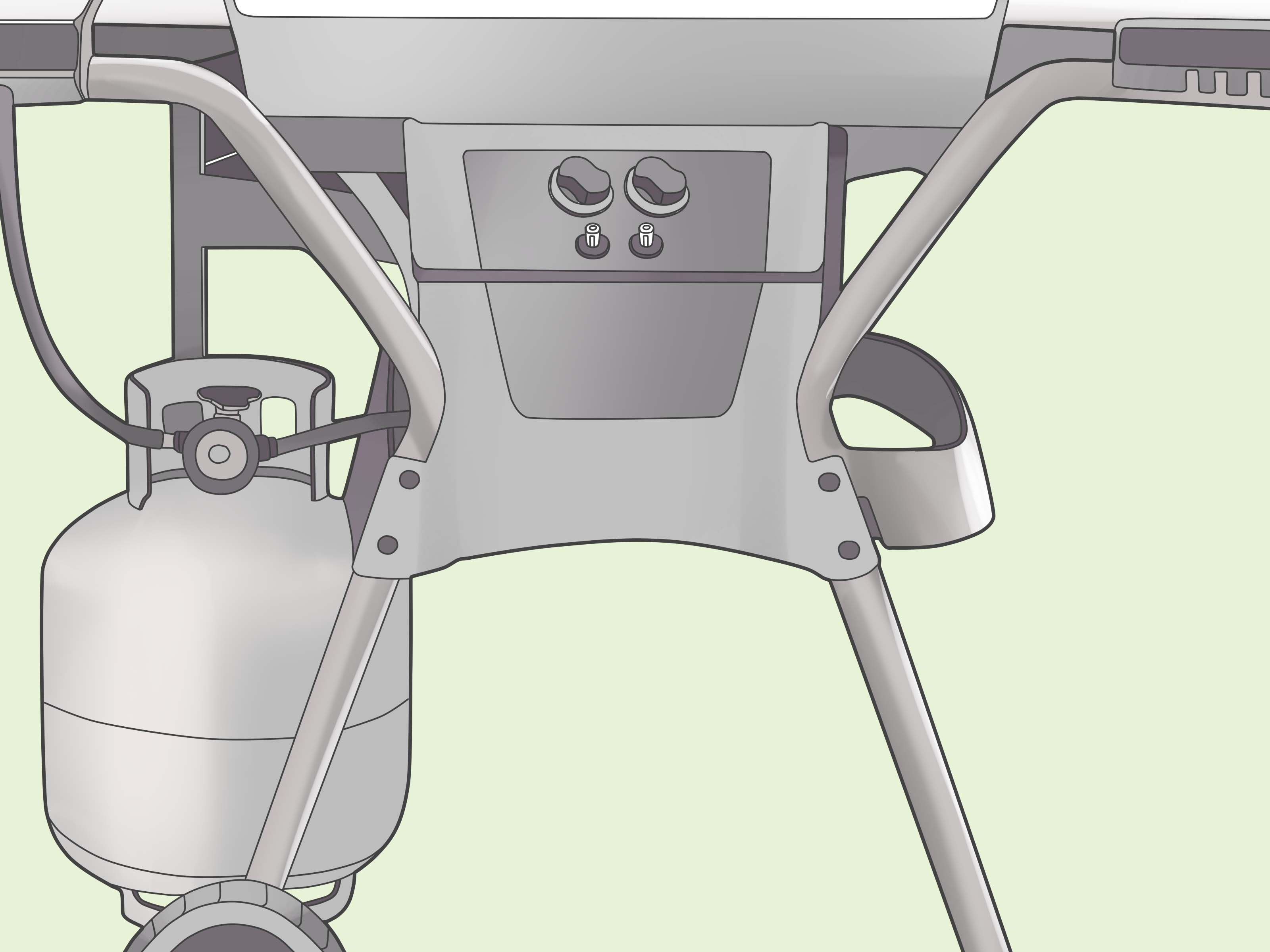
For a standard 20-pound propane tank, make sure the tank valve is closed by turning the handwheel clockwise. Then take the grill regulator coupling nut and align it with the propane tank valve. Turn the coupling nut clockwise by hand until it is snug. Do not use pliers unless your manual specifically says to do so.
The regulator is important because it controls gas pressure between the tank and the grill. Without the correct regulator, your grill may burn unevenly, fail to light, or become unsafe. Always use the regulator designed for your grill model.
For a one-pound propane cylinder, follow the portable grill instructions. Many portable grills allow the cylinder to screw directly into the regulator assembly. Hold the regulator steady, align the cylinder threads carefully, and turn until snug. If you are using an adapter hose, connect the hose to the grill first if the manual recommends that order, then connect the other end to the propane cylinder or tank.
One important tip: open propane valves slowly later in the process. Opening the valve too quickly can sometimes trigger a safety flow-limiting feature in the regulator, leading to weak flames and much confusion. Your grill is not broken; it may simply think something is wrong and has gone into “safety turtle mode.”
Step 4: Perform a Soapy Water Leak Test
Do not light the grill yet. First, perform a leak test. Mix a small amount of dish soap with water in a spray bottle or bowl. A 50/50 mix works well because it creates visible bubbles. Apply the solution to the connection between the propane tank and regulator, the valve area, the hose fittings, and any connection points recommended in your manual.
Now slowly open the propane tank valve by turning it counterclockwise. Watch the soapy areas closely. If you see steady bubbles growing, there is a leak. Turn the tank valve off immediately. Tighten the connection gently, then test again. If bubbles continue, disconnect the tank and do not use the grill until the faulty part is replaced or inspected by a qualified technician.
Never use a match, lighter, or flame to check for leaks. That old-school method belongs in the Hall of Terrible Ideas, somewhere between “deep-fry a turkey indoors” and “store fireworks next to the grill.” The bubble test is simple, cheap, and much safer.
Step 5: Open the Tank Valve Slowly and Light the Grill
Once the leak test shows no bubbles, you can prepare to light the grill. Keep the grill lid open while lighting. This prevents gas from collecting under the lid. Slowly open the tank valve all the way or according to your grill manual. Then turn on the burner specified for ignition and press the igniter button.
If the grill does not light within a few seconds, turn the burner knob back to OFF, close the propane valve, and wait several minutes before trying again. This waiting period allows any accumulated gas to disperse. Do not keep clicking the igniter while gas continues to flow. That is not persistence; that is how backyard eyebrows become temporary.
After the first burner lights, you can turn on the remaining burners as directed. Look at the flame. A healthy propane grill flame is usually mostly blue with some yellow tips. Large yellow flames, roaring flames, weak flames, or flames lifting away from the burner may indicate a regulator issue, dirty burner ports, low fuel, or an incorrect connection.
Step 6: Shut Down Properly After Cooking
When you are done grilling, shut down in the correct order. Turn off the propane tank valve first by rotating it clockwise. Then turn the burner control knobs to OFF. This helps clear gas from the line and reduces the chance of accidental flow next time.
Let the grill cool completely before covering it. Store the propane tank upright outdoors in a well-ventilated area, away from heat sources and ignition sources. Do not store propane cylinders inside a house, basement, garage, shed, or vehicle. If you transport a tank for refill or exchange, secure it upright, keep the vehicle ventilated, and go directly to your destination.
Common Mistakes to Avoid When Connecting a Propane Tank
Using the Wrong Adapter
Not every adapter hose is right for every grill. Some portable grills have built-in regulators, while others rely on a specific hose-and-regulator setup. Using the wrong adapter can cause poor performance or unsafe pressure. Buy parts that match your grill brand, model, and fuel type.
Skipping the Leak Test
A leak test takes less than two minutes. Skipping it saves almost no time and removes one of the most important safety checks. Test whenever you connect a new tank, exchange or refill a cylinder, replace a hose, or use the grill after a long break.
Opening the Valve Too Fast
If your grill lights but only produces tiny flames, the regulator may have restricted gas flow. Turn everything off, disconnect the regulator, wait a minute, reconnect it, and slowly open the propane valve. Slow and steady wins the burger race.
Storing a Spare Tank Under the Grill
A spare propane tank should not be stored under or near the grill. Heat and flame increase risk. Keep extra cylinders upright, outdoors, and away from cooking areas.
Troubleshooting: What If Something Seems Wrong?
If you smell gas, turn off the propane valve if it is safe to do so, move away from the grill, and keep flames, sparks, and electrical switches away from the area. If the smell continues or you cannot stop the leak, leave the area and call your local fire department or emergency services.
If the connection will not tighten, inspect the threads and gasket. The regulator may be misaligned, cross-threaded, or incompatible. If bubbles appear during the leak test, try reconnecting once. If the leak continues, replace the hose, regulator, or tank as needed.
If the grill has weak flames, check that the tank has fuel, the valve was opened slowly, the burner knobs were off during connection, and the hose is not kinked. Also inspect burner tubes for spider webs, grease, or debris. A grill that sits unused can become a tiny apartment complex for insects, and they rarely pay rent.
Real-World Experience: Lessons From Hooking Up Propane Tanks
The first time many people connect a propane tank, they overthink it. That is completely normal. Propane has a serious reputation, and rightly so. But once you understand the sequence, the process becomes routine: off, inspect, connect, test, open slowly, light safely.
One of the most useful habits is creating a small pre-grill checklist. Before every cookout, glance at the hose, confirm the tank is upright, make sure the grill is away from anything flammable, and check that the lid is open before ignition. These steps become automatic, just like checking whether you remembered the buns before the burgers are already sizzling.
Another experience worth sharing: do not wait until guests arrive to test a new propane setup. If you bought a new grill, replaced a regulator, switched to a portable tank, or added an adapter hose, test everything earlier in the day. That way, if a fitting leaks or a part does not match, you still have time to fix it. There is no culinary heartbreak quite like holding a tray of marinated chicken while discovering your regulator does not fit.
For portable grills, the biggest lesson is stability. A one-pound propane cylinder is convenient, but the grill should sit on a strong, level surface. Tailgates, picnic tables, and campsite benches can wobble. Before lighting, give the grill a gentle stability check. If it rocks, slides, or sits too close to napkins and chip bags, move it. Portable does not mean careless.
For full-size grills, weak flames are one of the most common frustrations after connecting a propane tank. Many times, the issue is not the tank at all. The burner knobs may have been left open during connection, or the tank valve may have been opened too quickly. Resetting the regulator often solves the problem: turn off the tank and burners, disconnect the regulator, wait briefly, reconnect it, and open the tank valve slowly.
Another practical tip is to keep a dedicated spray bottle labeled “leak test” near your grill supplies. Fill it with water and a little dish soap before the season starts. When leak testing is easy, you are more likely to do it. And yes, labeling it matters. Otherwise, someone may use it on patio plants and wonder why the basil tastes like kitchen sink.
Propane tank storage is also a lesson people often learn late. Do not bring a tank indoors because it looks cleaner, safer, or more convenient. Propane cylinders belong outside in a ventilated location. Keep them upright, protected from tipping, and away from high heat. If you exchange tanks, check the new one before leaving the store if possible. Look for the valve condition, dents, rust, and the general “does this look like it survived a monster truck rally?” factor.
Finally, respect your nose. Propane has a strong rotten-egg odor added so leaks are easier to detect. If you smell it, stop. Do not shrug it off, do not light the grill, and do not assume it will “burn off.” Turn off the valve if safe, move away, and handle the issue before cooking. A delayed dinner is annoying; an unsafe grill is worse.
Once you have connected propane tanks a few times, the process becomes second nature. The key is not speed. The key is consistency. A safe propane connection is a calm little ritual before the fun begins: check the parts, make the connection, bubble-test the fittings, open the valve slowly, and grill with confidence. After that, your biggest problem should be whether the hot dogs are “lightly charred” or “emotionally overcooked.”
Conclusion
Learning how to hook up a small propane tank to a grill is mostly about following the right order and refusing to skip safety steps. Place the grill outdoors, inspect the tank and regulator, connect the fittings by hand, test for leaks with soapy water, open the valve slowly, and shut everything down properly after cooking.
Whether you are using a 20-pound cylinder for a backyard barbecue or a one-pound cylinder for a portable grill, compatibility and leak testing matter. Once you build the habit, connecting a propane tank becomes quick, safe, and pleasantly boringwhich is exactly what you want when fire, fuel, and dinner are all invited to the same party.











