
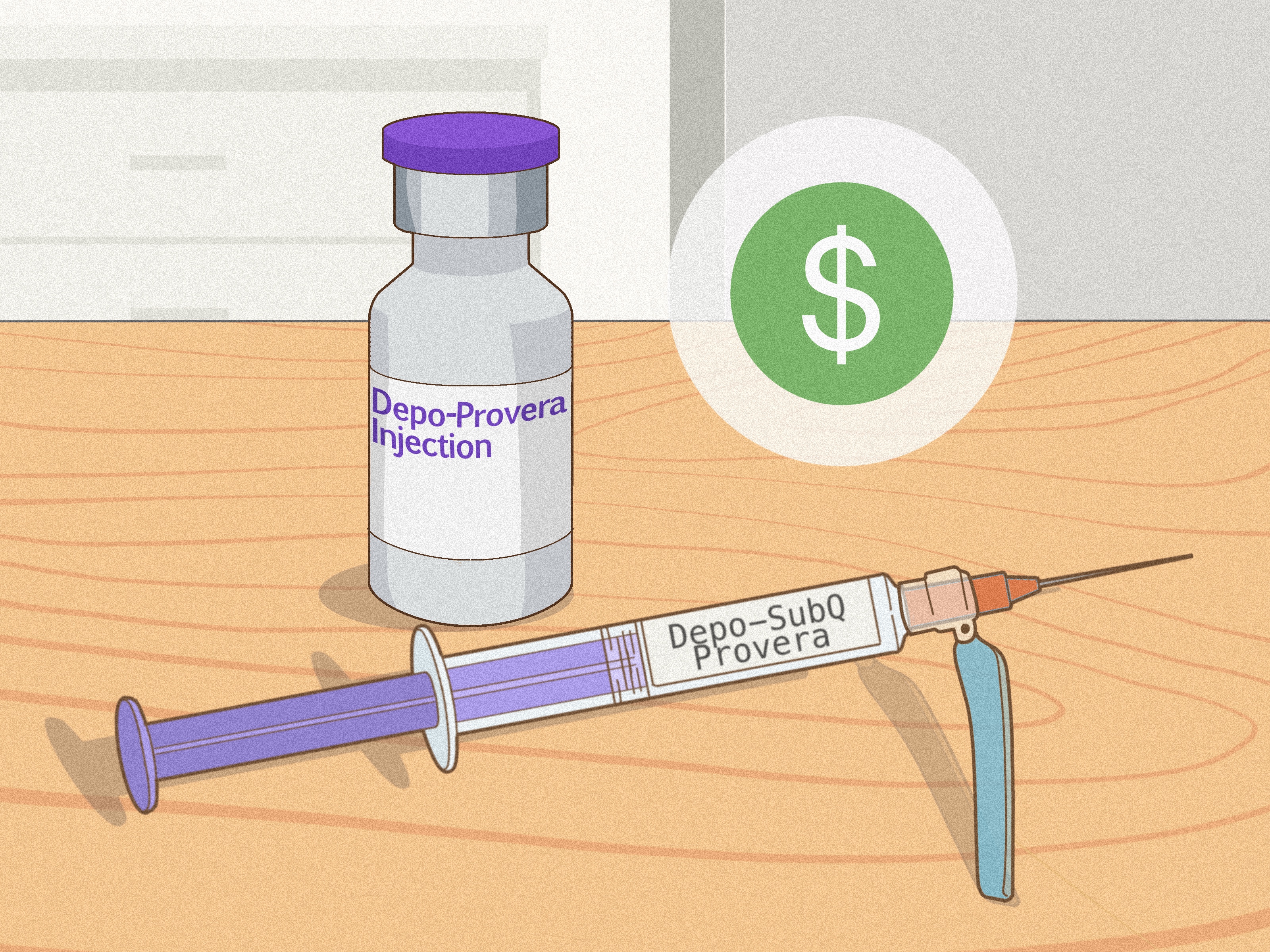
Important medical note: This guide is educational and should not replace training from a licensed healthcare professional. Depo-Provera CI is usually given by a healthcare professional as an intramuscular injection. Some people may be prescribed a different at-home version, Depo-SubQ Provera 104, but self-administration should only happen after a clinician provides instructions, confirms the correct product, and explains what to do if something goes wrong. In other words: this is healthcare, not a “watch one video and wing it” situation.
What Is a Depo Shot?
The Depo shot, often called Depo-Provera, DMPA, or the birth control shot, is an injectable form of contraception that uses the hormone medroxyprogesterone acetate. It helps prevent pregnancy mainly by stopping ovulation, thickening cervical mucus, and making the uterine lining less receptive. For people who do not want to remember a daily pill, it can feel like a scheduling upgrade: one appointment every few months instead of a tiny tablet staring at you every morning like a judgmental mint.
In the United States, two progestin-only injectable contraceptive forms are commonly discussed: DMPA-IM, which is injected into muscle, and DMPA-SC, which is injected under the skin. They are not interchangeable without medical guidance because the formulation, dose, route, and instructions differ. Depo-Provera CI is the intramuscular product most people mean when they say “Depo shot.” Depo-SubQ Provera 104 is the subcutaneous version that may be used for self-injection when prescribed and taught by a clinician.
Before You Begin: Safety Comes First
A Depo shot is not just “a quick poke.” It is a prescription medication with benefits, risks, timing rules, side effects, and follow-up needs. Before anyone receives it, a healthcare professional should review health history, possible pregnancy, current medications, allergies, breast cancer history, unexplained vaginal bleeding, liver disease, blood clot or stroke history, bone health concerns, and personal reproductive goals.
The shot does not protect against sexually transmitted infections. Condoms or other barrier protection are still important if STI prevention is part of the plan. That detail matters because birth control and STI protection are cousins, not twins.
How to Give a Depo Shot Safely: 14 Steps
Step 1: Confirm the exact Depo product
Start by identifying whether the prescription is for Depo-Provera CI, the intramuscular version, or Depo-SubQ Provera 104, the subcutaneous version. This matters because the route and dose are different. A safe Depo shot begins with the right medication, right patient, right timing, and right route. Mixing these up is not a small clerical oops; it can affect effectiveness and safety.
Step 2: Make sure a qualified professional is involved
For Depo-Provera CI, administration is typically done by a healthcare professional. If at-home self-injection is being considered, it should be specifically prescribed and taught using the correct subcutaneous product. Do not attempt to copy clinical injection technique from random internet instructions. Needles deserve respect, and so does your body.
Step 3: Review medical history and possible contraindications
Before giving or receiving a Depo shot, review medical conditions that may make the method unsuitable. These can include current or past breast cancer, unexplained vaginal bleeding, severe liver disease, certain clotting or cardiovascular risks, and allergies to medication ingredients. A clinician may also ask about migraines, diabetes, bone health, postpartum status, breastfeeding, depression history, and medications that could interact with hormonal contraception.
Step 4: Confirm the person is not pregnant
The first Depo shot is often timed around the menstrual cycle or another point when pregnancy can be reasonably ruled out. If timing is uncertain, a pregnancy test may be needed. This step is not meant to be awkward; it is simply good medical housekeeping. Nobody wants a preventable “wait, what?” moment later.
Step 5: Explain how the shot works and what it cannot do
Patient counseling should cover the basics: Depo helps prevent pregnancy, must be repeated on schedule, can change bleeding patterns, may cause side effects, and does not protect against STIs. People should understand that lighter periods, irregular bleeding, spotting, or no periods can happen. For some users, that is a perk. For others, it is annoying. Either way, it is better when it is not a surprise.
Step 6: Discuss timing and backup birth control
Timing affects when pregnancy protection begins. If the first shot is given during the recommended window near the start of a period, protection may begin right away. If it is given at another time, backup contraception such as condoms may be recommended for the first week. Follow-up shots need to stay on schedule, usually every 12 to 13 weeks. If the shot is late, pregnancy testing and backup contraception may be needed.
Step 7: Check the medication label and expiration date
In a clinical setting, the medication should be checked carefully before administration. The provider confirms the medication name, dose, expiration date, storage condition, packaging integrity, and whether the suspension looks appropriate for use. This step is not glamorous, but neither is explaining that the wrong medication was used. Boring checks save real trouble.
Step 8: Prepare a clean, private space
The shot should be given in a clean, well-lit setting where privacy is respected. The person receiving the shot should feel comfortable asking questions. A healthcare visit is not a factory conveyor belt; it should include consent, explanation, and time to speak up if something feels off.
Step 9: Use strict infection-control practices
Healthcare professionals use sterile supplies, hand hygiene, proper skin cleaning, and safe sharps disposal. These practices reduce infection risk and protect both the patient and the person administering the medication. This article intentionally does not provide needle-depth, needle-angle, or step-by-step injection technique because that belongs in professional training or clinician-provided instructions for a prescribed self-injection product.
Step 10: Administer only by the approved route
Depo-Provera CI is intended for intramuscular administration by a healthcare professional, commonly in the upper arm or buttock area. Depo-SubQ Provera 104 is a different product designed for subcutaneous use. The route must match the product. A simple way to remember this: the label is the boss, not guesswork.
Step 11: Observe briefly after the shot
After the shot, the patient should be able to sit for a short time if needed, especially if they feel lightheaded around needles. Mild soreness can happen. Severe pain, swelling, rash, trouble breathing, fainting, or signs of allergic reaction require urgent medical attention. Most people do fine, but safety means planning for the rare moments when someone does not.
Step 12: Document the injection
Good documentation includes the date, medication, dose, route, lot number, expiration date, site used, and any immediate reaction. For patients, keeping a personal record also helps. A phone calendar note can be a superhero in sweatpants when the next appointment sneaks up.
Step 13: Schedule the next shot before leaving
Depo works best when shots are on time. Schedule the next injection before the person leaves the clinic, and set reminders. Many people use a calendar app, clinic reminder, birth control tracking app, or old-fashioned sticky note. The method does not matter as much as the result: do not let the next shot become a mystery date.
Step 14: Know when to call a healthcare professional
Call a clinician for heavy or concerning bleeding, severe abdominal pain, signs of pregnancy, severe headaches, chest pain, shortness of breath, leg swelling, yellowing of the skin or eyes, mood changes that feel serious, or any side effect that feels worrying. Also call if a shot is missed or late, because emergency contraception, backup contraception, or pregnancy testing may be recommended depending on timing.
Common Side Effects of the Depo Shot
The most common side effect is a change in bleeding pattern. Some people have spotting. Some have irregular bleeding. Some eventually stop having periods while using Depo. Other possible side effects include headaches, bloating, abdominal discomfort, dizziness, tiredness, nervousness, decreased libido, acne changes, breast tenderness, and weight changes.
Not everyone experiences side effects, and not every side effect means the shot is a bad fit. The key question is whether the method supports the person’s health, comfort, and goals. If the shot is making life miserable, a clinician can discuss alternatives such as pills, patches, rings, implants, IUDs, condoms, or nonhormonal options.
Bone Health and Long-Term Use
Depo-Provera CI carries a warning about loss of bone mineral density, especially with longer use. The labeling says it is not recommended as a long-term birth control method, meaning longer than two years, unless other methods are considered inadequate. This does not mean everyone must panic at the two-year mark. It means a healthcare professional should reassess the benefits and risks, especially for people with osteoporosis risk factors.
Healthy habits may support bone health while using Depo. These include getting enough calcium and vitamin D, doing weight-bearing activity when appropriate, avoiding smoking, and limiting alcohol. A clinician may recommend a different birth control method or additional evaluation if bone health is a concern.
How Effective Is the Depo Shot?
Depo is highly effective when used on schedule. Typical-use effectiveness is lower than perfect-use effectiveness because real life includes missed appointments, late shots, school schedules, work shifts, transportation problems, and calendars that apparently enjoy betrayal. The best way to keep protection strong is to receive each shot on time and ask a clinician what to do if a dose is late.
Who Might Like the Depo Shot?
Depo may appeal to people who want private, low-maintenance birth control that does not require daily action. It may also be considered by people who cannot or do not want to use estrogen-containing methods. Some people like that it may reduce period bleeding or cramps over time. Others dislike the unpredictability of bleeding, the need for repeat visits, or the possibility of delayed return to fertility after stopping.
The “best” birth control method is not the one with the flashiest brochure. It is the one that fits the person’s body, health history, values, schedule, comfort level, and future pregnancy plans.
What to Expect at a Depo Appointment
A typical appointment may include questions about health history, pregnancy possibility, medications, side effects from previous shots, blood pressure, and timing. The healthcare professional may explain the shot, answer questions, administer it, document it, and help schedule the next dose. If it is the first shot, the visit may include more counseling. If it is a repeat shot and everything is going smoothly, the appointment may be quick.
Practical Experience: What Real Depo Shot Visits Often Feel Like
For many people, the first Depo appointment feels more intimidating than the shot itself. The waiting room is often the hardest part because the imagination starts producing dramatic movie trailers: giant needle, scary music, slow-motion panic. In reality, the visit is usually straightforward. A nurse or clinician asks questions, confirms timing, explains what to expect, and gives the shot in a clinical setting. The whole process often feels less like a medical thriller and more like a very organized errand.
One common experience is surprise at how much counseling matters. People often arrive thinking only about the injection, but leave realizing the calendar is the real main character. Depo is not a daily method, which is convenient, but that convenience comes with one big responsibility: returning on time. Many users set two reminders: one for the appointment window and another a week earlier to schedule or confirm the visit. That tiny habit can prevent stress later.
Another real-world lesson is that bleeding changes can be emotionally annoying even when they are medically expected. Spotting can show up like an uninvited guest who did not even bring snacks. Some people have irregular bleeding for the first few months. Others stop having periods, which may feel freeing or unsettling depending on the person. The best experience tends to happen when the clinician explains these possibilities before they happen. A side effect is easier to handle when it does not feel like a mystery.
People also report different feelings about privacy. Some like that Depo does not require a visible device, daily pill pack, or action before sex. For users who live in busy households, travel often, or simply hate daily routines, that privacy and simplicity can be a major advantage. But privacy should never mean isolation. If side effects appear, if a shot is late, or if pregnancy is suspected, contacting a healthcare professional is still the smart move.
Comfort after the shot varies. Some people feel mild soreness at the site for a day. Others barely notice it. Wearing comfortable clothing to the appointment can help, especially if the shot is given in the upper arm. It is also helpful to ask the clinician what is normal afterward and what symptoms should prompt a call. Clear instructions reduce the urge to search the internet at 1:00 a.m., which is when every harmless symptom somehow turns into a three-season medical drama.
Another useful experience-based tip is to keep a personal birth control note. It can include the date of the shot, the next due date, side effects, bleeding changes, mood changes, and questions for the next appointment. This record helps the clinician see patterns. For example, if headaches happen only during the first week after each shot, or spotting starts near the end of the dosing window, that information is more useful than saying, “My body is being weird,” although that phrase is sometimes emotionally accurate.
Finally, people often learn that Depo is not a lifetime contract. If it works well, great. If it causes frustrating side effects or no longer fits someone’s goals, there are other contraceptive options. A good clinician will not treat switching methods like a betrayal. Birth control is personal healthcare, not a loyalty program.
Final Thoughts
Learning how to give a Depo shot safely starts with understanding that “safe” is the keyword. Depo-Provera CI should be administered by a trained healthcare professional, and at-home self-injection should only involve the correct prescribed subcutaneous product with proper clinician instruction. The most important steps are confirming the right product, ruling out pregnancy, reviewing medical history, using the correct schedule, documenting the dose, watching for side effects, and planning the next shot on time.
Depo can be a convenient, private, and effective birth control option for many people, but it is not perfect for everyone. The smartest approach is simple: ask questions, follow the schedule, use condoms for STI protection, and keep a healthcare professional in the loop. Your calendar, your clinician, and your future self will all appreciate the teamwork.












