
If your car air conditioner smells like wet socks, old gym bags, vinegar, or a suspicious science experiment, you are not alone. A smelly car AC is one of those problems that starts smalljust a little funky breeze from the ventsand quickly becomes a full-blown personal attack every time you start the engine.
The good news? In many cases, you can eliminate odor from a car air conditioner without replacing the entire AC system or dramatically announcing, “This car is haunted.” Most bad AC smells come from moisture, mold, mildew, bacteria, a dirty cabin air filter, clogged drainage, or debris hiding in the ventilation system. Once you understand where the odor is coming from, fixing it becomes much less mysterious.
This guide explains how to remove bad smells from car AC vents, how to prevent musty odors from returning, when to replace the cabin air filter, and when it is time to call a mechanic. Buckle up. Your nose is about to file a thank-you note.
Why Does a Car Air Conditioner Smell Bad?
Your car’s air conditioning system does more than blow cold air. It also removes moisture from the air. That moisture usually drains away through the evaporator drain tube. But when water lingers around the evaporator, inside the HVAC housing, or in a dirty filter, it creates the perfect little vacation resort for mold, mildew, and bacteria.
The evaporator is especially important. It gets cold when the AC runs, and warm humid air passes over it. Condensation forms, just like water beads on a cold glass of iced tea. Normally, that water exits under the vehicle. If it does not drain well, or if the system stays damp after every drive, odor-causing growth can develop.
Another common culprit is the cabin air filter. This filter traps dust, pollen, leaves, road grime, and other airborne debris before air enters the cabin. Over time, it can become clogged, damp, and smelly. When the blower fan pushes air through a dirty filter, that odor gets delivered directly to your face with impressive confidence.
Common Car AC Smells and What They Mean
Musty or Moldy Smell
A musty smell from car AC vents usually points to mildew or mold inside the HVAC system. This is especially common in humid climates, during rainy seasons, or when the AC is used often but never dried out properly.
Vinegar or Sour Smell
A vinegar-like odor often comes from bacteria or mildew in the evaporator area. It can also happen when moisture mixes with organic debris, such as leaves or pollen, inside the ventilation system. The smell may be strongest when you first turn on the AC.
Dusty or Stale Smell
If the air smells dusty, stale, or like an old closet, check the cabin air filter first. A clogged filter restricts airflow and can hold years of pollen, dust, and tiny reminders that your car has been breathing city traffic since the last presidential election.
Sweet Chemical Smell
A sweet smell may indicate coolant or another fluid-related issue. This is not something to ignore. If the smell is strong, appears with foggy windows, or you notice fluid leaks, have the vehicle inspected.
Burning Smell
A burning odor from the vents can suggest electrical problems, overheated components, or debris near hot parts. Turn off the system and get professional help. “Maybe it will fix itself” is not a strategy when burning smells are involved.
Step-by-Step: How to Eliminate Odor from a Car Air Conditioner
1. Replace the Cabin Air Filter
The cabin air filter is the easiest place to start. In many vehicles, it sits behind the glove box, under the dashboard, or near the base of the windshield under the hood. Your owner’s manual will show the exact location.
Remove the old filter and inspect it. If it is gray, packed with leaves, damp, furry-looking, or smells like a basement, replace it. A fresh filter can instantly improve airflow and reduce odors. Many drivers replace cabin air filters every 12 months or around every 12,000 to 30,000 miles, but dusty roads, heavy pollen, pets, smoke, and humid weather may require more frequent replacement.
For odor control, consider an activated carbon cabin air filter if one is available for your vehicle. Carbon filters can help absorb some odors and fumes better than basic paper filters. However, even the fanciest filter will not solve a deep evaporator mold problem by itself. Think of it as a strong first move, not a magic wand.
2. Clean the Air Vents
Dust and grime collect around vents, especially if you park outside or drive with windows open. Use a soft detailing brush, microfiber cloth, or small vacuum attachment to clean the vent slats. For tighter spaces, a foam brush or cotton swab can help.
Avoid soaking the vents with household cleaners. Too much liquid can drip into electronics or leave sticky residue. If you use a cleaner, spray it onto the cloth first, not directly into the vent. Your dashboard does not need a shower.
3. Run the Fan Without AC to Dry the System
Moisture is the main villain in many car AC odor stories. One easy habit is to dry the evaporator before parking. A few minutes before you reach your destination, turn off the AC button but leave the fan running. Use fresh-air mode if possible. This helps blow warmer air across the evaporator and reduce leftover condensation.
This simple trick is especially useful in humid areas. It will not clean an already contaminated system overnight, but it can help prevent odors from returning after cleaning.
4. Use Fresh Air Mode at the Right Time
Most vehicles have two airflow settings: fresh air and recirculation. Recirculation cools the cabin quickly because it reuses interior air. Fresh air brings outside air into the system.
If your AC smells musty, run the system in fresh-air mode for several minutes with the windows open. This helps flush stale air from the ductwork. After the smell improves, use recirculation when needed for faster cooling, but do not rely on it constantly. Trapping the same damp air inside the cabin can make the problem worse.
5. Check the Evaporator Drain Tube
When your AC runs, you should usually see water dripping under the vehicle on a hot day. That is normal condensation leaving the system. If you never see water, or if the passenger-side carpet feels damp, the evaporator drain tube may be clogged.
A blocked drain lets moisture collect inside the HVAC housing, where odors can grow quickly. Clearing the drain tube may require lifting the vehicle or accessing a tight area under the car. Some handy owners can manage it, but if you are unsure, let a technician handle it. Poking around the wrong place can turn a small smell problem into a repair bill with emotional damage.
6. Use an Automotive AC Cleaner Properly
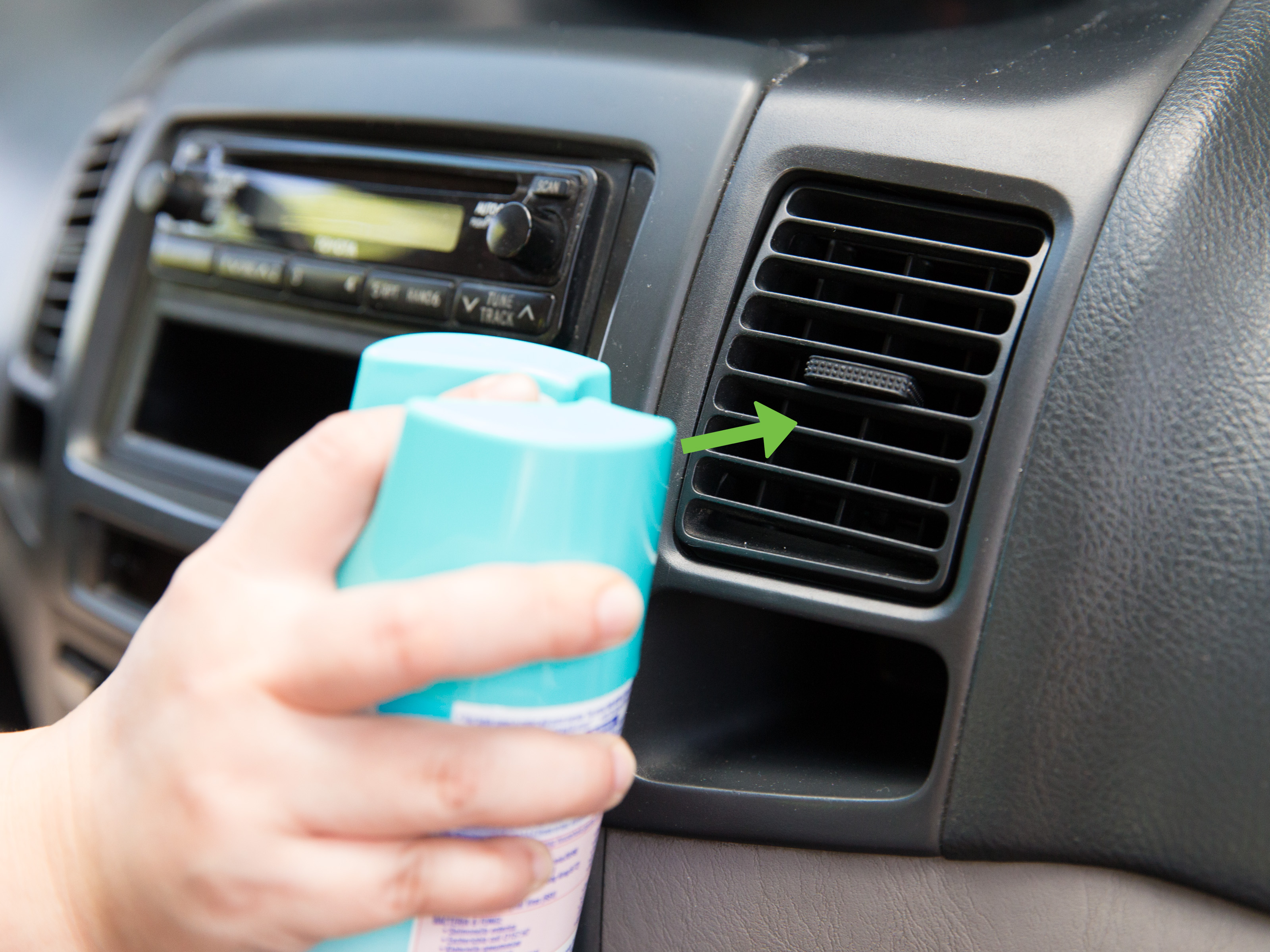
Automotive AC cleaners are designed to treat odor inside the vents, ducts, or evaporator area. They come as sprays, foams, or disinfecting products. Choose a product made specifically for vehicle HVAC systems and follow the label exactly.
Before using an AC cleaner, remove the dirty cabin air filter. Many products work best when sprayed through the air intake near the windshield cowl or into the evaporator drain area, depending on the design. After cleaning, install a new cabin air filter.
Do not use bleach, ammonia, strong household disinfectants, or mystery chemicals from the garage shelf. Mixing cleaners can create dangerous fumes, and harsh products can damage materials inside the HVAC system. The goal is fresh air, not a rolling chemistry lesson.
7. Clean the Interior, Not Just the AC
Sometimes the AC gets blamed for odors that actually come from the cabin. Old food, wet floor mats, spilled coffee, pet hair, gym clothes, and damp carpet can all make the ventilation system smell worse because air circulates through the cabin.
Vacuum the seats, carpets, and floor mats. Remove trash from under seats. Check the trunk for damp items or forgotten groceries. If floor mats are wet, take them out and dry them completely. If the carpet is damp, find the source quickly. Water leaks from doors, sunroofs, windshield seals, or AC drains can keep the interior humid and feed odor problems.
8. Avoid Masking Odors with Heavy Air Fresheners
Air fresheners can make your car smell like “tropical waterfall” for about ten minutes, but they do not solve the cause. In fact, strong fragrances can mix with mildew odor and create a new scent best described as “pine tree trapped in a locker room.”
Use air fresheners only after cleaning the source of the odor. For a simple freshening method, place an open box of baking soda in the car overnight or use odor absorbers designed for vehicles. These can help reduce lingering smells, but they should support cleaning, not replace it.
How to Prevent Car AC Odor from Coming Back
Keep the Evaporator Dry
Turn off the AC compressor a few minutes before parking and let the fan run. This small habit helps dry the evaporator and reduces the damp environment where mildew grows.
Replace the Cabin Air Filter Regularly
Check the cabin air filter at least once a year. Replace it sooner if you drive on dusty roads, park under trees, carry pets, live in a humid climate, or notice weak airflow.
Do Not Ignore Water Leaks
Wet carpet, foggy windows, or a damp smell after rain can indicate water entering the cabin. Fix leaks early. Moisture trapped inside a car is basically an engraved invitation for odors.
Use the AC Year-Round
Running the AC occasionally, even during cooler months, helps keep seals lubricated and allows the system to remove moisture from the cabin air. Many defrost settings automatically use the AC for this reason.
Park Smart When Possible
Parking in shade can reduce heat buildup, while cracking windows slightly in safe, dry conditions can help ventilation. If your car sits for long periods, air it out before driving.
When Should You Call a Mechanic?
DIY cleaning works for many mild to moderate odors. However, professional service is the better choice if the smell returns quickly, the passenger floor is damp, airflow is weak even after replacing the filter, the odor is sweet or burning, or you suspect mold deep inside the evaporator case.
A technician can inspect the drain tube, blower motor, evaporator, HVAC housing, and related seals. Some shops offer evaporator cleaning services that reach areas normal vent sprays cannot. If the odor comes from a refrigerant leak, coolant leak, electrical issue, or contaminated evaporator core, professional diagnosis is the safest route.
Example Cleaning Routine for a Smelly Car AC
Here is a practical routine for a typical musty AC smell:
- Remove trash and vacuum the cabin.
- Check for damp carpet, wet mats, or water leaks.
- Remove and replace the cabin air filter.
- Clean dust from vents and dashboard surfaces.
- Run the fan on fresh-air mode with windows open for several minutes.
- Use an automotive AC cleaner according to the product directions.
- Install the new cabin air filter after treatment.
- Dry the evaporator after future drives by turning off AC and leaving the fan on briefly.
This routine addresses the most common causes: dirty filtration, stale duct air, moisture, and surface grime. If the odor remains after this process, the problem is probably deeper than the filter and vents.
Extra Experience: Real-World Lessons from Smelly Car AC Problems
After dealing with enough car AC odors, one lesson becomes obvious: the smell almost always has a backstory. It is rarely “just air.” A friend once complained that her compact SUV smelled like vinegar every morning. She bought three different air fresheners, clipped them to every vent, and created a scent combination that could only be described as “lemon furniture polish meets haunted salad.” The odor still came back. The actual problem was a cabin air filter so clogged with leaves that it looked like it had started its own compost program.
Another common experience happens after summer road trips. The AC runs for hours, the evaporator gets soaked with condensation, and then the car is parked in the heat. The next morning, the first blast from the vents smells musty. That does not always mean the system is ruined. Sometimes, simply replacing the filter, airing out the cabin, and drying the evaporator after each trip can make a huge difference.
Pet owners often face a different version of the problem. Dog hair, dander, damp paws, and fabric seats can all feed cabin odor. When the air recirculates, the AC seems guilty even when the real odor source is in the carpet or cargo area. In those cases, cleaning the vents alone is like brushing your teeth while still eating garlic bread. You have to clean the interior too.
Humidity also changes the game. Drivers in dry climates may replace a cabin air filter once a year and never think about smells. Drivers in humid areas may need to be more aggressive: dry the system before parking, avoid leaving damp towels or umbrellas in the car, and inspect the filter more often. A car parked outside under trees may also collect leaves near the windshield cowl, where outside air enters the HVAC system. Those leaves can break down, hold moisture, and make the air smell stale.
The biggest mistake is waiting too long. A light musty odor is usually easier to fix than a smell that has been baking for six months. Once odor settles into fabric, foam, carpet, and duct surfaces, cleaning becomes more involved. That is why a quick inspection at the first sign of funk is worth it.
One practical habit is to treat AC odor prevention like brushing your car’s teeth. Replace the filter, keep the cabin dry, clean the vents, and let the system breathe. You do not need to obsess over it, but a little routine care keeps the air fresher and the ride much more pleasant. After all, your car should smell like a carnot a damp towel with wheels.
Conclusion
Learning how to eliminate odor from a car air conditioner starts with understanding the cause. Most unpleasant AC smells come from moisture, mildew, bacteria, clogged cabin air filters, blocked drains, or dirty interiors. The best fix is not to cover the odor with perfume. The best fix is to remove the source.
Start with the simple steps: replace the cabin air filter, clean the vents, dry the evaporator, check for moisture, and use an automotive AC cleaner safely. If the odor is strong, unusual, or keeps coming back, have the system inspected by a professional. A clean AC system does more than smell betterit improves comfort, airflow, and the overall driving experience.
Your nose deserves better than mystery mildew. Give your AC system a little care, and it will reward you with fresh, cool air instead of a blast from the swamp dimension.












