
Gymnastics jumps look simple from the bleachers: bend, spring, point your toes, land like a statue, smile like you totally meant to do that. In reality, a clean gymnastics jump is a tiny engineering project involving posture, power, timing, flexibility, balance, and a landing that does not sound like a dropped refrigerator.
Whether you are learning a straight jump, tuck jump, pike jump, straddle jump, split jump, or a simple half-turn jump, the goal is the same: create height, show a clear body shape in the air, and land with control. This guide breaks the process into six practical steps so beginners can build safe, polished jumps without rushing into tricks that belong in a competition routineor at least in a gym with a qualified coach and proper mats.
Before you begin, remember that gymnastics is a real sport, not a living-room dare. Practice on a safe surface, use proper equipment, and work with a trained coach whenever possible, especially if you are young, new to gymnastics, or trying anything beyond basic floor jumps.
What Are Gymnastics Jumps?
Gymnastics jumps are skills where the athlete pushes off the floor, beam, or another surface, shapes the body in the air, and lands with balance. Jumps appear in floor routines, balance beam routines, warmups, dance passages, and beginner skill progressions. They help gymnasts develop explosive leg power, body awareness, coordination, flexibility, and confidence.
Common gymnastics jumps include:
- Straight jump: A vertical jump with the body tight, legs together, and toes pointed.
- Tuck jump: A jump where the knees lift toward the chest while the body stays controlled.
- Pike jump: A jump where the legs extend forward together in a pike shape.
- Straddle jump: A jump where the legs open wide to the sides, often with pointed toes and lifted posture.
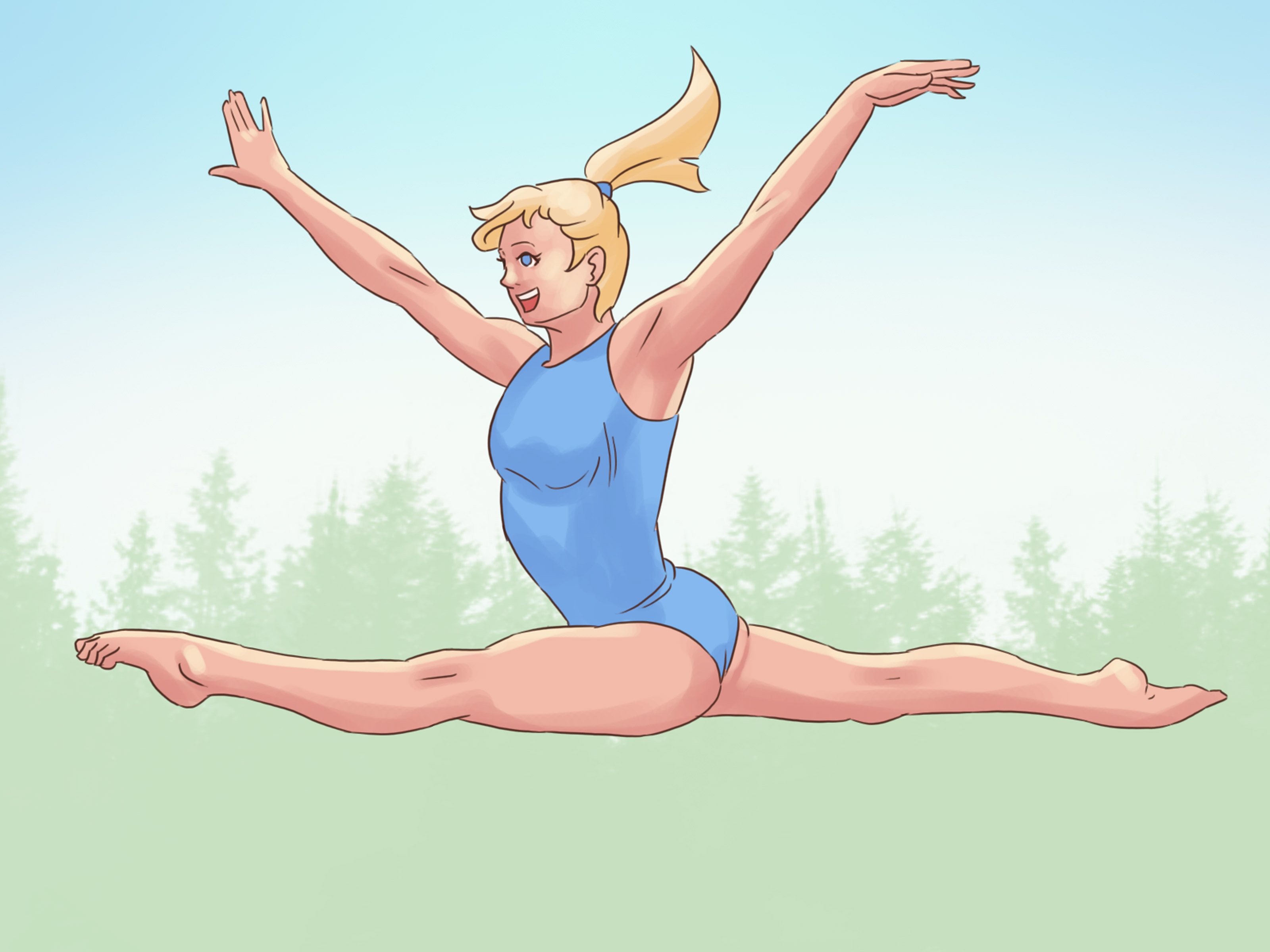
- Split jump: A jump where one leg reaches forward and the other reaches backward, creating a split shape in the air.
- Half-turn jump: A straight jump with a controlled 180-degree turn before landing.
The best gymnastics jumps are not the ones that go highest at any cost. They are the ones that look intentional from takeoff to landing. Height matters, but control matters more. A jump that launches like a rocket and lands like a shopping cart with one bad wheel still needs work.
Step 1: Warm Up Your Body Before You Jump
A proper warmup prepares your muscles, joints, and nervous system for movement. Cold muscles do not enjoy surprise jumping sessions. They complain, and sometimes they complain loudly.
Start with five to ten minutes of light movement. Try jogging in place, high knees, power skips, jumping jacks, arm circles, ankle rolls, and gentle leg swings. The goal is to raise your body temperature and wake up the muscles you will use for jumping.
Beginner Warmup Routine
- Jog or march in place for 60 seconds.
- Do 10 gentle jumping jacks.
- Perform 10 ankle circles on each foot.
- Do 10 bodyweight squats with slow control.
- Practice 5 small straight jumps, landing softly each time.
- Stretch calves, quads, hamstrings, hips, shoulders, and wrists gently.
Do not bounce aggressively into stretches or force your legs into a split before your body is ready. Flexibility improves over time. For gymnastics jumps, quality beats drama. You want your muscles warm, not shocked into filing a complaint.
Step 2: Master the Starting Position
Every strong gymnastics jump begins before your feet leave the floor. Your starting position sets up your balance, power, and line. If your posture is messy at the beginning, your jump will usually become messier in the air.
Stand with your feet together or hip-width apart, depending on the jump and your coach’s instructions. Keep your chest lifted, shoulders relaxed, core lightly engaged, and eyes looking forward. Your arms may begin by your sides, in front, or overhead depending on the style of jump, but they should move with purpose.
Good Starting Position Checklist
- Feet flat and stable.
- Knees soft, not locked.
- Chest lifted without arching the lower back.
- Core engaged like you are gently bracing for a laugh.
- Eyes forward, not staring at your toes.
- Arms prepared to swing smoothly.
For beginners, a small bend in the knees helps create power. Avoid sinking too low like you are sitting in an invisible chair. A gymnastics jump uses a quick, springy bendnot a full squat competition.
Step 3: Use Your Arms and Legs Together for Takeoff
The takeoff is where your jump gets its height. Bend your knees slightly, swing your arms, and push through your feet. Your ankles, knees, and hips should extend together as you rise. Think of your body as one coordinated spring, not a collection of random parts trying to vote on what happens next.
Push through the balls of your feet and point your toes as you leave the floor. Keep your core tight so your body does not fold, twist, or wobble unexpectedly. Your arms should help lift the jump, but they should not fling you off balance.
Takeoff Tips for Better Height
- Bend your knees slightly before jumping.
- Swing your arms with control, not wild enthusiasm.
- Push through the floor using both legs evenly.
- Extend your hips, knees, ankles, and toes.
- Keep your chest upright and your head neutral.
If one foot pushes harder than the other, your jump may drift sideways. That is useful if you are trying to dodge chores, but not ideal for gymnastics. Practice straight jumps first so you can feel an even takeoff before adding shapes like tuck, pike, straddle, or split.
Step 4: Shape Your Body Clearly in the Air
The airborne shape is what makes a gymnastics jump recognizable. A tuck jump should look like a tuck jump. A straddle jump should look like a straddle jump. A split jump should not look like your legs had two different appointment times.
For a straight jump, keep your body long and tight. Legs stay together, toes point downward, and arms reach with clean lines. This is the foundation for many other jumps.
For a tuck jump, lift your knees toward your chest while keeping your chest up. Do not collapse your upper body down to your legs. The knees come up; the torso stays proud.
For a pike jump, extend both legs forward together while keeping them straight. Point your toes and reach your arms forward or toward the legs depending on your training style. Avoid dropping your head too much; you still need to see where the floor plans to reappear.
For a straddle jump, open both legs to the sides, keeping them straight and lifted. Point your toes and keep your knees facing upward as much as possible. A strong straddle jump requires flexibility, but also core strength and timing.
For a split jump, kick one leg forward and the other backward. Both legs should stay long, with pointed toes and lifted posture. Beginners may not reach a full split in the air right away, and that is normal. Work gradually, and never force your range of motion.
Common Air-Shape Mistakes
- Looking down during the jump.
- Bending the legs when the shape requires straight knees.
- Forgetting to point the toes.
- Throwing the arms unevenly.
- Rushing the shape and preparing to land too early.
A clean shape does not need to be huge at first. Start with a small, correct version of the jump. As strength, flexibility, and timing improve, your height and range will grow naturally.
Step 5: Land Softly and “Stick” the Finish
Landing is the part of a gymnastics jump that reveals everything. A good landing is quiet, balanced, and controlled. A rough landing is loud, stiff, and usually followed by the face people make when they pretend nothing happened.
As you return to the floor, bring your legs together or to the correct landing position for the jump. Land on the balls of your feet first, then lower your heels with control. Bend your knees and hips slightly to absorb force. Keep your chest lifted, your core engaged, and your knees tracking in the same direction as your toes.
How to Stick a Gymnastics Landing
- Land with both feet at the same time for basic two-foot jumps.
- Bend your knees softly to absorb impact.
- Keep your chest up and eyes forward.
- Do not let your knees cave inward.
- Freeze for two to three seconds after landing.
- Finish with controlled arms and a confident posture.
The “freeze” is important. It teaches balance and body control. After every jump, pretend someone pressed pause on your routine. If you can hold the landing without stepping, hopping, or windmilling your arms, you are building real gymnastics control.
Step 6: Practice Progressions and Improve Gradually
Gymnastics jumps improve through repetition, but not mindless repetition. You want focused practice with clean form. Start with straight jumps and landing drills before moving to tuck, pike, straddle, split, or turning jumps.
A smart progression might look like this:
- Practice straight jumps with soft landings.
- Add arm swing coordination.
- Try tuck jumps with small height.
- Practice pike and straddle shapes seated on the floor.
- Add pike or straddle jumps with low height.
- Practice split jumps only after building flexibility and leg control.
Use mirrors, video feedback, or coach feedback to check your form. Video can be especially helpful because what you feel in the air and what actually happens in the air are not always close relatives.
Best Gymnastics Jumps for Beginners
Straight Jump
The straight jump is the best starting point. Stand tall, bend your knees slightly, swing your arms, jump straight up, point your toes, and land softly. Focus on height, tight body position, and a controlled finish.
Tuck Jump
For a tuck jump, jump upward first, then lift your knees. Many beginners try to tuck before they leave the floor, which steals height. Think “jump, then tuck.” Keep your chest lifted and land with soft knees.
Straddle Jump
For a straddle jump, jump upward and open your legs to the sides. Keep your toes pointed and knees straight. Bring your legs back together before landing. Practice seated straddle holds and leg lifts to build the strength needed for a cleaner shape.
Pike Jump
A pike jump requires strong hip flexors and hamstring flexibility. Jump upward, extend both legs forward, point your toes, and keep your posture controlled. Beginners should start with small pike shapes and gradually increase height.
Split Jump
A split jump is beautiful when done well, but it takes patience. Work on lunges, active kicks, and gentle split flexibility. In the air, reach one leg forward and one leg backward while keeping both legs long. Land with control and avoid twisting your hips.
Safety Tips for Gymnastics Jumps
Gymnastics jumps should be practiced on a proper surface, such as a gymnastics floor, mat, or supervised training area. Avoid hard floors, slippery socks, crowded spaces, and furniture obstacle courses. Your coffee table did not sign up to be a vault.
- Train under qualified supervision when possible.
- Use mats and safe surfaces.
- Warm up before jumping.
- Stop if you feel sharp pain, dizziness, or unusual discomfort.
- Progress gradually instead of rushing to advanced jumps.
- Keep practice fun and avoid overtraining.
Young athletes should also pay attention to rest, hydration, nutrition, and mental energy. Gymnastics should build confidence, not constant pressure. If a jump is not improving, step back, fix the basics, and try again later.
Common Mistakes and How to Fix Them
Mistake 1: Landing Too Stiff
Fix it by bending your knees and hips slightly when you land. Aim for a quiet landing. If your landing sounds like a drum solo, soften it.
Mistake 2: Looking Down
Fix it by keeping your eyes forward. Looking down often pulls your chest forward and ruins your balance.
Mistake 3: Forgetting the Arms
Fix it by practicing arm swings separately. Arms help create lift and finish the shape. They should look intentional, not decorative.
Mistake 4: Rushing the Jump Shape
Fix it by practicing the shape on the floor first. Sit in a pike, straddle, or tuck position and learn what the correct shape feels like before trying it in the air.
Mistake 5: Training Too Much Too Soon
Fix it by using short, focused practice sessions. Ten excellent jumps are better than fifty tired ones with sloppy form.
of Real-World Experience: What Learning Gymnastics Jumps Actually Feels Like
Learning gymnastics jumps can feel surprisingly humbling. Many beginners expect jumps to be easy because, well, everyone has jumped before. You have jumped over puddles, jumped onto curbs, jumped when your phone fell off the bed, and possibly jumped dramatically when a bug appeared without permission. But gymnastics jumps are different because they ask you to control every detail while airborne for about one blink.
The first experience many beginners have is discovering that their arms have opinions. You may tell your arms to swing neatly upward, but they may decide to flap, cross, or freeze like confused noodles. This is normal. Arm coordination takes practice. A helpful trick is to rehearse the arm pattern without jumping. Bend, swing, reach, finish. Repeat until it feels smooth. Then add a small jump.
Another common experience is realizing that pointing your toes is harder than it sounds. Coaches say “point your toes” so often that it becomes the unofficial national anthem of gymnastics. In a jump, pointed toes make the line cleaner and the skill look more polished. At first, you may remember to point them only after landing, which is not exactly useful, but still a sign your brain is trying. Practice calf raises, ankle stretches, and simple straight jumps while focusing only on toe point.
Landings also teach patience. Beginners often want to move immediately after landing because holding still feels awkward. But the stuck landing is where control develops. One practical exercise is the “three-second statue.” After each jump, land, bend your knees, lift your chest, and hold for three seconds. If you step, wobble, or wave your arms around like you are signaling a rescue helicopter, reset and try again.
Flexibility jumps, especially straddle and split jumps, can feel frustrating because progress is gradual. You might practice for weeks and still feel like your legs are opening only slightly. That does not mean you are failing. It means your body is adapting. Active flexibility, strength, and timing matter just as much as passive stretching. A gymnast who can sit in a split may still need practice to show a clean split shape in the air.
One of the best experiences is the first time a jump feels light. Suddenly the takeoff is smoother, the shape appears at the right moment, and the landing is quiet. It may not be perfect, but it feels differentmore controlled, more confident, more like gymnastics and less like emergency bouncing. That moment usually comes after many small corrections, not one magic tip.
The most important lesson is to respect the basics. Straight jumps, soft landings, tight body positions, and controlled arm swings may seem simple, but they build the foundation for more advanced skills. Gymnastics rewards patience. The athletes who improve fastest are often the ones who treat beginner drills seriously instead of rushing past them.
So, if your tuck jump feels tiny or your straddle jump looks more like a polite suggestion than a dramatic shape, keep going. Practice safely, listen to your coach, celebrate small wins, and remember: every polished jump began as a slightly awkward hop with ambition.
Conclusion
Gymnastics jumps combine power, precision, flexibility, and landing control. To perform them well, warm up thoroughly, set a strong starting position, use coordinated arms and legs, create a clear body shape in the air, land softly, and practice progressions patiently. Start with straight jumps before moving into tuck, pike, straddle, split, and turning jumps. Most importantly, train safely and build skill step by step.
A clean gymnastics jump is not just about getting off the floor. It is about showing control from the first bend of the knees to the final frozen landing. Master that, and even your simplest jump can look sharp, confident, and ready for the spotlight.
Note: This article is for educational purposes only. Beginners should practice gymnastics jumps on safe surfaces and under qualified supervision, especially when learning new skills or training as young athletes.












