
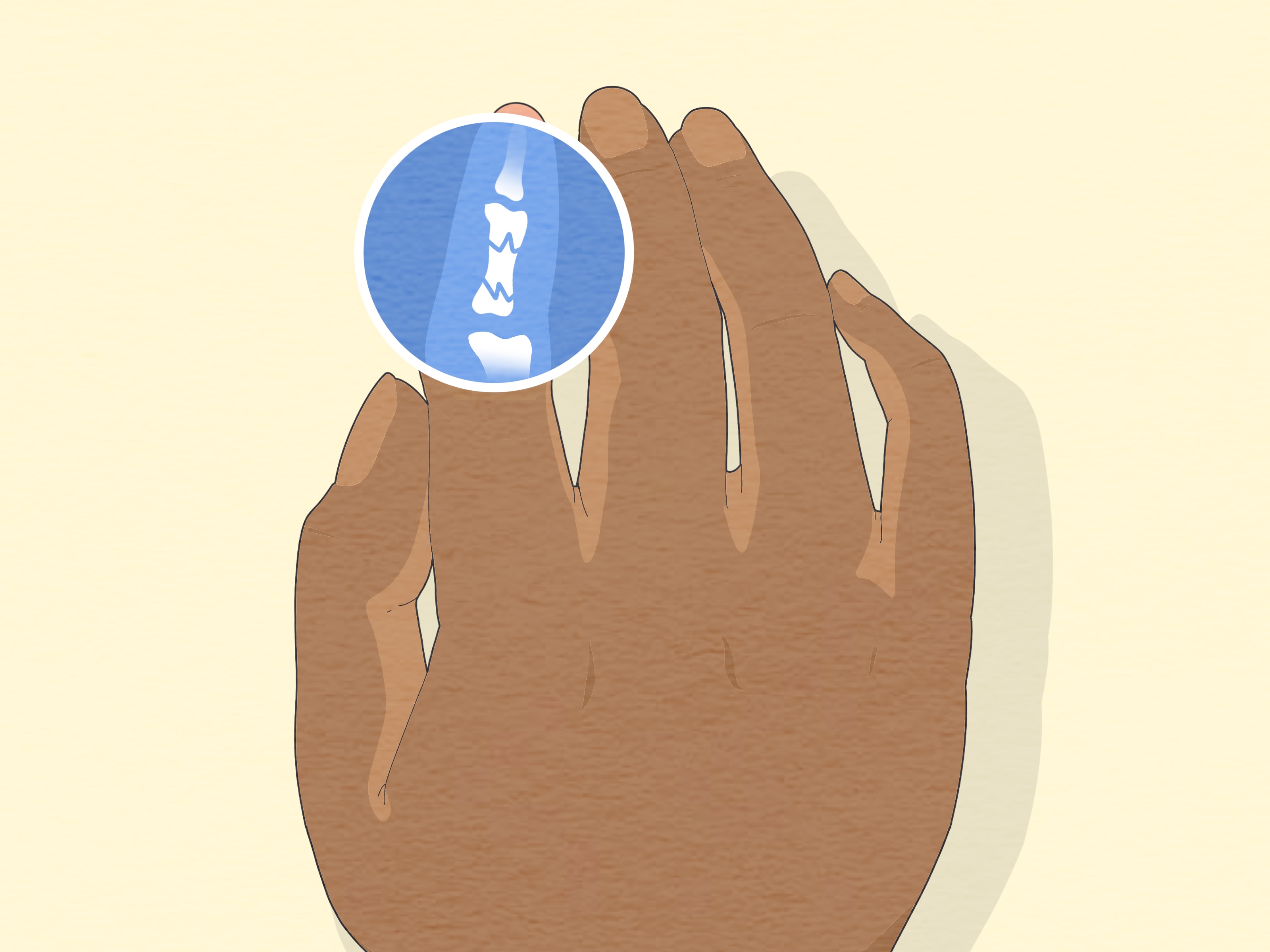
A finger meets a basketball, a car door, a hammer, or the edge of a kitchen counter, and suddenly it is starring in its own medical drama. It hurts, it swells, and it may turn a shade of purple normally reserved for eggplants. But is the finger actually broken, or is it merely jammed, sprained, bruised, or dislocated?
Unfortunately, fingers are not great communicators. A small fracture can look surprisingly mild, while a painful sprain can produce impressive swelling and bruising. You may even be able to move a broken finger, so the classic “I can bend it, therefore it is fine” test is about as dependable as asking your dog to review your tax return.
The only reliable way to confirm most finger fractures is through a medical examination and X-rays. Still, certain symptoms can help you recognize a possible broken finger, protect it from additional damage, and decide how quickly to seek care.
What Is a Broken Finger?
A broken finger, medically called a finger fracture, occurs when one or more bones in a finger crack or break. Each finger contains three small bones known as phalanges, while the thumb contains two. A fracture may occur near the fingertip, along the shaft of a bone, beside a joint, or where a tendon or ligament attaches.
Finger fractures vary widely. A stable, nondisplaced fracture remains in reasonably good alignment. A displaced fracture has bone fragments that have shifted. A comminuted fracture breaks the bone into several pieces, while an open fracture creates a wound through which bone may be exposed or connected to the outside environment.
Even a tiny break deserves attention. Fingers contain compact networks of bones, joints, tendons, ligaments, nerves, blood vessels, and nail structures. Poor alignment can affect grip, dexterity, joint motion, and the ability to straighten or bend the finger.
Common Causes of a Broken Finger
Most finger fractures result from a sudden impact, crushing force, twisting injury, or extreme bending. Common causes include:
- Slamming a finger in a door, drawer, or window
- Being struck by a baseball, basketball, volleyball, or other fast-moving object
- Falling onto an outstretched hand
- Hitting a hard object with a closed fist
- Using hammers, drills, power saws, or heavy equipment
- Getting a finger caught in sports gear, clothing, or machinery
- Twisting a finger during a fall, tackle, or collision
People with osteoporosis or another condition that weakens bones may sustain a fracture after less force than would normally be expected.
How to Tell if a Finger May Be Broken
No single symptom proves that a finger is fractured. Instead, consider the injury mechanism, the exact location of the pain, the finger’s appearance, and whether it still functions normally.
1. Immediate or Intense Pain
A fracture often causes sudden pain at the moment of injury. The pain may become sharper when you touch the injured area, try to grip something, or move the finger. Localized “point tenderness”pain concentrated directly over one part of the boneis particularly suspicious.
However, pain intensity is not a fracture detector. Some small fractures produce moderate discomfort, while ligament injuries and dislocations can be extremely painful.
2. Rapid Swelling
Swelling frequently begins soon after a finger fracture. The finger may look thicker than the matching finger on the other hand, and rings can quickly become tight. Remove rings as early as possible after an injury, before swelling turns jewelry removal into an unwanted escape-room challenge.
3. Bruising or Color Changes
Bruising may appear around the injured bone or joint. A crush injury to the fingertip can also cause blood to collect beneath the nail, creating a dark red, purple, blue, or black area known as a subungual hematoma.
A bruised nail does not automatically mean the bone is broken, but severe throbbing, a lifted nail, a nail-bed cut, or significant fingertip tenderness should be medically evaluated.
4. A Crooked, Shortened, or Rotated Finger
Visible deformity is one of the strongest warning signs. The finger may point in an unusual direction, appear shorter, have a depressed knuckle, or overlap another finger.
One useful observation is the finger-cascade check. Without forcing the hand, gently begin making a loose fist. Normally, the fingers should point in a similar direction toward the base of the thumb. If the injured finger crosses over or underneath a neighboring finger, the fracture may have caused rotation. Stop if the movement produces substantial pain, and do not attempt to twist the finger back into place.
5. Limited Movement
A broken finger may be difficult or impossible to bend or straighten. Movement may be blocked by pain, swelling, a displaced bone, or associated tendon damage.
Being able to move the finger does not rule out a fracture. Many people retain partial or even nearly normal movement with a small, stable break.
6. Numbness, Tingling, Coldness, or Pale Skin
Numbness and tingling may indicate nerve irritation or compression. A pale, bluish, unusually cold, or increasingly numb fingertip may signal reduced circulation and requires urgent medical attention.
7. A Drooping Fingertip
If the fingertip bends downward and cannot be actively straightened, the injury may be mallet finger. This commonly occurs when a ball or another object forcefully strikes the end of an extended finger. The extensor tendon may be torn, or it may pull off a small fragment of bone.
8. An Open Wound or Exposed Bone
A cut near a suspected fracture may mean the injury is open, even when bone is not visibly protruding. Open fractures carry a greater infection risk and require prompt treatment.
Broken Finger vs. Jammed Finger vs. Dislocation
Jammed or Sprained Finger
A jammed finger usually involves stretched or torn ligaments around a joint. It can cause pain, swelling, bruising, stiffness, and reduced movementessentially the same guest list seen at a fracture party.
A mild sprain is more likely when the finger has a normal shape, minimal point tenderness over the bone, and gradually improving movement. Nevertheless, some “jams” include small avulsion fractures, in which a ligament or tendon pulls away a chip of bone.
Dislocated Finger
A dislocation occurs when the bones forming a joint move out of their normal positions. The joint often looks clearly crooked or out of place and may feel locked. Fractures and ligament injuries can occur at the same time.
Do not pull on a jammed or dislocated finger or attempt to force it straight. Homemade relocation attempts can injure nerves, blood vessels, tendons, and cartilage.
Why Symptoms Alone Are Not Enough
Fractures, sprains, tendon injuries, and dislocations overlap considerably. X-rays are generally needed to identify a broken bone, determine whether it reaches a joint, and assess alignment or rotation.
A Safe At-Home Check After a Finger Injury
An at-home check cannot diagnose a fracture, but it can help you recognize warning signs while arranging appropriate care.
- Remove rings immediately. Do this before swelling increases. Do not force a ring over badly swollen or deformed tissue.
- Compare both hands. Look for differences in length, angle, swelling, nail position, skin color, and knuckle height.
- Locate the tenderness. Note whether the pain is concentrated over a bone, joint, nail, or soft tissue. Avoid repeated poking.
- Check sensation. Lightly touch the fingertip and compare the feeling with the same finger on the opposite hand.
- Observe circulation. Check whether the fingertip is warm and normally colored. A cold, pale, blue, or numb finger is urgent.
- Test motion gently. Ask the injured person to bend and straighten the finger only as comfort allows. Never force movement.
Do not repeatedly “test” the injury throughout the day. If a fracture is unstable, frequent bending can increase displacement and swelling.
When to Seek Emergency Care
Go to an emergency department or obtain immediate medical care when:
- Bone is visible or protruding through the skin
- There is a deep cut or heavily contaminated wound near the injury
- The finger is severely deformed, crushed, or partially amputated
- The fingertip is pale, blue, cold, numb, or losing sensation
- Bleeding does not stop with gentle direct pressure
- Pain is severe or rapidly worsening
- The injury involves high-force machinery or major trauma
A visibly crooked finger also requires prompt professional care. Do not delay simply because the pain becomes more manageable.
When to Arrange a Same-Day or Prompt Evaluation
Seek urgent care, primary care, sports medicine, or orthopedic evaluation when the finger has significant swelling, bruising, point tenderness, reduced motion, nail-bed damage, or pain that makes ordinary use difficult.
Children should be assessed promptly when a fracture is suspected because the injury may involve a growth plate. A seemingly small cut near the nail can occasionally accompany a serious open growth-plate fracture.
Persistent pain also matters. If an initial X-ray appears normal but focal tenderness and functional problems continue, a clinician may recommend repeat X-rays or additional imaging. Some small or hidden fractures are not obvious on the first images.
First Aid for a Suspected Broken Finger
While seeking care, focus on protection rather than amateur bone engineering.
- Stop the activity. Rest the hand and avoid gripping, lifting, throwing, or typing a novel with the injured finger.
- Remove jewelry. Take off rings before swelling increases.
- Apply wrapped ice. Use a cold pack wrapped in a thin cloth for about 15 to 20 minutes at a time. Do not place ice directly on the skin.
- Elevate the hand. Keep it above heart level when practical to limit swelling.
- Immobilize gently. Keep the finger in the position found. A temporary padded splint may protect it during transport.
- Cover wounds. Place clean gauze over an open wound and apply gentle pressure around, not directly onto, exposed bone.
Buddy taping an injured finger to a neighboring finger can support certain minor, stable injuries, but it is not appropriate for every fracture. Avoid buddy taping if the finger is deformed, rotated, numb, badly swollen, or has an open wound. Tape should never be tight enough to cause tingling, color changes, or increased pain.
How Doctors Diagnose a Broken Finger
A healthcare professional will ask how the injury happened and examine the finger’s alignment, tenderness, skin, nail, circulation, sensation, tendons, and range of motion.
X-rays are typically taken from multiple angles because a small fracture may be hidden in one view. The images help determine:
- Which bone is broken
- Whether the fragments remain aligned
- Whether the fracture extends into a joint
- Whether the finger is shortened or rotated
- Whether a tendon or ligament pulled off a piece of bone
CT scans, MRI scans, ultrasound, and other tests are not routinely needed for straightforward finger injuries, but they may be considered when symptoms persist despite normal X-rays or when complex joint and soft-tissue damage is suspected.
How a Broken Finger Is Treated
Treatment depends on the fracture’s location, stability, alignment, and involvement of joints, tendons, nails, or growth plates.
Splinting or Casting
Many stable fractures heal with a finger splint, buddy support, or cast. Immobilization protects the bone while it reconnects. The prescribed position and duration matter, so a random drugstore splint should not replace a professional assessment.
Reduction
If bone fragments have shifted, a clinician may perform a reduction to restore alignment. This can often be done without an incision after numbing the finger. Follow-up X-rays may be used to ensure the alignment remains acceptable.
Surgery
Surgery may be needed for unstable, severely displaced, rotated, open, or joint-involving fractures. Pins, screws, plates, or wires may hold the pieces in position during healing. Nail-bed injuries and damaged tendons may also require repair.
Rehabilitation
Finger stiffness can develop quickly after immobilization. Once the fracture is stable enough, a clinician may recommend controlled motion or hand therapy. Beginning exercises too early can disturb the fracture, while waiting too long may contribute to stiffness. Follow the schedule provided for the specific injury rather than borrowing exercises from an enthusiastic stranger online.
How Long Does a Broken Finger Take to Heal?
Many uncomplicated finger fractures show substantial bone healing within several weeks, but recovery time varies. Joint fractures, crush injuries, open fractures, tendon damage, surgery, smoking, diabetes, poor circulation, and delayed treatment can lengthen recovery.
Pain often improves before strength, flexibility, and swelling return to normal. Mild swelling or stiffness may continue for weeks or months. Return to work or sports should be based on stability, function, pain, and the ability to protect the fingernot merely on how many calendar pages have turned.
What Happens if a Broken Finger Is Left Untreated?
An untreated fracture may heal in the wrong position, a problem called malunion. Possible long-term consequences include:
- Permanent crookedness or rotation
- Reduced grip strength
- Chronic pain or tenderness
- Loss of bending or straightening
- Joint stiffness and post-traumatic arthritis
- Nail deformity after nail-bed damage
- Infection after an open fracture
Prompt evaluation is especially important when the fracture involves a joint. Small alignment errors can become surprisingly noticeable when the finger performs thousands of precise movements every day.
Common Experiences and Practical Lessons From Finger Injuries
The following composite examples reflect situations commonly encountered after finger injuries. They are not substitutes for individual medical advice, but they illustrate why symptoms can be misleading.
The Basketball “Jam” That Was More Than a Jam
Imagine a recreational basketball player whose fingertip is struck directly by the ball. The finger swells, but the player can still bend it and finishes the game. By evening, the fingertip droops and cannot be actively straightened.
The practical lesson is that movement alone does not exclude a significant injury. A person may still bend a finger even when an extensor tendon has been damaged or a small bone fragment has been pulled away. The unusual resting positionthe drooping tipis more informative than the ability to tolerate another quarter of basketball.
Early evaluation matters because mallet-type injuries often require the fingertip to remain continuously supported in a precise position. Removing the splint or repeatedly bending the joint can interrupt healing.
The Door-Slam Injury With a Dark Fingernail
In another common scenario, someone closes a car door on a fingertip. The nail turns purple, the fingertip throbs, and swelling develops quickly. Because the finger is not crooked, the person assumes the injury is merely a bruise.
Crush injuries can damage several structures at once: the fingertip bone, nail bed, skin, and surrounding soft tissue. Blood trapped beneath the nail may create intense pressure. A clinician may need to check for a fracture, evaluate the nail bed, clean any wound, and decide whether trapped blood should be drained.
The experience also teaches a useful first-aid habit: remove rings immediately after any hand injury. People sometimes focus so intently on the painful fingertip that they overlook a ring on the same hand until swelling makes it difficult or dangerous to remove.
The “It Looks Fine” Fracture
Consider a person who trips, catches the hand awkwardly, and develops pain around the middle joint of a finger. There is little bruising, no dramatic deformity, and enough movement to type. The person waits several days because the injury does not look serious. Pain persists whenever the finger is pressed from the side or used to grip a mug.
Small stable fractures and avulsion fractures may look unimpressive. Persistent point tenderness and reduced function are reasons to seek evaluation even without movie-scene swelling. Treatment may be simple, but the correct support and timing of movement can prevent stiffness and poor healing.
The Crooked Finger Someone Tries to “Pop Back”
A finger that suddenly points sideways after a sports collision may be dislocated, fractured, or both. Friends sometimes recommend pulling it straight because they have seen athletes do that on television. Real life has fewer stunt coordinators.
Forceful manipulation can worsen a fracture, trap soft tissue in the joint, or injure nerves and blood vessels. The safer response is to keep the finger in the position found, apply wrapped ice, elevate the hand, and obtain prompt medical care.
The Child Who Can Still Wiggle the Finger
Parents may feel reassured when a child can move an injured finger. Yet children can sometimes move a finger despite a fracture, including one near a growth plate. Injuries around the nail deserve particular attention when there is bleeding, a displaced nail, or a cut that may communicate with the fracture.
The broader lesson from these experiences is simple: judge the entire pattern, not one reassuring sign. Normal movement does not eliminate a fracture, severe pain does not prove one, and lack of deformity does not guarantee that the bone is intact.
Conclusion
A broken finger commonly causes localized pain, swelling, bruising, tenderness, reduced motion, or an abnormal shape. Rotation, shortening, numbness, coldness, a drooping fingertip, a damaged nail, or an open wound raises greater concern.
You cannot reliably determine at home whether a finger is broken. Sprains, fractures, dislocations, and tendon injuries often look remarkably similar, and the ability to move the finger does not rule out a break. Protect the injury, remove rings, use wrapped ice, elevate the hand, and seek medical evaluation when symptoms are significant or persistent.
Emergency care is appropriate for exposed bone, severe deformity, uncontrolled bleeding, major crushing, or signs of impaired circulation. Fingers may be small, but they are precision equipment. Giving an injured one timely attention can protect its alignment, strength, motion, and future ability to perform important taskssuch as buttoning a shirt, playing an instrument, or pointing accusingly at whoever left the drawer open.












