
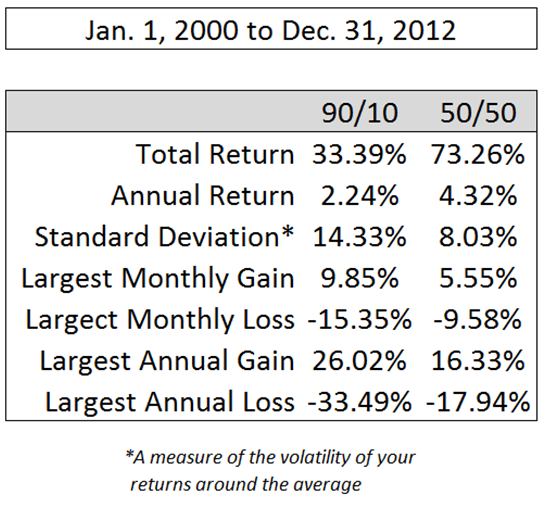
Choosing the right asset allocation is one of the least glamorous and most important decisions an investor can make. Picking the next hot stock gets the headlines. Asset allocation gets the job of helping you sleep at night when the headlines become terrifying.
Your asset allocation is simply how you divide your investment money among major asset classes such as stocks, bonds, cash, and sometimes real estate or other alternatives. It is the blueprint of your portfolio. Think of it as building a house: the paint color is fun, but the foundation is what keeps the living room from becoming an accidental basement.
The “right” asset allocation is not a magic 60/40 recipe, a viral social-media chart, or whatever your cousin bought after listening to one finance podcast at double speed. It should reflect your goals, your timeline, your cash needs, and the amount of market turbulence you can realistically handle without making a panic-driven decision.
What Is Asset Allocation?
Asset allocation is the process of dividing an investment portfolio among broad categories of investments. The traditional building blocks are stocks, bonds, and cash or cash equivalents. Each category behaves differently, carries different risks, and may play a different role in helping you pursue your financial goals.
Stocks: The Growth Engine
Stocks represent ownership in companies. Over long periods, they have historically offered meaningful growth potential, but they can also be dramatic. A stock-heavy portfolio may deliver strong long-term returns, yet it can decline sharply during market downturns. Stocks are often best suited to money that will not be needed for many years.
Bonds: The Shock Absorbers
Bonds are loans made to governments, municipalities, or companies. They generally aim to provide income and can help moderate portfolio volatility, although they are not risk-free. Bond values can fluctuate when interest rates change, and lower-quality bonds can carry greater credit risk. Still, bonds often play an important stabilizing role when stock markets become moody.
Cash: The Financial Umbrella
Cash and cash equivalents, such as high-yield savings accounts, money market funds, and short-term Treasury instruments, usually offer lower return potential than stocks or bonds. Their superpower is stability and liquidity. Cash is especially useful for emergency savings, near-term expenses, and goals that are too close to gamble with.
Some investors also include real estate investment trusts, commodities, private investments, or other alternatives. These may be useful in certain situations, but they are not mandatory ingredients for a sensible portfolio. A well-diversified mix of stocks, bonds, and cash can already do a lot of heavy lifting without requiring a decoder ring.
Why Asset Allocation Matters More Than Finding “The Best Investment”
Many people spend enormous energy searching for the perfect stock, fund, or market prediction. That can be entertaining, much like watching people build tiny houses on television. But an individual investment is only one piece of the puzzle. The mix of assets across your whole portfolio often has a greater influence on your overall risk level than one brilliant or terrible security selection.
A portfolio holding only stocks may produce higher growth potential, but it may also experience deep temporary losses. A portfolio holding only cash may feel wonderfully calm, but it may struggle to outpace inflation over long periods. Asset allocation helps balance these competing risks: the risk of losing money in the short term and the risk of not growing enough to meet future goals.
This is why there is no universally perfect portfolio. A 28-year-old saving for retirement, a family saving for a home purchase in three years, and a retiree drawing income from investments should not necessarily own the same blend of assets. Their money has different jobs, and job descriptions matter.
The Four Questions That Determine Your Ideal Asset Allocation
1. What Is This Money For?
Start with the purpose of each investment account. Is it retirement money? A future down payment? College tuition? A business opportunity? A dream vacation that you would like to take before your knees begin negotiating with gravity?
Each goal deserves its own time frame and risk level. Money needed soon should generally be invested more conservatively than money intended for a goal decades away. Combining every financial goal into one giant account can make asset allocation harder because your portfolio may be trying to fund both a wedding next summer and retirement in 2055. That is like asking one suitcase to pack for a beach vacation and a polar expedition.
2. When Will You Need the Money?
Your time horizon is often the most practical starting point. The longer you have before needing the money, the more time your portfolio may have to recover from market declines. A long-term investor may be able to tolerate a larger allocation to stocks because temporary volatility is less likely to derail an objective that is many years away.
In contrast, money needed in the next few years may need a larger allocation to cash, short-term bonds, or other lower-volatility investments. If you are planning to buy a house in 18 months, putting the down payment into a volatile stock portfolio can turn your open-house dreams into a very educational spreadsheet.
3. How Much Risk Can You Afford to Take?
Risk capacity is your financial ability to withstand losses. It is different from your emotional comfort with risk. Someone may enjoy roller coasters but still have low risk capacity because they need the money soon. Another person may dislike market swings but have a stable income, strong emergency savings, low debt, and decades before retirement.
Consider your income stability, emergency fund, debt level, insurance coverage, other assets, and upcoming obligations. A person with a secure job, no high-interest debt, and a long investing horizon may have more capacity for market risk than someone approaching retirement with large expected medical expenses or unstable income.
4. How Much Risk Can You Emotionally Handle?
Risk tolerance is your emotional response to investment losses. It is easy to call yourself aggressive when markets are climbing and everyone is posting rocket emojis. The more useful question is this: how would you react if your portfolio fell 20%, 30%, or more during a difficult year?
If a large decline would cause you to sell everything and swear off investing forever, your allocation may be too aggressive, even if a questionnaire says you are technically capable of taking more risk. The best asset allocation is one you can stick with during both boring and chaotic markets.
How to Build an Asset Allocation Step by Step
Step 1: Create a Financial Safety Net First
Before deciding how much to invest in stocks or bonds, make sure your short-term financial base is sturdy. Maintain an emergency fund appropriate for your situation, address high-interest debt, and avoid investing money you may need for ordinary living expenses.
Investing is easier when a market decline does not force you to sell assets at the wrong time to pay for a car repair, medical bill, or surprise expense involving a washing machine that suddenly believes it is a fountain.
Step 2: Separate Short-Term and Long-Term Goals
List your goals and place them into buckets. A simple framework could look like this:
- Short term: Goals within roughly one to three years, such as emergency reserves, travel, or a near-term home purchase.
- Medium term: Goals within roughly three to 10 years, such as a child’s education or a planned career change.
- Long term: Goals more than 10 years away, such as retirement or long-range family wealth planning.
Short-term money often calls for stability and easy access. Long-term money may be positioned for more growth potential because it has more time to absorb market fluctuations. Medium-term goals usually require a careful balance between the two.
Step 3: Choose a Broad Portfolio Style
Investors often describe their strategic asset allocation as conservative, balanced, or growth-oriented. These labels are not personality types, and nobody receives a cape after choosing “growth.” They are simply shorthand for how much of a portfolio is dedicated to assets with higher growth potential versus assets designed to provide stability.
A conservative portfolio may emphasize bonds and cash because preserving capital and reducing volatility are top priorities. A balanced portfolio may combine meaningful exposure to stocks with a substantial allocation to bonds. A growth-oriented portfolio may emphasize diversified stocks because the investor has a long horizon and greater ability to tolerate market swings.
For example, an investor in their late twenties saving for retirement may reasonably hold a more stock-focused portfolio than someone planning to use the money for retirement income within a few years. Meanwhile, a family saving for a home purchase in two years may place much more emphasis on liquid, lower-risk holdings.
Step 4: Diversify Within Each Asset Class
Asset allocation is not the same as diversification, although the two work together. Asset allocation asks, “How much should be in stocks, bonds, and cash?” Diversification asks, “How can I avoid putting too much faith in one company, sector, country, or type of bond?”
Within stocks, diversification may include U.S. large companies, smaller companies, international developed markets, and emerging markets. Within bonds, diversification may involve government bonds, investment-grade corporate bonds, municipal bonds where appropriate, and varying maturity dates.
Broad mutual funds and exchange-traded funds can make diversification easier because one fund may hold hundreds or thousands of securities. This does not eliminate risk, but it can reduce the damage caused by one company, industry, or narrow market segment having a very bad year.
Sample Asset Allocation Profiles: Illustrations, Not Instructions
The examples below are simplified illustrations rather than recommendations. Your ideal mix may differ because of taxes, pension income, debt, family responsibilities, health needs, business ownership, or other financial factors.
Growth-Oriented Long-Term Investor
A younger investor saving for retirement and expecting to leave the money untouched for decades may have a portfolio weighted heavily toward diversified stocks, with a smaller allocation to high-quality bonds and cash. The investor accepts larger temporary swings in exchange for greater long-term growth potential.
Balanced Mid-Career Investor
A mid-career investor may want a meaningful allocation to stocks for retirement growth while also adding bonds to help reduce volatility. This investor may have several competing goals, such as retirement, education savings, and future flexibility, making balance more important than chasing the highest possible return.
Conservative Near-Term Goal Investor
An investor saving for a home down payment, tuition payment, or retirement withdrawal in the near future may emphasize cash equivalents and high-quality short-duration bonds. The objective is not to win a performance contest. It is to make sure the money is available when the goal arrives.
Do Not Let the 60/40 Portfolio Become a Personality Test
The classic 60% stock and 40% bond portfolio is often used as a reference point because it combines growth assets with defensive assets. It can be a useful starting concept, but it is not a law of nature. It may be too aggressive for one person and too conservative for another.
Your life matters more than a neat round number. A person with a pension, low living expenses, and a 30-year investing horizon may be comfortable with more stocks. A person expecting to make major withdrawals soon may need more stable assets. Use sample portfolios as educational benchmarks, not as something to copy with the confidence of a contestant assembling furniture without reading the instructions.
How Often Should You Rebalance Your Portfolio?
Over time, investment performance causes your portfolio to drift. If stocks rise sharply, a portfolio originally designed to hold 60% stocks may gradually become 70% or 75% stocks. You may now be taking more risk than you intended, without consciously deciding to do so.
Rebalancing means restoring your portfolio to its planned asset allocation. Many investors review their allocations annually, while others rebalance when an asset class moves beyond a pre-set range. For example, you might review your investments once a year or act when an asset category shifts several percentage points from its target.
In tax-advantaged retirement accounts, rebalancing may be relatively straightforward. In taxable accounts, selling appreciated investments can create capital-gains taxes, so investors may prefer to rebalance gradually with new contributions, dividends, or withdrawals. The important part is to use a rule-based process instead of changing your portfolio because a headline made your coffee taste nervous.
Common Asset Allocation Mistakes to Avoid
Investing Based on Headlines
Markets move every day. Financial news is designed to make every movement feel urgent because “Markets Continue Existing Normally” is not exactly a ratings magnet. Changing your allocation every time the economy looks uncertain can lead to buying high, selling low, and repeatedly resetting your long-term plan.
Ignoring Concentration Risk
Owning a large amount of your employer’s stock, one technology company, one cryptocurrency, or one trendy sector can create concentration risk. Even a successful company can experience a major setback. A diversified portfolio is less exciting at dinner parties, but it is usually more forgiving when one investment disappoints.
Keeping Too Much Cash for Too Long
Cash is essential for emergencies and near-term goals. However, holding excessive cash for decades can expose investors to inflation risk, meaning the purchasing power of that money may erode over time. The goal is not to avoid cash; it is to assign cash a clear job.
Taking More Risk Than You Can Keep
An aggressive portfolio is only useful when the investor can remain invested through difficult periods. A slightly more conservative allocation that you can hold consistently may be better than a highly aggressive plan you abandon at the first market storm.
Using Target-Date and Asset Allocation Funds
For investors who prefer simplicity, target-date funds, balanced funds, and asset allocation funds may provide a diversified portfolio in a single investment. A target-date fund generally becomes more conservative as it approaches a selected year, while balanced funds may maintain a relatively steady mix of stocks and bonds.
These options can be convenient, especially in workplace retirement plans. However, investors should still review the fund’s underlying allocation, fees, investment strategy, and glide path. Two funds with the same target retirement year can hold different levels of stock exposure, so the label alone should not make the decision for you.
When Should You Change Your Asset Allocation?
Change your allocation when your life changes, not simply because the market had a dramatic Tuesday. Legitimate reasons to reassess include approaching retirement, receiving a large inheritance, changing careers, buying a home, having a child, experiencing a major change in income, or discovering that your current portfolio creates more anxiety than it should.
Review your allocation at least once a year and whenever a major financial event occurs. The objective is to make intentional updates based on your actual circumstances, not emotional reactions to short-term market noise.
Practical Experiences: What Investors Learn About Asset Allocation the Hard Way
Most investors do not learn asset allocation from a textbook. They learn it from the moment their portfolio falls sharply, their phone fills with alarming market alerts, and they suddenly become very interested in whether cash under a mattress earns interest. Experience teaches that risk feels different when it has your name on it.
One common lesson is that confidence during a bull market can be misleading. When stocks are rising, it is easy to believe you are naturally aggressive. Then a real decline arrives, and the same investor discovers that seeing a portfolio drop by thousands of dollars is not nearly as entertaining as watching a red line on a chart. The useful takeaway is not to avoid stocks forever. It is to choose a level of stock exposure that you can continue holding when markets behave badly.
Another lesson is that every dollar needs a job. Investors often make mistakes when they place money for a short-term goal into a long-term investment strategy. Someone who needs a down payment in two years may feel tempted by the potential upside of stocks. But when markets decline shortly before the purchase, the issue is no longer theoretical. The down payment is suddenly smaller, the timeline becomes stressful, and the dream home begins to look like a very expensive lesson in liquidity.
Experienced investors also learn that diversification can feel disappointing right up until it becomes valuable. When one sector dominates the market, a diversified portfolio may appear boring by comparison. International stocks may lag, bonds may seem sleepy, and a broad index fund may not give anyone an exciting story to tell at brunch. Yet diversification is not designed to win every year. It is designed to prevent one wrong bet from becoming a financial crater.
Rebalancing is another habit that sounds easy until it asks you to sell some of the investments that have been doing well and buy more of the ones that have been disappointing. That can feel backward. However, disciplined rebalancing is not a prediction that winners will lose or losers will win. It is a way to maintain the risk level you intentionally selected rather than allowing recent market performance to make the decision for you.
Many investors eventually discover that simplicity is an advantage, not a compromise. A small number of diversified, low-cost funds can be easier to understand, monitor, and rebalance than a collection of dozens of overlapping investments. Complexity often feels sophisticated, but it can also hide unnecessary fees, duplication, and confusion.
Finally, real-world experience teaches that the best asset allocation is not the one that looks smartest in a spreadsheet. It is the one that fits your goals, survives your emotions, respects your cash-flow needs, and gives you a reasonable chance of staying invested through good markets, bad markets, and whatever bizarre market headline appears next.
Conclusion: Build a Portfolio You Can Live With
The right asset allocation is personal. It should match your financial goals, your timeline, your need for liquidity, your ability to take losses, and your willingness to remain invested when markets get rough. Stocks can help power long-term growth. Bonds can add stability and income potential. Cash can protect near-term needs. Diversification can reduce the danger of one bad decision taking over your whole financial story.
Start by identifying what each dollar is meant to accomplish. Build a safety net, choose a sensible mix of investments, diversify broadly, and rebalance with discipline. You do not need to predict the next market winner to create a thoughtful portfolio. You simply need a plan sturdy enough to keep working when the market decides to act like a caffeinated squirrel.











