
Middle school is a strange little universe. One minute you are worried about a math quiz, and the next minute two friends are arguing because somebody replied “k” instead of “okay” in a group chat. Somewhere between changing classes, managing homework, dealing with friendships, and figuring out who you want to be, adults may start telling you to “act more mature.”
But what does being mature in middle school actually mean?
It does not mean acting like a miniature 40-year-old who carries a briefcase and discusses mortgage rates at lunch. Maturity means learning to manage your emotions, take responsibility for your choices, treat people respectfully, solve problems without creating unnecessary drama, and make thoughtful decisions even when your friends are watching.
Those abilities develop gradually. Research on adolescent development shows that brain systems involved in planning, prioritizing, emotional control, and decision-making continue developing throughout adolescence and beyond. In other words, maturity is not something you suddenly receive on your thirteenth birthday. It is a collection of skills you practice.
What Does Being Mature in Middle School Mean?
A mature middle school student is not necessarily the quietest student, the student with perfect grades, or the person who never makes mistakes. Mature students can be funny, energetic, creative, and occasionally forget their homework like everyone else.
The difference is how they respond when something goes wrong.
If they hurt someone’s feelings, they apologize instead of inventing seventeen excuses. If they receive criticism, they try to understand it instead of immediately attacking the person who gave it. If friends pressure them to do something foolish, they are willing to say no.
At its core, maturity involves self-regulation: noticing emotions and impulses without automatically letting those feelings control your next move. Experts who work with children and adolescents frequently connect growing maturity with emotional regulation, responsibility, problem-solving, empathy, and increasingly independent decision-making.
1. Think Before You Speak
One of the fastest ways to appear more mature is surprisingly simple: create a tiny pause between what you think and what you say.
Imagine that somebody makes an annoying comment during lunch. Your first thought might be, “I have the perfect comeback.” Unfortunately, your perfect comeback may also be perfectly designed to start an argument that lasts until Thursday.
Before responding, ask yourself three questions:
- Is what I am about to say true?
- Is it necessary?
- Will saying it improve the situation?
You do not need to analyze every sentence like a lawyer preparing for court. Even a two-second pause can help prevent impulsive comments.
2. Learn to Control Your Reactions
Being mature does not mean never getting angry, embarrassed, jealous, nervous, or disappointed. Those emotions are normal. Maturity means deciding what to do with them.
Suppose a teacher corrects you in front of the class. You may feel embarrassed. An immature response might be rolling your eyes, muttering something disrespectful, or complaining loudly afterward. A more mature response is taking a moment, listening, and discussing the issue privately if necessary.
Try the pause-and-reset method
When you feel yourself becoming extremely emotional, stop talking for a moment. Take a slow breath, identify what you are feeling, and give yourself time before responding.
You might silently think, “I am angry because I feel embarrassed.” Simply naming the emotion can make it easier to choose what happens next. Emotional regulation and conflict-resolution skills improve through practice rather than appearing automatically.
3. Take Responsibility Instead of Making Excuses
Everyone makes mistakes. Mature people are not people who never mess up; they are people who can admit when they have messed up.
Imagine you forget to finish an assignment. You could say:
“My brother was being loud, my phone battery died, the dog looked suspicious, and Mercury may have been in retrograde.”
Or you could say:
“I forgot to finish it. I should have planned better. Can I turn it in tomorrow?”
The second answer shows responsibility.
The same principle applies outside school. If you break something, admit it. If you hurt a friend, apologize. If you promised to do a chore, do it without requiring six reminders and an international search operation.
Taking on appropriate responsibilities at home can also help young people practice independence, reliability, and accountability.
4. Become More Organized
Maturity often looks surprisingly boring from the outside. Sometimes it is simply remembering that your science project is due Friday instead of discovering this information at 10:47 p.m. Thursday.
Organization is part of executive functioning, the group of mental skills involved in planning, focusing attention, managing time, controlling impulses, and completing tasks.
Use simple systems
- Write assignments in a planner or digital calendar.
- Check your backpack every evening.
- Keep important papers in specific folders.
- Break large projects into smaller steps.
- Set reminders for deadlines.
- Prepare clothes and school supplies the night before.
You do not need a color-coded productivity command center with fourteen highlighters. A simple checklist that you actually use is better than an elaborate system you abandon after three days.
5. Listen When Other People Talk
Listening is one of the most underrated signs of maturity.
Real listening means paying attention instead of spending the entire conversation preparing your next sentence. Avoid interrupting. Ask questions when you do not understand something. Try to understand the other person’s perspective before defending yours.
This matters with teachers and parents, but it matters just as much with friends.
If a friend says, “I was upset when you made that joke about me,” your first instinct might be, “But I was only joking!” A more mature response would be, “I didn’t realize it bothered you. I’m sorry.”
Respectful communication works better when people can express opinions without feeling instantly judged or attacked.
6. Stay Out of Unnecessary Drama
Middle school drama sometimes travels faster than the school Wi-Fi.
A rumor begins during first period. By lunch, it has acquired five new characters, three romantic relationships, and possibly a helicopter.
Mature students learn that they do not have to participate in every conflict.
If two friends are arguing, avoid carrying insults between them. Do not forward screenshots simply because they are interesting. Do not repeat rumors when you do not know whether they are true.
Ask yourself, “Does getting involved actually help anybody?”
If the answer is no, walking away may be the smartest move.
7. Handle Friendship Conflicts Directly
Avoiding unnecessary drama does not mean avoiding every difficult conversation. Healthy friendships occasionally require uncomfortable discussions.
Instead of posting a mysterious status designed to make one specific person feel guilty, talk directly to the person involved.
You might say, “I felt left out when everyone made plans without me,” rather than, “You are literally the worst friend in human history.”
Using calm language and explaining your own feelings can reduce defensiveness. Conflict-resolution guidance for children often emphasizes calming down first, identifying the actual problem, using respectful “I” statements, and brainstorming possible solutions.
8. Respect Other People’s Boundaries
Another important part of growing up is realizing that other people are allowed to have boundaries.
Your friend does not have to share every secret with you. Someone may not want to be photographed. A classmate may not appreciate teasing about their appearance, family, grades, relationships, or personal life.
Pay attention when someone says “stop,” “no,” or “I don’t like that.” Mature behavior means respecting that response instead of treating it as a challenge to continue.
It also works both ways. You are allowed to establish reasonable boundaries of your own and communicate them respectfully.
9. Know What to Do About Bullying
Being mature does not mean proving how tough you are by handling every dangerous or harmful situation alone.
If you experience bullying or see somebody else being bullied, getting help from a trusted adult can be the responsible choice. Depending on the situation, students can support the person being targeted, avoid encouraging the bullying, document cyberbullying, and report what happened to a parent, teacher, counselor, administrator, or another trusted adult.
You should not put yourself in physical danger trying to stop a confrontation. Getting adult help is not childish or “snitching.” Protecting someone’s safety matters more than impressing people who may forget the entire incident a week later.
10. Be Responsible Online
Your digital behavior counts as real behavior.
If you would never say something to someone’s face, think carefully before typing it underneath their photo at 11:30 p.m.
Before posting, sending, or forwarding something, consider whether it could embarrass or hurt someone. Protect private information. Do not share another person’s photos or messages simply to get attention.
Remember that screenshots have a remarkable survival instinct. A message you thought would disappear may continue wandering around school long after you wish it had vanished.
Digital citizenship education emphasizes making thoughtful choices, behaving responsibly, thinking critically, protecting privacy, and treating other people appropriately online.
11. Choose Friends Without Losing Yourself
Wanting to fit in is normal, especially during adolescence, when friendships and social belonging can become extremely important.
However, maturity means understanding that friendship should not require you to abandon your values.
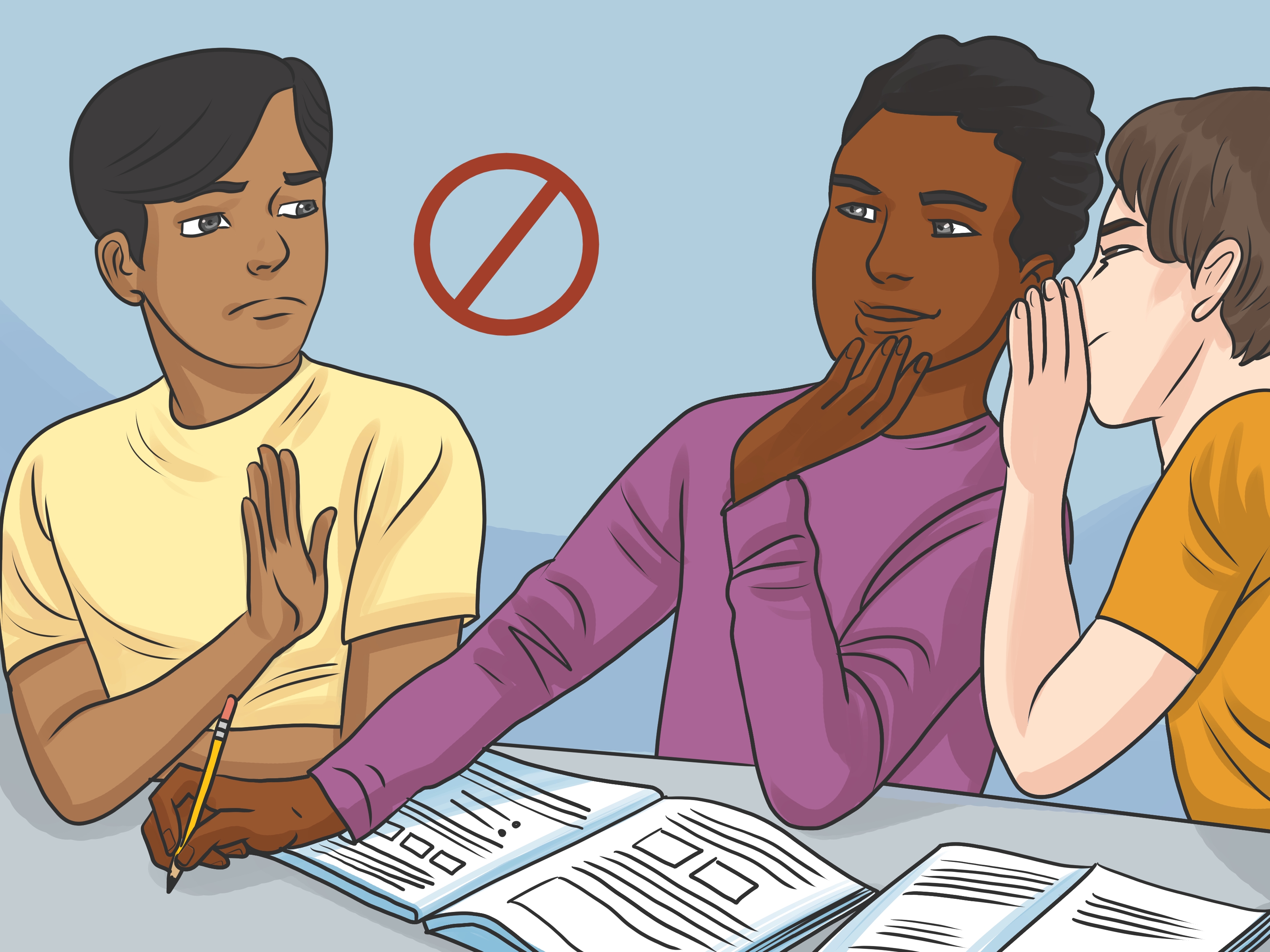
If friends pressure you to cheat, bully someone, break an important rule, send an inappropriate picture, vape, steal, or participate in some other risky behavior, you are allowed to say no.
You do not need a dramatic speech. Sometimes maturity sounds like:
“No thanks.”
“I’m not doing that.”
“You guys can go. I’m staying here.”
Good friends may occasionally disagree with you, but they should not require you to repeatedly do things that make you uncomfortable.
12. Take School Seriously Without Becoming Obsessed With Perfection
Being mature academically means putting in reasonable effort, preparing for class, asking for help when necessary, and learning from mistakes.
It does not mean believing that one bad quiz has destroyed your entire future.
If you receive a disappointing grade, ask what went wrong. Maybe you studied the wrong material. Maybe you waited until the last minute. Maybe you understood the concept but rushed through the test.
Then make an adjustment.
That processreviewing a result, changing your strategy, and trying againis far more useful than spending three hours declaring that the teacher personally hates you.
13. Treat Adults Respectfully Without Pretending They Are Always Right
Maturity does not mean agreeing with every adult.
Teachers, coaches, parents, and other adults can misunderstand situations or make mistakes. You can disagree while still communicating respectfully.
Instead of shouting, “That’s completely unfair!” try explaining the specific issue:
“I understand the rule, but I think there may have been a misunderstanding. Can I explain what happened?”
Being calm does not guarantee you will get what you want. It does make it more likely that people will listen seriously to what you have to say.
14. Take Care of Your Body and Brain
Sometimes an apparent maturity problem is actually an exhaustion problem.
It is much harder to control emotions, concentrate, remember assignments, and deal patiently with other people when you are extremely tired. Health guidance for adolescents generally recommends about eight to ten hours of sleep per night for teens ages 13 to 18, and research connects adequate sleep with attention, learning, emotional health, and daytime functioning.
Try maintaining a reasonable bedtime, getting regular physical activity, eating regularly, and taking breaks when stress begins piling up.
Taking care of yourself is not separate from maturity. It makes mature decisions easier.
15. Ask for Help Before a Small Problem Becomes Huge
Some students think maturity means solving absolutely everything alone.
It doesn’t.
A mature person recognizes when a problem is beyond what they can safely or realistically handle.
Talk to a parent, teacher, counselor, coach, nurse, or another trusted adult if you are dealing with persistent bullying, serious anxiety, threats, unsafe behavior, overwhelming stress, or another situation that feels too big to manage independently.
Strong school connections and supportive relationships with adults and peers are associated with better student well-being. Asking for support can be part of good problem-solving rather than evidence that you have failed.
Simple Mature Habits You Can Practice Every Day
You do not need to reinvent your personality overnight. Start with small behaviors that you can repeat.
- Say thank you when someone helps you.
- Apologize when you are wrong.
- Return borrowed items.
- Show up when you said you would.
- Finish responsibilities before expecting privileges.
- Do not interrupt constantly.
- Avoid gossiping about people who are not present.
- Keep private information private.
- Think before sending angry messages.
- Ask questions when you do not understand something.
- Clean up your own messes.
- Accept reasonable consequences without turning them into a courtroom drama.
Individually, these habits look small. Together, they create something people quickly notice: reliability.
Experiences That Teach You How to Be Mature in Middle School
The funny thing about maturity is that you usually learn it after doing something slightly immature first. Nobody reads one article on Monday morning and enters school Tuesday as a perfectly calm philosopher.
Experience 1: The Group Chat Disaster
Imagine that a friend sends you an angry message. You immediately type a long response that includes several excellent insults. Your thumb is hovering over the Send button.
Then you decide to wait.
Twenty minutes later, you read your message again and realize that sending it would probably turn a small misunderstanding into a major conflict. You delete most of it and write, “I think we misunderstood each other. Can we talk tomorrow?”
That moment is maturity.
The angry feeling did not disappear magically. You simply refused to let a temporary emotion make a permanent decision.
Experience 2: Getting a Bad Grade
Suppose you receive a 68 on a test you expected to pass easily.
Your first reaction might be to blame the teacher, the questions, the classroom temperature, or the mysterious student who coughed during question seven.
After looking at the test, however, you notice that you lost points because you rushed and skipped several instructions.
A mature response is uncomfortable but useful: admit what happened and change your approach. Before the next test, you study earlier and spend the final five minutes checking your work.
Your next grade improvesnot because you suddenly became smarter, but because you learned from the previous result.
Experience 3: Two Friends Start Fighting
Now imagine two close friends are angry with each other. Friend A tells you everything Friend B supposedly did. Ten minutes later, Friend B asks what Friend A said.
This is where middle school can accidentally turn you into a full-time diplomatic courier.
The immature choice is carrying every angry sentence back and forth. The mature choice is refusing to make the conflict worse.
You could say, “I think you two should talk directly. I don’t want to repeat things and make it worse.”
That might feel awkward, but maturity often involves choosing a little awkwardness now instead of a lot of drama later.
Experience 4: Admitting You Were Wrong
Perhaps you tease a classmate and everybody laughs. Later, you realize the person was genuinely embarrassed.
You have two options.
You can tell yourself that they are too sensitive. Or you can consider the possibility that your joke crossed a line.
A sincere apology does not require a 900-word speech.
“I’m sorry about what I said earlier. I thought it was funny, but I shouldn’t have embarrassed you.”
That sentence may demonstrate more maturity than winning an argument ever could.
Experience 5: Saying No to Your Friends
One of the hardest maturity tests happens when the wrong choice would make you more popular.
Maybe friends want you to join them in making fun of someone. Maybe they want you to share a private screenshot. Maybe they want to break a rule that could seriously hurt somebody.
Saying no can feel uncomfortable because nobody wants to become the boring person in the group.
But confidence develops each time you make a decision based on your values rather than applause from the people standing beside you.
Experience 6: Realizing You Still Need Adults Sometimes
Growing up creates an interesting contradiction: you want independence, but you occasionally discover situations that require help.
Perhaps another student will not stop harassing you. Maybe stress is interfering with sleep and schoolwork. Maybe somebody is threatening you online.
Trying to handle everything secretly can make the situation harder.
Talking to a trustworthy adult does not cancel your independence. Mature independence includes knowing when you can solve a problem yourself and when another person’s experience, authority, or protection is necessary.
How Long Does It Take to Become More Mature?
There is no deadline.
Some people become organized early but struggle with emotions. Others communicate wonderfully but forget everything that is not physically attached to their backpack. Different skills develop at different speeds.
Instead of asking, “Am I mature yet?” ask a more useful question:
“Am I handling situations better than I did six months ago?”
If you are becoming better at controlling reactions, accepting responsibility, keeping commitments, respecting boundaries, and thinking about consequences, you are moving in the right direction.
Conclusion
Learning how to be mature in middle school is not about becoming serious, boring, or perfect. It is about gaining more control over your own choices.
Pause before reacting. Take responsibility when you make mistakes. Listen to people. Respect boundaries. Stay away from unnecessary gossip. Think carefully about what you post online. Keep your schoolwork organized, choose friends who respect you, and ask trustworthy adults for help when a situation becomes unsafe or overwhelming.
Most importantly, expect to make mistakes while learning these skills. Maturity is not demonstrated by never failing. It is demonstrated by what you do after the mistake: recognize it, repair what you can, learn something useful, and make a better choice next time.
Note: Students develop social, emotional, and organizational skills at different rates. If managing school, emotions, attention, friendships, or stress feels unusually difficult, getting support from a parent, teacher, counselor, or qualified professional can be a sensible next step.













