
“`
Adjusting an air fuel mixture screw sounds like the kind of job that requires a secret handshake, three generations of garage wisdom, and at least one uncle named “Big Ray.” Good news: it is not magic. It is a careful, small-adjustment process that helps a carbureted engine idle smoothly, respond cleanly to throttle, and stop coughing like it just read your repair bill.
The air fuel mixture screw, often called the idle mixture screw, pilot screw, or low-speed mixture screw, controls how much fuel or air enters the engine at idle and just off idle. On many carburetors, turning the screw one way leans the mixture, meaning less fuel or more air. Turning it the other way richens the mixture, meaning more fuel or less air. The exact direction depends on the carburetor design, but on many automotive-style carburetors, turning the idle mixture screw clockwise leans the mixture and turning it counterclockwise richens it.
This guide walks through the process in seven practical steps. It applies broadly to older carbureted cars, motorcycles, lawn mowers, generators, snow blowers, and other small engines with adjustable mixture screws. However, always check your owner’s manual or service manual first. Many newer carburetors have sealed or tamper-resistant adjustments for emissions compliance, and those should not be modified unless the manufacturer specifically allows it or a qualified technician is handling the work.
Before You Touch the Screw: What the Air Fuel Mixture Screw Actually Does
A carburetor’s job is to mix air and fuel before that mixture enters the engine. At higher speeds, jets and other circuits do most of the work. At idle and low throttle, the idle or pilot circuit takes center stage. That is where the air fuel mixture screw comes in.
When the mixture is too lean, the engine may surge, hesitate, pop through the intake, stall when you open the throttle, or need extra choke to stay running. When the mixture is too rich, the engine may smell like raw fuel, idle lumpy, foul spark plugs, blow dark exhaust, or respond sluggishly. In other words, lean is “I skipped lunch,” rich is “I ate three burritos and regret everything.” The sweet spot is where the engine idles smoothly, responds cleanly, and does not act dramatic.
Tools and Safety Checklist
Before adjusting the air fuel mixture screw, gather a few simple tools. You may need a flathead screwdriver, a carburetor adjusting tool, a tachometer, a vacuum gauge for automotive carburetors, safety glasses, gloves, and the correct service manual. For motorcycles and small engines, access may be tight, so a short screwdriver or flexible carburetor tool can save your knuckles from becoming part of the project.
Work in a well-ventilated area because engines produce exhaust fumes, including carbon monoxide. Keep hands, hair, sleeves, and tools away from fans, belts, chains, blades, tines, and hot exhaust parts. If you are working on a car, set the parking brake and keep the transmission in Park or Neutral as appropriate. If you are working on a mower, chainsaw, trimmer, or generator, make sure the equipment is stable and the working attachment cannot move unexpectedly. Safety is not the boring part; it is the part that lets you keep all ten fingers for future bad decisions.
How to Adjust an Air Fuel Mixture Screw in 7 Steps
Step 1: Confirm the Carburetor Is Adjustable
First, find the air fuel mixture screw. On automotive carburetors, there may be one, two, or four idle mixture screws, usually located near the base plate or metering block. On motorcycles, the pilot screw may be underneath or on the side of the carburetor. On small engines, the low-speed mixture screw may sit near the carb body, although many modern units only offer idle speed adjustment.
Do not force, drill, or defeat a sealed cap or tamper-resistant screw. If the screw is capped, limited, or hidden behind emissions hardware, the manufacturer may not intend for owners to adjust it. In that case, your best move is to clean the carburetor, replace the air filter, refresh the fuel, check the spark plug, or take the machine to a qualified technician. Sometimes the smartest adjustment is knowing when not to adjust anything.
Step 2: Start With a Healthy Engine
A mixture screw cannot fix everything. It cannot repair a clogged jet, cracked intake boot, dirty air filter, weak spark, stale gasoline, bad fuel pump, vacuum leak, incorrect float level, or a carburetor that has been sitting since the era of flip phones. Before tuning, make sure the engine is mechanically sound.
Check the air filter first. A dirty filter restricts airflow and can make the engine run rich. Inspect the fuel. Old gas can leave varnish and residue inside the carburetor, especially in small engines that sit for months. Check the spark plug for heavy carbon, oil fouling, or damage. On automotive engines, look for vacuum leaks around hoses, the carburetor base gasket, and intake manifold. On motorcycles, inspect rubber intake boots for cracks. If unmetered air sneaks into the engine, the mixture screw will have to fight a battle it cannot win.
Step 3: Warm the Engine to Operating Temperature
Start the engine and let it warm up fully. Carburetors are tuned for normal operating temperature, not for the first thirty seconds of cold-blooded grumbling. If the engine needs choke to start, that is normal. But once it warms up, the choke should be off before you make final mixture adjustments.
For a car, allow the engine to idle until the thermostat opens and the idle settles. For a motorcycle, let it run long enough to feel stable, but avoid overheating an air-cooled engine while parked. For a mower or generator, warm it up according to the manual. A cold engine often wants a richer mixture, so tuning too early can leave you with a setting that feels fine in the driveway and terrible once the engine is actually ready to work.
Step 4: Gently Seat the Screw and Set a Baseline
If you do not know the current setting, turn the mixture screw clockwise very gently until it lightly seats. Count the turns as you go so you can return to the previous setting if needed. The word “gently” deserves its own neon sign here. Do not crank the screw down like you are closing a submarine hatch. The tip of the screw is delicate, and damaging it can ruin the carburetor’s ability to meter fuel accurately.
Once lightly seated, back the screw out to a baseline setting. Many carburetors use a starting point around 1 to 2 turns out from lightly seated, while some small engines or motorcycle carburetors may call for a different factory specification. If your manual gives a number, use that number. The baseline is not the final tune. It is simply the “let’s get this engine running without drama” position.
Step 5: Adjust Slowly in Small Increments
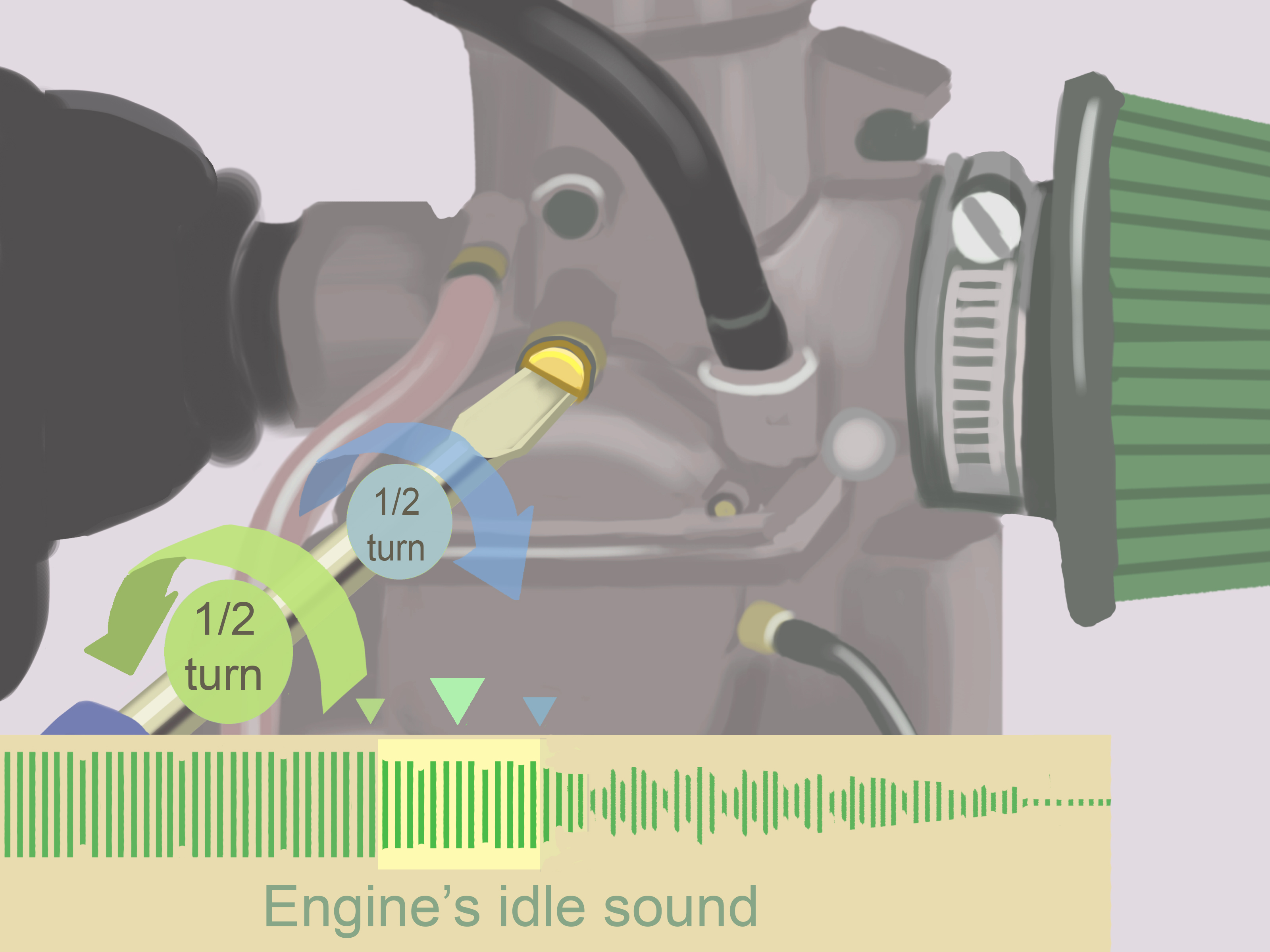
With the engine warm and idling, turn the mixture screw in small increments, usually about 1/8 turn at a time. Pause after each movement and listen. The engine needs a moment to respond. Rushing this process is how people end up three turns away from sanity, wondering why the engine sounds worse than before.
If you are adjusting an automotive carburetor with two idle mixture screws, adjust each screw equally and alternate sides. For example, turn the left screw 1/8 turn, then the right screw 1/8 turn. If the carburetor has four-corner idle adjustment, keep the changes balanced across all four screws. The goal is not to make one screw a hero. The goal is even, smooth fuel distribution.
For many automotive carburetors, turning the screw inward leans the idle mixture, while turning it outward richens it. However, some carburetors use an air screw design where the effect can be reversed. That is why the manual matters. If the engine improves as you turn the screw out, keep moving in tiny steps until it stops improving. If it worsens, return and go the other way.
Step 6: Tune for Highest Smooth Idle, RPM, or Vacuum
The best setting is usually found where the engine reaches its highest smooth idle speed or highest steady manifold vacuum. On a car or truck, connect a vacuum gauge to a full manifold vacuum source below the throttle blades. Adjust the mixture screws until you get the highest stable vacuum reading without using the idle speed screw as a shortcut. Once vacuum peaks, a slight adjustment may be needed to keep the engine from being overly rich.
If you do not have a vacuum gauge, use a tachometer. Adjust the screw until the idle RPM rises to its highest smooth point, then fine-tune for steadiness. You are listening for a clean, even idle without surging, stumbling, or loading up. On a small engine, the “instrument” may simply be your ears, but take your time. A smooth idle has a steady rhythm. A poor mixture sounds uneven, lazy, or nervous.
After each mixture change, the idle speed may rise or fall. That is normal. Do not chase every tiny RPM change immediately. First, find the best mixture. Then adjust the idle speed screw separately to bring idle RPM back to the manufacturer’s specification. Mixture screw and idle speed screw are teammates, not the same player.
Step 7: Recheck Throttle Response and Final Idle Speed
Once the mixture is set, blip the throttle gently. The engine should pick up cleanly without hesitation, coughing, or dying. Let it return to idle. If the idle hangs high before slowly dropping, the mixture may be lean, the throttle linkage may be sticking, or there may be an air leak. If the engine stumbles and smells heavily of fuel, it may be too rich.
Now set the idle speed to the correct specification. On a car, that may vary depending on transmission type, camshaft, and accessories. On small engines, the idle should be low enough that blades, chains, tines, or attachments do not move at idle. On motorcycles, the idle should be stable and appropriate for the engine design. Recheck your mixture one last time after setting idle speed, because changing idle speed can slightly affect the idle circuit.
Common Mistakes When Adjusting an Air Fuel Mixture Screw
Turning the Screw Too Far
The most common mistake is making big adjustments. A full turn is a massive change in carburetor language. Think of the screw as a seasoning knob, not a volume knob. Add a little, taste the soup, then decide. Small changes help you understand what the engine wants.
Adjusting a Dirty Carburetor
If the carburetor passages are clogged, the mixture screw may have little or no effect. That is a clue, not a challenge. Remove and clean the carburetor, inspect the jets, replace worn gaskets, and make sure fuel flows correctly. A clean carburetor responds clearly to adjustment. A dirty one just gaslights you.
Ignoring Vacuum Leaks
A vacuum leak adds extra air after the carburetor, creating a lean condition that no normal mixture adjustment can fully solve. If the engine only runs with the mixture screw unusually far out, or if the idle remains erratic no matter what you do, inspect for leaks before blaming the screw.
Confusing Idle Speed With Idle Mixture
The idle speed screw controls how far the throttle plate stays open at idle. The mixture screw controls the fuel-air balance through the idle circuit. If you crank the idle speed screw too far, you may uncover the transition slot on some carburetors and make idle mixture tuning unreliable. Set speed and mixture in the right order, and do not use one screw to cover up a problem with the other.
Signs Your Adjustment Is Correct
A properly adjusted air fuel mixture screw produces a stable idle, crisp throttle response, easier warm starts, and fewer fuel smells. The engine should not require choke once warm. It should not stumble when you open the throttle gently. It should return to idle without racing or dying. Spark plugs should look reasonable after normal use, not dry and chalky white from excessive leanness or black and sooty from richness.
Do not expect one mixture screw adjustment to transform a worn-out engine into a championship machine. Carb tuning is important, but it works best when compression, ignition, fuel delivery, air filtration, and exhaust are all in good shape. The mixture screw is a fine-tuning tool, not a miracle wand with a screwdriver slot.
When You Should Stop and Call a Professional
Call a qualified mechanic if the screw is seized, capped, stripped, missing its spring, or has no effect. Also get help if the engine backfires badly, leaks fuel, races uncontrollably, smokes heavily, or operates equipment attachments at idle. If the carburetor is on a vehicle that must pass emissions testing, improper mixture adjustment can cause failure and may violate local rules.
Professional help is also smart when working with multi-carb motorcycle setups. On those engines, mixture adjustment and carb synchronization often work together. Adjusting one carb without syncing the set can create a lumpy idle, uneven cylinder temperatures, and a riding experience best described as “angry shopping cart.”
Real-World Experience: What Adjusting an Air Fuel Mixture Screw Teaches You
Anyone who has tuned a carburetor a few times learns the same lesson: patience beats confidence. The first instinct is to twist the screw until something dramatic happens. The better approach is to move slowly, listen carefully, and let the engine tell you what it wants. Engines are not shy. They complain loudly when the mixture is wrong.
One common experience is the “almost fixed” idle. The engine starts, runs, and seems okay, but every few seconds it dips like it is about to stall. A beginner may immediately turn the idle speed screw higher. That can keep the engine alive, but it does not solve the mixture problem. When the mixture screw is adjusted carefully, the idle often smooths out and the engine no longer needs an artificially high idle to survive. It is the mechanical equivalent of standing up straight instead of leaning on a wall.
Another familiar situation happens with small engines that have sat through winter. The owner drains nothing, stabilizes nothing, and then acts personally betrayed when the mower refuses to start in spring. Old fuel leaves deposits in the carburetor, especially in tiny idle passages. In that case, adjusting the air fuel mixture screw may not do much. The screw can only meter fuel through passages that are actually open. Cleaning the carburetor, replacing stale fuel, and checking the air filter often do more than turning the screw back and forth for half an hour while muttering garage poetry.
On older cars, a vacuum gauge can make the process feel almost scientific. You turn the screw slightly, the needle rises, and suddenly the engine sounds happier. Then you go a little farther and the needle drops. That peak is your clue. The trick is not to overshoot. Many people find the highest reading, then go too rich “just to be safe.” A slightly rich idle may feel smooth at first, but it can waste fuel, smell unpleasant, and foul plugs over time. Best steady vacuum and clean throttle response matter more than simply dumping in extra fuel.
Motorcycles add their own comedy. The mixture screw may be tucked under the carburetor in a place clearly designed by someone with three-inch fingers made of rubber. Heat from the engine can make access uncomfortable, so the right tool matters. Riders often learn to count turns carefully because getting lost is easy. Was that two turns out? Two and a half? Did the screwdriver slip? Why is the garage floor suddenly holding the tiny spring hostage? This is why working over a clean surface and writing down the original setting is a very underrated habit.
There is also a useful emotional lesson: do not tune around another problem. If the engine only runs with the mixture screw far outside the normal range, something else is probably wrong. Maybe the pilot jet is clogged. Maybe the float level is off. Maybe the intake boot is cracked. Maybe the air filter is so dirty it has developed its own ecosystem. Good tuning is not forcing the screw to compensate for bad maintenance. Good tuning is making a healthy system better.
Finally, adjusting an air fuel mixture screw teaches respect for small changes. A tiny turn can change how an engine sounds, smells, and responds. That is satisfying. It is also humbling. Carburetors are simple in concept but sensitive in practice. When you get the mixture right, the reward is immediate: the idle steadies, the throttle sharpens, and the engine stops acting like it is auditioning for a roadside assistance commercial. That little screw may be small, but when adjusted correctly, it can make an old machine feel cared for again.
Conclusion
Learning how to adjust an air fuel mixture screw is one of the most useful skills for anyone maintaining a carbureted engine. The process is simple: confirm the screw is adjustable, start with a healthy engine, warm it up, set a careful baseline, make small adjustments, tune for the smoothest idle or highest steady vacuum, and recheck throttle response. The key is patience. Turn gently, count carefully, and avoid using the mixture screw to hide problems like vacuum leaks, stale fuel, dirty filters, or clogged carburetor passages.
When done correctly, this adjustment can improve idle quality, reduce stalling, sharpen throttle response, and make your engine feel less like a grumpy lawn ornament. When done carelessly, it can create more confusion than progress. Respect the screw, respect the manual, and remember: if the adjustment has no effect, the carburetor is probably asking for cleaning, not more twisting.












