
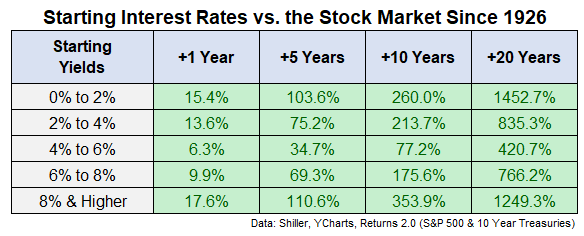
“Higher for longer” sounds like a gym slogan, but in markets it’s more like a weather forecast: it changes what you wear, how you travel, and whether you regret leaving the house at all. In plain English, it means interest rates stay elevated for an extended stretchlong enough that investors can’t treat it as a temporary inconvenience. And when rates stay up, the stock market doesn’t just “feel” it. It literally recalculates the price of the future.
If you’ve ever wondered why stocks can shrug off bad headlines one day and faint dramatically the next, welcome to the awkward love triangle between the Federal Reserve, bond yields, and equity valuations. This article breaks down what “higher for longer” really means, why it matters for stocks, which parts of the market tend to win or lose, and how to think about portfolio decisions without panic-selling like it’s a competitive sport.
What “Higher for Longer” Actually Means (No, It’s Not Just a Vibe)
“Higher for longer” is shorthand for a rate environment where central banksespecially the U.S. Federal Reservekeep policy rates at relatively high levels because inflation is still a concern, growth remains resilient, or both. The key word is longer: markets can price in a quick rate cut cycle. They struggle more when “temporary” turns into “this might be our personality now.”
Where rates are right nowand why that matters
The Fed’s policy rate anchors short-term borrowing costs across the economy. When the Fed maintains a higher target range, yields on cash-like options (think Treasury bills and money market funds) can stay appealing. That creates real competition for stocksbecause investors can earn a decent return without taking equity risk, without sweating earnings season, and without learning what “adjusted EBITDA” means.
In other words: when cash pays something meaningful, stocks have to work harder to justify their price.
The Stock Market vs. Higher Rates: The Math Nobody Escapes
At a basic level, stocks represent a claim on future cash flowsprofits, dividends, buybacks, and all the other ways companies try to send you money without admitting they love you. To value those future dollars, investors discount them back to today. When interest rates rise (or stay high), the discount rate often rises too, which can reduce the present value of those future cash flows.
A simple example (with fewer nightmares than a finance textbook)
Imagine a company expected to generate most of its profits far in the futurelike many high-growth businesses. If investors use a higher discount rate, those distant profits are “worth less” today. That’s one reason growth stocks can be especially sensitive to higher rates: more of their valuation rests on earnings that haven’t happened yet.
Meanwhile, companies with steadier near-term cash flows (often value or dividend-oriented) may be less sensitive to discount-rate changesthough they’re not immune. “Higher for longer” is less like a sniper and more like gravity: it affects everything, just not equally.
It’s Not Just Valuations: Higher Rates Change Business Reality
Rates don’t only impact spreadsheets and discounted cash flow models. They also change what companies can afford to do in the real economy.
1) Borrowing costs rise (and refinancing gets spicy)
Companies that rely heavily on debtespecially those that need to refinance frequentlymay face higher interest expense, which can squeeze profit margins. That matters a lot in sectors like real estate, small caps, and parts of consumer discretionary where leverage is common.
2) Consumers feel it too
Higher rates can mean pricier mortgages, auto loans, and credit card interest. Even if employment stays solid, higher financing costs can cool demand. When demand cools, revenue growth can slowand the stock market is famously allergic to “slowing.”
3) The hurdle rate for investment goes up
When cash and short-term bonds yield more, companies and investors become pickier. Projects that looked great under low rates can suddenly look mediocre. That can reduce capital spending or push firms to prioritize efficiency, profitability, and shareholder returns over “growth at all costs.”
Why Stocks Can Still Rise in a Higher-for-Longer World
Here’s the part that confuses people: stocks don’t automatically fall when rates stay high. Markets are forward-looking and messy. Strong earnings growth, productivity improvements, and investor enthusiasm (hello, themes like AI) can counteract higher discount rates. Sometimes, the market can even rally because “higher for longer” signals the economy is sturdier than feared.
Stocks don’t trade on rates alone
Equity prices tend to reflect a bundle of expectations: earnings, inflation, growth, policy, geopolitics, sentiment, and whether investors collectively decided to be brave today. If earnings accelerate faster than the headwind from rates, stocks can climb anywayespecially in sectors with strong balance sheets and pricing power.
Sector Reality Check: Who Tends to Like Higher Rates (and Who Doesn’t)
Sector performance is never guaranteed, but “higher for longer” often reshuffles leadership. Think of it as the market’s way of saying, “Congrats, your old playbook has been retired.”
Often pressured
- Long-duration growth stocks: The more valuation depends on profits far in the future, the more sensitive it can be to discount rates.
- REITs and rate-sensitive real estate: Higher financing costs can weigh on property values and cash flows, and income investors may find alternatives in bonds.
- Heavily leveraged companies: Higher interest expense can eat into earnings. Refinancing risk becomes a headline.
- Speculative “story stocks”: When cash yields are attractive, investors tend to demand real profits soonernot just vibes and a logo.
Often supported (or at least less bothered)
- Quality companies with strong free cash flow: Firms that can fund growth internally may be less exposed to borrowing costs.
- Financials (sometimes): Banks and insurers can benefit from certain rate dynamics, though it depends on the yield curve and credit conditions.
- Defensives: Healthcare and consumer staples can hold up if growth slowsthough they can still be affected by valuation and rate moves.
- Short-duration “cash-flow now” businesses: Companies generating meaningful profits today can look comparatively attractive.
The Bond Market Is Not a Side Character Anymore
In the low-rate era, investors often treated bonds like that one friend who always cancels plans: technically part of the group, but not expected to do much. In a higher-for-longer environment, bondsand even plain cashcan become real portfolio competitors.
Why this changes the stock market conversation
When yields on high-quality fixed income are elevated, the “equity risk premium” debate gets louder. Put simply: if you can earn a solid yield with less risk, you may demand a better deal (a lower price or higher expected return) from stocks. That can compress valuation multiples, even if corporate earnings are fine.
It also changes behavior. Investors may rebalance more often, compare dividend yields to bond yields, and become less tolerant of companies that burn cash. This doesn’t doom equitiesit just makes the market more selective.
Higher for Longer Playbook: Practical Ways to Think (Without Overreacting)
This isn’t personalized financial advice, but it’s a framework investors commonly use when rates stay elevated: focus on durability, avoid needless leverage, and stop assuming tomorrow will look like 2019.
1) Re-price expectations, not just holdings
A big mistake is expecting the same returns you got in ultra-low-rate years. When discount rates are higher, the market often requires either better earnings growth or lower starting valuations to deliver similar returns. That doesn’t mean “stocks are bad.” It means the bar is higher.
2) Prioritize balance-sheet strength
Companies with manageable debt, stable margins, and consistent free cash flow often have more flexibility. They can keep investing, buying back shares, or paying dividends without begging the bond market for permission.
3) Watch the “duration” of your equity exposure
You can think of some equities as “long-duration” assetsmore sensitive to changes in discount ratesbecause their value depends on earnings far into the future. A portfolio overloaded with long-duration growth can be more volatile if rates stay stubbornly high.
4) Consider what fixed income offers now
In higher-rate environments, bond ladders, shorter-duration strategies, and diversified fixed income allocations can play a bigger role. You don’t have to choose between “all stocks” and “hiding under your mattress.” You can build a portfolio where safer yields help fund patience in equities.
5) Diversify by “economic sensitivity,” not just by ticker symbols
Ten stocks in ten industries can still behave like one trade if they’re all levered, speculative, and dependent on cheap capital. In a higher-for-longer world, diversification works better when you mix different drivers: quality cash flows, reasonable valuations, defensive earnings, and (yes) some income.
What to Watch: The “Higher for Longer” Dashboard
If you’re trying to understand whether rates are likely to stay elevatedor whether the market is simply having a dramatic phasethese signals matter:
- Fed communications: Statements, meeting minutes, and commentary about inflation progress and labor-market conditions.
- Inflation trend: Not just one data pointlook for a consistent pattern.
- Long-term Treasury yields: They influence mortgage rates and corporate borrowing, and often feed into equity discount rates.
- Credit spreads: If spreads widen, the market is pricing more stress and higher financing risk.
- Earnings revisions: If analysts keep raising profit expectations, stocks can hold up better even with higher rates.
So… Is Higher for Longer Bad for Stocks?
“Bad” is too simple. “Different” is more accurate.
Higher-for-longer rates can pressure valuation multiples and expose weak business models. They can also reward profitable companies, punish excessive leverage, and make markets more disciplined. Over time, that can be healthyeven if it feels rude in the moment.
The key is to separate three ideas that often get mixed together:
- Rates can stay high while stocks rise if earnings grow enough.
- Rates can fall while stocks fall if the reason is recession.
- Volatility often increases when the market is unsure whether “higher for longer” is policy… or prophecy.
If there’s a punchline here, it’s this: the stock market doesn’t hate higher rates. It hates surprises. When investors can plan around a higher-rate world, businesses adapt, portfolios rebalance, and the market finds its footingsometimes with less drama, sometimes with more memes.
Experiences From a Higher-for-Longer Market (About )
In a higher-for-longer environment, investors tend to go through a very recognizable emotional playlist: denial, bargaining, spreadsheet-making, and then (eventually) acceptanceoften right after they discover that cash actually pays interest again. One common experience is the “wait… my savings account does what now?” moment. For years, many people ignored cash because it felt pointless. When short-term yields rise, investors start treating cash as an active allocation rather than a parking lot. That shift alone can change how the stock market behaves, because money that used to chase riskier assets can now earn something respectable on the sidelines.
Another repeated story: investors suddenly care about debt. Not in a moral sensemarkets aren’t therapistsbut in a practical sense. In low-rate times, a heavily leveraged company could refinance cheaply and keep the party going. In a higher-rate world, refinancing becomes a plot twist. People start reading balance sheets, looking at maturities, and asking unromantic questions like “How much of this business model depends on cheap borrowing?” That’s often when “quality” stops being a buzzword and becomes a strategy.
Portfolio behavior also changes in ways that feel small but add up. Many investors report they rebalance more frequentlynot because they’re trading a lot, but because the gap between “safe yield” and “equity risk” becomes more visible. A classic experience is adding short-term bonds or building a bond ladder for the first time, then realizing the ladder provides psychological comfort. When stocks wobble, investors can say, “It’s fine, the bond side is doing its job,” instead of turning every market dip into a personal insult.
Sector rotation becomes more than a headline. People notice that the market starts rewarding companies that generate cash today, not “someday.” Investors who lived through ultra-low-rate years often describe a learning curve: they held high-growth names expecting valuation multiples to expand forever, then watched those multiples compress when discount rates stayed elevated. The lesson isn’t “never buy growth.” It’s “pay attention to what you’re paying for growth,” and whether the company can fund itself without constant cheap capital.
Finally, there’s the experience of patienceforced, at first, then appreciated later. Higher-for-longer markets often teach investors that returns may come more from earnings and dividends than from rapid multiple expansion. That can feel slower, but it’s also sturdier. Many investors end up simplifying their approach: diversify, keep costs low, avoid over-leverage, and focus on businesses (and funds) with durable cash flows. It’s not flashy. But in a world where rates stay high longer than expected, “not flashy” can be surprisingly effective.
Conclusion
“Higher for longer” doesn’t have to be a stock-market horror movie. It’s a regime changeone that makes valuation discipline matter, rewards real cash flow, and gives bonds and cash a starring role again. For investors, the goal isn’t to predict every rate move. It’s to build a portfolio that can live through them without constant reinvention (or emotional damage). If you can do that, higher-for-longer becomes less of a threatand more of a filter that helps separate strong businesses from the ones that only looked good when money was basically free.












