
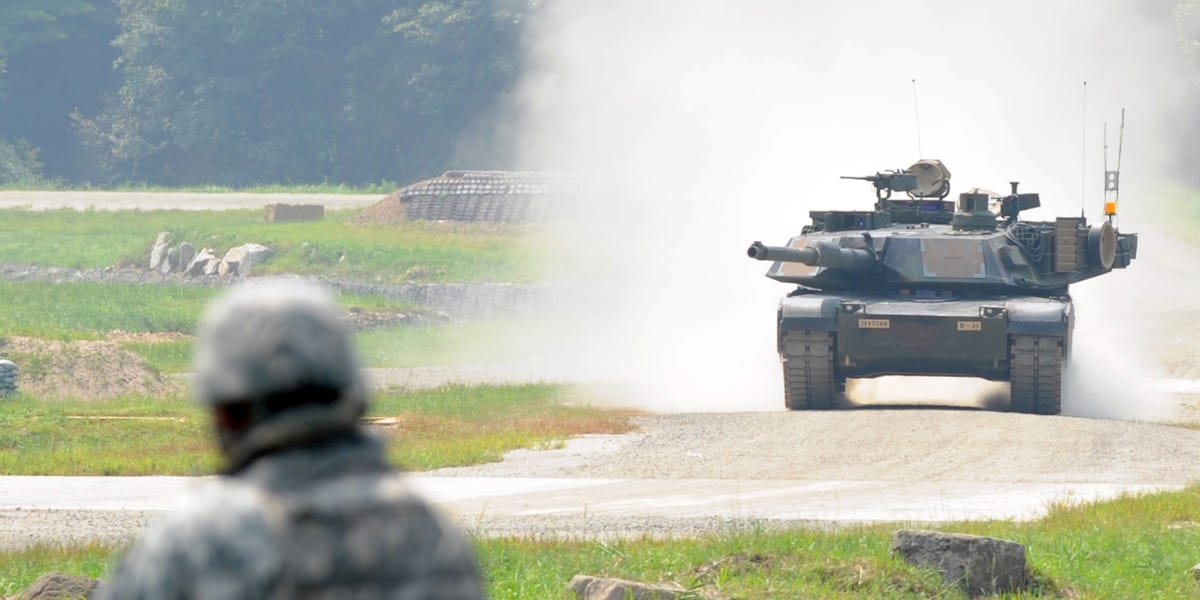
When American officials say heavy-hitting tanks are “on the table” for Ukraine, they are not talking about moving a large metal object from one parking lot to another. They are talking about diplomacy, logistics, training, maintenance, ammunition, political signaling, alliance coordination, and the very modern problem of keeping heavy armor useful in a battlefield watched constantly by drones. In other words, it is not just a tank decision. It is a rolling, steel-plated policy exam with a very loud engine.
The American M1 Abrams tank became one of the most recognizable symbols of Western military support for Ukraine after Russia’s full-scale invasion. For months, Kyiv argued that modern Western armor could help its forces defend territory, protect troops, and support future counteroffensive operations. Washington initially hesitated, not because the Abrams lacked power, but because power comes with a bill: fuel, spare parts, skilled maintainers, recovery vehicles, training pipelines, and a supply chain that does not fit neatly into a motivational poster.
Eventually, the United States announced in January 2023 that it would send 31 Abrams tanks to Ukraine. That number was not random. It was described as enough to equip a Ukrainian tank battalion. Later, the Pentagon shifted from the more modern M1A2 plan to refurbished M1A1 variants to speed delivery. The decision showed a central truth of wartime aid: the “best” system is not always the one with the shiniest brochure. Sometimes the best system is the one that can arrive, be supported, and actually be used before the situation changes again.
Why Abrams Tanks Became a Big Deal
The Abrams carries a reputation larger than its silhouette. In the American imagination, it is often treated as the heavyweight champion of armored warfare: tough, fast for its size, and built around crew protection. But in Ukraine, the Abrams debate has always been less about mythology and more about integration. A tank alone does not win a war. A tank without infantry support, maintenance, ammunition, recovery support, air defense, drone awareness, and practical battlefield planning is like bringing a luxury grill to a picnic and forgetting the propane.
Ukraine’s interest in Western tanks grew from a practical need. Soviet-era tanks were familiar to Ukrainian crews, but losses, wear, ammunition constraints, and battlefield demands pushed Kyiv to seek newer armored platforms from NATO countries. The Abrams joined a wider family of Western support that included German Leopard tanks, British Challenger tanks, infantry fighting vehicles, artillery, air defenses, and armored personnel carriers.
The Abrams also carried diplomatic weight. For Germany and other European countries, the U.S. decision helped unlock a broader Western tank coalition. The debate around Leopard 2 transfers was politically sensitive, and Washington’s willingness to commit Abrams tanks helped reassure allies that the United States was not asking Europe to shoulder the symbolic burden alone. In alliance politics, that matters. Sometimes a tank is a tank; sometimes it is also a very expensive handshake.
The U.S. Decision: From “Too Difficult” to “Yes, But Carefully”
Before the U.S. pledge, American officials often stressed the Abrams’ sustainment challenges. The concern was not simply whether Ukrainian troops could learn to operate the vehicle. Ukraine had already shown remarkable speed in adapting to Western systems. The harder issue was whether the country could support a heavy, complex armored fleet under wartime pressure.
That concern was reasonable. Modern tanks are not plug-and-play gadgets. They require trained mechanics, steady parts availability, secure repair routes, transport support, and crews who can work under pressure. The tank may get the headline, but the mechanic often decides whether it appears on the next day’s battlefield. That is not glamorous, but neither is flossing, and both prevent painful problems later.
When the United States chose to send M1A1 Abrams tanks rather than wait for newer M1A2 versions, the move reflected a practical compromise. M1A1 tanks could be refurbished and delivered faster. They still represented a major capability, but they were easier to provide within a timeline Ukraine could actually use. This is one of the most important lessons of the Abrams story: military aid is not only about capability; it is about timing.
What Abrams Tanks Can and Cannot Do
The Abrams can provide protected mobility, direct fire support, and psychological weight on the battlefield. Its presence can help Ukraine protect troops during certain armored operations, support defensive lines, and strengthen combined-arms formations. It can also force Russia to account for a more capable armored threat, which has value even when tanks are not used in dramatic Hollywood-style charges.
But the Abrams is not a magic wand with tracks. Ukraine’s war has shown that no single platform is invincible. Drones, mines, artillery, anti-armor weapons, and constant surveillance have made armored warfare far more difficult than many observers expected. A tank that was designed to dominate open maneuver warfare must now survive in an environment where small drones can spot movement, guide strikes, and turn concealment into a daily discipline.
This does not mean tanks are obsolete. That phrase gets tossed around every few months like a hot take looking for a microphone. The better conclusion is that tanks are changing roles. They remain valuable when used as part of a larger system, but they are far more vulnerable when isolated or exposed. In Ukraine, the tank is no longer the solo hero riding into the sunset. It is one member of a very busy team, and the team includes drones, engineers, infantry, artillery, electronic warfare, logistics crews, and air defense.
The Drone Problem Changed the Conversation
By 2024, reports indicated that Ukraine had pulled some U.S.-provided Abrams tanks back from the most exposed frontline roles because Russian drone reconnaissance and strike tactics made them easier to detect and target. This development did not prove that the Abrams failed. It proved that the battlefield evolved quickly.
Modern war is now a contest of visibility. If a vehicle can be seen, it can often be targeted. If it can be targeted, it must move, hide, defend, or risk being lost. That reality affects every armored vehicle in Ukraine, not only American tanks. Russian armor, Ukrainian armor, Western armor, Soviet-designed armor all must deal with a sky full of sensors and a front line saturated with cheap, dangerous technology.
The lesson for Ukraine and its partners is clear: heavy armor still matters, but it must be paired with counter-drone measures, better concealment, mobility discipline, fast repair systems, and realistic expectations. The Abrams brings strength, but it does not bring immunity. No serious planner should expect a tank to solve problems created by mines, drones, artillery shortages, and manpower pressure all at once. That would be like expecting a pickup truck to fix your taxes.
Why More U.S.-Made Abrams Entered the Picture
The phrase “American tanks” also became broader after Australia announced it would provide Ukraine with retired M1A1 Abrams tanks. These were U.S.-made vehicles from Australia’s own inventory, offered as Canberra upgraded its armored forces. Australia’s decision expanded the Abrams story beyond Washington and showed how allied stockpiles can become part of Ukraine’s long-term defense support.
For Kyiv, additional Abrams tanks could help replace losses, support training, provide spare parts, and keep armored units viable. The exact battlefield impact depends on condition, support packages, crew readiness, maintenance capacity, and how commanders choose to employ them. More tanks do not automatically mean more battlefield success. They must arrive with the boring-but-crucial ecosystem that keeps them moving.
That ecosystem is where wars are often decided. A tank without fuel is scenery. A tank without spare parts is a museum exhibit with anxiety. A tank without trained crews is a very expensive classroom. The Abrams debate reminds us that Western support is strongest when it delivers complete capabilities rather than headline-friendly hardware alone.
Strategic Meaning: More Than Metal
The Abrams decision carried strategic meaning beyond the number of vehicles. It signaled that the United States was willing to provide Ukraine with one of its most iconic ground combat platforms. That mattered to Kyiv, to NATO allies, and to Moscow. It also showed that earlier red lines around certain weapons could shift as the war evolved.
Still, the decision was not reckless. It came with training, sustainment planning, and careful sequencing. The U.S. and its allies have repeatedly tried to balance urgency with escalation concerns, battlefield needs with stockpile limits, and symbolic commitments with practical support. That balancing act is messy, slow, and often criticized from every direction. But it is also how large democracies tend to move when the stakes are high.
For Ukraine, Abrams tanks represent one part of a broader requirement: the ability to defend territory, absorb pressure, rebuild combat power, and keep Russia from assuming that time automatically works in Moscow’s favor. Heavy armor alone cannot do that. But combined with air defense, artillery, drones, engineering support, training, and steady resupply, it can contribute to a stronger defensive and offensive toolkit.
The Politics of “On the Table”
In Washington, “on the table” is a famous phrase because it sounds decisive without actually deciding anything. It means an option is being considered, tested, debated, argued over, and probably placed in a spreadsheet where someone has used too many colors. For Ukraine, getting Abrams tanks onto the table was an important diplomatic achievement. Getting them off the table and into a supportable force was the harder part.
The political debate in the United States has also shifted over time. Supporters argue that giving Ukraine stronger weapons helps defend a sovereign country, weaken Russia’s ability to threaten Europe, and protect the rules-based international order. Skeptics question cost, escalation risks, oversight, and the long-term sustainability of American aid. Both debates affect whether future tank packages, spare parts, ammunition, or maintenance assistance remain politically viable.
That is why the Abrams story is not finished. Even when the tanks arrive, the policy continues. Congress debates funding. The Pentagon manages readiness and supply chains. Allies coordinate transfers. Ukrainian crews adapt. Russian forces adapt too. The phrase “on the table” may begin as a talking point, but in a long war, it becomes a recurring test of political will.
What the Abrams Debate Teaches About Modern War
First, logistics are strategy
The Abrams debate made one lesson impossible to ignore: logistics are not the boring footnotes of war. They are the skeleton. A system that cannot be maintained will not matter for long. Ukraine’s partners must think not only about what to send, but how to keep it working months later.
Second, no weapon stays dominant forever
The rapid rise of drones has changed how all armored vehicles operate. Tanks remain important, but they must be protected, hidden, supported, and used with discipline. The battlefield is now a giant surveillance puzzle, and everyone is trying not to be the most obvious piece.
Third, symbolism has real value
The Abrams pledge helped demonstrate that the West was willing to move beyond lighter systems and provide Ukraine with heavier equipment. That message mattered. In war, morale, deterrence, alliance unity, and political confidence are not soft issues. They shape decisions on both sides.
Fourth, expectations must be realistic
The Abrams is powerful, but it cannot erase fortified defenses, drone threats, ammunition shortages, or the brutal arithmetic of attrition. Treating any single weapon as a war-winning miracle is not analysis; it is marketing with camouflage paint.
Experience-Based Reflections: What the Abrams Story Feels Like From the Ground Level
Anyone who has followed Ukraine’s defense needs closely can sense a recurring pattern: excitement rises when a major Western weapon is approved, then reality walks in wearing steel-toed boots. The announcement is dramatic. The delivery is complicated. The battlefield use is even more complicated. The Abrams fits this pattern perfectly.
From a practical experience perspective, the first lesson is patience. Heavy systems do not move at the speed of social media. People may ask, “Why not send them tomorrow?” But tanks require preparation, crews require training, and maintainers need time to understand what keeps the vehicle alive. A rushed transfer without support can create frustration instead of strength. The tank may be famous, but fame does not replace a repair manual, a trained mechanic, or a secure supply route.
The second experience is humility. Observers often speak about military equipment as if it enters the battlefield with guaranteed results. Ukraine has shown that even advanced systems must adapt. Abrams tanks entering a drone-heavy war face conditions very different from the environments many people associate with American armored power. That does not make them useless. It makes them part of a learning curve. In Ukraine, every system is tested against a battlefield that changes almost weekly.
The third experience is the importance of teamwork. A tank crew is not operating in a vacuum. Behind every armored vehicle are instructors, logisticians, planners, transport crews, mechanics, intelligence analysts, medics, and political decision-makers. The public sees the tank. The war effort depends on the network. This is true for Abrams, Leopards, artillery systems, air defenses, and drones. The visible machine is only the front page of a much longer book.
The fourth experience is that public expectations can become unfair. When a famous weapon arrives, some people expect immediate breakthroughs. If that does not happen, they swing too far the other way and call the system a failure. The truth is usually less theatrical. Abrams tanks can help Ukraine, but they cannot single-handedly solve strategic problems. Their value depends on timing, terrain, support, weather, enemy adaptation, and the larger operational picture.
The fifth experience is that modern defense support is cumulative. A single package may look small or late, but over time, repeated support shapes Ukraine’s ability to continue resisting. Abrams tanks, Bradley fighting vehicles, air defense interceptors, artillery shells, engineering vehicles, and training programs all form a layered defense ecosystem. The Abrams is a heavy and visible part of that ecosystem, but it is not the whole system.
Finally, the Abrams story shows why Ukraine keeps asking and why allies keep debating. Ukraine is fighting a larger invader and needs tools that help preserve lives, defend territory, and maintain leverage. Allies must weigh cost, readiness, risk, and political support. That tension is not going away. But the fact that Abrams tanks moved from “too complicated” to “approved,” delivered, adapted, and supplemented by allied transfers tells us something important: in this war, the table keeps changing, and so do the options placed on it.
Conclusion
Heavy-hitting American tanks being “on the table” for Ukraine is not just a story about armored vehicles. It is a story about how democracies make hard choices under pressure, how alliances coordinate support, and how old assumptions about battlefield power are being rewritten by drones, logistics, and industrial endurance.
The Abrams remains a powerful symbol and a serious military asset, but its real value depends on the system around it. Ukraine does not need myths on tracks. It needs sustainable capability: trained crews, maintainers, parts, ammunition, protection, and the freedom to adapt. The Abrams can contribute to that effort, especially as part of a wider network of Western support. But the tank’s greatest lesson may be this: in modern war, power is not measured only by armor thickness or engine noise. It is measured by whether a force can keep learning, keep moving, and keep fighting smarter than yesterday.
Note: This article is an editorial analysis based on publicly reported information and official defense statements from reputable U.S. and allied sources. It avoids operational guidance and focuses on policy, logistics, and strategic context.












