
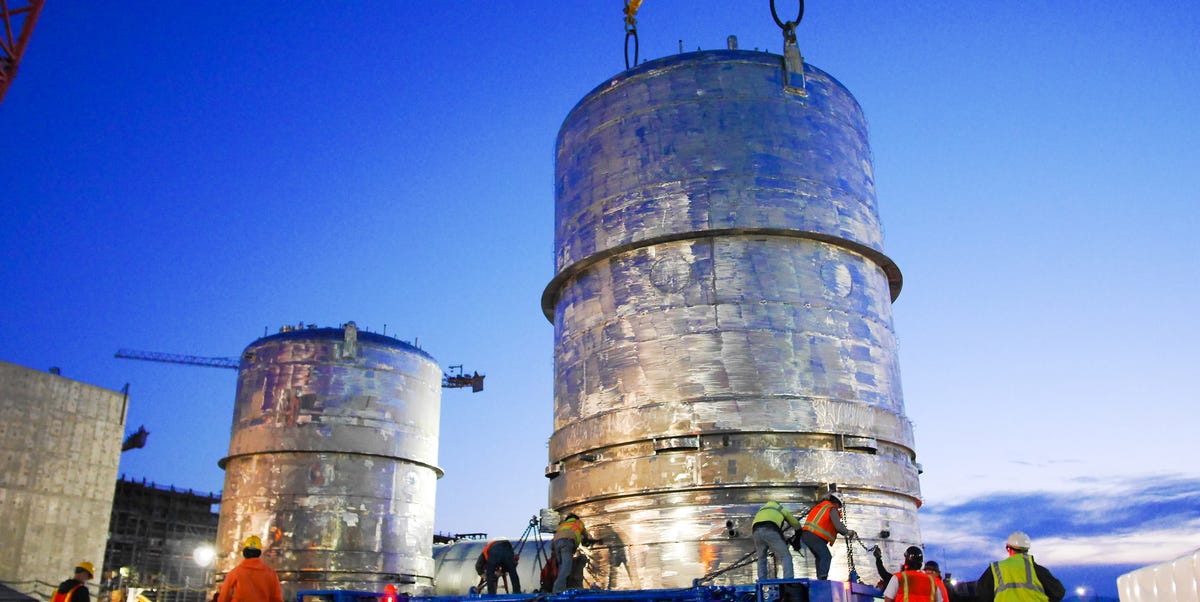
The Hanford Site in southeastern Washington is where groundbreaking nuclear science, wartime urgency, environmental damage, and one spectacularly complicated cleanup project all occupy the same patch of desert. It is part history museum, part industrial megaproject, and part warning label for what happens when radioactive waste is stored with the optimism of someone saying, “We will sort that out later.”
Today, Hanford nuclear waste cleanup involves aging underground tanks, contaminated soil, radioactive groundwater, retired reactors, enormous treatment facilities, thousands of workers, multiple regulators, Tribal Nations, and a schedule measured in decades rather than weekends. Understanding the site requires looking beyond the dramatic phrase “nuclear waste” and examining what was produced, where the contamination went, how cleanup works, and why progress can be both genuinely impressive and painfully slow.
What Is the Hanford Site?
The Hanford Site occupies roughly 580 to 586 square miles of semiarid land along the Columbia River in southeastern Washington. It was established in 1943 as part of the Manhattan Project, the secret federal program that developed the first atomic weapons. The location offered abundant river water for reactor cooling, hydroelectric power, transportation access, and distance from major population centers.
Engineers constructed the world’s first full-scale plutonium production reactor at Hanford. Plutonium made there was used in the Trinity nuclear test and in the atomic bomb dropped on Nagasaki in August 1945. Production continued during the Cold War, and Hanford eventually supplied nearly two-thirds of the plutonium used in the United States nuclear weapons stockpile.
The industrial achievement was enormous, but so was the human and environmental cost. Before construction, the federal government acquired approximately 600 square miles through eminent domain. Indigenous peoples had used the Columbia River landscape for thousands of years, while farming communities and towns also occupied the area. Some residents were given only weeks to leave.
Why Is There So Much Nuclear Waste at Hanford?
Producing plutonium was not as tidy as turning on a reactor, collecting a glowing metal brick, and calling it a day. Uranium fuel had to be fabricated, irradiated inside reactors, cooled, chemically processed, and separated. Each stage generated radioactive materials, hazardous chemicals, contaminated equipment, and liquid waste.
For decades, some liquid waste was intentionally discharged into ponds, trenches, cribs, and the soil. Hanford records describe about 450 billion gallons of liquid released to ground-disposal sites during the production era. Contaminants then moved through the unsaturated soil above the water table, known as the vadose zone, and into groundwater beneath portions of the site.
The Underground Tank Problem
The most difficult part of the Hanford cleanup mission is the tank waste. Approximately 55 to 56 million gallons of radioactive and chemically hazardous material remain in 177 large underground tanks. The inventory includes 149 older single-shell tanks and 28 double-shell tanks. The waste is not a uniform liquid; it can include watery supernatant, saltcake, thick sludge, radioactive particles, corrosive chemicals, and gases. Think less “barrel of mysterious goo” and more “underground chemistry experiment that has been running since your grandparents were young.”
Many tanks exceeded their intended service life decades ago. Washington regulators report that at least 68 tanks are assumed to have leaked in the past. Leaked waste can move slowly through hundreds of feet of soil, potentially reaching groundwater and, over much longer periods, threatening the Columbia River.
How Hanford Nuclear Waste Cleanup Is Organized
The U.S. Department of Energy owns the Hanford Site and directs the cleanup. The Environmental Protection Agency and Washington State Department of Ecology regulate major portions of the work. Their central legal framework is the Hanford Federal Facility Agreement and Consent Order, better known as the Tri-Party Agreement.
Signed in 1989, the agreement establishes enforceable cleanup commitments under the federal Superfund law and the Resource Conservation and Recovery Act. It includes milestones for investigating contamination, treating waste, closing facilities, remediating soil, and protecting groundwater. When deadlines or technologies change, the agencies negotiate revisions and seek public and Tribal input.
A major agreement finalized in January 2025 created a revised roadmap for tank waste work. It preserved plans to begin low-activity waste vitrification in 2025, targeted the start of high-level waste vitrification in 2033, and required waste retrieval from 22 tanks in the 200 West Area by 2040. It also included additional storage capacity, technology development, and a pathway for grouting certain low-activity waste for disposal outside Washington.
Vitrification: Turning Nuclear Waste Into Glass
Vitrification is the centerpiece of the Hanford tank waste treatment strategy. The process combines treated waste with glass-forming materials and heats the mixture to approximately 2,100 degrees Fahrenheit in industrial melters. The molten material is poured into stainless steel containers, where it cools into solid glass.
The goal is not to make the waste disappear. Radioactivity does not respond to motivational speeches. Instead, vitrification locks contaminants into a durable material that resists water intrusion, chemical reaction, and environmental migration. The radioactivity then decreases naturally over time through radioactive decay.
The Waste Treatment and Immobilization Plant
Hanford’s Waste Treatment and Immobilization Plant, often called the Vit Plant, is one of the largest and most technically complicated radioactive waste treatment facilities ever constructed. Its systems must handle waste that is radioactive, chemically aggressive, variable in composition, and capable of producing flammable gases.
Rather than waiting for every planned facility to be completed, the Department of Energy adopted the Direct-Feed Low-Activity Waste approach. Tank waste is retrieved, pretreated to remove much of its cesium, and sent directly to the Low-Activity Waste Facility for vitrification.
In October 2025, Washington officials announced that radioactive and hazardous tank waste was being vitrified at Hanford for the first time. By May 2026, the plant had converted more than 100,000 gallons of tank waste into glass, and the first containers of vitrified low-activity waste had been placed in permanent onsite disposal. These milestones do not finish the tank mission, but they mark a transition from decades of design and construction to actual waste treatment.
Why Grout Is Part of the Cleanup Debate
Vitrification is highly durable, but it is expensive and slow. For portions of waste containing relatively low concentrations of radioactivity, the Department of Energy is evaluating grout: a cement-like mixture that immobilizes waste in a solid form.
Under the current strategy, approximately 24 million gallons of low-activity waste associated with 22 tanks could be grouted and disposed of at commercial facilities outside Washington. The Government Accountability Office reported an estimated grouting cost of roughly $480 million to $1.1 billion, excluding transportation, disposal, and several waste-preparation expenses.
Supporters argue that grout could reduce costs, empty tanks faster, and reserve vitrification capacity for more radioactive material. Critics question whether grout will reliably contain long-lived, mobile contaminants such as technetium-99 and iodine-129 under every proposed disposal condition.
The debate is not simply “glass good, concrete bad.” It concerns waste composition, disposal-site geology, transportation risk, long-term performance, federal classifications, regulatory standards, and how much uncertainty society is willing to leave for future generations.
Groundwater and Soil Cleanup
Tank waste attracts the headlines, but groundwater cleanup is another massive undertaking. Contaminants found beneath Hanford include uranium, technetium-99, tritium, strontium-90, hexavalent chromium, nitrate, carbon tetrachloride, and other radioactive or chemical pollutants.
Hanford operates several pump-and-treat systems. Wells extract contaminated groundwater, treatment equipment removes or reduces targeted pollutants, and the cleaned water is returned underground. Washington reports that these facilities have treated more than 38 billion gallons of groundwater.
The large 200 West treatment facility was designed to process about 2,500 gallons per minute. Later expansion increased its flow rate to about 3,400 gallons per minute, allowing treatment of hundreds of millions of additional gallons each year. Researchers are also testing improved ion-exchange materials for removing uranium, technetium, and chromium.
Pump-and-treat technology is useful for containing plumes and removing large amounts of contamination, but it is not a magic straw. Contaminants can cling to sediments, remain trapped in low-permeability layers, or continue entering groundwater from deep soil. Cleanup teams therefore combine pumping with monitoring wells, chemical treatment, soil removal, engineered barriers, and advanced subsurface imaging.
Protecting the Columbia River
The Columbia River is central to nearly every major Hanford cleanup decision. It supports fisheries, agriculture, recreation, wildlife, hydroelectric power, and Tribal cultural practices. Hanford includes major salmon habitat and a long free-flowing stretch of the river, making groundwater protection both an environmental and regional economic priority.
Health, Workers, and Community Concerns
Historical Hanford releases created real exposure concerns, especially involving iodine-131 released into the air during early production. A federal public-health assessment concluded that uncertainty remained regarding the health effects of some past offsite exposures. It identified children who consumed milk from animals grazing on contaminated pasture as a particularly sensitive historical population.
The same assessment found that many evaluated contemporary exposure pathways represented no apparent health threat because contact was low or infrequent. However, that report was published in 2011 and relied substantially on environmental information dating to 2003, so it should be read as a historical assessment rather than a substitute for current monitoring data.
Worker safety remains a major operational concern. Employees can encounter radiological hazards, hazardous chemicals, heat stress, confined spaces, aging facilities, heavy equipment, and potentially harmful tank vapors. Cleanup therefore requires protective clothing, exposure controls, air monitoring, emergency preparation, specialized training, and a workplace culture in which stopping unsafe work is treated as responsibility rather than insubordination.
Hanford supports a workforce of more than 13,000 people, while the responsible field office oversees an annual budget of approximately $3 billion. That makes cleanup an important part of the Tri-Cities economy as well as an environmental obligation.
Tribal Nations and Cultural Resources
The Hanford landscape did not begin with the Manhattan Project. Archaeological and cultural resources in the region extend back approximately 11,000 years. The Columbia River, nearby mountains, traditional foods, fishing locations, burial areas, and ceremonial places remain culturally significant to Indigenous communities.
The Yakama Nation, Confederated Tribes of the Umatilla Indian Reservation, Nez Perce Tribe, and Wanapum Band participate in consultation and cleanup discussions. Their interests include treaty rights, access to traditional resources, protection of sacred places, restoration of natural resources, and cleanup standards compatible with Tribal ways of lifenot merely industrial land use.
This distinction matters. A cleanup level considered acceptable for a fenced industrial zone may not be acceptable for fishing, gathering plants, digging roots, conducting ceremonies, or using the land over many generations.
How Much Will Hanford Cleanup Cost?
Hanford is among the most expensive environmental cleanup programs in the world. A 2025 Department of Energy lifecycle estimate, cited by the Government Accountability Office in 2026, projected roughly $364 billion to $589 billion in remaining costs, with active cleanup extending through 2086. Earlier federal estimates also showed an enormous range, reflecting uncertainty about technology, disposal routes, regulatory decisions, construction performance, and future appropriations.
Costs rise when projects are delayed, facilities require redesign, aging infrastructure must be maintained longer, or contamination proves more complicated than expected. Yet rushing can also create expensive failures. Hanford’s central management challenge is balancing speed, safety, scientific uncertainty, legal compliance, and long-term environmental protection.
What Progress Has Been Made?
It is easy to describe Hanford as an endless cleanup, but substantial work has been completed. Many contaminated buildings have been demolished, reactor areas have been stabilized, spent fuel and radioactive sludge have been removed from locations near the river, waste sites have been excavated, groundwater systems have processed billions of gallons, and numerous retired reactors have been placed in protective interim enclosures.
The start of tank waste vitrification is especially important because tank treatment had remained one of the cleanup program’s most visible unfinished promises. Still, converting the first portion of waste into glass is closer to opening the first lane of a transcontinental highway than reaching the destination.
Progress should therefore be judged using several questions: Is risk being reduced? Are tanks being emptied? Is contamination being prevented from reaching the river? Are workers protected? Are milestones transparent? Are cleanup choices defensible over centuries rather than merely convenient during the next budget cycle?
Experiences Related to the Hanford Site and Nuclear Waste Cleanup
For many visitors, the most memorable introduction to Hanford is a tour of B Reactor, now associated with Manhattan Project National Historical Park. The building looks less like a science-fiction reactor and more like an enormous industrial machine room designed by people who considered beige an exciting color. Standing before the reactor face, visitors can see thousands of openings where uranium fuel was loaded. The scale makes the Manhattan Project feel less like a chapter in a textbook and more like a physical undertaking performed by thousands of workers under extraordinary secrecy.
The experience is emotionally complicated. Guides explain the engineering achievement, the urgency of World War II, and the plutonium production process. At the same time, the story leads inevitably to Nagasaki, displaced communities, Indigenous history, Cold War expansion, radioactive releases, and the cleanup burden inherited by people who had no role in creating it. A responsible visit does not require choosing between admiration for technical skill and concern about consequences. Hanford makes room for both reactions, whether visitors find that comfortable or not.
Residents of the nearby Tri-Cities often experience Hanford differently. For them, the site can mean family careers, economic stability, environmental concern, and dinner-table debates about federal policy. A person may have a parent who worked in plutonium production, a spouse employed in cleanup, and a neighbor who distrusts the Department of Energy. Hanford is not an abstract national issue in these communities; it is an employer, a historical identity, and a source of uncertainty located just beyond familiar highways.
Attending a Hanford public meeting offers another revealing experience. Discussions can shift rapidly from engineering diagrams to regulatory deadlines, treaty rights, groundwater models, worker protection, transportation routes, and billion-dollar estimates. Acronyms arrive in flocks: DOE, EPA, Ecology, TPA, CERCLA, RCRA, LAW, HLW, WTP, and DFLAW. New participants may initially suspect that everyone is speaking in classified alphabet soup. Over time, however, the complexity becomes understandable. Each acronym represents a law, facility, waste stream, or decision that can affect public safety and cleanup schedules.
Reading Hanford reports creates a similar lesson in patience. Progress rarely arrives as one heroic moment. It appears as a tank emptied, a building stabilized, a plume contained, a treatment campaign completed, or a milestone renegotiated after years of technical review. The experience can be frustrating because every achievement reveals another layer of work. Yet that is the nature of cleaning a site where contamination accumulated across decades and moved through tanks, buildings, soil, groundwater, and institutional boundaries.
Workers describe a culture in which routine actions require careful preparation. A maintenance task that would take an hour in an ordinary industrial plant may require radiological surveys, protective equipment, work permits, mock-up training, air sampling, backup plans, and detailed review. From the outside, the process may look slow. From inside a hazardous facility, the same process can look like the reason everyone goes home safely.
The most valuable experience Hanford offers is perspective. Nuclear technology can produce benefits or military power on a dramatic schedule, but radioactive waste does not respect election cycles, quarterly budgets, or public attention spans. Cleanup requires scientific continuity, stable funding, honest oversight, and memory that lasts longer than the careers of individual managers. Hanford teaches that industrial decisions can create obligations lasting generationsand that environmental responsibility begins when society stops calling those obligations somebody else’s problem.
Conclusion
The Hanford Site represents both a defining technological achievement and one of America’s most difficult environmental legacies. Its reactors helped launch the Atomic Age, but plutonium production left aging tanks, contaminated groundwater, hazardous buildings, buried waste, and long-term risks to the Columbia River.
Nuclear waste cleanup at Hanford is finally moving through an important new phase. Low-activity tank waste is being vitrified, groundwater treatment systems continue operating, contaminated facilities are being removed, and regulators have established revised milestones for future tank work. Nevertheless, the most radioactive waste, leaking-tank legacy, deep-soil contamination, final disposal decisions, and long-term stewardship will require decades of sustained effort.
Hanford is not a story with a quick ending. It is a test of whether institutions can remain accountable across generations, apply better science as it develops, protect workers and communities, honor Tribal rights, and resist solving today’s budget problem by creating tomorrow’s environmental emergency.











