
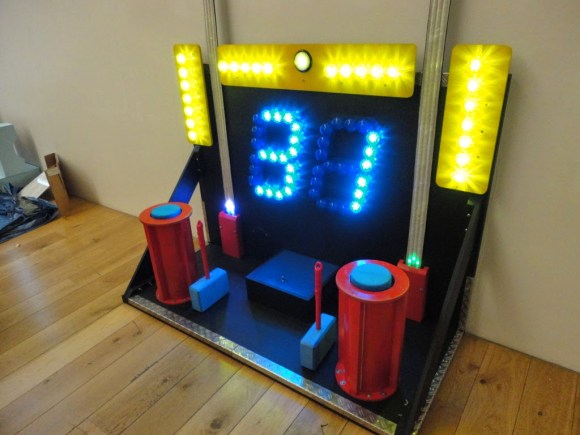
Some retro games age like fine wine. Others age like milk left in an unplugged arcade cabinet. Pong, somehow, keeps dodging both fates. More than fifty years after Atari turned digital table tennis into a cultural earthquake, people are still rebuilding it, remixing it, and lovingly giving it absurd new jobs. That is where HammerPong comes in: a towering, fairground-style, LED-soaked twist on the classic that swaps tiny paddles for giant foam hammers and turns a simple back-and-forth rally into a full-body performance.
And honestly? It is glorious. HammerPong does not try to “improve” Pong by burying it under menus, lore, battle passes, or a cinematic universe for the ball. It takes the original game’s best qualities, strips them down to their bones, and then rebuilds them at carnival scale. The result feels playful, theatrical, slightly ridiculous, and weirdly brilliant. In other words, exactly what a great arcade game should be.
What Is HammerPong, Exactly?
HammerPong is a physical arcade-style reinterpretation of Pong built by a maker who had already experimented with one-dimensional Pong using an addressable LED display. In this version, players stand beside a tall vertical playfield and use oversized foam hammers to smack a traveling point of light back toward the other side. A lit scoreboard keeps the pressure on, the visuals sell the spectacle, and the entire machine looks like it escaped from a boardwalk arcade with a degree in electronics.
That combination is the whole hook. Traditional Pong happens behind glass and under control of a knob or paddle. HammerPong pulls the action out into real space. Instead of nudging a paddle a few inches, you wait, swing, connect, and hope your timing is good. The “ball” still travels along a clear path. The rules are still instantly understandable. But the body language changes everything. Suddenly, the game is not just about reaction speed. It is about anticipation, rhythm, posture, performance, and the tiny ego bruise that arrives when you miss an easy return in front of other people.
Which, to be fair, is also what makes it fun.
Why Pong Still Works in 2026
To understand why HammerPong feels so smart, it helps to remember why Pong never really went away. The original game was famously simple: volley a square “ball” back and forth, score when your opponent misses, repeat until someone gets smug. That simplicity was not a flaw. It was the point. Pong was easy to read, easy to explain, and easy to start playing without a tutorial that lasts longer than a college semester.
That clarity helped make Pong a breakout hit in arcades. It also helped establish a basic rule of great game design: people love systems they can understand in seconds and spend far longer mastering than they expected. Atari’s version of Pong was approachable enough for casual players and satisfying enough to keep them feeding quarters into the machine. That balance, now described in modern game design language as being “easy to learn, difficult to master,” remains one of the cleanest formulas in interactive entertainment.
HammerPong keeps that formula intact. The brilliance is not in changing the rules beyond recognition. The brilliance is in changing the scale, the input, and the showmanship while preserving the instantly readable structure underneath. It is still Pong. It just looks like Pong got hired to headline a county fair.
The Magic Trick: Same Rules, Bigger Body
One reason HammerPong feels fresh is that it taps into something screen-only games cannot fully duplicate: physical game feel. In traditional digital design, “game feel” often refers to responsiveness, control, timing, and the sensation that your input matters. HammerPong turns that into something literal. You are no longer pressing a button and watching a result. You are stepping into the interaction. Your arms, timing, and confidence become part of the interface.
That matters more than it sounds. A game can be mechanically simple and still feel thrilling if the input method is tactile and expressive. Oversized hammers make every return look dramatic. A miss is not a quiet little error. It is a public event. A perfect hit feels less like clicking the correct command and more like landing a carnival trick shot. Even spectators can read the tension immediately, which is a big reason physical arcade games have such magnetic presence.
MIT’s long-running work on “athletic-tangible” play helps explain why projects like this resonate. When full-body motion and real physical objects are integrated into digital systems, the result often strengthens social energy and shared experience. HammerPong is not trying to simulate a sport with photorealistic graphics. It is doing something arguably more interesting: using digital tools to exaggerate the joy of simple physical competition.
Why the Build Matters as Much as the Gameplay
Half the charm of HammerPong is that it is not just a game idea. It is also a maker project executed with real craft. The build uses an Arduino Due, a 32-bit ARM-based board well suited to larger interactive projects, along with addressable LED strips that can create fast, colorful animations and a highly legible moving “ball.” In plain English, that means the machine has enough brains to track the action and enough visual punch to look like it belongs in a real arcade.
The lighting is especially important. Addressable LEDs are not just decoration here; they are the playfield, the feedback system, and the mood. They turn the logic of Pong into something theatrical. Motion becomes visible from across the room. Score changes feel celebratory. Returns can sparkle. Misses can pop. A plain screen would communicate the rules, but the giant illuminated structure communicates occasion. It tells players this is not just another prototype on a workbench. This is an event.
That distinction matters because great arcade machines have always been part software, part stage design. Cabinet shape, control feel, light placement, sound, and scale all contribute to why people walk over in the first place. HammerPong understands that arcade truth in its bones. It is not merely functional. It is inviting. The machine is selling the fantasy before the first swing even happens.
HammerPong Understands the Theater of Arcades
Classic arcades were loud, bright, and impossible to ignore for a reason. The best machines were built to pull attention from across the room. That was never accidental. Arcade design has always been equal parts gameplay and seduction: bold cabinets, glowing marquees, dramatic controls, and sounds calibrated to tell nearby humans, “Something fun is happening over here. Leave your friends and come investigate.”
HammerPong nails that arcade instinct. By turning Pong vertical and oversized, it creates spectacle before anyone understands the rule set. Then, once people get close enough, they discover the opposite of complexity. The machine looks huge, but the idea is tiny and brilliant: hit the light back. That contrast is part of why it works so well. The build says “big attraction.” The rules say “you already know how to play.”
That is also why HammerPong feels more social than many modern games. It is readable to players and non-players at the same time. Even someone who has never touched a controller can understand what is happening within seconds. A rally becomes a shared moment. A wild comeback becomes a crowd story. A complete whiff becomes comedy. You do not need patch notes to enjoy that. You need eyes and a sense of humor.
Retro Gaming Meets Maker Culture
The bigger story behind HammerPong is not just nostalgia. It is the ongoing conversation between retro gaming and DIY electronics. Pong remains a favorite for makers because its core logic is elegant enough to rebuild in countless forms: tiny displays, custom cabinets, tabletop installations, LED strips, and even strange physical hybrids that barely resemble the 1972 original while still feeling spiritually correct.
That flexibility is a design superpower. Some games are trapped by their original hardware or by mechanics too complicated to reinterpret cleanly. Pong is the opposite. It is like a durable design skeleton waiting for new skins. Want to build a pocket-sized version? Go for it. Want to make a furniture piece around it? Atari literally sells modern products that treat Pong as decor and conversation starter. Want to make a giant interactive wall that people smack with foam mallets? Apparently yes, and apparently that is delightful.
Maker culture loves exactly this kind of challenge because it sits at the sweet spot where engineering, design, nostalgia, and playful absurdity all overlap. HammerPong is technically impressive, yes, but it is also emotionally legible. You can admire the electronics and still immediately get the joke. It is serious craftsmanship in service of a very unserious kind of joy. That combination is powerful.
What HammerPong Says About the Future of Play
Projects like HammerPong are a useful reminder that the future of gaming is not only about sharper graphics, larger maps, or more realistic shadows on extremely moody rocks. Sometimes the future is better because it gets more physical, more social, and more public. Sometimes innovation means taking a familiar game and rebuilding the experience around how humans actually like to gather, laugh, compete, and show off a little.
There is a growing appetite for installations, hybrid play spaces, interactive exhibits, and game designs that reconnect digital systems with the physical world. That does not mean screens are going away. It means screens are no longer the only stage. A project like HammerPong hints at a future where playful technology lives in museums, events, family spaces, pop-up arcades, classrooms, and maker fairs as much as it lives in living rooms and on handheld devices.
If that sounds optimistic, good. It should. HammerPong is optimistic. It believes old ideas can still surprise us. It believes familiar mechanics can feel new when placed in a new body. And it believes that a giant glowing wall and two foam hammers are enough to turn a historical footnote into a crowd magnet. Frankly, that is the kind of confidence more modern design could use.
Why “New Heights” Is More Than a Clever Phrase
The phrase “takes Pong to new heights” works as a headline because HammerPong does exactly that in three ways. First, it literally raises the game into a taller, more vertical form. Second, it lifts the emotional energy by turning a calm tabletop-style contest into a physically expressive duel. Third, it elevates Pong from historical artifact to living design material. Instead of treating retro gaming as something to preserve under museum glass, HammerPong treats it as something to touch, swing at, and laugh with.
That is why the project feels memorable. Not because it is bigger for the sake of being bigger, but because every added inch of scale serves readability, drama, and delight. The best part is that HammerPong does all this without betraying the original idea. It respects Pong enough to keep it understandable, then messes with it just enough to make it feel mischievously alive again.
In a world full of overdesigned products desperate to prove how advanced they are, HammerPong offers a different lesson: sometimes the smartest innovation is the one that remembers play should be obvious, physical, and a little bit silly. That is not a downgrade. That is a design upgrade.
Extended Experience: What Playing HammerPong Feels Like
Imagine walking into a maker fair, retro arcade night, or interactive art event and spotting HammerPong from across the room. You do not first notice the rules. You notice the glow. The tall LED playfield catches your eye the way old arcade marquees used to, with that irresistible promise that something dramatic is happening a few steps away. Then you see the hammers, which is the moment your inner adult politely steps aside and your inner twelve-year-old takes the wheel.
At first, the game looks almost too simple. Two players. One traveling point of light. One oversized foam hammer per person. Then the ball starts moving, and suddenly simplicity stops being simple. Timing matters. Nerves matter. The first instinct is to swing too early because the setup makes you feel like you should be doing something heroic. But HammerPong does not reward heroics. It rewards rhythm. So the first few rallies are often a little clumsy, which is excellent, because clumsy games are funny and funny games draw crowds.
Once the rhythm clicks, the experience changes. You start reading the pace of the light. Your body shifts into anticipation mode. A clean return feels far more satisfying than it has any right to, partly because the physical motion sells the impact, and partly because everyone nearby can see whether you nailed it or blew it. On a normal screen, a missed input is private. On HammerPong, a miss has stage presence. You do not just lose a point. You create a moment.
That public quality is one of the game’s biggest strengths. Friends heckle. Strangers laugh. Spectators instinctively pick sides. Even waiting players start rehearsing their swings like they are preparing for a title fight in the world’s least serious sports league. HammerPong turns competition into performance without making it intimidating. Because the premise is playful, failure feels charming rather than punishing. The machine almost gives you permission to be dramatic.
There is also a satisfying contrast between the softness of the hammer and the precision the game demands. Foam suggests chaos. The LED timing demands discipline. That tension makes every rally more entertaining. You feel like you are in a carnival game, but the logic underneath is clean and almost elegant. It is a rare combination: silly on the surface, disciplined at the core. The more you play, the more you appreciate how carefully the interaction has been tuned.
And then there is the visual feedback. Because the “ball” is a bright moving point of light rather than a tiny object on a distant screen, your eyes stay locked in. The travel path is readable, dramatic, and easy for spectators to follow. When the score changes, the machine celebrates. When the rally speeds up, the tension becomes visible. You are not just playing a game; you are participating in a light show with stakes. That sounds grandiose, but so does any sentence involving two adults smacking invisible geometry with foam tools.
The aftereffect is maybe the best part. Long after a round ends, people keep talking about it. Not in the lore-heavy, patch-analysis way people discuss modern competitive games, but in the classic social way: “Did you see that comeback?” “You swung way too early.” “I thought you had that one.” HammerPong creates stories instantly because its action is physical enough to remember and simple enough to retell. That is the secret sauce of great public play. You do not just consume it. You recount it.
So yes, HammerPong may be a novelty. But it is the good kind of novelty: the kind that reminds people games can still surprise them, still gather a crowd, and still make total strangers grin at the same blinking line of light. In a world where so much entertainment is personalized, private, and quietly optimized, there is something refreshingly loud about that.
Conclusion
HammerPong succeeds because it understands both the history of Pong and the timeless thrill of physical play. It preserves the original game’s instant clarity while amplifying everything arcades have always done well: spectacle, tension, social energy, and just enough chaos to make people laugh. With its towering LED playfield, foam-hammer controls, and unapologetically playful design, it proves that retro concepts do not need to be frozen in time to stay relevant. They can be rebuilt, enlarged, re-performed, and made gloriously weird all over again.
If the best games are the ones that make people gather around, understand the goal instantly, and then beg for one more round, HammerPong has earned its place in the conversation. Not bad for a game about a dot going up and down while humans overcommit with foam mallets. Pong would probably approve.












