
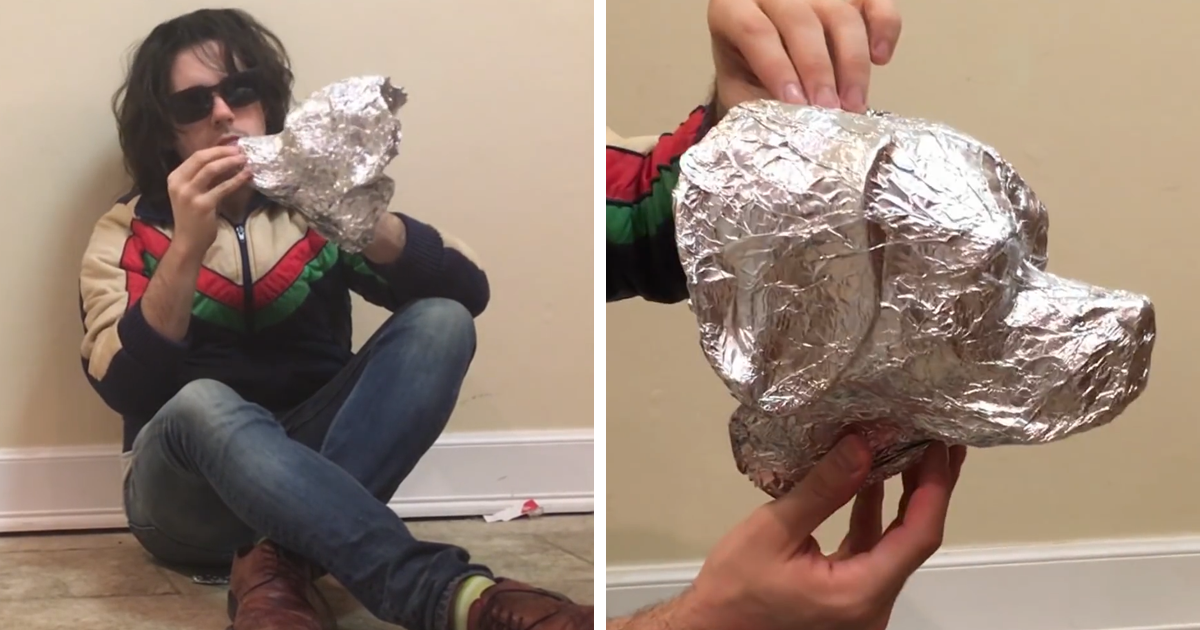
Every now and then, the internet hands us a video so strange, charming, and suspiciously perfect that our brains collectively bark, “Wait, how did he do that?” One such clip shows artist Jim McKenzie appearing to “sculpt” a dog’s face out of tin foil in less than one minute. The subject is his dog Gordo, the material looks like ordinary aluminum foil, and the result seems almost impossible: a recognizable canine face emerging at superhero speed from a crinkly silver blob.
At first glance, it feels like a tiny miracle from the land of viral art videos. A guy sits down, works with his hands, and suddenly a dog’s face appears as if the foil took obedience classes. But the real story is better than a simple speed-sculpting flex. The clip became popular because it plays with our expectations, our love of cute dogs, and our habit of believing whatever looks impressive on a small screen. The big twist? The footage was reversed. McKenzie was not sculpting the foil dog face in under a minute; he was destroying an already-made sculpture, then playing the video backward.
That reveal does not ruin the video. It makes it funnier, smarter, and more memorable. It turns a quick art clip into a mini lesson about creativity, editing, media literacy, and why dogs remain undefeated as the internet’s favorite co-stars. Gordo may not have received royalties in biscuits, but spiritually, he carried the production.
The Viral Trick Behind the “Dog Face Sculpture”
The reason the video works is simple: it shows something our eyes want to believe. We know talented artists can work quickly. We have seen time-lapse painting, speed drawing, clay modeling, and cake decorating videos where impossible detail appears in seconds. So when a foil dog face seems to form right before us, our brains file it under “amazing skill” before asking too many questions.
McKenzie’s trick depends on reversal. Instead of starting with flat foil and building the dog’s face, he begins with a finished foil sculpture and crushes or unwraps it. When played backward, destruction looks like creation. The folds seem intentional. The wrinkles appear to obey the artist’s fingertips. The dog’s muzzle, eyes, and forehead seem to rise from chaos like a silver puppy phoenix.
That is why the title “Guy ‘Sculpts’ Dog’s Face In Less Than 1 Minute” is so clickable. The quotation marks around “sculpts” do a lot of work. They hint that something playful is going on. It is not a normal art tutorial. It is a prank, a process illusion, and a clever reminder that video can tell the truth while still misleading the viewer’s first impression.
Who Is Jim McKenzie?
Jim McKenzie is an American artist, sculptor, animator, and director known for whimsical, surreal, and sometimes darkly funny character work. His art often has a storybook-meets-nightmare energy: playful enough to invite you in, odd enough to make you check whether the furniture is breathing. He has created sculptures, process videos, stop-motion-style work, and imaginative characters that feel handmade, cinematic, and slightly mischievous.
That background matters because the dog-face clip is not random internet nonsense. It fits McKenzie’s larger creative personality. He understands sculpture, timing, visual storytelling, and the theatrical pleasure of fooling the audience for a second. The video is not just “look what I can make.” It is “look what I can make you think you saw.” That distinction is the tiny art-school goblin living inside the whole joke.
His dog Gordo also became part of the charm. Pets give art a friendly doorway. A sculpture of a random object might impress viewers, but a sculpture of a beloved dog brings personality. Viewers are not only watching a trick; they are watching an artist turn affection into a visual gag. Gordo becomes muse, model, and unofficial quality-control manager.
Why a Dog’s Face Works So Well as a Viral Subject
Dogs are built for emotional recognition. Even a simple outline of floppy ears, a nose, and two round eyes can trigger an instant “aww” response. That is why cartoons, logos, plush toys, and doodles often reduce dogs to a few clear features. Our minds complete the rest.
In McKenzie’s foil sculpture, the face does not need to be perfectly realistic to feel alive. The folds in the foil suggest fur. The bumps suggest cheeks. The shadows make the eyes and muzzle stand out. Aluminum foil is not soft, warm, or furry, yet the final form somehow reads as “dog.” That transformation is satisfying because it turns a common kitchen material into a recognizable companion animal.
There is also a comedy factor. Dogs already have expressive faces. They can look wise, confused, suspicious, proud, dramatic, or deeply concerned about a vacuum cleaner two rooms away. A foil version of a dog’s face adds another layer of absurdity. It looks like a pet portrait made by a wizard who ran out of marble and raided the pantry.
The Art of Making Something Look Effortless
One reason people love short art videos is that they compress effort. A painting may take eight hours, but a time-lapse makes it feel like the artist sneezed and produced a masterpiece. The problem is that viewers can forget the hidden labor. The polished one-minute clip often sits on top of years of practice, failed attempts, material knowledge, and editing choices.
The dog-face video exaggerates that idea beautifully. It pretends to show instant mastery while secretly revealing how easily presentation can shape perception. The sculpture existed before the clip’s “beginning.” The process we think we are watching is not the real process. Still, the finished object and the joke both require skill.
That is an important point: editing tricks do not cancel artistry. McKenzie still had to create the foil dog face in the first place. He still had to understand how it would deform when handled. He still had to plan a sequence that would look convincing in reverse. The illusion depends on real artistic control, not magic. Sadly, no evidence suggests Gordo whispered sculpting advice, though we should not rule it out.
Why Aluminum Foil Is a Surprisingly Good Sculpting Material
Aluminum foil is cheap, flexible, lightweight, and easy to shape. That makes it a favorite for quick armatures, classroom art projects, craft experiments, and visual demonstrations. You can compress it, twist it, crease it, and build volume without needing a kiln, studio, or expensive tools. It is the sculptural equivalent of a hoodie: not formal, but extremely useful.
Foil also catches light dramatically. Every fold creates highlights and shadows. On video, that reflective texture can make small movements look more dynamic. When McKenzie manipulates the foil, the surface sparkles and shifts, making the illusion feel active. The material practically begs the camera to pay attention.
However, foil is also unforgiving in a funny way. Once you crease it, the mark remains. That can be useful for texture, but it also means the artist must work with the material’s natural chaos. A dog’s face is an ideal subject because fur, wrinkles, and facial contours can absorb irregular folds. Try making a perfectly smooth human cheek out of crumpled foil and you may end up with something that looks like a haunted baked potato.
What the Video Teaches About Media Literacy
The most valuable part of the clip may be what it teaches about online viewing. We see a short video. It looks real. It has a clear beginning and end. It feels harmless, entertaining, and impressive. So we accept it. That is normal. Human beings are not built to fact-check every 48-second clip between lunch and homework, or between emails and reheated coffee.
But the reversed-sculpture trick shows why context matters. A video can be authentic footage and still create a false impression. No deepfake is required. No complicated software is needed. A simple edit can turn “artist crushes foil dog sculpture” into “artist creates dog sculpture at impossible speed.” The pixels are real; the story is flipped.
This is especially relevant in a world full of viral clips, AI-generated visuals, staged pranks, edited reactions, and out-of-context moments. The dog sculpture is a low-stakes example, which makes it perfect for learning. Nobody is harmed by believing a talented artist has turbo-charged foil fingers. But the same habit of instant belief can become risky when the subject is news, health, money, public safety, or reputation.
Simple Questions Viewers Can Ask
Before sharing any amazing video, ask a few quick questions. Who posted it first? Does the clip have a source? Is there a longer version? Could it be reversed, sped up, staged, or edited? Are other reliable outlets explaining the same thing? These questions do not make the internet less fun. They make you harder to fool, which is basically a superpower without the uncomfortable costume.
Dog Grooming vs. Dog “Sculpting”: Please Do Not Confuse Them
Because the phrase “sculpts dog’s face” could also sound like grooming, it is worth making an important distinction. McKenzie’s clip involves sculpting a foil representation of a dog’s face, not reshaping a living dog’s face. Real dog grooming should always prioritize comfort, safety, coat health, and the animal’s stress level.
Professional groomers may trim around a dog’s eyes, ears, paws, and face depending on the breed and coat type. That work requires patience, proper tools, and a calm dog. It is not a race. A one-minute viral transformation may be great for foil, but it is a terrible standard for grooming a living animal. Dogs wiggle. Dogs sneeze at the worst possible time. Dogs sometimes decide the scissors are suspicious government equipment.
Owners should be careful around sensitive areas such as the eyes and muzzle. If a dog has hair blocking vision, tear staining, matting, or coat buildup, a trained groomer or veterinarian can help decide the safest approach. Brushing, bathing, nail trimming, ear checks, and coat maintenance are part of responsible dog care, but speed should never outrank safety.
Why Short Art Videos Go Viral
Short art videos satisfy several internet cravings at once. They offer surprise, transformation, skill, and a final reveal. They are easy to watch without sound. They work on social media feeds where attention is treated like a rare bird that might fly away at any second. A viewer can understand the premise immediately: plain material becomes cool object.
The dog-face clip adds a twist. It is not just a transformation; it is a fake transformation. That gives viewers a second reward when they learn the truth. First, they enjoy the illusion. Then, they enjoy realizing how the illusion worked. The clip becomes shareable because people want to test their friends: “Did you catch it?” Nothing powers the internet quite like the opportunity to feel like a detective wearing pajama pants.
Viral success also depends on emotional clarity. A dog face is familiar. A one-minute challenge is easy to grasp. A prank on media outlets adds drama. The result is a compact story: artist appears to do impossible thing, internet believes it, twist reveals clever editing. That is a full three-act structure in less time than it takes to microwave soup.
The Role of Humor in Creative Work
Art does not always need to stand in a gallery whispering serious things about existential fog. Sometimes it can wink. McKenzie’s clip works because it blends craftsmanship with humor. The joke is not mean-spirited; it is playful. It pokes fun at the speed with which online media can chase an eye-catching clip without pausing to inspect it.
Humor also lowers the barrier to art appreciation. People who might not read a long essay about sculpture will happily watch a foil dog face appear on screen. Once they are laughing, they are also learning about form, process, editing, and perception. That is the sneaky power of funny art: it enters through the side door while everyone is busy smiling.
What Creators Can Learn From the Clip
For artists, content creators, and storytellers, the clip offers several lessons. First, a strong concept matters. “I made a foil dog” is nice. “I made the internet think I sculpted a dog in under a minute” is much stronger. The difference is narrative.
Second, constraints can improve creativity. A simple material, a short runtime, one clear subject, and a visual twist are enough to make a memorable piece. The video does not need expensive equipment or a complicated plot. It needs one idea executed cleanly.
Third, the reveal matters. A great viral clip often gives viewers something to discuss after watching. In this case, the discussion is not only “That looks cool,” but also “Wait, it was reversed?” That extra layer keeps the content alive beyond the first view.
Experiences and Lessons Related to “Guy ‘Sculpts’ Dog’s Face In Less Than 1 Minute”
Watching this kind of video feels a lot like seeing a street magician pull a coin from behind someone’s ear. You know there is a trick somewhere, but you still want to enjoy the moment. The first experience is wonder. A piece of foil, which most people use to cover leftovers, suddenly becomes a dog’s face. That alone is delightful. It reminds viewers that creativity often begins with ordinary objects. You do not always need a professional studio to make something memorable. Sometimes you need foil, patience, lighting, a camera, and the nerve to prank the entire internet politely.
The second experience is suspicion. After a few seconds, something feels too smooth. The sculpture seems to appear with impossible confidence. The hands move quickly, but not in the way a real sculpting process usually works. Details do not get built piece by piece; they seem to arrive already knowing their assigned seats. That is when a viewer starts to wonder whether the clip is reversed, edited, or staged. This moment is fun because it turns passive watching into active thinking.
The third experience is appreciation. Once the reversal is revealed, the video becomes more impressive in a different way. Instead of admiring only fast hands, you admire planning. The artist had to create a sculpture that would collapse convincingly. He had to understand how destruction would look when turned backward. He had to trust the audience to be fooled just long enough for the joke to land. That is not cheating; that is visual storytelling.
There is also a practical creative lesson here: presentation changes everything. The same physical action can tell two opposite stories depending on how it is edited. Crush a sculpture forward, and it is destruction. Play it backward, and it is creation. This applies beyond art videos. A photo, quote, statistic, or short clip can be technically real while still giving the wrong impression if context is missing. The dog-face video is cute, but its lesson is serious enough to keep in your pocket.
For pet lovers, the clip also highlights why dogs make such powerful artistic subjects. A dog’s face carries instant emotion. Even in foil, the suggestion of a muzzle and eyes can feel personal. Many dog owners have had the experience of seeing their pet’s personality in a sketch, cartoon, ornament, or badly folded blanket. The resemblance does not need to be perfect. It only needs to capture the spirit: the goofy dignity, the snack-based optimism, the expression that says, “I have never done anything wrong, including the thing I obviously just did.”
For beginner artists, the video can be encouraging. It shows that playful experiments can matter. Not every project has to become a museum piece. Some projects are valuable because they teach timing, form, texture, and audience reaction. Try sketching your pet in different materials: pencil, clay, cardboard, or foil. The goal is not perfection. The goal is noticing shapes, learning what features make your dog recognizable, and discovering that creativity improves when you stop treating every attempt like a final exam.
Finally, the experience of watching the clip is a reminder to stay curious. Enjoy the magic, then ask how it works. Laugh at the prank, then respect the craft. Share the video, but share the twist too. The best kind of internet fun does not make us less thoughtful. It makes us more alert, more creative, and maybe slightly more suspicious of any man who claims he can summon a dog face from foil in under sixty seconds.
Conclusion
“Guy ‘Sculpts’ Dog’s Face In Less Than 1 Minute” is more than a funny viral headline. It is a compact lesson in art, editing, attention, and internet belief. Jim McKenzie’s foil dog face works because it combines a lovable subject, a familiar material, and a clever reversal trick. The result is playful enough to entertain casual viewers and smart enough to reward anyone who looks twice.
The video also reminds us that creativity is not always about showing the process exactly as it happened. Sometimes it is about building an experience. McKenzie turns destruction into creation, a dog into a muse, and a sheet of foil into a tiny internet mystery. That is a pretty good return on investment for something most of us use to wrap cold pizza.
Most importantly, the clip encourages a healthier way to watch online media. Be amazed, but stay curious. Enjoy the dog, but question the edit. Celebrate the artist, but remember that the camera is never just a window; it is also a storyteller. And sometimes, that storyteller is holding aluminum foil and laughing quietly.











