
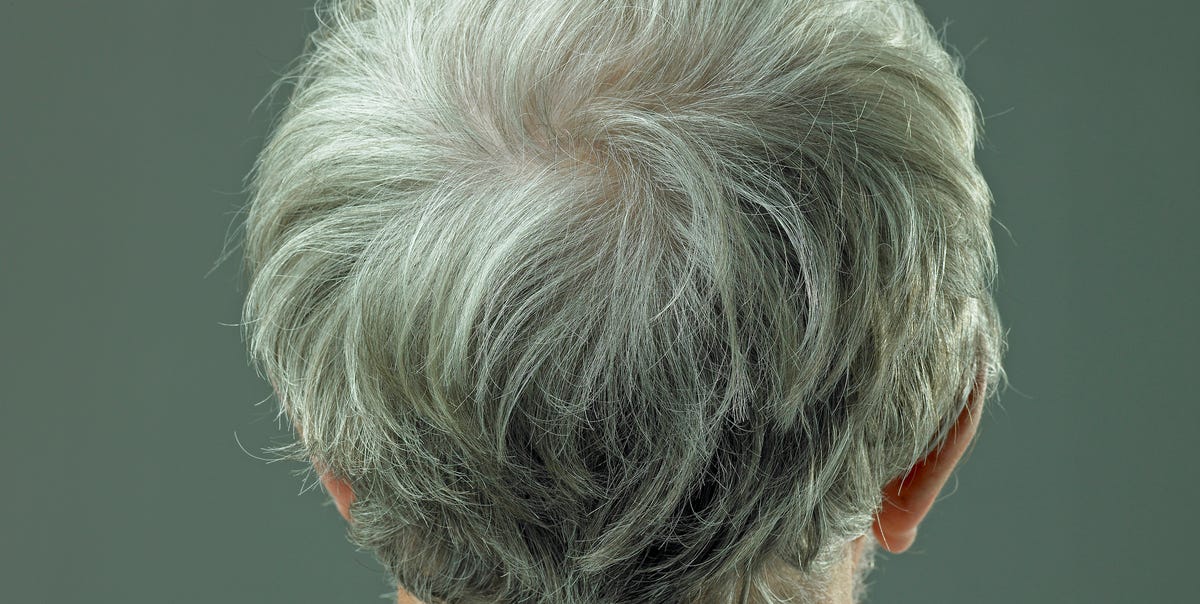
For generations, gray hair has been treated as a biological one-way street. Once a strand loses its color, the conventional wisdom says, it has purchased a nonrefundable ticket to Silver City. Hair dye can cover it, hats can hide it, and strategic lighting can negotiate with it, but the pigment itself is supposedly gone for good.
Research published in the journal eLife, however, suggests that the story is more complicated. Scientists studying individual human hairs found rare examples in which follicles stopped producing pigment and later started again. In several cases, the timing of these changes appeared to match periods of increased or reduced psychological stress.
That does not mean meditation will transform a full head of white hair into its original color by Friday. The study was small, spontaneous repigmentation was uncommon, and age-related gray hair remains difficult to reverse. Still, the findings challenge the assumption that every gray hair represents permanent biological damage. Under certain conditions, some follicles may retain more flexibility than scientists once believed.
Why Hair Turns Gray in the First Place
Hair color comes from melanin, a family of pigments produced by specialized cells called melanocytes. These cells work inside the hair follicle, adding pigment to a strand as it grows. Darker hair generally contains more melanin, while blond and red hair have different quantities and combinations of pigment.
The visible section of a hair shaft is primarily hardened keratin. Once that section emerges from the scalp, it is no longer living tissue. It cannot suddenly decide to become brown, black or red again. Any natural color change has to occur at the follicle, where new sections of the strand are being produced.
As people age, the pigment-producing system becomes less reliable. Melanocytes may work less efficiently, and the stem cells responsible for replenishing them may become depleted or dysfunctional. Newly growing hair then receives less pigment and appears gray, silver or white.
Genetics usually has the loudest voice in determining when this happens. If your parents began graying early, your follicles may have inherited a similarly enthusiastic schedule. Aging remains the main cause, but smoking, nutritional deficiencies, autoimmune conditions and chronic stress may accelerate the process in some people.
What the Human Gray Hair Study Actually Found
The widely discussed research was led by scientists at Columbia University and published in 2021. Rather than merely counting gray hairs in photographs, the researchers developed a high-resolution method for measuring pigmentation along individual hair shafts.
Because scalp hair grows at a relatively predictable rate, the length of a strand can function somewhat like a timeline. The root represents recent growth, while sections farther from the scalp were produced weeks or months earlier. A strand containing dark, white and dark sections therefore records a period in which its follicle produced pigment, stopped producing it and later resumed.
The researchers collected and analyzed 397 hairs from 14 healthy participants. Some strands remained consistently pigmented, some were consistently white, and others contained sharp transitions between pigmented and unpigmented sections. Most remarkably, researchers documented hairs that had become gray and subsequently regained pigment.
These reversals were found in men and women and in hairs from multiple body regions. They were also rare. The research team needed roughly two and a half years of recruitment to identify the small group of participants, so this was not evidence that most gray hairs routinely reverse while nobody is looking.
The Vacation Hair That Regained Its Color
One especially interesting case involved a 35-year-old man whose researchers identified five hairs with similar repigmentation patterns. When the hair timelines were compared with his recollection of stressful life events, the return of pigment lined up with a period of sharply reduced stress following a two-week vacation.
Another participant, a 30-year-old woman, had a strand that temporarily lost its pigment during a highly stressful period involving marital conflict, separation and relocation. Pigment later returned as that stressful period ended.
These examples are intriguing, but they must be interpreted carefully. The stress histories were reconstructed after the hairs had been collected, and detailed stress comparisons involved only a small subset of participants. The study found an association; it did not prove that stress reduction directly switched the follicles back on.
In other words, the hairs offered compelling biological clues, not a prescription for an anti-gray beach vacation. Although most of us would gladly volunteer for the follow-up study.
How Stress Could Affect Hair Pigment
Stress changes far more than mood. It can alter hormone signaling, immune activity, inflammation, sleep, metabolism and the sympathetic nervous system, which controls the familiar fight-or-flight response.
Earlier research in mice showed that acute stress could activate sympathetic nerves surrounding hair follicles. Those nerves released norepinephrine, causing pigment-regenerating stem cells to become excessively active and leave their reserve. Once those cells were depleted, the affected follicles could no longer make pigment, and the graying appeared permanent.
The human findings do not necessarily contradict that work. Stress may have different effects depending on its severity, duration, the species involved and the biological condition of a follicle. A follicle with a damaged but still functional pigment system may be capable of recovery. One that has permanently lost its melanocyte stem cells probably cannot be rescued simply by lowering stress.
The Biological Threshold Theory
The Columbia researchers proposed a model in which each follicle moves toward a biological threshold for graying. Age, genetics and accumulated cellular stress push it closer to that threshold. A major stressful event might temporarily push a vulnerable follicle over the line, causing a gray section to grow.
If the stress ends while the follicle still has functioning pigment machinery, the system might fall back below the threshold and produce color again. However, an older or more damaged follicle may be too far beyond that tipping point to recover.
This model helps explain why a 30-year-old might occasionally see a repigmented strand while an 80-year-old is unlikely to reverse an entire head of white hair by mastering deep breathing. Biology loves nuance, especially when consumers would prefer a refund policy.
Mitochondria May Be Part of the Story
The researchers also compared proteins found in dark and white sections of hair. Gray sections showed changes in numerous proteins associated with mitochondria, energy metabolism and cellular stress.
Mitochondria are often described as the powerhouses of cells, but they also regulate stress responses, inflammation and communication between cellular systems. Changes in mitochondrial activity could influence whether a follicle’s pigment-producing machinery remains stable, becomes disrupted or recovers.
The protein findings do not establish a single “gray hair switch.” Instead, they suggest that hair graying may reflect broader changes in cellular energy management. This is scientifically important because metabolism can sometimes be modified, whereas genetic aging has traditionally been viewed as far less flexible.
The “Stuck” Stem-Cell Discovery
A separate study published in Nature in 2023 added another piece to the puzzle. Researchers at NYU Grossman School of Medicine examined melanocyte stem cells in mouse hair follicles and found that these cells normally move between different compartments as hair cycles through growth and rest.
Depending on their location and the molecular signals surrounding them, the cells can shift between a flexible stem-cell state and a more mature pigment-producing state. This back-and-forth behavior helps follicles continue coloring new hair.
As the follicles aged, however, growing numbers of melanocyte stem cells became stranded in an area called the follicle bulge. There, they received insufficient WNT signaling and could no longer mature into functioning melanocytes. The cells had not necessarily vanished; they were effectively stuck in the wrong biological waiting room.
Researchers suggested that restoring the cells’ mobility or returning them to the correct follicle compartment might someday prevent or reverse graying. That is a promising research direction, not an available therapy. The experiments were performed primarily in mice, and scientists still need to determine whether the same mechanism can be safely manipulated in human follicles.
Can Gray Hair Be Reversed Today?
For most age-related or genetically programmed gray hair, the honest answer is no. There is currently no widely accepted medical treatment proven to restore natural pigment permanently across a person’s scalp.
Spontaneous repigmentation can occur in individual hairs, but it appears uncommon. Certain medications have also been associated with unexpected hair repigmentation in isolated reports, yet those observations do not provide a safe or practical treatment strategy.
Gray hair associated with a correctable underlying problem offers a more realistic possibility. Deficiencies in vitamin B12 or iron, for example, have been linked with premature graying. Thyroid disorders and autoimmune conditions such as vitiligo or alopecia areata can also affect pigmentation. Treating the underlying condition may slow further color loss and, in some cases, allow pigment to return as new hair grows.
That is different from taking supplements “just in case.” Vitamins are most useful when a genuine deficiency exists. Swallowing large amounts of B vitamins, copper or trendy anti-gray capsules has not been shown to reverse ordinary age-related graying.
Be Careful With Biotin and Hair Supplements
Biotin is heavily marketed for hair and nail health, but deficiency is uncommon, and evidence supporting high-dose supplementation for gray hair is weak. More importantly, biotin can interfere with certain laboratory tests, including tests used to evaluate thyroid function and heart problems.
Tell your healthcare provider about any supplements you take, especially before blood testing. A bottle with glamorous hair on the label can still create remarkably unglamorous medical confusion.
What You Can Realistically Do
Manage Stress for Health, Not as a Guaranteed Hair Treatment
Regular physical activity, sufficient sleep, social connection, mindfulness and time away from constant work demands can improve overall health. They may also reduce a factor that contributes to premature graying in susceptible follicles. However, stress reduction should not be advertised as a reliable way to restore hair color.
Avoid Smoking
Smoking has been associated with premature gray hair, possibly because tobacco-related chemicals increase oxidative stress and damage pigment-producing cells. Quitting offers benefits for the heart, lungs, skin and circulation, even when the bathroom mirror refuses to provide immediate applause.
Eat a Balanced Diet
A varied diet containing adequate protein, vitamin B12, folate, iron, zinc and copper supports normal hair growth and pigmentation. People following restrictive diets or those with digestive conditions that impair nutrient absorption may benefit from professional nutritional guidance and appropriate testing.
See a Doctor About Unusually Early or Sudden Graying
Gray hair is usually harmless, but a medical evaluation may be sensible when it begins unusually early, appears rapidly or occurs with other symptoms. Fatigue, weakness, hair loss, unexplained weight changes, sensitivity to heat or cold, numbness, pale skin or new patches of skin depigmentation may justify a discussion with a primary care doctor or dermatologist.
Depending on the circumstances, a clinician may consider tests for anemia, iron status, vitamin B12 deficiency, thyroid function or autoimmune disease. Testing should be guided by symptoms and medical history rather than an internet checklist with the emotional energy of a disaster movie.
Experiences With Gray Hair Reversal: What People May Notice
Real-world experiences with gray hair rarely resemble dramatic before-and-after advertisements. Changes are usually subtle, slow and easy to misinterpret. A single strand may contain several colors, but most people do not inspect their hair under magnification every morning. They notice broader patterns: more silver at the temples, darker roots after an illness resolves or fewer new gray hairs during a healthier period.
Consider a realistic composite example. A 32-year-old professional begins noticing gray strands during a year of long workdays, poor sleep and family stress. After changing jobs, exercising regularly and sleeping more consistently, she sees several hairs with darker growth near the roots. That observation could represent genuine repigmentation, but it could also reflect differences in lighting, naturally mixed hair colors or the replacement of older gray strands by different follicles. Without microscopic measurement, personal impressions remain suggestive rather than conclusive.
Another common experience involves correcting a nutritional deficiency. Imagine a person following a highly restrictive diet who develops fatigue, brittle nails and early graying. Testing reveals low vitamin B12 and iron stores. After supervised treatment, energy improves and some new hair appears darker. In that situation, addressing the deficiency may have restored conditions needed for normal pigment production. It would not prove that the same supplements could reverse gray hair in someone whose nutrient levels were already normal.
A third experience is less satisfying but more common. Someone adopts meditation, improves their diet, buys an expensive serum and waits for every gray strand to surrender. Six months later, overall hair quality may be better, but the silver remains. This does not mean the healthy habits failed. It means genetics and age-related stem-cell changes were probably stronger drivers than modifiable stress.
People also frequently report that a medication seemed to darken their hair. Medical literature includes unusual examples of hair repigmentation during treatment with certain anti-inflammatory, immune-modifying and cancer drugs. These effects are unpredictable and may be caused by changes in melanocyte activity, inflammation or growth signaling. Such drugs can carry serious risks and should never be used cosmetically to change hair color.
The most useful approach is to document rather than guess. Anyone curious about a possible reversal can take standardized photographs every few months using the same lighting, hairstyle, camera angle and distance. A dermatologist can examine unusual two-colored hairs with magnification and assess the scalp for pigment disorders or hair loss.
It is equally important to consider the emotional experience. The first gray hairs can feel like an unsolicited calendar notification from the aging department. Some people immediately reach for dye; others decide the silver looks distinguished, rebellious or pleasantly low-maintenance. Neither response is medically superior.
Research showing that some gray hairs can regain pigment should not turn normal aging into another personal performance target. Nobody has failed at wellness because their follicles did not respond to yoga. The discovery is exciting because it reveals unexpected biological flexibility, not because everyone must now wage war against every silver strand.
The Bottom Line
Gray hair may be reversible in limited circumstances. Human research has documented rare hairs that lost pigment and later regained it, sometimes in apparent alignment with changing stress levels. Laboratory studies also suggest that pigment-producing stem cells may become depleted, dysfunctional or trapped in the wrong part of the follicle.
These discoveries could eventually lead to treatments that protect melanocyte stem cells, restore their mobility or reactivate pigment production. Scientists are not there yet. For now, ordinary age-related gray hair remains largely irreversible, and no supplement, shampoo or lifestyle program has been proven to restore an entire head of natural color.
Reducing chronic stress, avoiding smoking, eating well and treating documented medical problems may help preserve overall hair health and possibly protect pigment in vulnerable follicles. They also provide benefits that matter even when your hair decides silver is its new signature color.












