
Hidden among the green hills of East Devon, Glebe House combines the warmth of a family country home with the culinary ambition of a destination restaurant. Its colorful rooms, working kitchen garden, handmade food, and easy access to the Jurassic Coast make it an unusually personal rural retreat. This is not a hotel where you collect a key card and disappear into a beige hallway. It is a place where bread is baking, vegetables are growing, paintings cover the walls, and dinner may become the most memorable part of the entire trip.
An English Country House With an Italian Soul
Glebe House sits above the village of Southleigh near Colyton, surrounded by the rolling farmland of the Coly Valley. The property occupies a 15-acre smallholding in the East Devon National Landscape, only a short drive from the Jurassic Coast and the South West Coast Path. From the house, the countryside appears to roll toward the horizon in soft green folds, occasionally interrupted by hedgerows, grazing animals, and the sort of narrow country lanes that make drivers reconsider the dimensions of their rental car.
Although Glebe House is frequently described as a boutique hotel, it makes more sense as an English interpretation of an Italian agriturismo. Traditional agriturismos connect accommodations, agriculture, and regional cooking. Guests do not simply sleep near the farm; they experience a way of life shaped by the farm. At Glebe House, that philosophy appears in the vegetable beds, polytunnel, bakery, aging room, workshops, seasonal menus, and relaxed relationship between the kitchen and the guest rooms.
The result feels pleasantly difficult to categorize. Is it a guest house with a remarkable restaurant? A restaurant with unusually comfortable bedrooms? An art-filled country residence that happens to cure meats and bake excellent bread? The answer is yes, which is far more interesting than choosing only one label.
From Family Home to Food-Led Rural Retreat
Glebe House was already part of Hugo Guest’s life long before it appeared in travel magazines. He grew up in the Georgian house when his parents operated it as a bed-and-breakfast. Hugo and his wife, artist Olive Guest, later left London and returned to Devon with their family in 2020. Their plan was not merely to redecorate the old business. They wanted to reshape it around food, art, hospitality, and the generous spirit they had experienced during trips to rural Italy.
The transformed Glebe House opened in 2021. Hugo brought professional kitchen experience and a fascination with traditional food crafts, while Olive helped create the property’s playful visual identity. Together, they turned the former family home into a place that still behaves like a home, albeit one with an ambitious restaurant, an impressive pantry, and much better wallpaper than most relatives are prepared to attempt.
This personal history matters because Glebe House does not feel like a country-house concept invented in a marketing meeting. The rooms contain old furniture alongside newer discoveries. Family connections remain visible. The hosts are not pretending that the building appeared fully formed for a photo shoot. Its appeal comes from continuity: a childhood home has evolved into a contemporary rural business without sanding away every trace of its past.
Interiors That Favor Character Over Convention
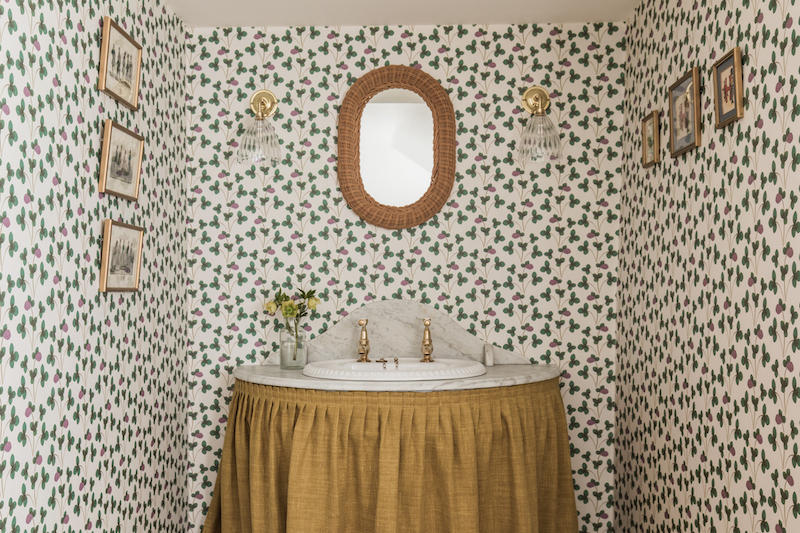
Many luxury hotels rely on a safe visual formula: pale walls, symmetrical bedside lamps, a decorative book nobody has opened, and one chair placed where no human would naturally sit. Glebe House takes the opposite approach. Its rooms mix floral wallpapers, hand-painted details, vintage furniture, colorful textiles, patterned tiles, original art, and objects collected rather than ordered by the truckload.
Olive worked with designer Alexandra Childs of Studio Alexandra to shape interiors inspired partly by the informal, artistic atmosphere associated with the Bloomsbury Group. The house combines inherited pieces with secondhand purchases, locally made objects, and artwork created by Olive and other artists. Instead of hiding the building’s age, the design uses it as a foundation for layers of color and pattern.
Rooms With Individual Personalities
Glebe House currently offers nine accommodations, including bedrooms in the main house, three cabins, and a separate annexe. The main-house rooms were once family bedrooms, and each has developed its own mood. Some feature canopy beds and wide valley views; others use bold wallpaper, painted furniture, vintage fireplaces, or bathrooms filled with cheerful patterns.
Names such as the Rose Room, Copper Beech, Tulip Room, and Old Boys Room reinforce the sense that guests are choosing a distinctive space rather than selecting Room Type B from a corporate diagram. Copper Beech, for example, has been noted for its calm green palette and strawberry-patterned bathroom wallpaper. The self-contained Old Kitchen annexe offers additional privacy, while the cabins place guests closer to the grounds and countryside.
Two Crow’s Nest cabins added in 2025 include wood-burning stoves and outdoor sunken baths. These additions extend the property’s rustic character without abandoning comfort. They are the kind of rooms that encourage guests to make ambitious plans for the afternoon, notice the bath and the view, and immediately cancel those plans.
Communal spaces are equally important. Sitting rooms with fireplaces, deep sofas, books, artwork, and an honesty bar encourage visitors to linger outside their bedrooms. This is one of the property’s defining strengths: it offers privacy without making isolation the default.
The Restaurant at the Center of Glebe House
Food is not a supporting amenity here. It is the main event. The restaurant’s cooking draws heavily from the country traditions of Italy and France while remaining rooted in East Devon’s produce, farms, fisheries, and changing seasons. The kitchen works with ingredients grown, reared, gathered, preserved, fermented, baked, or aged on the property whenever practical.
Rather than maintaining a giant menu in which tomatoes behave as though December is secretly August, the restaurant serves structured seasonal meals. Its principal Glebe House Dinner is a changing multicourse experience built around ingredients from the garden, aging room, and regional suppliers. On other nights, the Kitchen Supper offers a more relaxed version of generous home cooking, potentially centered on a pie, roast chicken, shared fish, garden vegetables, and a comforting dessert.
The cooking is polished, but the surrounding atmosphere avoids the stiffness sometimes associated with ambitious restaurants. Guests may begin with a drink in the lounge, watch activity through the kitchen opening, or dine in one of several intimate rooms. There is also a kitchen table for those who enjoy observing chefs at work and discovering how many movements are required to make dinner appear effortless.
Farm-to-Table as a Working System
“Farm-to-table” has become such a popular phrase that it can occasionally mean a lonely basil leaf grown near the parking lot. At Glebe House, the infrastructure gives the term substance. The property has a kitchen garden, polytunnel, cutting gardens, an on-site bakery, and a temperature-controlled room used for aging and salumi production. It has also raised Lop pigs and developed relationships with small regional producers.
The garden does more than provide decorative scenery. It supplies vegetables, herbs, and inspiration to the kitchen. The bakery supports the production of bread and other staples, while preservation and curing techniques allow seasonal abundance to continue appearing later in the year. Handmade butter, breads, pastas, preserves, and cured meats contribute to a meal that feels connected to both labor and landscape.
This approach earned Glebe House a Michelin Green Star, an award recognizing restaurants with notable commitments to responsible gastronomy. The recognition reflects a broader system involving seasonal cooking, lower-waste methods, local sourcing, composting, and support for smaller producers rather than a single photogenic vegetable patch.
A Restaurant Worth Planning Around
Travelers should reserve dinner when booking a room rather than assuming a table will automatically be waiting. The restaurant attracts nonresident diners as well as house guests, and capacity is intentionally limited. Dietary requirements can be accommodated with advance notice, including vegetarian, vegan, allergy-conscious, and intolerance-related alternatives.
Breakfast continues the same philosophy in a more relaxed form. Homemade granola, yogurt, poached fruit, freshly baked bread, eggs, and savory sides may appear depending on the season. It is substantial enough to support a coastal walk and tempting enough to make that walk begin approximately 45 minutes later than planned.
Art, Craft, and the Pleasure of Making Things
Glebe House treats creativity as part of hospitality rather than a decorative extra. Olive’s paintings appear throughout the interiors, while ceramics, textiles, wallpapers, and furniture reflect collaborations with designers and makers. The property has earned attention from design publications because it feels expressive without becoming a showroom in which visitors are afraid to put down a coffee cup.
Guests can also participate in scheduled experiences related to food and art. The calendar may include bread baking, pasta making, preserving, salumi instruction, painting, vineyard visits, and seasonal events. Some activities extend beyond the property, including mackerel fishing followed by dinner on the beach.
These workshops support the larger idea behind Glebe House: rural luxury does not have to mean doing absolutely nothing while someone silently delivers cucumber water. It can also mean slowing down enough to knead dough, learn why pasta texture matters, notice what is growing, or produce a painting that may not belong in a national gallery but will still look excellent in the downstairs bathroom.
A Thoughtful Approach to Sustainability
Glebe House’s environmental practices are closely tied to its culinary model. Fewer deliveries, reusable or minimal packaging, returnable glass bottles, whole-animal purchasing, composting, and on-site growing help reduce waste while supporting food quality. The property reports using a hot-composting system that turns its food and green waste into approximately 10 tons of compost annually, which is returned to the soil. It is also associated with the Slow Food movement and its emphasis on food that is good, clean, and fair.
Just as important, the restaurant works with seasons rather than fighting them. A seasonal menu can reduce unnecessary transportation while giving the kitchen a natural reason to change. Guests may encounter tender spring greens during one visit, abundant tomatoes and herbs during summer, mushrooms and squash in fall, or preserved ingredients and slow-cooked dishes in winter.
Sustainability at Glebe House is therefore not presented as a lecture between courses. It appears through taste, texture, sourcing, and the visible relationship between the land and the plate.
What to Do During a Stay
The property includes mature gardens, places to sit outdoors, a seasonal swimming pool, and a tennis court. More recent additions include a wood-fired sauna and cold-plunge facilities overlooking the countryside. Guests can spend an entire day on the grounds without feeling trapped, especially when the kitchen is producing aromas powerful enough to discourage unnecessary travel.
Those ready to explore will find the Jurassic Coast only a few miles away. East Devon brings together wooded valleys, farmland, coastal cliffs, beaches, and historic settlements such as Colyton, Beer, Branscombe, Seaton, and nearby Lyme Regis. The South West Coast Path offers routes ranging from gentle sections to climbs capable of turning a relaxed sightseeing stroll into an unexpected fitness assessment.
Beer and Branscombe
Beer is a small fishing village with a sheltered beach, boats, coastal access, and views across Lyme Bay. Branscombe combines thatched cottages, historic buildings, a valley setting, and another attractive stretch of coast. The moderate Beer and Branscombe circular route covers about 5.5 miles, climbing from Beer to the cliffs before continuing through open coastal scenery and descending toward Branscombe.
Colyton and the Coly Valley
Colyton offers historic streets, independent businesses, and an easy connection to the surrounding countryside. It makes a pleasant stop for travelers who want local character without the larger crowds sometimes found in coastal destinations. The valley itself is suited to slow drives and walks, although “slow drive” may become mandatory when a tractor appears around a hedge.
Who Will Enjoy Glebe House Most?
Glebe House is particularly well suited to travelers who organize vacations around meals. It also appeals to couples seeking a romantic rural break, design enthusiasts, gardeners, walkers, small groups of friends, and families who prefer personal hospitality to a large resort. Selected accommodations are suitable for dogs, adding another reason to explore the surrounding paths.
It may be less suitable for visitors who need a large spa complex, formal room service, nightlife within walking distance, or the predictable uniformity of an international hotel chain. The building is historic, the setting is rural, and the rhythm is intentionally unhurried. Public transportation requires planning, while narrow roads and limited nearby services make a car or arranged taxi useful.
That selectiveness is part of the attraction. Glebe House does not attempt to provide every possible hotel feature. It concentrates on atmosphere, food, craft, landscape, and human-scale hospitalityand performs those tasks with unusual confidence.
A Slow Weekend at Glebe House: The Experience
A well-planned Glebe House stay begins before arrival. Reserve a room and dinner together, check the workshop calendar, and avoid packing the itinerary with too many distant attractions. This is a retreat that rewards unoccupied hours. Arriving early enough to see the grounds in daylight allows the landscape to establish the mood before dinner takes over.
After following the final country lanes toward Southleigh, the house appears within the green scenery like a residence rather than a commercial hotel. Check-in is likely to feel informal and personal. Instead of immediately closing the bedroom door, spend time exploring the shared spaces. Notice the paintings, vintage chairs, patterned lampshades, stacked books, and views through the windows. The design is full of small decisions, and rushing through it would be like ordering a carefully made dinner and eating it while checking email.
Before the evening meal, walk through the garden and growing areas. Even when the beds are not overflowing with summer produce, they help explain the kitchen’s philosophy. The dining experience becomes more meaningful once you understand that the garden is part pantry, part laboratory, and part seasonal calendar.
Dinner should be allowed to unfold slowly. A meal at Glebe House is not designed as a quick refueling stop before another activity. Arrive early, have a drink in the lounge, and let the sequence of courses create the evening. Ingredients may be familiar, but techniques such as fermentation, curing, preserving, wood cooking, and careful sauce making can transform them. The relaxed rooms prevent the food from feeling like an examination, and the visible activity around the kitchen keeps the experience connected to the people preparing it.
The following morning, breakfast may present a difficult strategic question: eat moderately before a walk or accept that the first uphill section will be powered mainly by excellent bread. The second option is usually more enjoyable. Afterward, choose between staying on the property and heading toward the coast.
For an active day, drive to Beer and follow part of the South West Coast Path toward Branscombe. The combination of chalk cliffs, green slopes, open sea, and small villages demonstrates why the East Devon landscape is such an important part of Glebe House’s identity. Return with enough time to rest before dinner rather than arriving five minutes beforehand looking as though you personally climbed every cliff in Devon.
A slower alternative is to remain near the house. Read beside the fire, use the pool in summer, book a sauna session, play tennis, or join a workshop. Pasta making is especially appropriate because it connects the property’s Italian inspiration with a practical skill. Participants gain a new respect for dough consistency and discover that handmade pasta shapes can be described as “rustic” whenever geometry becomes uncooperative.
On the final morning, take one more walk around the grounds before leaving. Country stays often become memorable through transitions rather than scheduled highlights: mist moving across the valley, kitchen sounds beginning downstairs, bread arriving at breakfast, or late sunlight catching a painted wall. Glebe House is designed to create more of these moments than a typical hotel.
The ideal departure includes a stop in Colyton, Beer, or Lyme Regis, extending the rural atmosphere rather than racing directly back to a highway. By then, the appeal of Glebe House should be clear. It offers comfort without excessive formality, ambitious food without theatrical seriousness, and beautiful interiors without making guests feel like trespassers in a design museum.
Why Glebe House Stands Out in Rural Devon
Glebe House succeeds because its strongest elements reinforce one another. The garden supports the restaurant. The restaurant gives the guest house a reason to exist beyond accommodation. The art makes the historic building feel alive. The family history prevents the design from becoming superficial. The surrounding coast and countryside expand the experience beyond the property.
Numerous travel and design publications have praised the house for this combination of food, setting, and personality. Condé Nast Traveler included it in its 2022 Hot List, while other reviewers have emphasized its Italian agriturismo influence, expressive interiors, warm service, and resistance to standardized hotel culture.
There are grander country hotels in Devon and restaurants with more ceremony. Few, however, combine a working smallholding, serious seasonal cooking, handmade food, creative workshops, colorful rooms, family history, and access to the Jurassic Coast with such an easygoing personality.
Glebe House is ultimately a place for eating well, noticing details, and temporarily adopting a slower relationship with time. You may arrive for the restaurant, the interiors, or the Devon scenery. The clever part is that, by departure, separating those experiences no longer seems possible.












