
If your closets are exploding, your counters have disappeared under clutter, and your junk drawer is now a junk cabinet, welcomeyou’re in the right place. The good news is you don’t have to buy a single expensive storage system to get organized. With a little creativity (and maybe a screwdriver), you can turn everyday objects into smart, stylish repurposed storage that works harder than half the stuff you bought at the store.
Inspired by classic Bob Vila storage ideas and other upcycled organizing hacks, this guide rounds up 25 clever ideas for repurposed storage that help you cut clutter, save money, and reduce waste. From old drawers under the bed to vintage suitcases on the wall, these DIY storage solutions prove that organizing your home doesn’t have to be boringor expensive.
Why Repurposed Storage Is So Smart
Repurposed storage isn’t just a quirky TikTok trend. It’s a practical, eco-friendly way to solve real storage problems in real homes:
- Save money: You use what you already own instead of buying more plastic bins.
- Cut waste: Old jars, crates, and furniture stay out of the landfill.
- Add character: Upcycled pieces look more interesting than basic store-bought organizers.
- Customize your space: You can size, paint, and tweak each solution to fit your home perfectly.
Ready to raid your house, your garage, and maybe the local flea market? Let’s organizewithout spending a fortune.
25 Clever Ideas for Repurposed Storage
1. Turn Metal Grates into a Wall-Mounted Mail Center
If paper piles are taking over your entryway, repurpose metal grates or old radiator covers as vertical mail organizers. Mount them on the wall, add a few hooks at the bottom for keys, and slide letters, bills, and postcards into the grid. You’ve just turned a cluttered console table into a streamlined command center.
2. Slide Old Drawers Under the Bed
Retired dresser drawers make excellent under-bed storage. Add small casters to the bottom, give the fronts a fresh coat of paint, and use them to store off-season clothing, extra linens, kids’ toys, or board games. It’s basically a built-in storage system you already ownjust disguised as “junk furniture.”
3. Use a Wooden Ladder as a Blanket or Towel Rack
An old wooden ladder instantly becomes a chic blanket ladder in the living room or a towel rack in the bathroom. Lean it securely against the wall and drape blankets, quilts, or towels over the rungs. It saves closet space, keeps textiles within reach, and adds cozy, rustic charm.
4. Build a Mason Jar Organizer
Empty glass jars are organizing gold. Mount jar bands under a shelf and screw the jars in for spice storage in the kitchen, screws and nails in the garage, or art supplies in the craft room. You can also line them up in drawers or on shelves with labels for tea bags, cotton swabs, hair ties, or office supplies.
5. Stack Wooden Crates into Shoe or Book Storage
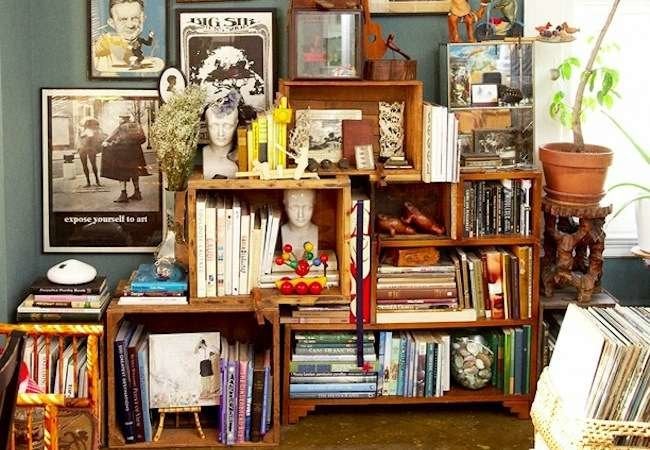
Wooden crateswhether new or salvagedcan be stacked to create a custom storage wall. Stand them vertically for books and baskets, or horizontally for shoes and bags in your entry. Secure the crates together and to the wall for safety, then paint or stain them to match your décor for a rustic, built-in look at a fraction of the price.
6. Upcycle Tin Cans into a Desk Caddy
Before you toss those soup and coffee cans, clean them, remove labels, and decorate with paint or contact paper. Cluster them in a tray or mount them on a board to create a desk caddy for pens, scissors, rulers, makeup brushes, or paintbrushes. It’s an easy upcycled storage project you can finish in an afternoon.
7. Turn Vintage Suitcases into Shelves or Side Tables
Vintage suitcases don’t just look cool; they hide clutter like pros. Stack them beside the sofa as a small side table and use the inside for extra blankets or seasonal décor. Or securely mount shallow cases to the wall as display shelves. You get hidden storage, nostalgic style, and a great conversation piece.
8. Transform a Flea-Market Cart into a Rolling Organizer
An old metal or wire cart can become a mobile storage superstar. Use it as a bar cart, craft station, bathroom caddy, or pantry helper. A quick clean and a coat of spray paint can make a tired laundromat or utility cart look like a designer piece, especially when styled with baskets and labeled bins.
9. Repurpose Cooling Racks and Baskets for Lid Storage
Struggling with a cabinet full of rogue food container lids? Place a wire cooling rack across the top of a shallow basket or bin. Slip lids vertically through the rack so they stay upright, visible, and easy to grab. You’ve just given a baking tool a second life as an organizer.
10. Use Old Cutting Boards and Rolling Pins as Wall Storage
Retired cutting boards make charming mini-shelves when mounted to the wall. Use them to hold small plants, spices, or decorative jars. Add hooks underneath for measuring spoons or keys. A mounted rolling pin becomes a towel bar or ribbon holder, especially handy in craft rooms or kitchens.
11. Turn Muffin Tins into Tiny-Item Organizers
Muffin pans are perfect for organizing tiny chaos. Use them in drawers for jewelry, beads, screws, batteries, or kids’ small toys. You can also slip muffin cups into each well to make things even easier to sort and swap out. It’s like a hardware store organizer, but cuter and already in your cabinet.
12. Double Your Closet Space with Soda Tabs
Save the little metal tab from your soda can and hook it over the neck of a hanger. Then hang another hanger through the lower hole of the tab. This simple hack lets you double up hangers vertically, maximizing awkward or small closets without buying special space-saving hangers.
13. Create a DIY Magnetic Knife or Tool Strip
A scrap board plus strong magnets can become a magnetic strip for knives in the kitchen or tools in the garage. Mount the wood securely to the wall and insert magnets from the back so the front stays smooth. You’ll free up drawer or counter space while keeping essentials visible and within reach.
14. Rethink an Over-the-Door Shoe Organizer
Clear-pocket shoe organizers aren’t just for shoes. Hang one on the pantry door for snacks, seasoning packets, and small jars; on a bathroom door for hair products and toiletries; or in a kids’ room for art supplies and small toys. Those pockets are basically built-in drawers you didn’t know you had.
15. Corral Pantry Goods in Repurposed Glass Jars
Reusing pasta sauce jars, jam jars, or candle jars for pantry storage instantly makes your shelves look more intentional. Fill them with rice, pasta, nuts, snacks, or baking ingredients. Add labels to the front and, if you’re feeling fancy, write cooking times on the lid. It’s budget-friendly “decanting” that still feels high-end.
16. Use Baskets and Boxes as Drawer Substitutes
If your cabinets or open shelving don’t have drawers, baskets and sturdy boxes can function as pull-out storage. Slip them onto shelves to manage bottles, jars, cleaning supplies, or kids’ lunch containers. Add labels so everyone knows where things belong, and you’ve got instant, flexible organization.
17. Turn Old Picture Frames into Jewelry Organizers
An old frame plus some wire mesh, chicken wire, or even fabric with ribbons can become a pretty jewelry organizer. Remove the glass, staple mesh or fabric to the back, and hang earrings from the grid. Add small hooks along the bottom for necklaces and bracelets, and suddenly your jewelry collection becomes wall art.
18. Repurpose a Spice Rack for Nail Polish or Craft Paint
Wall-mounted spice racks are the perfect size for nail polish bottles or small craft paint jars. Hang one on the back of a closet door or near your vanity and line up bottles by color. It’s visually satisfying and saves you from digging through a chaotic basket every time you want a specific shade.
19. Use Shower Caddies Beyond the Shower
Metal and plastic shower caddies can organize more than shampoo. Hang one in the laundry room to hold stain removers and clothespins, or in a garage to house spray paint cans and cleaning products. The built-in hooks are perfect for brushes, gloves, or small tools.
20. Make Over Salvaged Boards and Knobs into Hook Racks
Have a leftover piece of wood and some mismatched knobs or hooks? Attach them to create a custom hook rack. Mount it by the entry for bags and coats, in the bathroom for towels and robes, or in the closet for jewelry and scarves. It’s a simple way to repurpose hardware you already own.
21. Organize the Garage with Repurposed Cans and Jars
Coffee cans, large food tins, and pickle jars are ideal for corralling garage clutter like extension cords, paintbrushes, zip ties, and gardening gloves. Mount a small board on the wall and secure cans to it for vertical storage, or line them up on shelves and label the front. Instant workshop upgrade, zero extra cost.
22. Build a Pallet Wine Rack or Wall Shelf
A sturdy pallet can be cut and sanded into a rustic wall-mounted wine rack or general-purpose shelf. Use it to store wine bottles and glasses, or as a spice and oil rack in the kitchen. Just make sure the pallet is clean and safe for indoor use, then stain or paint to match your style.
23. Turn Shopping Bags into Wall Pockets
Sturdy paper or fabric shopping bags can be mounted to the wall or the inside of a closet door as impromptu storage pockets. Use them for scarves, kids’ soft toys, extra paper towels, or gift wrap supplies. Reinforce the handles or add grommets for durability, and you’ve got ultra-low-budget vertical storage.
24. Repurpose a Crib Rail as a Hanging Organizer
If your child has outgrown their crib, the side rail can live on as a wall organizer. Mount it horizontally and use the slats to hang S-hooks, baskets, or clips for art supplies, kitchen tools, or cleaning cloths. Just make sure all hardware is secure and placed where no one will bump into it.
25. Use Magazine Files Everywhere (Not Just for Magazines)
Magazine holders, especially sturdy cardboard or metal ones, are endlessly repurposable. Stand them on their side in the pantry for foil, parchment, and cutting boards; under the sink for spray bottles; or in kids’ rooms for coloring books and homework folders. You’ll be shocked how many little clutter zones they can tame.
How to Make Repurposed Storage Actually Work (Not Just Look Cute)
These ideas are fun, but the secret to staying organized is how you use them day-to-day. Keep these principles in mind:
- Declutter first: Repurposed storage should serve the things you love and usedon’t build elaborate systems for clutter you should just donate.
- Label everything: A simple label (even handwritten) drastically increases the odds that items get put back where they belong.
- Think visibility: Clear jars, open crates, and wall-mounted racks help you see what you have, so you don’t overbuy.
- Match storage to habits: Put everyday items at arm level, seldom-used items up high, and heavy things down low.
- Review seasonally: Revisit your systems every few months to tweak what isn’t working.
Real-Life Experiences with Repurposed Storage
Repurposed storage sounds great on paper, but how does it work in real homes? After seeing countless homeowners, renters, and DIY-lovers tackle clutter with upcycled solutions, some patterns show up again and againboth the wins and the “okay, that didn’t go as planned” moments.
1. Start small or you’ll overwhelm yourself.
One of the biggest mistakes people make is trying to overhaul every closet and cabinet in one weekend. It almost never works. The most successful transformations usually start with a single hotspot: the entryway drop zone, a chaotic kitchen cabinet, or the bathroom drawer of doom. When you focus on one area, you can experiment with a couple of repurposed storage ideaslike a mason jar organizer and a small hook rackthen adjust quickly if the layout doesn’t fit your routine.
2. The prettiest solution isn’t always the most practical.
That vintage suitcase side table looked incredible in photos, but in one small apartment, it quickly became a frustration. Why? The owner stored everyday items insidechargers, notebooks, remote controlsso they had to move the lamp and décor on top every time they needed something. The fix was simple: use that suitcase for low-access items (like seasonal décor) and keep daily essentials in an open basket on a nearby shelf. Lesson learned: think about how often you’ll need what you’re storing before you tuck it away in something closed and decorative.
3. Kids respond best to visible, simple systems.
Parents who swapped toy chests for repurposed storagelike labeled crates, open bins on shelves, and muffin tins for tiny toysnoticed kids are more likely to put things away when they can see exactly where items go. An over-the-door shoe organizer with clear pockets for action figures or art supplies is far more intuitive to a child than a giant, mysterious “toy box” where everything disappears forever.
4. Labels are non-negotiable in shared spaces.
In homes with multiple people, repurposed storage only works if everyone understands the system. A family that used thrifted baskets for pantry categories found that the baskets stayed neat precisely because each one had a bold, simple label: “SNACKS,” “PASTA + RICE,” “BAKING,” “BREAKFAST.” Without those labels, the baskets quickly turned into “mystery bins” that no one wanted to deal with. Labels don’t need to be fancythey just need to exist.
5. Maintenance is easier when storage is flexible.
Repurposed storage shines because it can evolve with your life. A set of glass jars might start as a baking zone in the kitchen, then migrate to the craft room later. Crates used for shoes could later hold gardening tools in the garage. The people who stay organized long-term treat repurposed pieces as modular building blocks, not permanent fixtures. When something stops working, they move, repaint, or reassign it instead of surrendering to clutter.
6. You don’t have to be “crafty” to succeed.
Many of the best repurposed storage solutions involve minimal tools and zero fancy skills: screwing casters onto drawers, washing out jars, hanging a shoe organizer, or adding hooks to a board. You don’t need a workshop or a Pinterest-perfect life. You just need a willingness to look at everyday items and ask, “What else could you do for me?” Over time, that mindset turns you into a kind of low-key storage genius.
Ultimately, the most valuable experience people share is this: once you start organizing with repurposed storage, you see your homeand your stuffdifferently. The broken-in ladder, the old jars, the leftover boards piled in the corner stop feeling like clutter and start feeling like potential. And that mindset shift is what keeps your home not just tidy for a weekend, but easier to maintain month after month.
Final Thoughts: Organize Smarter, Not Richer
Getting organized doesn’t require custom closets, designer bins, or a massive shopping spree. With these repurposed storage ideas, you can use what you already havedrawers, crates, ladders, jars, baskets, and a bit of imaginationto carve out calm from chaos in every room.
Start with one idea that solves a real problem in your home: maybe under-bed drawers for off-season clothes, a mail center by the door, or a crate shoe rack in the entryway. Once you see the difference a single upcycled solution can make, you’ll be hooked. Your home will get more organized, more personal, and more sustainableall at the same time.












