
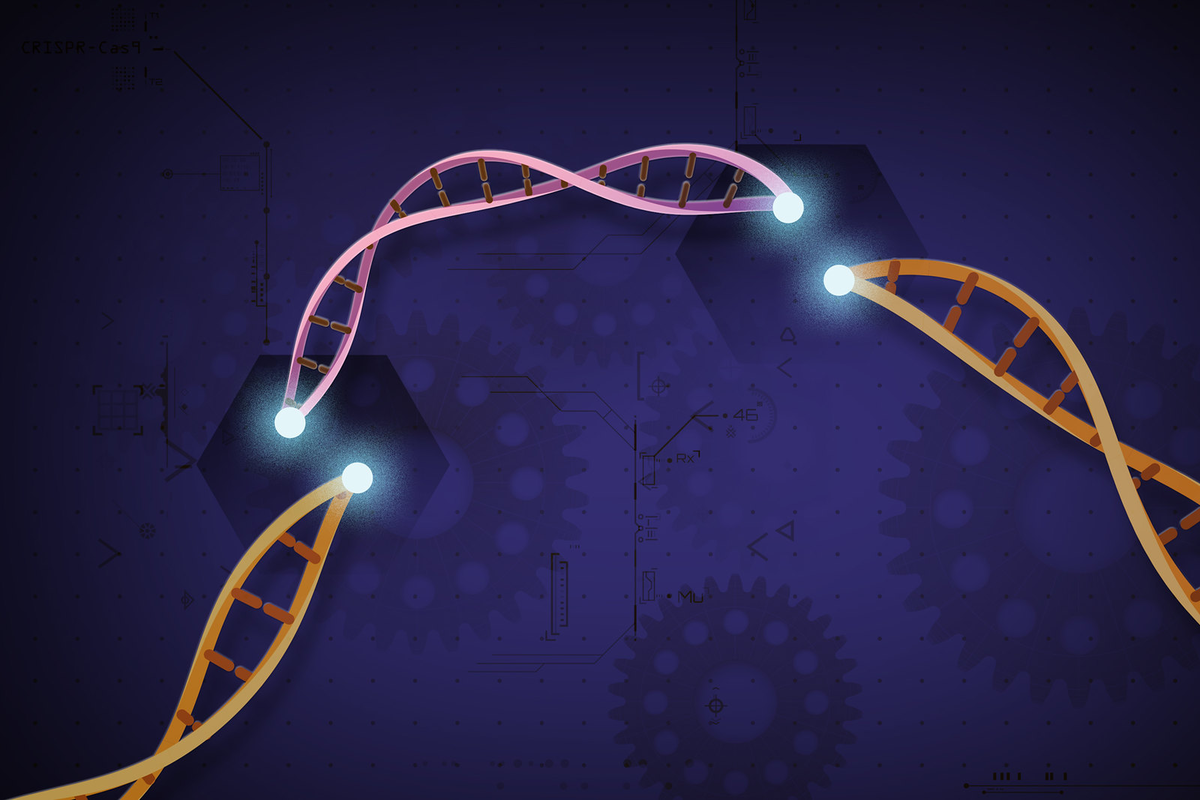
Modern medicine has officially entered the era where a sentence that used to sound like science fiction now belongs in serious medical journals: doctors can, in some cases, help families avoid passing a fatal genetic defect to a baby by making a very small genetic change at the start of life. Not a superhero origin story. Not a designer-baby shopping spree. Not a lab-coated attempt to order a genius who also sleeps through the night. Something much narrower, much more careful, and much more medically urgent.
The technology at the center of this conversation is often called mitochondrial replacement therapy, or MRT. You may also hear it described as “three-parent IVF,” which is scientifically catchy and socially chaotic at the same time. The basic idea is simple enough: if a mother carries dangerous mutations in her mitochondrial DNA, doctors may be able to move the parents’ main genetic material into a donor egg that has healthy mitochondria. The baby still gets almost all of its DNA from the mother and father, while the donor contributes healthy mitochondrial DNA. Tiny change, massive stakes.
That is why this story matters. For some families, mitochondrial disease is not an abstract genetic concept discussed in a classroom diagram. It can mean seizures, organ failure, developmental regression, muscle weakness, feeding problems, blindness, heart trouble, and a very short life. In those situations, “a bit of genetic modification” is not a flashy experiment. It is a deeply serious attempt to prevent suffering before it starts.
What Is the Fatal Genetic Defect, Exactly?
To understand why this approach exists, you need to meet the mitochondria, the tiny structures inside cells that act like power plants. They help generate the energy your body needs to do absolutely everything, from blinking to breathing to growing a brain. When mitochondria do not work correctly, organs that need a lot of energy, such as the brain, heart, muscles, liver, and kidneys, can be hit especially hard.
Mitochondrial diseases are not one single disorder. They are a group of genetic conditions, and some are devastating in infancy or childhood. Certain syndromes can cause severe neurological problems, poor growth, muscle weakness, breathing difficulty, and early death. In plain English: when your cellular batteries are defective, the whole system can struggle to stay online.
What makes this more complicated is that mitochondria have their own DNA. Most of your genes live in the cell nucleus, but mitochondria carry a small separate set of genes. Those mitochondrial genes are inherited almost entirely from the mother. So if a woman carries harmful mitochondrial DNA mutations, there is a risk she can pass them on to her children.
That maternal inheritance pattern is the key to the whole strategy. Doctors are not usually trying to rewrite the baby’s main genome in these cases. They are trying to prevent mutated mitochondrial DNA from making the trip to the next generation.
How the “Bit of Genetic Modification” Works
Mitochondrial replacement therapy sounds complicated because, well, it is. But the concept is surprisingly elegant. Think of it like moving the central instruction manual into a healthier energy system before the embryo develops further. The parents’ nuclear DNA, which contains the vast majority of traits people typically think about when they hear the word genetics, is preserved. The unhealthy mitochondria are what get swapped out.
One version of this method involves fertilizing the mother’s egg and the donor egg, then transferring the parents’ pronuclei, the structures carrying their nuclear DNA, into the donor embryo after the donor’s pronuclei have been removed. The result is an embryo with nuclear DNA from the intended mother and father, plus healthy mitochondria from the donor.
This is why people sometimes say the child has DNA from three people. Technically true, but also a phrase that tends to sprint ahead of nuance. The donor contribution is mitochondrial DNA, which is tiny compared with the nuclear genome. It matters biologically, absolutely. But it does not mean the donor is contributing the broad set of traits that shape most familiar characteristics.
So yes, this is a form of genetic modification in the broad sense. But it is not the same thing as using CRISPR to edit a gene for eye color, height, or some dystopian wishlist dreamed up by someone who watched too much streaming sci-fi and too little bioethics.
Why This Is Not the Same as “Designer Baby” Editing
One of the biggest problems in public discussions about reproductive genetics is that very different technologies get tossed into the same blender. Mitochondrial replacement therapy is often discussed alongside embryo gene editing, but they are not identical.
Genome editing tools such as CRISPR are designed to add, remove, or alter DNA at specific points in the genome. That raises major questions about precision, off-target effects, unintended consequences, and heritable changes that could be passed on for generations. It is powerful science, but it is also ethically explosive.
MRT is different. It does not usually edit the nuclear genome letter by letter. Instead, it replaces unhealthy mitochondria with healthy donor mitochondria. That still creates heritable change, which is one reason regulators remain cautious, but the medical goal is narrower: preventing severe mitochondrial disease in children who would otherwise face a high risk of serious illness.
In other words, this is less “build a better baby” and more “stop a terrible inherited disease before it gets a head start.” That distinction matters. A lot.
What Recent Results Suggest
The reason this topic has jumped back into headlines is that researchers in the United Kingdom reported encouraging real-world outcomes from mitochondrial donation. In 2025, scientists described healthy births following the use of the technique in women carrying dangerous mitochondrial DNA variants. The reports suggested the method sharply reduced the transmission of those mutations to the babies, and early development appeared normal in the children described so far.
That does not mean victory has been declared, confetti has fallen, and every scientific concern has packed up and gone home. It does mean the field now has something much more valuable than theory alone: actual children born after the procedure who can be followed over time.
That shift is huge. For years, mitochondrial replacement sat in the uncomfortable space between promise and proof. Supporters said it could help families avoid terrible disease. Critics said the long-term risks were still too uncertain. Now the conversation is becoming more grounded because outcomes are beginning to exist outside the lab.
Still, no responsible scientist is calling this “done.” Long-term monitoring matters. Mitochondrial biology is complicated, and even small residual amounts of mutated mitochondrial DNA could behave unpredictably over time. Biology loves nothing more than reminding humans that “pretty sure” is not the same as “fully understood.”
The Ethical Questions Are Real, Not Decorative
This technology lives at the intersection of medicine, reproduction, law, disability ethics, and public trust. That is why the debate has been so intense. Once you alter genetic inheritance in a way that can affect future generations, even for a serious medical reason, you are stepping into territory that societies do not approach lightly.
Supporters argue that preventing severe mitochondrial disease is a compassionate, medically targeted use of reproductive technology. It may allow some women to have genetically related children without knowingly passing on a devastating disorder. For families facing lethal or life-limiting disease, that argument carries obvious emotional force.
Critics and cautious observers raise several concerns. First, safety: no matter how promising early results look, this is still a biologically complex intervention. Second, governance: if society accepts heritable genetic modification in one setting, where is the line drawn later? Third, equity: who gets access to such expensive technology, and who gets left behind? Fourth, language: how scientists, journalists, and policymakers describe these babies can influence public fear, stigma, or false expectations.
There is also the broader concern that reproductive genetics can slide, little by little, from disease prevention toward enhancement. Today the goal may be to stop a fatal disorder. Tomorrow someone inevitably asks whether we can optimize this, improve that, or select for the other thing. That slippery-slope argument gets overused sometimes, but in genetics it cannot be laughed off entirely.
Why the United States Is Still So Cautious
The United States has not approved mitochondrial replacement for clinical use. The key reason is regulatory and ethical: the procedure results in heritable genetic modification, and Congress has blocked the FDA from reviewing applications involving embryos intentionally modified in ways that could be inherited.
That is not the same as saying American scientists think the idea is worthless. Far from it. U.S. researchers and institutions have played major roles in studying mitochondrial disease, reproductive genetics, and the ethics of human genome modification. But the legal structure remains restrictive, reflecting the fact that the science touches a nerve far deeper than standard IVF.
This is one of those rare cases where the scientific question and the policy question are equally important. You can have a technically promising method and still decide that the legal, ethical, and social conditions for using it are not yet settled. Frustrating? Yes. Irrational? Not necessarily.
What Families Actually Need From This Science
For families at risk of passing on mitochondrial disease, the conversation is usually not about futuristic ambition. It is about options. Sometimes that means natural conception with accepted risk. Sometimes it means IVF with embryo testing when possible. Sometimes it means using donor eggs. Sometimes it means adoption. And in a small number of cases, mitochondrial replacement may become part of that discussion where laws allow it.
What families need most is not hype. They need clear counseling, honest probabilities, strong ethics oversight, and doctors who can explain where the science is solid and where the uncertainty still lives. They also need language that is humane. Parents making these decisions are not trying to “play God.” Most are trying to avoid burying a child, managing a degenerative disease, or reliving a family history that has already been cruel enough.
That human reality is easy to miss when the story gets framed as a culture-war headline. But it is the most important part.
The Bigger Future of Genetic Medicine
Mitochondrial replacement is only one branch of a much larger tree. Gene therapy, genome editing, RNA-based treatments, and other forms of precision medicine are moving medicine toward interventions that target root causes rather than just symptoms. That is exciting, but it also demands discipline.
The public tends to swing between two bad extremes: “this will solve everything tomorrow” and “this is terrifying and should never happen.” Real science usually lives in the middle. It solves some problems slowly, introduces new questions, and forces society to update its moral vocabulary in real time.
That is exactly what is happening here. The ability to reduce the risk of a fatal inherited disorder in babies is remarkable. It is also incomplete, tightly bounded, and ethically sensitive. Those three things can all be true at once. Science hates a tidy slogan, even when the internet begs for one.
So, Is This a Medical Breakthrough?
Yes, with an asterisk the size of a bioethics textbook.
It is a breakthrough because it turns a once-theoretical possibility into a credible medical pathway for preventing some inherited mitochondrial diseases. It is also a reminder that the most meaningful genetic technologies may not be the flashy ones. Sometimes the most important advance is not building a better human. It is giving a family a fairer starting point.
The phrase “fixing a fatal genetic defect in babies with a bit of genetic modification” sounds almost casual. The reality is anything but. Behind that phrase are decades of cell biology, reproductive medicine, regulation, public debate, and families making agonizing decisions. The science may be small in scale, but the consequences are enormous.
And that may be the most honest conclusion of all: we are not watching science become reckless. At its best, we are watching science become precise enough to do something profoundly compassionate, while still humble enough to admit it must move carefully.
Experiences Around the Topic: What This Journey Feels Like for Families and Clinicians
One of the most overlooked parts of this topic is the emotional experience around it. Families who carry mitochondrial disease often do not arrive at this conversation with fresh optimism and a clean notebook. They arrive with history. Sometimes that history includes miscarriages, the death of an infant, years of unexplained symptoms in a child, or a diagnosis that finally gave a name to something terrifying. By the time reproductive genetics enters the chat, this is rarely a casual discussion over coffee and a cheerful pamphlet.
For many parents, the hardest part is uncertainty. Genetic counseling can explain risk, inheritance, and options, but it cannot magically erase grief or fear. A mother who knows she may pass on a severe mitochondrial disorder is not just reviewing science. She is wrestling with guilt, hope, identity, and impossible-sounding choices. Use a donor egg? Try IVF with testing? Accept the risk? Wait for a technology that may not be legal where she lives? None of those choices feels simple when the stakes are a future child’s life.
Clinicians experience a different kind of pressure. They have to explain highly technical concepts without flattening them into nonsense. They must be careful not to oversell an emerging technology while also recognizing that, to the family sitting in front of them, this is not an academic debate. This is their baby, their future, their odds. Doctors and genetic counselors often become translators between laboratory precision and human panic. That is skilled work, and emotionally heavy work too.
There is also a strange emotional tension in being told that a technology is both promising and restricted. Families may hear that healthy births have occurred elsewhere, that research is moving forward, and that experts see real potential, yet they may still have no practical access to it. That gap between scientific possibility and personal availability can feel brutal. It is like being told there is a lifeboat in the distance, but not at your dock.
Even when outcomes are good, the experience does not suddenly become carefree. Parents may still worry through pregnancy, delivery, newborn testing, and every developmental milestone after that. Each smile, feeding, and pediatric checkup can carry extra emotional weight. A normal result may feel joyful, but also fragile, because these families know exactly what abnormal results can mean.
What stands out most in real-world discussions is that families are not usually asking for perfection. They are asking for a chance. A chance to have a genetically related child without passing on a devastating disease. A chance to make decisions with clear information instead of guesswork. A chance for science to be useful in the most human way possible.
That is why the conversation deserves maturity. Not panic, not hype, and definitely not goofy “designer baby” shorthand tossed around for clicks. For the people living closest to this issue, the experience is not futuristic. It is intimate, exhausting, hopeful, and painfully real.
Conclusion
Mitochondrial replacement therapy is one of the clearest examples of how genetic medicine can be both astonishing and restrained at the same time. It does not promise perfect children. It does not erase every inherited disorder. It does not settle the ethical debate. What it does offer is something more grounded and more meaningful: the possibility of reducing the risk of a severe, sometimes fatal mitochondrial disease in babies before life begins in earnest.
That makes it a landmark development, but not a free pass. The technology deserves careful oversight, transparent long-term follow-up, and public discussion that is smarter than slogan-based fear. If the future of medicine includes changing genetic risk at the earliest stages of life, then this field may become one of the most important tests of whether science can move forward without leaving ethics behind.











