
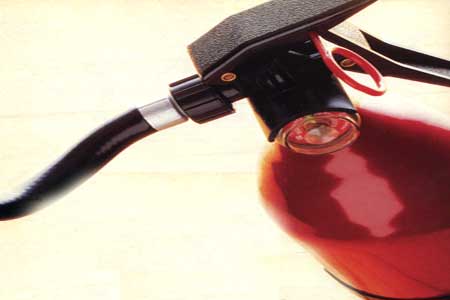
A fire extinguisher is one of those household products everyone hopes will spend its entire career gathering dust. Unlike a blender or television, however, it must work perfectly the first time you need it. There is no convenient “turn it off and back on again” option when a pan of oil is burning.
Portable fire extinguishers can stop or contain small, early-stage fires before they become devastating. They are not substitutes for smoke alarms, home sprinklers, an escape plan, or the fire department. Think of an extinguisher as an emergency tool for a very limited job: controlling a fire that is still small enough to fight safely while everyone else is leaving.
This guide explains how to choose the right fire extinguisher for your home, understand fire classes, place units where they can be reached, inspect them correctly, and use the PASS technique without accidentally turning a manageable emergency into an action-movie audition.
What a Home Fire Extinguisher Canand CannotDo
A portable extinguisher works by interrupting one or more elements that sustain combustion. Depending on the extinguishing agent, it may cool burning material, separate the fuel from oxygen, or interfere with the chemical reaction that keeps the fire going.
That sounds powerful, but most residential extinguishers contain only a limited amount of agent and may discharge in seconds. They are intended for small fires in their earliest stage, such as a wastebasket beginning to burn or a minor stovetop flare-up that has not spread.
Do not attempt to fight a fire when:
- The flames are spreading beyond the original object or container.
- The fire is reaching cabinets, walls, ceilings, or nearby furnishings.
- The room is filling with smoke.
- You cannot identify what is burning.
- You do not have the correct type of extinguisher.
- The fire is blocking your exit.
- You feel uncertain, physically unable, or afraid to approach it.
In any of these situations, leave immediately, close doors behind you when possible, stay outside, and call 911. Property can be replaced. People are considerably more difficult to reorder.
Understanding the Five Fire Classes
Fire extinguishers are labeled according to the kinds of fires they are designed to control. Matching the extinguisher to the hazard matters because the wrong agent may be ineffective, damage equipment, or make the fire more dangerous.
| Fire Class | Common Fuel | Household Examples |
|---|---|---|
| Class A | Ordinary combustible materials | Wood, paper, cloth, cardboard, and many plastics |
| Class B | Flammable liquids and gases | Gasoline, paint thinner, solvents, propane, and some oils |
| Class C | Energized electrical equipment | Appliances, wiring, outlets, breaker panels, and power tools |
| Class D | Combustible metals | Magnesium, titanium, sodium, and certain metal powders |
| Class K | High-temperature cooking oils and fats | Deep fryers and commercial-style cooking equipment |
Class A: Ordinary Household Combustibles
Class A fires involve materials found throughout most homes, including furniture, books, curtains, clothing, wood, and paper. Water-based extinguishers may work on Class A fires, but they must never be used on energized electrical equipment or burning cooking oil unless specifically labeled for those hazards.
Class B: Flammable Liquids and Gases
Garages, workshops, sheds, and utility areas often contain Class B hazards. Gasoline, solvents, oil-based paint, and propane can ignite rapidly and spread across surfaces. An extinguisher labeled for Class B fires uses an agent that helps interrupt the combustion process without scattering the burning liquid.
Class C: Energized Electrical Equipment
The “C” designation means the extinguishing agent does not conduct electricity under its tested conditions. Once electrical power has been disconnected, the remaining fire may be treated as Class A or B, depending on the material that continues to burn.
Never use an unlabeled water extinguisher on energized wiring or equipment. Water and live electricity are famous for getting along badly.
Class D: Combustible Metals
Class D fires are unusual in ordinary residences but may be present in specialized workshops, laboratories, or metalworking areas. These hazards require a purpose-built dry powder agent matched to the specific metal. A standard ABC extinguisher should not be treated as a universal solution for burning metals.
Class K: Cooking Oils and Fats
Class K extinguishers are designed for high-temperature cooking oils and fats and are commonly installed in commercial kitchens. Homeowners who regularly use deep fryers or commercial-style cooking equipment should evaluate whether a listed kitchen-specific extinguisher is appropriate.
Never throw water on a grease or cooking-oil fire. The water can flash into steam and violently spread burning oil across the room. For a very small pan fire, turning off the heat and carefully sliding a properly fitting metal lid over the pan may smother it, provided doing so does not require reaching through flames. When there is any doubt, evacuate.
How to Choose the Best Fire Extinguisher for Your Home
Start With a Multipurpose ABC Extinguisher
For many households, a listed multipurpose ABC dry-chemical extinguisher is a practical starting point. It can address ordinary combustibles, flammable liquids, and energized electrical equipmentthe three most common categories encountered in residential settings.
The label might show a rating such as “2-A:10-B:C.” The letters identify the approved fire classes, while the numbers indicate tested firefighting capacity within particular classes. In general, larger numbers represent greater capacity, but they also tend to come with more size and weight.
Select the largest extinguisher that responsible household members can lift, carry, and operate comfortably. A huge unit that nobody can move is less useful than a manageable model that can be handled confidently.
Look for Recognized Safety Certification
Purchase an extinguisher that carries a legitimate certification mark from a recognized testing organization, such as UL Solutions. Certification indicates that the product has been evaluated under applicable safety and performance standards.
Be cautious with unusually cheap devices, unknown marketplace sellers, or products making impressive claims without clear certification information. Counterfeit and unauthorized safety marks have appeared on fire-protection products. Buy from an established retailer and check that the model, manufacturer, instructions, and certification markings appear legitimate.
Compare Rechargeable and Disposable Models
Rechargeable extinguishers can be professionally serviced and refilled after use. They may cost more initially but are often built with durable valves and components. Disposable extinguishers are generally replaced after use or when they reach the end of the manufacturer’s recommended service life.
Neither design should be partially discharged and returned to the wall as though nothing happened. Even a brief squeeze can reduce pressure or allow leakage. After any discharge, replace or professionally service the extinguisher according to its label.
Consider Specialized Hazards
A typical home may benefit from more than one extinguisher type. Possible examples include:
- A multipurpose ABC unit for general living areas.
- A larger ABC unit for a garage or workshop.
- A listed kitchen-specific unit for cooking hazards.
- A clean-agent or carbon dioxide unit for sensitive electronics, when recommended by a fire-protection professional.
- A specialized Class D unit for a workshop using combustible metals.
Specialized extinguishers involve trade-offs. Carbon dioxide leaves little residue but has a relatively short discharge range and does not provide lasting cooling for deep-seated Class A materials. Dry chemical is versatile but can create a large, corrosive, difficult-to-clean mess. The correct choice depends on the hazard, not on which cylinder looks most heroic.
Where to Place Fire Extinguishers at Home
A practical home-safety baseline is to keep a working extinguisher on every occupied level. Larger homes, detached garages, workshops, outdoor cooking areas, and utility spaces may require additional units.
Near an Exit, Not Beside the Hazard
Place each extinguisher along a normal path of travel and near a door or exit. This lets you approach a small fire while keeping an escape route behind you.
Do not mount the kitchen extinguisher directly above the stove. If the stove is burning, the unit could become inaccessible behind heat, smoke, and flames. A nearby doorway, pantry entrance, or wall on the route out of the kitchen is usually more sensible.
Keep It Visible and Accessible
Mount extinguishers using the bracket or cabinet specified by the manufacturer. Do not hide them behind cleaning supplies, coats, stacked boxes, or the slow cooker that appears twice a year.
Everyone who may need the extinguisher should know where it is. Adults and capable older teenagers can be taught the basic safety procedure, but young children should focus on alerting an adult and escapingnot fighting fires.
Protect the Cylinder From Damage
Avoid locations exposed to excessive moisture, corrosion, freezing temperatures, direct sunlight, physical impact, or heat beyond the limits printed on the label. Garages, vehicles, patios, and outdoor cooking areas may experience extreme temperatures, so confirm that the extinguisher is rated for the intended environment.
When Is It Safe to Use a Fire Extinguisher?
Before attempting to use an extinguisher, every answer below should be “yes”:
- Is the fire small and confined to its original area?
- Is everyone else leaving or already outside?
- Has someone called 911?
- Is there very little smoke?
- Do you have the correct extinguisher?
- Is the extinguisher large enough for the hazard?
- Do you have a clear exit behind you?
- Do you know how to operate the unit?
If one answer is “no,” evacuate. Do not let an extinguisher create false confidence. Fire can grow rapidly, smoke can disorient people within moments, and a small cylinder cannot compensate for a blocked exit.
How to Use a Fire Extinguisher With the PASS Method
Read the instructions on your extinguisher before an emergency. Different models may have different operating distances, hoses, nozzles, or safety mechanisms. The widely taught PASS method provides the basic sequence:
P: Pull the Pin
Remove the safety pin or break the tamper seal. Hold the extinguisher upright unless the label directs otherwise. Do not press the operating lever while pulling the pin.
A: Aim at the Base of the Fire
Point the nozzle or hose toward the burning material, not the top of the flames. Spraying the dramatic orange part may look productive, but the fuel at the base is what must be controlled.
S: Squeeze the Handle
Squeeze the operating lever to release the extinguishing agent. Maintain a firm grip and expect noise, force, powder, vapor, or reduced visibility depending on the extinguisher type.
S: Sweep From Side to Side
Move the stream across the base of the fire while maintaining the distance recommended on the label. Continue until the flames are out or the extinguisher is empty.
Watch carefully for re-ignition. Back away toward your exit rather than turning your back on the burned area. If the fire does not go out quickly, grows, produces more smoke, or returns, leave immediately and close the door behind you.
Fire Extinguisher Inspection and Maintenance
A monthly visual inspection takes only a minute and can reveal problems before an emergency. Add it to an existing routine, such as testing smoke alarms or wondering why there are seventeen unmatched socks in the laundry room.
Use This Monthly Inspection Checklist
- Confirm that the extinguisher is in its designated location.
- Make sure it is visible and easy to reach.
- Check that the pressure-gauge needle is in the operable or green range, when a gauge is present.
- Verify that the safety pin and tamper seal remain intact.
- Inspect the cylinder for dents, cracks, rust, corrosion, or leakage.
- Make sure the hose or nozzle is unobstructed and undamaged.
- Confirm that the operating instructions remain readable.
- Check that the mounting bracket is secure.
- Review the manufacturing date and manufacturer’s replacement or service instructions.
Do not squeeze the handle to “test” the extinguisher. That is not a test; it is a discharge, followed by an awkward trip to buy or service another extinguisher.
Follow the Manufacturer’s Service Life
There is no single replacement age that applies to every residential extinguisher. Some manufacturers identify service or replacement periods around 10 to 12 years for certain models, while rechargeable units may have different professional inspection and testing requirements.
Follow the exact instructions printed on the cylinder and in the owner’s manual. Local rules may impose additional servicing requirements for rental properties, multifamily buildings, home businesses, or particular jurisdictions.
Check for Product Recalls
Write down or photograph the brand, model number, serial number, and manufacturing date. Use this information to check the manufacturer’s safety-notice page and the U.S. Consumer Product Safety Commission recall database.
This step matters because past recalls have involved extinguishers that could clog, require excessive force, fail to discharge, or experience nozzle problems. A green gauge cannot tell you whether the model itself is subject to a recall.
Dispose of Old Extinguishers Correctly
Do not place a pressurized extinguisher in ordinary household trash unless local authorities specifically permit it. Contact your fire department, household hazardous-waste program, recycling center, or licensed extinguisher service company for disposal instructions.
Common Fire Extinguisher Mistakes
- Buying one tiny extinguisher for an entire multi-level home: Coverage should reflect the size, layout, and hazards of the property.
- Storing it beside the stove: The fire may block access before you can reach it.
- Using the wrong class: An incompatible agent may spread the fire or create electrical danger.
- Forgetting to call 911: A fire that appears extinguished may continue burning inside a wall, appliance, cabinet, or ventilation space.
- Continuing after visibility worsens: Smoke is a signal to leave, not an invitation to crawl closer.
- Ignoring partial discharge: A used extinguisher must be serviced or replaced.
- Failing to inspect the unit: Corrosion, lost pressure, blocked access, or a recall can make it unreliable.
- Trying to protect property at all costs: The correct priority is life safety and escape.
Build a Complete Home Fire-Safety System
Fire extinguishers are only one layer of protection. A safer home also includes working smoke alarms, carbon monoxide alarms where appropriate, an escape plan, and responsible control of cooking, heating, electrical, smoking, candle, and battery hazards.
Install smoke alarms according to current local guidance, including inside sleeping rooms, outside sleeping areas, and on every level of the home. Test them regularly and replace alarms according to the manufacturer’s instructions.
Create a home escape plan with two possible ways out of each room when feasible. Choose an outdoor meeting place and practice the plan with everyone in the household. Include arrangements for children, older adults, people with disabilities, and pets without delaying human escape.
Residential fire sprinklers provide another important layer of protection by controlling fires automatically. An extinguisher requires someone to recognize the hazard, reach the unit, make the correct decision, and operate it successfully. A sprinkler system does not need anyone to remember an acronym at 2:00 a.m.
Practical Experiences and Lessons From Realistic Home Scenarios
Experience One: The Stovetop Flare-Up
Imagine a homeowner heating oil in a skillet while answering a phone call. The oil begins smoking, then ignites. The first instinct might be to grab the extinguisher mounted beside the range. Unfortunately, flames now stand between the homeowner and the cylinder.
This scenario teaches why placement matters as much as ownership. A kitchen extinguisher should be positioned near the route out, not where the most likely fire can block it. From the doorway, the homeowner can assess the fire while maintaining an exit.
If the flames are confined to the pan, the heat can be turned off without reaching across the fire, and a metal lid is immediately available, carefully covering the pan may stop the fire. If the flames reach the cabinets, smoke spreads, or safe access is uncertain, the correct experience-based response is to leave and call 911.
The most important lesson is not “be faster with the extinguisher.” It is “arrange the kitchen so that a safe decision remains possible.”
Experience Two: The Garage Workbench Fire
A second homeowner uses a grinder near a workbench where cardboard boxes, oily rags, paint, and fuel containers have accumulated. A spark lands in the clutter and a small fire begins.
The garage has an extinguisher, but it is a compact model buried behind sports equipment. By the time it is found, the flames have spread from cardboard to a shelf holding flammable products. The correct action is now evacuation rather than firefighting.
This experience highlights three issues: housekeeping, extinguisher capacity, and accessibility. Removing combustible clutter around spark-producing tools can prevent the incident. Mounting a properly rated ABC extinguisher near the garage exit makes it easier to reach. Selecting a unit large enough for garage hazards provides more useful capacity than relying on the smallest available cylinder.
After even a successful extinguisher discharge, the fire department should still evaluate the area when appropriate. Sparks and heat can remain hidden inside wall cavities, containers, insulation, or piled materials.
Experience Three: The Extinguisher That Looked Fine
During a routine home-safety check, a family finds that its extinguisher has a gauge in the green zone. At first glance, everything seems perfect. A closer inspection reveals that the unit is more than a decade old, its model number appears in an old safety notice, and the nozzle has been partially blocked by debris.
This is why checking only the pressure gauge is not enough. A complete inspection includes the cylinder, hose, pin, seal, mounting location, label, manufacturing information, and current recall status.
The family replaces the affected unit, mounts the new one correctly, photographs the label, and saves the manufacturer’s instructions digitally. They also review PASS using an empty training prop rather than discharging the real extinguisher.
That modest routine creates familiarity. In an emergency, nobody must search for the extinguisher, guess which direction to point it, or discover that a storage box has been placed in front of it.
What These Experiences Teach
Home fire safety is rarely about owning the most expensive equipment. It is about removing delays and bad decisions. The extinguisher must match the hazard, remain accessible, be maintained, and be used only while escape is still easy.
Practice also changes behavior. A household that has discussed when not to fight a fire is less likely to take reckless chances. A person who has lifted the extinguisher knows whether it is manageable. A family that has practiced its escape route knows where to meet and will be less tempted to reenter the home.
Preparation turns an extinguisher from a decorative red cylinder into one useful component of a complete safety plan.
Conclusion
The best home fire extinguisher is correctly rated, properly certified, large enough for the intended hazard, light enough to operate, mounted near an exit, and inspected regularly. A multipurpose ABC extinguisher is a sensible foundation for many homes, while kitchens, garages, workshops, and specialty hazards may require additional protection.
Learn the PASS method before an emergency, but remember that knowing how to use an extinguisher also means knowing when not to use one. If the fire is growing, smoke is increasing, or your exit is threatened, leave immediately and call 911.
A fire extinguisher may save property and prevent a minor incident from becoming a disaster. Your escape plan, smoke alarms, and willingness to evacuate are what protect the people who matter most.
Note: This article provides general educational information and does not replace manufacturer instructions, local fire codes, professional training, or guidance from your local fire department. During a fire emergency, prioritize evacuation and call 911 from a safe location.
{

  "meta_title": "Fire Extinguishers: Ultimate Home Safety Guide",

  "meta_description": "Learn how to choose, place, inspect, and safely use fire extinguishers at home, including fire classes, PASS steps, and maintenance tips.",

  "sapo": "A fire extinguisher can stop a small emergency from becoming a devastating house firebut only when the unit is correctly selected, properly placed, regularly inspected, and used without blocking your escape. This complete home safety guide explains Class A, B, C, D, and K fires, multipurpose ABC extinguishers, kitchen and garage protection, the PASS operating method, monthly maintenance, product recalls, and the warning signs that mean it is time to evacuate. You will also learn from realistic household scenarios that reveal the placement and inspection mistakes homeowners often discover too late.",

  "keywords": [

    "fire extinguishers",

    "home fire safety",

    "fire extinguisher classes",

    "PASS fire extinguisher method",

    "ABC fire extinguisher",

    "fire extinguisher maintenance",

    "kitchen fire safety"

  ]

}












