
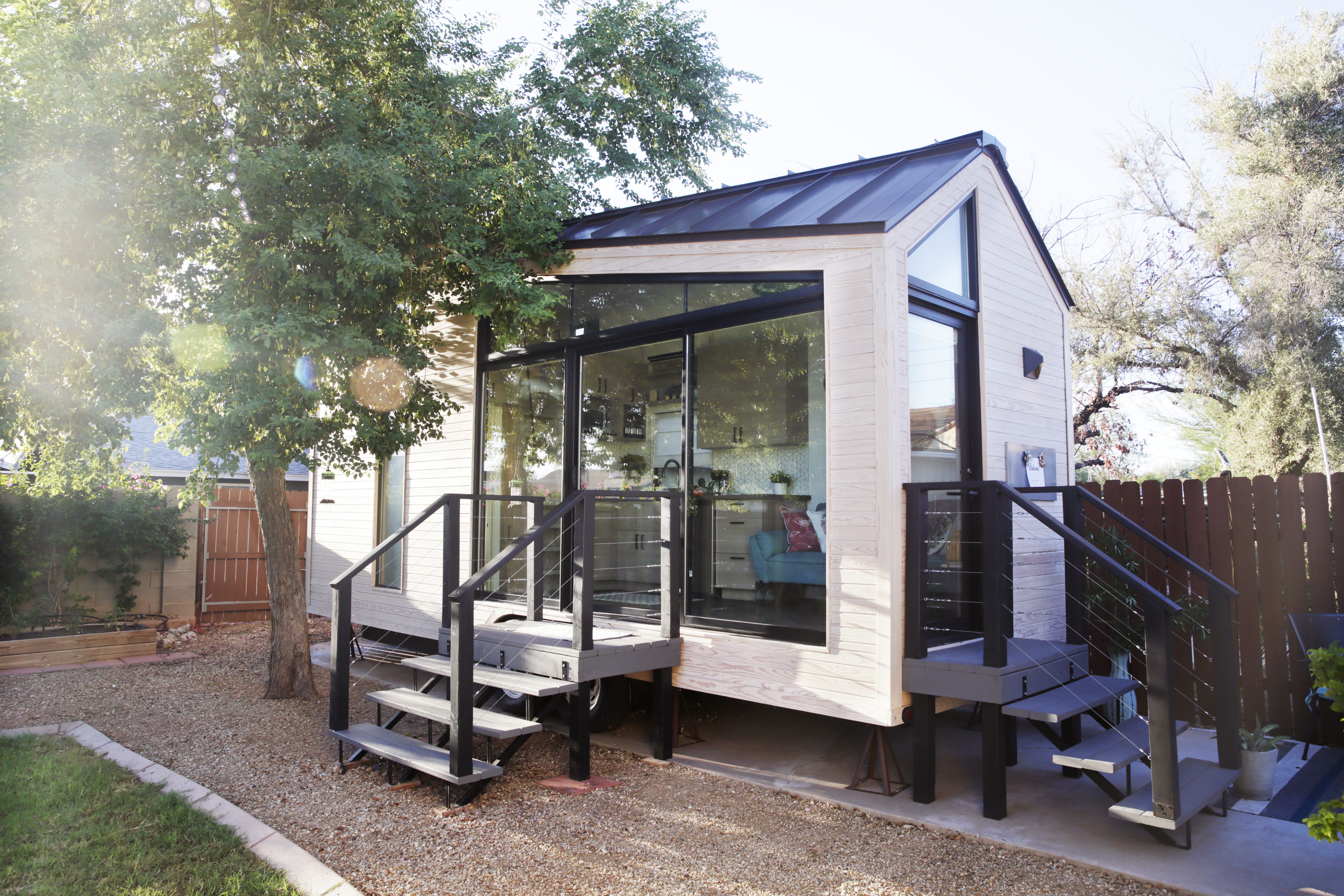
Tiny houses are a lot like tattoos: they look amazing on other people, they spark intense opinions at family gatherings, and if you don’t plan ahead,
you can end up with something you love in theory… and regret every time you try to use the bathroom at 2 a.m.
The good news: most tiny-house “mysteries” aren’t actually mysteries. They’re just a mix of building codes, zoning rules, insurance fine print,
and the universal law of small spaces: if you don’t design it on purpose, it will design you by accident.
Below are the questions tiny-house pros hear constantlybuilders, inspectors, lenders, and insurers includedanswered in plain English (with a tiny bit of
sass, because it’s a tiny house, not a tiny personality).
1) What counts as a “tiny house,” officially?
In everyday conversation, “tiny house” can mean anything from a cute backyard studio to a rolling cabin with a chandelier and a composting toilet.
In code-world, though, a common benchmark is 400 square feet or less for the main living area. Some definitions exclude loft space when
measuring “official” square footage, which matters when you’re trying to fit a whole life into something the size of a generous walk-in closet.
For homes built on foundations, the International Residential Code includes an appendix (often called Appendix Q) that modifies certain
requirements specifically for tiny houses under that size threshold. Translation: tiny houses can be built safely without pretending they’re full-size
houses that forgot to grow up.
2) Tiny house on wheels or on a foundationwhich one is “smarter”?
The most honest expert answer is: it depends on what problem you’re trying to solve.
Tiny house on a foundation (THOF): best for stability and long-term living
- Usually easier to treat like a real home (permits, utilities, address, property taxdepending on your local rules).
- Often easier to insure and finance in more traditional waysagain, depending on how it’s classified.
- Feels less “camping-adjacent” when it comes to temperature control, plumbing, and everyday comfort.
Tiny house on wheels (THOW): best for flexibilityon paper
- Mobility can help if you move for work or want the option to relocate.
- Placement can still be tricky because many jurisdictions don’t treat a THOW like a standard dwelling.
- Transport adds complexity: towing capacity, road limits, setup costs, and “Where can I legally park this?” becoming your new hobby.
A lot of people choose wheels because they assume it automatically dodges red tape. Sometimes it does, sometimes it doesn’t.
The smarter move is deciding where the house will live most of the time and designing around that reality.
3) Is a tiny house legal where I live?
This is the big one. And the tiny answer is: it’s not a state-by-state question as much as a city-by-city, county-by-county question.
Two neighborhoods can have totally different rules, which is both exciting (for zoning lawyers) and terrifying (for everyone else).
What you’re really checking
- Zoning: What kinds of homes are allowed on the lot? Minimum size? ADU rules? Setbacks?
- Building code path: Can a tiny house be permitted under the residential code (often using Appendix Q)?
- Use: Full-time primary residence, backyard ADU, short-term rental, or “temporary” unit?
- Utility requirements: Water, sewer/septic, electricalwhat’s required vs optional vs prohibited.
Experts tend to recommend starting with your local planning/zoning office before you buy a trailer, order windows, or fall in love with a Pinterest floor plan
that has a staircase built out of artisanal regret.
4) Do I need permitsand what permits are we talking about?
If your tiny home is on a foundation and intended for regular residential use, you’re typically looking at a familiar lineup:
building permit, electrical, plumbing, mechanical, and sometimes separate permits for septic/well or grading.
If it’s on wheels, classification becomes the plot twist. Some tiny homes on wheels are treated more like recreational units or park-model style units,
which can change the inspections, where you can place it, and whether it can be used as a full-time residence.
One important industry point: if a unit is marketed and intended as a permanent residence, it may not be treated as an RV or park-model RV,
and may need to comply with local building codes, modular codes, and/or HUD-related manufactured housing rules depending on classification.
The paperwork matters because the paperwork decides your legal life.
5) How much does a tiny house really cost?
Tiny houses can be cheaper than traditional homes, but they aren’t automatically cheap. Experts break costs into three buckets:
the house, the land, and the everything-you-forgot-to-budget-for.
Upfront build or purchase
Many mainstream estimates put a typical build range around $30,000–$60,000 for a basic tiny home, with significant variation based on
materials, customization, and whether it’s DIY or professionally built. High-end tiny homes can climb much higher.
The hidden money traps experts warn about
- Land isn’t optional. Even a tiny house needs somewhere to exist legallyand that’s often the hardest part.
- Utility hookups can be expensive. Extending water, sewer, and power to raw land can cost anywhere from “not fun” to “are you kidding me?”
- Transport + setup costs add up for homes on wheels: delivery, blocking/leveling, tie-downs, and site prep.
Pros also remind buyers to budget for ongoing costsinsurance, maintenance, repairs, taxes (where applicable), and utilities. Smaller doesn’t mean
zero; it means different.
6) Can I finance a tiny house with a normal mortgage?
Sometimes. Often, it’s complicated.
Traditional mortgages work best when the home is on a permanent foundation, legally permitted as a dwelling, and can be appraised like other homes.
Some tiny homes don’t fit those boxesespecially homes on wheelswhich can push buyers toward personal loans, RV-style loans, or specialty financing.
Experts also note a practical issue: many lenders have minimum loan sizes that are higher than the price tag of some tiny homes, which makes financing
feel like trying to buy a single donut using a home equity application.
7) What about insurancehow do you insure something that’s half house, half loophole?
Insurers generally want one thing: a clear category. Tiny homes don’t always provide that, so the key is matching coverage to how the home is built and used.
Common insurance routes
- RV insurance: Often used for homes on wheels that meet certain RV-related construction and certification expectations.
- Mobile/manufactured home policies: Sometimes used for stationary tiny homes, depending on classification and insurer rules.
- Specialty tiny home coverage: Some insurers offer tailored policies, but eligibility may depend on build type and documentation.
Experts repeatedly emphasize documentation: build standards, inspections, and certifications can make insurance simpler. Some insurers prefer or require
third-party inspection paths (for example, NOAH-related certification routes for certain stationary or hybrid classifications), while others will focus on
factory-built requirements.
8) What’s Appendix Qand should I care?
If you’re building a tiny house on a foundation (or trying to permit one), you should absolutely care.
Appendix Q is designed specifically for tiny houses under the size threshold and adjusts certain residential code requirements.
It addresses practical tiny-house realities like compact stairs, lofts, ceiling heights, and emergency escape considerationswithout turning your house into a hazard.
In plain terms: it’s the code world admitting that “normal house rules” don’t always map cleanly onto 200 square feet, and that safety can be achieved with
smart, scaled requirements.
9) Will my tiny house need to meet RVIA, ANSI, or NOAH standards?
This is where expert answers sound like: “Tell me what it is, what it’s on, and what you’re calling it.”
If it’s treated like a park-model or RV-style unit
Standards tied to recreational units and park-model units may come up, including ANSI-based frameworks used for park-model RVs and RV standards referenced by
industry groups. This can impact road legality, inspections, and where the unit can be placed.
If it’s meant to be a permanent residence
Industry guidance warns that when a unit is intended and marketed for permanent residence, it generally can’t simply be treated like an RV or park-model unit;
it may need to comply with local building codes, modular codes, and/or HUD-related manufactured housing rules depending on classification.
Why certifications matter in real life
- Insurance: Some insurers prefer third-party inspection/certification paths.
- Financing: Clear compliance documentation can reduce lender anxiety.
- Resale: Buyers like paperwork that proves the home was built safely (because nobody wants a “mystery electrical system”).
10) How do utilities work in a tiny house?
Utilities are where tiny living stops being cute and starts being real. Experts typically ask three questions:
Where will it sit? What’s available? What’s required by code?
On-grid options
- Electric: Standard service connections when permitted; or a plug-in approach when allowed for certain placements.
- Water: Municipal water hookup, or a well on rural land.
- Sewer: Municipal sewer connection, or septic system where allowed.
Off-grid and hybrid options
Solar, battery storage, propane appliances, rainwater systems, and hauled water can workbut they must align with local requirements and practical daily life.
Many owners end up “hybrid,” using solar to reduce bills while staying connected to grid power for reliability.
Experts strongly recommend pricing out hookups early. Depending on the property, costs can include connecting to city water and sewer, installing a well and septic,
trenching, panels, and site work. The tiny house might be the smallest line item on the spreadsheet.
11) Composting toilets: brilliant solution or smelly mistake?
Composting toilets can be an excellent solutionespecially in remote locations or where septic is difficultbut they’re not “set it and forget it.”
Experts describe them as more like a small appliance that requires attention, not magic.
What experts want you to know
- Standards exist: Some jurisdictions look for systems evaluated under recognized standards like NSF/ANSI 41.
- Maintenance matters: Odor and mess problems usually trace back to poor installation, poor ventilation, or neglected upkeep.
- Graywater is still a thing: Even without a flush toilet, you often need a plan for sink/shower water disposal.
A well-designed composting setup can reduce water use and help in locations where conventional onsite systems aren’t feasible.
A poorly planned one becomes a cautionary tale you tell at parties to make people leave early.
12) How do I avoid layout mistakes that make daily life miserable?
Tiny house experts don’t just design spacesthey design habits. The best layouts reduce friction and make daily routines easy.
Here are the most common “wish I’d known” points:
- Stairs vs ladder: Ladders save space, but stairs save your shins and your dignity. Many people compromise with alternating tread stairs.
- Loft reality check: Heat rises. So do the odds you’ll bonk your head. Plan ventilation and clearance carefully.
- Storage needs a job description: “General storage” becomes “where clutter goes to multiply.” Build storage that fits specific items.
- Two-person flow: If you live with someone, design for passing each other without a full choreography rehearsal.
- Moisture control: Small spaces show humidity fastvent fans and good airflow aren’t optional.
13) Can I rent out a tiny house as an ADU or short-term rental?
Possiblybut “can” and “allowed to” are different verbs.
For ADUs, many places regulate them tightly: size caps, owner-occupancy rules, parking requirements, and limits on using them as primary residences or rentals.
For short-term rentals, you may run into separate licensing, tax, and safety requirements.
Experts advise checking rules for (1) ADUs, (2) long-term rentals, and (3) short-term rentals separately. One “yes” doesn’t automatically unlock the other two.
Real-World Tiny House Experiences (The Part You Don’t Get From Floor Plans)
Experts can answer technical questions all day, but the lived experience is where the lessons really stickusually right after you spill coffee because your
“dining table” is also your desk, your pantry, and the place where your cat judges you.
Many tiny homeowners describe the first month as a gentle emotional detox. At first, you notice what you don’t have: a hallway, a spare closet, a place to
dramatically stomp away during an argument. Then you notice what you do have: fewer things to clean, fewer things to organize, and a surprising amount
of calm when you’re not living inside a warehouse of stuff.
One common story goes like this: someone designs a tiny house around “weekend vibes,” then moves in full-time and realizes weekday life needs different features.
Remote workers often learn quickly that a laptop on the couch sounds cozy until your back files a complaint. A tiny house that truly works long-term usually has
a real workstationsometimes a fold-down desk, sometimes a built-in counter, sometimes a table that doesn’t require converting the bed first.
Couples and families report that tiny living changes communication. You can’t “avoid a conversation” by disappearing into another wing of the housebecause there
is no other wing. The upside is that small irritations get addressed sooner. The downside is that you will discover exactly how loud someone chews pretzels.
Experienced tiny dwellers often suggest designing tiny “privacy zones”: a reading nook, a loft corner with a curtain, even an outdoor seating spot that becomes
an extension of the living room.
Weather is another teacher. People who go tiny in cold climates often say insulation, air sealing, and ventilation matter more than any trendy finish.
In hot climates, shading and airflow become the real luxury upgrades. Owners in storm-prone areas tend to take anchoring, wind-rated design, and solid insurance
documentation seriouslybecause a tiny home is only adorable until it becomes a very expensive kite.
Then there’s the “where do I put it?” chapter. Plenty of tiny house dreams wobble not because the house is bad, but because the placement plan is vague.
People who succeed long-term often lock down a legal, stable site earlywhether that’s an ADU setup, a tiny house community, or land with clearly defined
utility and permitting paths. Once the home has a legitimate place to live, everything else gets easier: mail, utilities, insurance, and that feeling that you’re
always one conversation away from having to move.
Finally, there’s the stuff question. Tiny living doesn’t force you to be a minimalist, but it does demand that your belongings earn their keep. Many owners end up
with a “one-in, one-out” rule, and they get weirdly excited about multipurpose items. The tiny house isn’t just a buildingit’s a lifestyle editor.
It quietly asks, every day: “Do you love this? Do you use this? Or are you just paying rent to store it?”
In the end, people who thrive in tiny houses tend to share one trait: they treat the house as a system. Legal plan, site plan, utility plan, storage plan,
routine plan. The folks who struggle usually bought the vibe first and tried to bolt on reality later. Tiny living rewards intentionand punishes “we’ll figure it out.”
Conclusion
The most-asked tiny house questions usually boil down to four things: classification, location, documentation,
and daily-life design. If you know how your tiny home will be classified, where it will sit legally, how it will connect to utilities, and what
standards/inspections support financing and insurance, you’re miles aheadpossibly literally, if you’re towing.
Tiny houses can be practical, beautiful, and financially sensible. They can also become expensive puzzles if you skip the boring steps.
Do the boring steps. Then enjoy the fun part: living in a space that fits your life like a well-tailored jacketcompact, sharp, and weirdly empowering.











