
Knee pain has a special talent for turning normal life into a negotiation. Stairs become a board meeting. Getting out of a chair becomes a dramatic event. Walking the dog becomes “walking the dog, but with commentary from your left kneecap.” So when a treatment promises pain relief without pills, needles, or surgery, it is no surprise that people ask: Does laser therapy for knee pain work?
The honest answer is: laser therapy may help some people with knee pain, especially knee osteoarthritis, but it is not a miracle cure, cartilage regenerator, or replacement for exercise-based rehab. Research suggests that low-level laser therapy, also called cold laser therapy or photobiomodulation, can reduce pain and improve function for certain patients in the short term. However, results vary depending on the device, dose, treatment schedule, diagnosis, and whether laser is used alone or alongside physical therapy.
In other words, laser therapy is not snake oil wearing safety goggles. But it is also not a magic wand from the Department of Knees. It works best when it is treated as one tool in a broader knee pain plan.
What Is Laser Therapy for Knee Pain?
Laser therapy for knee pain usually refers to the use of red or near-infrared light applied to the painful area of the knee. The goal is to stimulate biological activity in tissues, reduce inflammation, improve local circulation, and calm pain signals. You may hear several names for this approach, including:
- Low-level laser therapy (LLLT)
- Cold laser therapy
- Photobiomodulation therapy (PBMT)
- Red light therapy for knee pain
- High-intensity laser therapy (HILT)
- Class IV laser therapy
The phrase “cold laser” does not mean the device is stored next to the frozen peas. It means the treatment does not heat tissue the way surgical lasers do. Surgical lasers cut, burn, or vaporize tissue. Therapeutic lasers are designed to deliver light energy without damaging the skin.
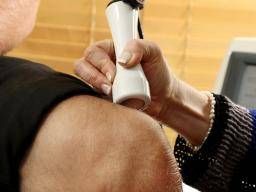
During treatment, a clinician typically places a handheld device over specific points around the knee. Sessions may last a few minutes to 20 minutes, depending on the machine and protocol. Most people feel little to nothing during the session. There is no incision, no anesthesia, and usually no downtime. You can normally walk out afterward, ideally with less grumbling from your knee.
How Is Laser Therapy Supposed to Help Knee Pain?
The main theory behind photobiomodulation is that certain wavelengths of light can interact with cells, particularly the mitochondria, which are often described as the energy factories of the cell. When light is absorbed, it may influence cellular energy production, nitric oxide signaling, inflammation-related pathways, and tissue repair processes.
For knee pain, the proposed benefits include:
- Reduced inflammation around the joint
- Lower pain sensitivity
- Improved blood flow in nearby tissues
- Less stiffness after treatment
- Better tolerance for exercise and movement
That last point matters. If laser therapy reduces pain enough for someone to move better, strengthen the quadriceps, improve hip control, and walk more comfortably, it can indirectly support long-term progress. The laser may open the door, but exercise usually has to walk through it.
What Kind of Knee Pain Is Laser Therapy Used For?
Laser therapy is most often discussed for knee osteoarthritis, the “wear-and-tear” form of arthritis that develops when cartilage, bone, synovial tissue, and surrounding structures change over time. Knee osteoarthritis can cause pain, stiffness, swelling, creaking, reduced range of motion, and difficulty with stairs or prolonged walking.
Clinics may also use laser therapy for other knee-related problems, such as tendon irritation, bursitis, ligament sprains, post-exercise soreness, or pain after injury. However, the evidence is strongest and most commonly studied in knee osteoarthritis.
It is important to know what laser therapy is not. It is not proven to rebuild lost cartilage in an arthritic knee. It does not correct severe bone-on-bone joint damage. It will not fix a torn meniscus that mechanically locks the knee. It also will not solve knee pain caused by an infection, fracture, inflammatory arthritis flare, blood clot, or tumor. If knee pain is sudden, severe, swollen, red, hot, associated with fever, or follows major trauma, get medical evaluation before trying any treatment that sounds relaxing and futuristic.
So, Does Laser Therapy for Knee Pain Actually Work?
For some people, yes, laser therapy can reduce knee pain and improve function, especially in the short term. Several clinical trials and systematic reviews have found positive results for low-level laser therapy or high-intensity laser therapy in people with knee osteoarthritis. Some research suggests that laser combined with exercise may work better than exercise alone, and high-intensity laser therapy may provide stronger effects than low-level laser therapy in certain studies.
But the evidence is not perfectly neat. Studies have used different wavelengths, power levels, treatment points, session lengths, number of sessions, and outcome measures. Some trials show meaningful improvement; others show little or no difference compared with sham treatment. That makes the research a bit like a junk drawer: useful things are in there, but you may have to dig past three rubber bands and an expired coupon.
Major medical guidelines also show cautious optimism rather than wild applause. Orthopedic guidance has recognized FDA-cleared or FDA-approved laser treatment as a possible option for improving pain and function in knee osteoarthritis, but the strength of recommendation is limited. Rheumatology-focused guidance continues to emphasize stronger evidence for exercise, weight management when appropriate, topical anti-inflammatory medications, braces for selected patients, and injections in certain cases.
The practical takeaway: laser therapy may work, but it should not be the entire plan. It is best considered an add-on treatment, especially for people who want a non-drug option and are willing to pair it with strengthening, mobility work, weight management if needed, and smart activity changes.
Who Might Benefit Most From Laser Therapy?
Laser therapy may be worth discussing with a healthcare provider if you have mild to moderate knee osteoarthritis, chronic knee pain that flares with activity, stiffness that limits movement, or pain that makes physical therapy difficult. It may also appeal to people who cannot tolerate oral NSAIDs because of stomach, kidney, heart, blood pressure, or medication-interaction concerns.
Some patients use laser therapy because they want to delay injections or surgery. That is reasonable as long as expectations stay grounded. A good goal is not “I want a brand-new knee by Friday.” A better goal is “I want less pain so I can walk, exercise, sleep, and function better.” Knees appreciate realistic project management.
Laser therapy may be less helpful if the knee has advanced structural damage, severe deformity, major instability, or pain that is primarily caused by a mechanical problem. People with very severe arthritis may still feel temporary relief, but the improvement may not be strong enough or long-lasting enough to change daily life.
What Happens During a Laser Therapy Session?
A typical session starts with a brief assessment. The clinician may ask where the pain is located, what activities make it worse, whether swelling is present, and how your knee responded to previous treatments. You may sit or lie down while the laser device is applied around the knee joint line, kneecap, tendons, or painful soft-tissue areas.
The treatment is usually painless. Some high-intensity devices may create mild warmth, but therapy should not feel like your kneecap is being toasted like a bagel. If it burns, stings, or feels uncomfortable, say something immediately.
Many protocols involve multiple visits over several weeks. Some people report improvement after a few sessions; others need a full treatment series before they notice a difference. A clinic should be able to explain the treatment plan, the device used, the expected number of sessions, the cost, and how progress will be measured.
Benefits of Laser Therapy for Knee Pain
It Is Noninvasive
No needles, no incisions, no recovery room, no hospital gown that opens in the back at the worst possible time. For people nervous about injections or surgery, this is a major advantage.
It May Reduce Pain Without More Medication
Many people with knee osteoarthritis already use topical NSAIDs, acetaminophen, oral NSAIDs, or prescription medications. Laser therapy may provide another option for pain relief without adding another pill to the daily lineup.
It Can Support Physical Therapy
Pain often blocks progress. If laser therapy makes exercise more tolerable, it may help patients participate more fully in strengthening and mobility work. Stronger muscles around the knee can improve stability and reduce stress on irritated joint structures.
Side Effects Are Usually Mild
When performed correctly with an appropriate device, laser therapy is generally considered low risk. Eye protection is important because therapeutic laser light can harm the eyes. Some people may have temporary soreness, warmth, or skin sensitivity, but serious side effects are uncommon in properly supervised treatment.
Limitations and Downsides
Results Are Not Guaranteed
Some people feel better. Some feel nothing. A few feel temporary relief that fades quickly. The wide range of responses is one reason laser therapy remains a “maybe helpful” treatment rather than a universal recommendation.
It Can Be Expensive
Insurance coverage varies, and many patients pay out of pocket. If a clinic recommends a long package of sessions, ask what outcomes they track and what happens if you do not improve. Buying 20 sessions without a progress checkpoint is not healthcare; it is a subscription service with shinier equipment.
Device Quality and Dosing Matter
Not all red light devices are equal. Wavelength, power, treatment time, dose, treatment points, and tissue depth all matter. A consumer gadget bought online is not the same as a medical-grade device used by a trained clinician. Also, more power is not automatically better. In photobiomodulation, dosing can be tricky: too little may do nothing, while too much may reduce the desired effect.
It Does Not Replace Diagnosis
“Knee pain” is a symptom, not a diagnosis. Osteoarthritis, tendon injury, referred hip pain, meniscus damage, inflammatory arthritis, and nerve-related pain can all show up as knee discomfort. Laser therapy should come after a reasonable evaluation, not before anyone knows what is being treated.
Laser Therapy vs. Other Knee Pain Treatments
The best knee pain plan is usually layered. For knee osteoarthritis, the foundation often includes education, low-impact exercise, strength training, weight management when appropriate, topical anti-inflammatory medication, and activity modification. Braces, canes, shoe changes, injections, radiofrequency ablation, and surgery may be considered depending on severity and goals.
Compared with these options, laser therapy sits in the noninvasive, low-risk, variable-evidence category. It may be more appealing than injections for people who dislike needles. It may be safer than frequent oral NSAID use for certain patients. But it does not have the same long-term evidence base as exercise and weight management, and it does not replace joint replacement when arthritis is severe and disabling.
A smart way to think about laser therapy is this: it may help reduce the “pain volume” so you can do the work that actually protects the knee over time. If you use laser therapy and then return to doing nothing but sitting, limping, and arguing with staircases, the benefit may be short-lived.
Questions to Ask Before Trying Laser Therapy
- What diagnosis are we treating?
- Is the device FDA-cleared or FDA-approved for this type of use?
- Is this low-level laser therapy, photobiomodulation, or high-intensity laser therapy?
- How many sessions are recommended before we judge whether it is working?
- What outcome will we track: pain score, walking distance, stairs, range of motion, sleep, or medication use?
- What will this cost, and is it covered by insurance?
- What exercises or rehab plan should I do alongside treatment?
- Are there any reasons laser therapy may not be safe for me?
Good clinicians welcome these questions. If the answer is “Just trust the beam,” keep your wallet and your kneecap moving.
Realistic Experiences With Laser Therapy for Knee Pain
People’s experiences with laser therapy for knee pain often fall into a few patterns. One common story is the person with mild to moderate knee osteoarthritis who has pain while climbing stairs, getting out of the car, or walking longer distances. After several laser sessions combined with gentle strengthening exercises, this person may notice that the knee feels less stiff in the morning and less irritated after errands. The improvement may not be dramatic enough to inspire a victory parade, but it can be meaningful: fewer pauses on the stairs, more confidence during walks, and less need to reach for pain relievers.
Another experience is the “temporary relief” pattern. Someone may feel better for a day or two after treatment, then the pain creeps back. This does not mean the treatment failed completely, but it suggests that laser alone is not addressing the bigger drivers of pain. Weak hip muscles, poor sleep, high training load, extra joint stress, or advanced arthritis may still be feeding the problem. In that case, laser therapy can be a helpful comfort tool, but the long-term plan needs more structure.
Some patients report no noticeable change. This can be frustrating, especially when the treatment is paid out of pocket. Nonresponse may happen because the diagnosis is not ideal for laser therapy, the arthritis is too advanced, the dose is not appropriate, or the pain is coming from somewhere else. For example, hip arthritis or lumbar spine issues can sometimes refer pain toward the knee. Treating the knee with light will not do much if the actual troublemaker is upstairs in the back or hip, wearing a disguise.
There are also people who like laser therapy because it gives them a safe, low-stress way to re-engage with treatment. Chronic knee pain can make people fearful of movement. A painless therapy session, paired with clear guidance, can reduce anxiety and help them restart walking, cycling, water exercise, or physical therapy. That psychological boost matters. Pain is not only a tissue problem; it is also a confidence problem.
The best experiences tend to happen when expectations are clear from the beginning. Patients who expect laser therapy to erase years of arthritis may be disappointed. Patients who see it as a possible pain-reduction tool within a complete plan are more likely to judge it fairly. A reasonable trial might include several sessions, a simple home exercise program, tracking pain and function, and a decision point after a few weeks. If walking distance improves, stairs feel easier, and pain medication use drops, that is useful progress. If nothing changes, it may be time to invest energy elsewhere.
Final Verdict: Should You Try Laser Therapy for Knee Pain?
Laser therapy for knee pain can work for some people, especially those with knee osteoarthritis, but it works best as part of a complete treatment plan. It may reduce pain, improve function, and help people tolerate movement better. It is generally noninvasive and low risk when performed properly. However, evidence is mixed, benefits may be short term, and the treatment can be costly if not covered by insurance.
If you are curious, talk with a physician, physical therapist, sports medicine specialist, or orthopedic clinician who can confirm your diagnosis and help you compare options. Laser therapy is most worth considering when it is paired with the real heavy hitters: exercise, strengthening, weight management if needed, smart pacing, and practical tools like braces or topical anti-inflammatory medications when appropriate.
Your knee does not need hype. It needs a plan. Laser therapy may earn a place in that plan, but it should not be asked to carry the whole team.
Note: This article is for educational purposes only and should not replace medical advice, diagnosis, or treatment from a licensed healthcare professional.












