
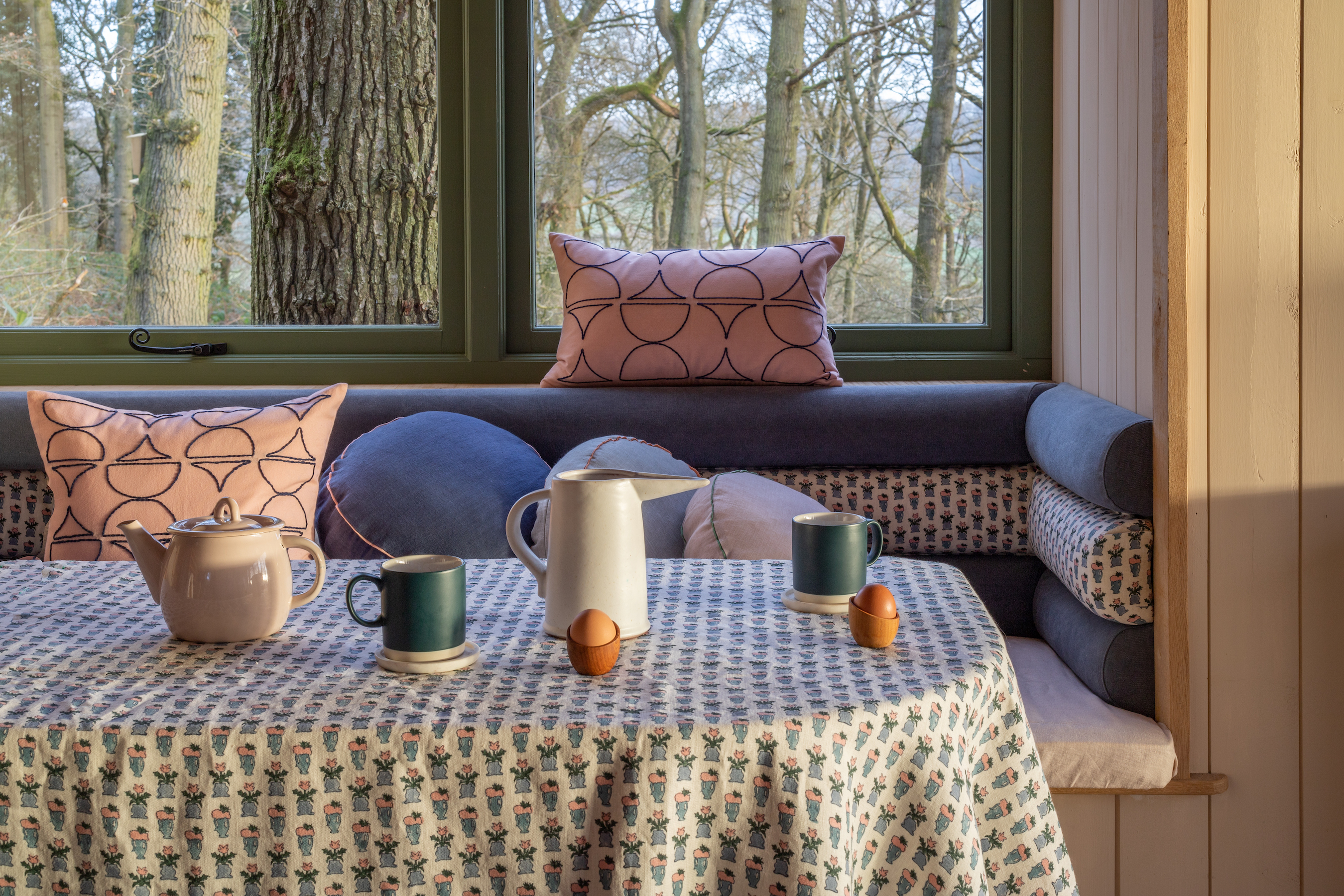
Cottagecore decorating is sometimes reduced to wildflowers, teacups, and the suspicious belief that everyone has time to bake bread before breakfast. At its best, however, the style is about something more enduring: natural materials, useful objects, traditional skills, and rooms that feel collected rather than assembled overnight.
The Campbell Collection fits beautifully into that philosophy. Founded by textile designer Emma Campbell and based in Bath, England, the small housewares brand works with skilled artisans in Jaipur and other parts of India. Its handmade quilts, embroidered cushions, block-printed tablecloths, and fabric yardage combine British cottage warmth with Indian textile craftsmanship. The result is colorful without becoming chaotic, relaxed without looking careless, and charming without requiring a decorative wheelbarrow in the living room.
What Is The Campbell Collection?
The Campbell Collection is a cottage-industry textile label created by Emma Campbell, who studied textile design at Central Saint Martins and Edinburgh College of Art. Her husband, Tim Campbell, contributes to the business side, while Emma develops the patterns, colors, products, and styling.
According to a 2023 profile by Remodelista, the collection was established to celebrate handmade homewares while helping support employment and preserve traditional craft techniques in India. Campbell collaborates with artisan partners and a women’s sewing collective to produce textiles that carry visible evidence of human hands.
The assortment has included:
- Hand-stitched cotton quilts
- Embroidered cotton and linen cushions
- Block-printed tablecloths
- Organic cotton and linen fabric yardage
- Woodblock prints made on recycled cotton paper
These are not generic “country-style” accessories wearing a floral disguise. The designs draw on architecture, carved screens, plants, and colors associated with Jaipur and its historic neighborhoods. That source material gives the fabrics a strong visual identity even when they are placed in a thoroughly British cottageor a sixth-floor American apartment whose nearest sheep is printed on a mug.
Why These Handmade Indian Textiles Suit Cottagecore Homes
They celebrate evidence of the maker
Cottagecore favors objects that appear to have a life beyond the shopping cart. Hand-block printing naturally produces slight shifts in color, pressure, and pattern registration. Embroidery may reveal tiny variations in stitch length. These qualities are not defects; they distinguish handcrafted cloth from a mechanically perfect repeat.
During block printing, a carved wooden block is coated with color and pressed onto the fabric. The artisan repeats the impression across a long printing table, aligning every placement by eye and experience. Multicolored designs require separate blocks and printing rounds. The Campbell Collection’s Flower Pot pattern, for example, was reported to use five hand-carved blocks, making it one of the label’s most labor-intensive designs.
They connect beauty with usefulness
A quilt warms a bed. A tablecloth protects a table. A cushion makes the straight-backed chair inherited from an aunt considerably less judgmental. Cottagecore interiors work best when decorative pieces are also useful, and The Campbell Collection is built around practical textiles rather than purely ornamental clutter.
They bring history into a contemporary room
India has a long and influential history of printed cotton production. Traditional Indian chintz, with its botanical motifs and complex color processes, became highly desirable in Europe centuries ago and profoundly influenced Western furnishing fabrics. Modern hand-block-printed textiles are not interchangeable with historic chintz, but they belong to a broader story of Indian design knowledge, skilled printing, and global textile exchange.
The Campbell Collection gives that history a modern voice through simplified motifs, playful palettes, and versatile natural fabrics. It feels nostalgic without becoming a museum reenactment.
Signature Fabrics and Motifs in the Collection
Flower Pot
Flower Pot marked the collection’s early move into floral fabric. Printed on organic linen, the design offers a botanical rhythm without relying on the tiny rosebuds commonly associated with cottage decor. Because five wooden blocks are used to build the pattern, its apparently easygoing surface conceals an exacting production process.
This pattern can work especially well for café curtains, a sink skirt, a reading-chair cushion, or a single upholstered seat. Let it be the leading print and surround it with plain linen, painted wood, or quiet stripes.
Old City
The Old City family of patterns has appeared in multiple scales and colors, including pale pink and blue grounds. Smaller repeats are useful because they can cover a larger surface without visually swallowing the furniture. Consider Old City yardage for a banquette, headboard, window treatment, or generous tablecloth.
A small geometric repeat also makes a good companion for florals. The trick is contrast: combine a loose botanical print with a tidier motif rather than asking two equally busy fabrics to engage in a shouting contest.
Rattan
Inspired by the lattice of a woven chair, Rattan translates a familiar natural texture into a graphic block print. The design has been produced on organic cotton slub, whose subtle surface irregularity adds another layer of character.
Rattan is particularly effective in kitchens, breakfast rooms, and sunrooms. Used as a café curtain or cabinet skirt, it provides pattern while maintaining a lighter visual footprint than a dense floral.
Stepwell
Stepwell references architectural details found in Jaipur’s Old City. Its structured geometry introduces order to soft furnishings and botanical accessories. A colorway combining pale blue with warmer pink and red printing demonstrates one of the collection’s strengths: unexpected colors that still feel comfortable together.
Use a geometric Campbell Collection fabric when a cottagecore room begins drifting too far into sugar-plum territory. Architecture-inspired pattern gives the eye somewhere firm to land.
Campbell Collection Quilts: Color, Cloth, and Kantha Stitching
The quilts are among the collection’s most expressive pieces. Designs such as the Shivani and Rani quilts have used organic cotton panels, hand dyeing, cross-stitching, embroidery, and hand quilting.
Kantha is a South Asian stitching and quilting tradition particularly associated with Bengal and nearby regions. Historically, layers of worn fabric were joined with running stitches to create useful cloths. Contemporary makers employ kantha stitching in many forms, including new-fabric quilts and decorative home textiles. Its running lines give a quilt texture, movement, and a sense of continuity.
The Shivani quilt was described as having cotton panels dyed to precise color specifications with azo-free, nontoxic dyes. After dyeing, the panels were cut, pinned, sewn, and quilted by hand. The Rani design combined cross stitches with a border of kantha stitching.
On a bed, such a quilt can carry most of the room’s color. Add solid sheets, one or two patterned cushions, and perhaps a striped throw. Covering every available surface in competing prints may be technically cottagecore, but it can also make bedtime feel like entering a fabric sample book.
Embroidered Cushions That Do More Than Fill a Sofa
The Campbell Collection’s cushion designs show how shape and stitching can make a modest accessory feel special. Sanjina cushions have been made from hand-embroidered organic cotton in rectangular and bolster-like forms. The design was named for Sanjina, a seamstress and team leader associated with the collection’s production.
Mukesh round cushions, meanwhile, have used organic linen and fine contrasting piping. A round cushion is a useful styling tool because it interrupts the parade of square pillows that often marches across a sofa. Combine one round cushion with a larger floral square and a plain lumbar cushion for a layered arrangement that still leaves somewhere to sit.
For a quieter room, choose cushions that repeat colors already present in artwork, painted furniture, or rugs. For a more spirited cottage interior, use them to introduce one surprise colorrose against blue, green against pink, or warm red beside natural linen.
Block-Printed Tablecloths for Everyday Cottage Style
A handmade tablecloth can transform a room faster than repainting it and with significantly less time spent arguing over color chips. Campbell Collection tablecloths extend the brand’s fabric patterns across a broad surface, making the table a visual anchor.
For everyday use, let a printed tablecloth hang naturally rather than styling it with an army of decorative objects. A bowl of fruit, a jug of garden flowers, mismatched ceramics, and simple glassware are enough. Cottagecore should suggest that lunch might happen at any moment, not that the table has been roped off for preservation.
Pattern mixing works best when one element dominates. If the cloth has a strong repeat, use plain napkins and softly colored dinnerware. With a smaller pattern, striped napkins or floral plates can join the scene, provided the palette shares at least one or two colors.
How to Use Campbell Collection Fabric Yardage
Yardage offers the most creative flexibility, but it also rewards planning. Before ordering, request a swatch when available. Computer screens alter color, and natural linen may look different in morning sun, artificial light, and the mysterious dimness that descends whenever guests arrive.
Small projects with a big effect
- Sew café curtains for a kitchen or bathroom window.
- Cover a lampshade to repeat a room’s accent color.
- Create removable cushion covers with hidden zippers.
- Add a gathered skirt beneath a sink or open console.
- Frame a fabric remnant as inexpensive textile art.
- Make napkins, placemats, or a narrow table runner.
Larger applications
For headboards, drapery, banquettes, or light upholstery, confirm the fabric width, weight, repeat, and intended use before calculating yardage. Pattern matching can require additional material, especially with a directional motif. Order enough from the same production batch when possible because handmade printing and dyeing may create subtle variations between runs.
Not every decorative fabric is suitable for a hardworking sofa. A midweight linen may be excellent for curtains and occasional seating yet insufficient for a household populated by children, pets, or an adult who eats tomato sauce as though stains were a competitive sport. Ask about abrasion resistance, backing, and professional upholstery recommendations before committing.
Building a Balanced Cottagecore Color Scheme
Successful cottagecore rooms combine pattern with breathing space. Begin with one hero textile, then identify three colors within it:
- A dominant background color for walls or large plain surfaces
- A supporting color for upholstery, rugs, or curtains
- An accent color for cushions, ceramics, flowers, and artwork
Soft pink, faded blue, leafy green, indigo, cream, and spice-inspired red all suit the Campbell aesthetic. Natural wood, rattan, aged brass, and woven baskets provide neutral texture. Better Homes & Gardens recommends mixing cottage patterns in different scales, while contemporary cottage interiors often combine florals, checks, stripes, and dotted or geometric prints.
If a room feels too busy, remove one pattern rather than adding three plain beige objects and hoping they negotiate peace. If it feels flat, introduce texture through embroidery, slub linen, quilting, or piping before adding another color.
How to Care for Handmade Quilts and Printed Fabrics
Care should always begin with the instructions supplied for the individual product. Fiber content alone does not determine safe cleaning: dyes, embroidery, piping, batting, and construction can all affect the recommended method.
- Test an inconspicuous area before spot cleaning.
- Use cool or lukewarm water when the care instructions permit washing.
- Select a gentle detergent without optical brighteners or chlorine bleach unless specifically approved.
- Avoid aggressive rubbing, twisting, and wringing.
- Dry away from harsh direct sunlight to reduce fading.
- Rotate displayed quilts and cushions so one area does not receive constant light.
- Store clean textiles in a cool, dry place without placing heavy objects on sharp folds.
Hand printing can mellow with time, which many owners find appealing. Preventable damage is less romantic. Spilled wine does not become “patina” merely because the tablecloth was expensive.
What to Check Before Buying Artisan-Made Textiles
The word “handmade” is meaningful only when accompanied by useful information. Look for clear details about the makers, location of production, fiber content, printing or stitching method, dyes, care requirements, and intended use. Ask whether the business has an ongoing relationship with its artisan partners and how production supports skilled employment.
For Campbell Collection pieces, earlier published information identified artisan work in Jaipur and elsewhere in India, including collaboration with a women’s collective. Product availability, prices, compositions, and policies can change, so confirm current specifications directly before ordering.
It is also worth remembering that block printing, kantha, embroidery, and Indian cotton traditions are distinct practices with regional histories. Thoughtful decorating appreciates that cultural context instead of treating every handmade Indian textile as a generic “bohemian” accessory.
A Lived-In Experience: Spending a Weekend With Cottagecore Fabrics
The easiest way to understand these textiles is to imagine introducing them gradually over a weekend. On Friday evening, place a hand-stitched quilt over plain white bedding. The room changes immediately. Color settles across the largest horizontal surface, the running stitches catch the light, and furniture that previously looked slightly unrelated begins to feel intentional.
The first lesson is that one excellent textile can do more than several minor decorations. There is no urgent need to buy a ceramic rabbit, a fake spinning wheel, and twelve signs announcing that the kitchen is where memories are made. The quilt already supplies warmth, craftsmanship, and a focal point.
On Saturday morning, add two cushions: one embroidered rectangle and one round piped cushion. Their different shapes create a collected appearance without matching perfectly. The most successful combination usually shares a color but varies in pattern density. A geometric cushion beside a looser floral design feels lively; two nearly identical florals can look as though one is impersonating the other.
Next, hang a short piece of block-printed cotton as a café curtain. As daylight passes through it, the print appears softer than it did on a sample laid flat. This is an important practical discovery: fabric changes with location. A pale linen that looks quiet beneath a store light may glow near a sunny window, while indigo can become deeper and more architectural in a shaded room.
Saturday dinner provides the tablecloth test. Spread a patterned cloth across an old wooden table, then resist the temptation to add six more patterns. Plain plates, folded cotton napkins, and a small bowl of herbs allow the printed surface to remain the star. The room feels dressed, but not formal. A minor misalignment in the block print becomes visible near one corner and, rather than spoiling the cloth, reveals how it was made.
Sunday is the editing day. Step back and look for repetition. Perhaps the pink in the tablecloth now connects with a cushion in the next room. Maybe the blue quilt makes the painted dresser look less lonely. If the house has become too sweet, introduce a dark wood stool, an iron lamp, or a simple striped textile. Cottagecore benefits from contrast; otherwise, the room can resemble a cupcake that has developed property rights.
Living with handmade fabrics also changes daily habits. You shake crumbs from the tablecloth instead of ignoring them. You fold the quilt rather than launching it toward a chair. You notice fading near a window and rotate a cushion. These small acts of care are part of the appeal. The textiles invite participation, not reverence.
Most importantly, the weekend demonstrates that cottagecore is not a fixed shopping list. It is a way of assembling a home around comfort, memory, useful craft, and natural materials. Campbell Collection quilts, cushions, tablecloths, and yardage work because they can enter that process one piece at a time. They do not need a thatched roof. They need a room willing to become more personal.
Conclusion: Cottagecore With Craft at Its Center
The Campbell Collection offers a richer interpretation of cottagecore fabricsone grounded in textile design, skilled artisan production, and the practical pleasures of cloth. Its Indian hand-block printing, embroidery, natural fibers, and kantha-inspired quilting bring texture and individuality to bedrooms, kitchens, dining spaces, and quiet reading corners.
The collection is most effective when used selectively. Begin with a quilt, tablecloth, cushion, or small length of yardage. Build the room around its colors, combine patterns of different scales, and leave enough visual calm for the handmade details to be noticed. The goal is not to manufacture nostalgia. It is to create a home that feels comfortable, useful, and unmistakably inhabited.
Note: Product names describe documented examples from the collection. Confirm current availability, materials, dimensions, care instructions, and ordering policies with the retailer.











