
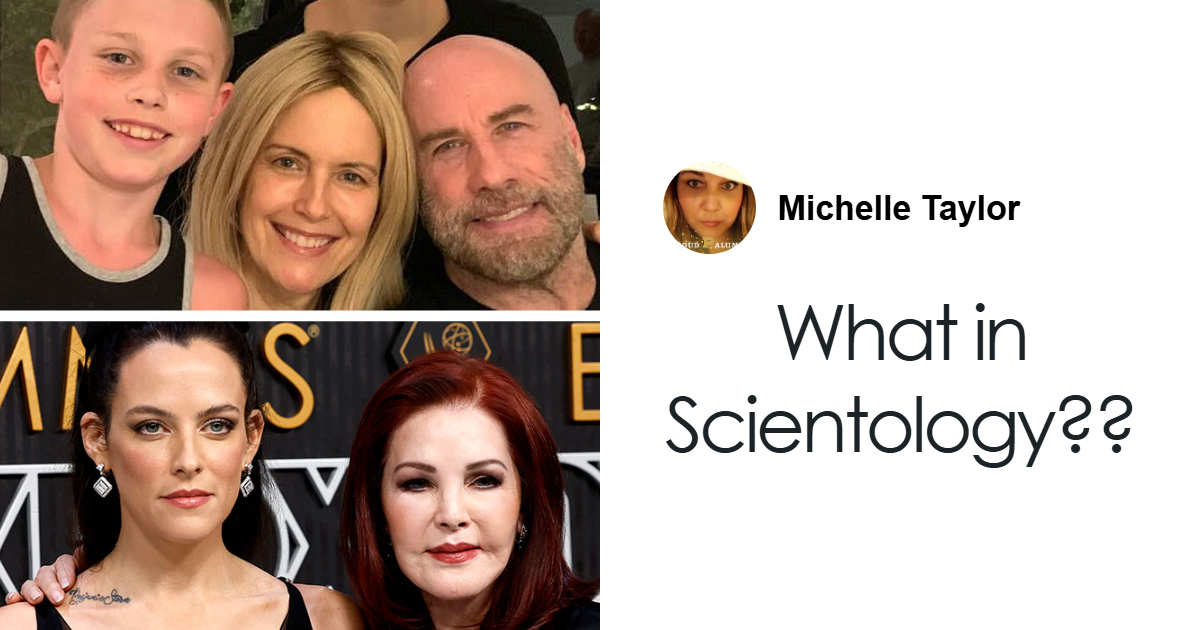
Editorial note: The allegation discussed below comes from a civil-court filing and remains unproven. A lawsuit can contain dramatic assertions, but it is not a DNA test, a medical record, or a judicial finding. This article reports the claim with necessary context and does not present it as fact.
Hollywood has produced plenty of plot twists over the years, but few arrive with more noise than a court filing involving the Presley family, John Travolta, Kelly Preston, and a claim about genetic parentage. In December 2025, an amended complaint in a larger legal dispute included an allegation that Riley Keough may have donated eggs used in the conception of Benjamin Travolta, John Travolta and the late Kelly Preston’s youngest child.
The filing instantly created the kind of headline that makes people put down their coffee, pick it back up, and then stare at it as though it had personally challenged their reading comprehension. But the most important word in the story is not “bombshell.” It is claim.
The court documents did not establish that Riley Keough is Ben Travolta’s biological mother. They described an allegation made within a bitter dispute involving Priscilla Presley’s former business associates and her son, Navarone Garcia. Priscilla Presley’s legal representatives strongly rejected the allegation, calling it outrageous, irrelevant, and harmful to her family.
That distinction matters. Celebrity legal disputes can produce extraordinary accusations, but extraordinary accusations do not become verified simply because they are filed in a courthouse instead of posted in an Instagram comment section.
What the Court Filing Alleged
The controversy emerged from an amended complaint involving Brigitte Kruse and Kevin Fialko, former business associates of Priscilla Presley. Their dispute with Navarone Garcia centered on business, contracts, money, and the complicated fallout surrounding the Presley family’s affairs after Lisa Marie Presley’s death in 2023.
Inside that wider legal conflict, the plaintiffs included allegations involving Riley Keough, John Travolta, Kelly Preston, and Ben Travolta. According to the filing, Michael Lockwood, Lisa Marie Presley’s former husband, allegedly told Kruse that Travolta and Preston had approached the Presley family years earlier regarding egg donation.
The filing claimed that Keough allegedly provided eggs that were used to help conceive Ben, who was born in 2010. It also included claims about an alleged payment and an older Jaguar. Those details raced across entertainment websites because, frankly, “celebrity fertility allegation involving Elvis Presley’s granddaughter and a Jaguar” is not exactly a headline designed to sit quietly in the corner.
Still, the sensational details are allegations within a complaint. They are not independently verified evidence of genetic parentage. The filing reportedly referenced alleged notes, messages, and statements attributed to people involved in the broader family dispute. It did not publicly present a confirmed DNA result, authenticated fertility-clinic record, or judicial determination establishing the claim.
Why a Court Filing Is Not the Same as Proof
A lawsuit is a legal document in which one side lays out its version of events. It can include claims that may later be challenged, narrowed, dismissed, contradicted, settled, or never proven at trial. Court filings are important because they show what parties are alleging. They are not automatic truth machines with robes and a stapler.
That is especially important when a filing touches on reproductive history, private family relationships, and genetic identity. Those matters are personal even when famous people are involved. The public may be fascinated by the possibility of an unexpected Elvis Presley family connection, but fascination is not evidence.
In this case, the allegation also appeared in a dispute that was not primarily about Ben Travolta’s parentage. The core legal fight involved business relationships and accusations surrounding the Presley family’s finances and management. The claim about Keough and Travolta became a major media hook, yet it was not the central issue the court was being asked to decide.
That context should shape how readers interpret the story. A dramatic detail placed inside a sprawling lawsuit may have strategic value for the party presenting it. It may be intended to explain relationships, show alleged motivations, apply pressure, or tell a broader narrative. None of those possibilities, however, substitutes for proof.
The Presley Family’s Response to the Allegation
Priscilla Presley’s attorneys pushed back forcefully. They described the allegations as shameful and said they had nothing to do with the actual claims in the case. The response framed the disputed statements as part of an effort to cause pain and pressure the Presley family during an already contentious legal conflict.
That response is important for two reasons. First, it shows that the allegation was directly disputed rather than quietly accepted. Second, it reminds readers that the Presley family had already been dealing with a wider series of legal, financial, and estate-related conflicts after Lisa Marie Presley’s death.
Riley Keough has long been closely associated with preserving her mother’s legacy and the wider Elvis Presley family heritage. She is the daughter of Lisa Marie Presley and musician Danny Keough, and she became a central figure in the family’s public-facing future after Lisa Marie’s death. For that reason, any allegation involving a hidden biological connection to another high-profile family was always likely to generate outsized attention.
John Travolta and Kelly Preston welcomed Ben in 2010, following the devastating death of their son Jett in 2009. Travolta has often spoken publicly about the importance of family, while Ben has remained largely protected from the kind of nonstop celebrity attention that follows his father. That makes caution even more necessary when discussing claims involving his private background.
What “Biological Mother” Would Mean in This Context
Part of the confusion comes from the language used in headlines. In discussions of assisted reproduction, “biological,” “genetic,” “gestational,” and “legal” parenthood can refer to different things.
If the allegation were ever proven, it would suggest that Keough was a genetic contributor through egg donation. The filing alleged that Kelly Preston carried the pregnancy and gave birth to Ben. That would mean the terms “biological mother” and “birth mother” would not be interchangeable in the story.
But again, this is a discussion of what the allegation would mean if it were verified. The public record described in entertainment coverage does not establish that it happened. It is better to use careful language than to turn a complicated, disputed reproductive claim into a cartoonish celebrity-family tree.
Why This Story Spread So Quickly
The story had all the ingredients of a viral celebrity-news event: Elvis Presley’s family, John Travolta, a private fertility allegation, an old luxury car, long-running lawsuits, and enough emotional history to make a daytime soap opera look like a quiet gardening show.
There was also a powerful “what if?” factor. If the allegation were true, Ben Travolta would have a genetic connection to the Presley family. That possibility invited endless headlines about Elvis Presley’s hypothetical great-grandson, even though the central claim had not been proven.
Search engines and social platforms reward surprising combinations of famous names. Once a headline gets repeated often enough, readers can begin to mistake repetition for confirmation. That is why responsible coverage has to repeat the legal status of the claim just as often as it repeats the famous names attached to it.
How Responsible Celebrity Coverage Should Handle Court Claims
Use “alleges,” “claims,” and “according to the filing”
These phrases are not boring legal decorations. They tell readers the difference between an established fact and one party’s accusation. In a story involving private medical or reproductive information, that difference is essential.
Separate public facts from disputed details
Public facts include that Ben Travolta is John Travolta and Kelly Preston’s son, that Riley Keough is Lisa Marie Presley’s daughter, and that a legal dispute involving Presley family associates generated the filing. The alleged egg donation arrangement belongs in a separate category: disputed claim.
Do not let a headline outrun the evidence
A headline that says court documents “reveal” a fact can mislead readers when the documents only contain an untested allegation. The word “claim” is less flashy, but it is more accurate. Accuracy may not always wear sequins, but it usually survives the morning after.
Protect the privacy of people who did not choose the controversy
Ben Travolta did not file the lawsuit, make the allegation, or invite public speculation about his genetic background. Reporting should focus on the legal dispute and the public statements of adults rather than treating a teenager’s private identity as entertainment inventory.
Frequently Asked Questions About the Riley Keough and Ben Travolta Court Claim
Did court documents prove that Riley Keough is Ben Travolta’s biological mother?
No. The documents reportedly contained an allegation. A court filing does not by itself prove genetic parentage, and the allegation was publicly disputed by Priscilla Presley’s legal team.
Who made the allegation?
The allegation appeared in an amended complaint connected to a legal dispute involving Priscilla Presley’s former associates, Brigitte Kruse and Kevin Fialko, and her son, Navarone Garcia.
Was John Travolta sued over the allegation?
No. The dispute discussed in entertainment coverage was not a paternity lawsuit against John Travolta, Riley Keough, or Michael Lockwood. The allegation appeared as part of a broader business and family conflict.
Did Riley Keough publicly confirm the claim?
No public confirmation of the allegation was reported. The Presley family’s legal representatives rejected the disputed accusations, while entertainment outlets reported that representatives for several people named in the filing did not immediately comment.
Why does the story mention Elvis Presley?
Riley Keough is Elvis Presley’s granddaughter through her mother, Lisa Marie Presley. That family connection is why the unverified allegation sparked headlines suggesting a potential genetic link between Ben Travolta and the Presley family.
Experience-Based Takeaways: What This Celebrity Court Story Teaches Readers
The Riley Keough and Ben Travolta court-document controversy offers a useful real-world lesson in how people experience celebrity news today. Most readers do not encounter a court filing first. They encounter a screenshot, a dramatic post, a search headline, or a friend saying, “Did you see this?” By the time the legal context arrives, the claim may already feel established in the public imagination.
That experience is common because human brains love a surprise. When a story connects two famous families that seem unrelated, curiosity switches on immediately. Add a secret arrangement, a disputed family connection, and an item as oddly specific as a vintage car, and the story practically arrives wearing a feather boa. Specific details can make a claim feel more believable, but specificity is not the same as verification.
Readers can protect themselves from rumor inflation by pausing before sharing. First, ask where the information came from. Was it a court ruling, a sworn declaration, a journalist’s summary, a social-media account, or a headline rewritten from another headline? Second, ask whether the person accused or discussed has responded. Third, check whether the story uses language such as “alleged,” “claimed,” or “according to a filing.” Those words are clues that the information remains contested.
Another useful experience comes from watching how headlines evolve. The earliest versions of a celebrity legal story are often the loudest because nobody wants to be the outlet that says, “A complicated filing contains an unresolved allegation.” That is not exactly a phrase that inspires people to sprint toward the refresh button. But later coverage often adds the information readers most need: denials, context, procedural updates, and explanations of what a filing does not prove.
This case also shows why private reproductive information deserves extra care. Fertility choices, egg donation, and family relationships are deeply personal subjects. Even when public figures are involved, readers should resist the urge to turn a legal allegation into a permanent label for someone else’s child or family.
Finally, there is an important emotional lesson. Celebrity news can feel distant because the names are famous, but the people involved are still connected to real grief, real family relationships, and real reputations. Kelly Preston died in 2020. Lisa Marie Presley died in 2023. Their families have faced losses that should not be reduced to internet trivia or used as background decoration for a viral rumor.
The strongest reader habit is simple: stay curious, but keep one hand on the brakes. Read the article, not just the headline. Notice what has been proved, what has been denied, and what remains unknown. A good mystery may be entertaining, but responsible reporting requires more than a dramatic opening line and a shocked-face emoji.
The Bottom Line
The most accurate way to describe this story is straightforward: an amended court filing made an unverified allegation that Riley Keough donated eggs used in the conception of John Travolta and Kelly Preston’s son Ben. The claim was disputed by Priscilla Presley’s legal team, and the public reporting did not establish it as fact.
That may be less explosive than declaring a family secret solved, but it is better journalism. In celebrity court coverage, the truth is often not found in the loudest sentence. It is found in the careful words around it: alleged, disputed, unproven, and still unresolved.












