
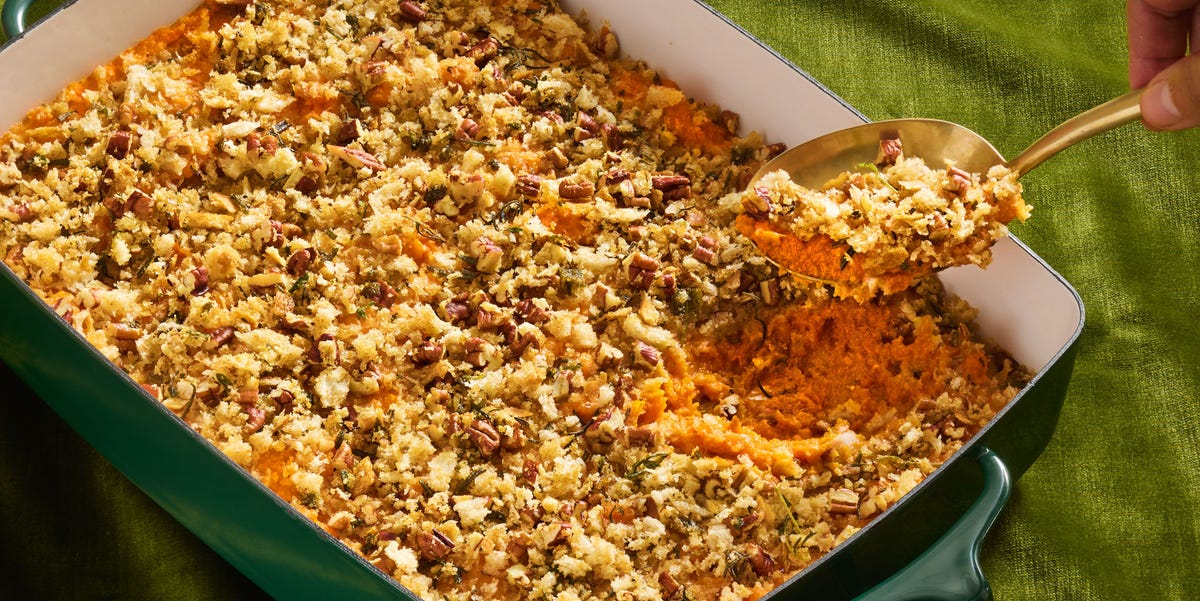
Sweet potato casserole has spent decades wearing a marshmallow hat and pretending it belongs next to the pie. Delicious? Absolutely. Subtle? Not exactly. This best savory sweet potato casserole recipe takes the naturally sweet, creamy comfort of sweet potatoes and gives it a dinner-table upgrade with garlic, herbs, butter, Parmesan, crispy breadcrumbs, and a crunchy pecan topping. It is cozy enough for Thanksgiving, elegant enough for Christmas dinner, and easy enough for a Sunday roast chicken situation where everyone suddenly becomes “very interested” in side dishes.
The magic of a savory sweet potato casserole is balance. Sweet potatoes already bring caramel-like flavor, especially when roasted. Instead of piling on brown sugar, this recipe leans into roasted garlic, shallots, thyme, rosemary, sage, Gruyere or Parmesan, and a buttery topping that bakes into golden crunch. The result is creamy underneath, crisp on top, and deeply flavorful without tasting like dessert wandered into the wrong room.
If you have ever wanted a savory Thanksgiving sweet potato casserole that does not involve mini marshmallows, this is the one to bookmark. It is rich but not heavy, simple but not boring, and make-ahead friendly enough to save your holiday sanity.
Why This Savory Sweet Potato Casserole Works
The best casseroles are not just “soft food in a dish.” They need contrast: creamy filling, crispy topping, bold seasoning, and enough fat and salt to make each bite taste complete. Sweet potatoes are naturally smooth and earthy, but they can become flat if they are treated only as a sweet ingredient. Savory seasonings bring them to life.
Roasting the sweet potatoes instead of boiling them is one of the biggest flavor upgrades. Boiling can make the filling watery if the potatoes absorb too much moisture. Roasting concentrates the natural sugars, deepens the color, and gives the flesh a fluffier texture. That means your casserole tastes richer before you add a single spoonful of butter.
Garlic and shallots add aromatic depth. Fresh rosemary, sage, and thyme bring a classic holiday flavor profile without making the dish taste like stuffing. Parmesan adds saltiness and umami, while Gruyere adds a nutty, melted-cheese luxury. The breadcrumb topping gives the casserole the crunch it needs so it does not feel like a bowl of baby food dressed for a banquet.
Recipe Overview
- Prep time: 25 minutes
- Cook time: 1 hour 15 minutes
- Total time: About 1 hour 40 minutes
- Servings: 8 to 10
- Best for: Thanksgiving, Christmas, potlucks, Sunday dinner, meal prep sides
- Flavor profile: Creamy, savory, buttery, herby, lightly cheesy, gently sweet
Ingredients for the Best Savory Sweet Potato Casserole
For the Sweet Potato Filling
- 4 pounds sweet potatoes, scrubbed
- 4 tablespoons unsalted butter, plus more for greasing the dish
- 2 tablespoons olive oil
- 2 medium shallots, finely chopped
- 4 garlic cloves, minced
- 1 tablespoon chopped fresh sage
- 1 tablespoon chopped fresh thyme
- 1 teaspoon chopped fresh rosemary
- 1 teaspoon kosher salt, plus more to taste
- 1/2 teaspoon black pepper
- 1/4 teaspoon smoked paprika
- 1/8 teaspoon cayenne pepper, optional
- 1/2 cup whole milk or half-and-half, warmed
- 1/2 cup sour cream or Greek yogurt
- 1 cup grated Gruyere cheese or sharp white cheddar
- 1/2 cup grated Parmesan cheese
- 2 large eggs, lightly beaten
For the Crispy Parmesan Pecan Topping
- 1 cup panko breadcrumbs or coarse sourdough breadcrumbs
- 3/4 cup chopped pecans
- 1/2 cup grated Parmesan cheese
- 3 tablespoons melted butter
- 1 tablespoon olive oil
- 1 teaspoon chopped fresh thyme
- 1/2 teaspoon chopped fresh rosemary
- 1/4 teaspoon kosher salt
- 1/4 teaspoon black pepper
Optional Savory Add-Ins
This casserole is excellent as written, but it also welcomes a little personality. Add 6 slices of cooked, crumbled bacon for a smoky version. Stir in caramelized onions for deeper sweetness. Add chopped green onions before serving for freshness. For a vegetarian holiday table, keep it meat-free and let the cheese, herbs, and toasted topping do the heavy lifting.
How to Make Savory Sweet Potato Casserole
Step 1: Roast the Sweet Potatoes
Preheat the oven to 400°F. Line a large baking sheet with parchment paper. Prick the sweet potatoes all over with a fork, place them on the prepared sheet, and roast for 50 to 60 minutes, or until a knife slides easily into the center. The skins should look wrinkled and the flesh should feel very soft.
Let the potatoes cool until you can handle them. Split them open and scoop the flesh into a large mixing bowl. Discard the skins, or save them for a crispy snack if you are the type of person who sees potential in everything, including potato jackets.
Step 2: Build the Savory Flavor Base
While the sweet potatoes cool, melt 4 tablespoons butter with 2 tablespoons olive oil in a skillet over medium heat. Add the shallots and cook for 3 to 4 minutes, stirring often, until softened. Add the garlic, sage, thyme, rosemary, smoked paprika, cayenne if using, salt, and pepper. Cook for another minute, just until fragrant.
This step matters. Raw garlic tossed straight into mashed sweet potatoes can taste sharp. Gently cooking the aromatics in butter and oil mellows the garlic and wakes up the herbs. It gives the casserole that “someone knew what they were doing” flavor.
Step 3: Mash the Filling
Add the warm shallot-herb mixture to the sweet potatoes. Pour in the warmed milk or half-and-half and add the sour cream. Mash until mostly smooth. For a rustic casserole, use a potato masher. For a silkier texture, use a hand mixer on low speed. Do not overbeat; sweet potatoes are forgiving, but they do not need to be whipped into orange wallpaper paste.
Fold in the Gruyere and Parmesan. Taste the mixture before adding the eggs. Adjust with more salt, pepper, or paprika if needed. When the seasoning is right, stir in the beaten eggs. The eggs help the casserole set softly, giving it structure without making it stiff.
Step 4: Assemble the Casserole
Reduce the oven temperature to 375°F. Grease a 9-by-13-inch baking dish or a similar 3-quart casserole dish with butter. Spoon in the sweet potato filling and smooth the top with a spatula.
Step 5: Make the Crunchy Topping
In a medium bowl, combine the panko breadcrumbs, pecans, Parmesan, melted butter, olive oil, thyme, rosemary, salt, and pepper. Stir until evenly coated. Scatter the topping over the sweet potato filling in an even layer.
The topping should look generous. This is not the time for breadcrumb shyness. The creamy filling needs that buttery crunch, and your guests deserve a top layer that makes a tiny, satisfying crackle when the serving spoon hits it.
Step 6: Bake Until Golden
Bake for 25 to 30 minutes, until the filling is hot and the topping is golden brown. If the topping browns too quickly, tent the dish loosely with foil. Let the casserole rest for 10 minutes before serving. This helps the filling settle and keeps the first scoop from collapsing like a tiny orange landslide.
Tips for Perfect Savory Sweet Potato Casserole
Choose the Right Sweet Potatoes
Look for firm sweet potatoes with smooth skin, even color, and no soft spots. Medium sweet potatoes tend to roast more evenly than giant ones. Orange-fleshed varieties are ideal because they become naturally creamy and colorful when cooked.
Do Not Refrigerate Raw Sweet Potatoes
Store raw sweet potatoes in a cool, dark, dry place instead of the refrigerator. Cold storage can affect their texture and flavor. Keep them away from moisture and wash them only when you are ready to cook.
Roast Instead of Boil When Possible
Boiling is faster, but roasting gives better flavor and reduces the risk of watery filling. If you must boil, cut the sweet potatoes into even chunks and drain them very well. Let them steam-dry in the pot for a few minutes before mashing.
Season More Than You Think
Sweet potatoes can handle bold seasoning. Salt, pepper, garlic, herbs, cayenne, smoked paprika, and cheese all help balance their sweetness. Taste the filling before adding eggs so you can adjust safely and confidently.
Use Texture Like a Secret Weapon
The topping is not decoration; it is strategy. Panko stays crisp, sourdough breadcrumbs add rustic flavor, pecans bring nuttiness, and Parmesan adds salty crunch. Together, they keep the casserole from feeling too soft or one-dimensional.
Make-Ahead Instructions
This savory sweet potato casserole is very make-ahead friendly. Prepare the filling up to 2 days in advance, spread it into the baking dish, cover tightly, and refrigerate. Make the topping separately and store it in an airtight container in the refrigerator.
When ready to bake, let the casserole sit at room temperature for 30 minutes while the oven preheats. Add the topping just before baking. If the dish is still cold, add 5 to 10 minutes to the baking time. This method keeps the topping crisp and prevents the breadcrumbs from absorbing moisture overnight.
How to Store and Reheat Leftovers
Store leftover casserole in an airtight container in the refrigerator for up to 4 days. Reheat individual portions in the microwave, or warm the entire dish in a 350°F oven until heated through. For the best texture, reheat uncovered so the topping can crisp again. If the top looks dry, drizzle on a tiny bit of melted butter before warming.
You can freeze the filling before baking, but the topping is best made fresh. Freeze the sweet potato base tightly wrapped for up to 2 months. Thaw overnight in the refrigerator, add the topping, and bake as directed.
Recipe Variations
Bacon and Green Onion Savory Sweet Potato Casserole
For a loaded version, fold 1/2 cup cooked crumbled bacon into the filling and sprinkle sliced green onions on top after baking. This version is excellent with grilled chicken, roast turkey, or a holiday ham.
Vegetarian Mushroom Herb Casserole
Sauté 8 ounces chopped mushrooms with the shallots until browned. Mushrooms add a meaty depth without actual meat, making the dish satisfying for vegetarian guests.
Spicy Southwest Sweet Potato Casserole
Replace the rosemary and sage with cumin, chili powder, and a pinch of chipotle powder. Use sharp cheddar instead of Gruyere and finish with cilantro and toasted pepitas. This variation works beautifully with roasted pork or black bean chili.
Gluten-Free Savory Sweet Potato Casserole
Use gluten-free panko or crushed gluten-free crackers in the topping. You can also replace breadcrumbs with extra pecans and pumpkin seeds for a naturally crunchy topping.
What to Serve With Savory Sweet Potato Casserole
This casserole is a natural fit for Thanksgiving turkey, roasted chicken, glazed ham, prime rib, or pork tenderloin. It also plays nicely with green beans, Brussels sprouts, cranberry sauce, cornbread dressing, and simple salads. Because it is savory rather than sugary, it does not compete with dessert. Pumpkin pie can relax. Nobody is coming for its job.
For a weeknight dinner, serve it with rotisserie chicken and a crisp green salad. For a vegetarian meal, pair it with roasted mushrooms, sautéed kale, and a scoop of lentils. The casserole is rich enough to feel special but flexible enough to work outside the holiday season.
Common Mistakes to Avoid
Using Undercooked Sweet Potatoes
If the potatoes are not fully tender, the filling will be lumpy in a bad way. A few rustic pieces are fine. Crunchy bits are not. Roast until the flesh is completely soft.
Skipping the Salt
Sweet potatoes need salt to taste balanced. Without it, the casserole can seem dull or overly sweet. Season in stages and taste as you go.
Adding the Topping Too Early for Make-Ahead Prep
If the topping sits on the filling overnight, it can become soggy. Store it separately and add it right before baking.
Overloading With Dairy
Milk, sour cream, butter, and cheese make the filling creamy, but too much liquid can make it loose. Start with the amount listed, then add more only if the potatoes seem dry.
Personal Experience: What Makes This Recipe Worth Repeating
The first time I made a savory sweet potato casserole, it was partly out of rebellion. The holiday table already had cranberry sauce, pie, whipped cream, and at least one mysterious “salad” involving whipped topping. I wanted the sweet potatoes to act like a side dish, not a dessert in a casserole dish trying to sneak into dinner before its turn.
Roasting the sweet potatoes changed everything. The kitchen smelled warm and earthy before the casserole was even assembled. When I scooped the soft orange flesh into the bowl, it already tasted good with nothing more than salt and butter. That is always a good sign. A recipe should not need a fireworks show of ingredients to rescue the main event.
The second lesson came from the herbs. Fresh sage can be bossy if you use too much, rosemary can taste like a pine tree with ambition, and thyme is the quiet friend who somehow makes everyone else behave. Together, in the right amounts, they make sweet potatoes taste deeper and more grown-up. Add garlic and shallots cooked in butter, and suddenly the filling tastes like it belongs next to turkey, gravy, and roasted vegetables.
The topping is where people start paying attention. A creamy casserole without crunch can be comforting, but it can also become monotonous after three bites. The breadcrumb, pecan, and Parmesan topping fixes that immediately. It browns beautifully, smells like Thanksgiving stuffing took a vacation in a cheese shop, and gives every spoonful contrast. I have watched people who “do not really like sweet potato casserole” go back for seconds because this version is not cloying.
Another practical discovery: this dish is a holiday lifesaver because it behaves well when made ahead. You can roast and mash the potatoes the day before, season the filling, spread it in the dish, and keep the topping separate. The next day, all you have to do is sprinkle, bake, and accept compliments with whatever level of humility feels believable.
It also reheats better than expected. The filling stays creamy, and the topping can be revived in the oven. Leftovers are excellent with eggs the next morning, tucked beside roast chicken, or eaten straight from the container while standing in front of the fridge pretending you are “just checking something.” No judgment. The casserole understands.
What makes this the best savory sweet potato casserole recipe is not that it is complicated. It is that it respects the sweet potato. It lets the vegetable stay naturally sweet while surrounding it with enough salt, herbs, fat, and crunch to make it feel complete. It is familiar enough for traditional holiday guests and different enough to make the table more interesting. In a world full of marshmallow-topped casseroles, this one shows up in a crisp breadcrumb jacket and quietly steals the side-dish spotlight.
Conclusion
The best savory sweet potato casserole recipe is creamy, flavorful, crisp on top, and balanced from the first bite to the last. By roasting the sweet potatoes, seasoning them with garlic and fresh herbs, folding in savory cheese, and finishing with a Parmesan pecan breadcrumb topping, you get a casserole that feels comforting without becoming overly sweet.
This dish deserves a place at Thanksgiving, Christmas, potlucks, and cozy family dinners because it solves the classic sweet potato problem: too much sugar, not enough depth. Here, the natural sweetness of the potatoes still shines, but it is supported by butter, herbs, cheese, and crunch. That is not just a side dish. That is the casserole equivalent of showing up to dinner with excellent manners and a great jacket.
Note: This article is written for web publishing in clean HTML body format. It intentionally avoids raw source links, duplicate phrasing, AI-style placeholders, and unnecessary content-reference markers.











