
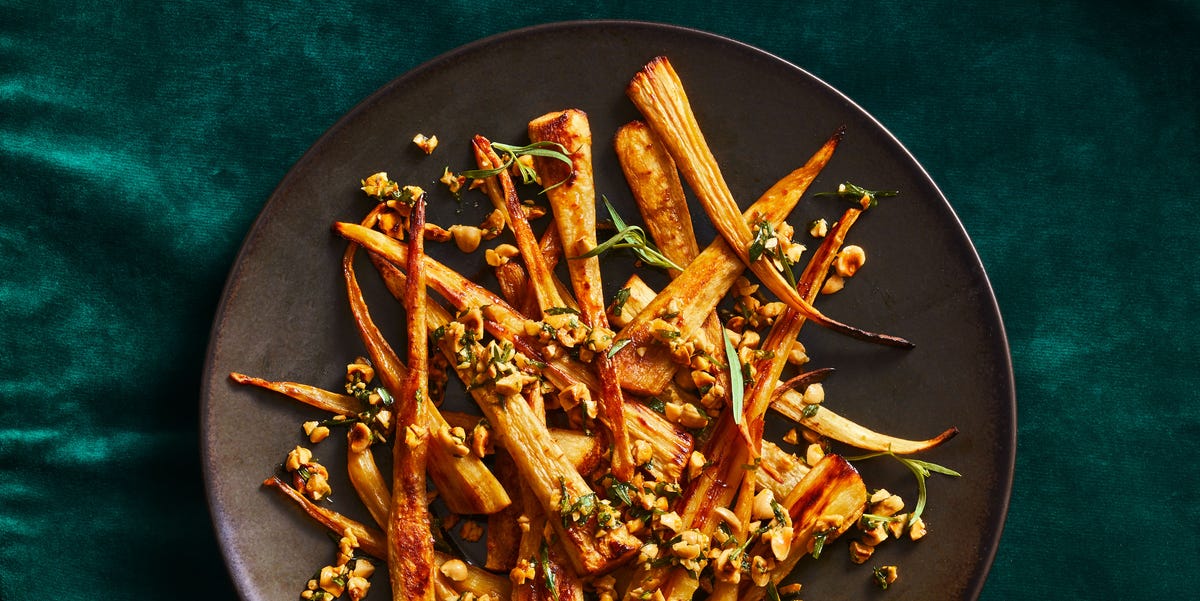
Roasted parsnips are the quiet overachievers of the holiday table. They do not arrive with the fame of mashed potatoes, the drama of stuffing, or the social confidence of green bean casserole. But give them a hot oven, a glossy Madeira glaze, and a shower of toasted hazelnuts, and suddenly they become the side dish everyone keeps “just taking one more bite” of until the platter looks suspiciously empty.
This roasted parsnips with hazelnuts and Madeira glaze recipe is built for big flavor without fussy technique. The parsnips roast until golden and caramelized, the Madeira reduces into a sweet-savory glaze with a little tang, and the hazelnuts add buttery crunch. It is elegant enough for Thanksgiving, Christmas, Easter, or a dinner party, but simple enough for a cozy Sunday roast chicken situation.
Think of this dish as roasted root vegetables wearing a velvet jacket. It is earthy, nutty, gently sweet, and just fancy enough to make people ask, “Wait, did you go to culinary school?” You may answer however you like. We are not here to fact-check your dinner-table legend.
Why This Roasted Parsnips Recipe Works
Parsnips have a naturally sweet, slightly nutty flavor that becomes deeper in the oven. Roasting concentrates their sugars, browns their edges, and turns the centers tender and almost creamy. The trick is to cut them evenly, give them space on the pan, and roast them hot enough so they caramelize instead of steaming.
The Madeira glaze brings the magic. Madeira is a fortified wine with caramel, toasted nut, dried fruit, and warm savory notes. When simmered with vinegar, butter, honey, and a little mustard, it becomes a shiny sauce that clings to the roasted parsnips instead of sliding sadly to the bottom of the plate.
Finally, hazelnuts add contrast. Soft roasted parsnips need crunch the way a good movie needs a plot twist. Toasted hazelnuts bring richness, aroma, and a slightly sweet nuttiness that makes the whole dish feel complete.
Ingredients for Roasted Parsnips with Hazelnuts and Madeira Glaze
For the Roasted Parsnips
- 2 1/2 pounds parsnips, peeled
- 3 tablespoons olive oil
- 1 teaspoon kosher salt, plus more to taste
- 1/2 teaspoon freshly ground black pepper
- 1 teaspoon fresh thyme leaves
- 1/2 teaspoon finely grated orange zest, optional but highly recommended
For the Madeira Glaze
- 1/2 cup Madeira wine
- 2 tablespoons apple cider vinegar or sherry vinegar
- 1 tablespoon honey or maple syrup
- 1 tablespoon unsalted butter
- 1 teaspoon Dijon mustard
- 1 small shallot, finely minced
- Pinch of salt
For the Finish
- 1/2 cup hazelnuts, toasted, skinned, and roughly chopped
- 2 tablespoons chopped fresh parsley
- Extra thyme leaves, for garnish
- Flaky sea salt, optional
How To Make Roasted Parsnips with Hazelnuts and Madeira Glaze
Step 1: Prep the Parsnips
Heat the oven to 425°F. Peel the parsnips and trim off the tops and skinny tips. Cut each parsnip lengthwise into halves or quarters, depending on size. If the cores are very woody, slice them out. Younger, slimmer parsnips usually do not need much coring, but large parsnips can have a tough center that refuses to cooperate, like a root vegetable with a stubborn personality.
Try to keep the pieces similar in thickness so they cook evenly. Thin tips can roast faster than thick tops, so cut large pieces down until everything looks roughly equal.
Step 2: Season and Roast
Place the parsnips on a large rimmed baking sheet. Toss with olive oil, kosher salt, pepper, thyme, and orange zest if using. Spread them in a single layer with space between pieces. Crowding the pan makes vegetables steam, and steamed parsnips are not the goal. We are chasing golden edges, not beige disappointment.
Roast for 25 to 35 minutes, flipping once halfway through, until the parsnips are tender in the center and browned at the edges. If your oven runs cool or the pieces are thick, they may need a few extra minutes.
Step 3: Toast the Hazelnuts
While the parsnips roast, toast the hazelnuts in a dry skillet over medium heat for 4 to 6 minutes, stirring often, until fragrant. You can also toast them on a small baking sheet in the oven for 6 to 8 minutes. Once cool enough to handle, rub them in a clean kitchen towel to remove most of the skins, then roughly chop.
Do not worry if every bit of skin does not come off. Hazelnuts are delicious, not auditioning for a skincare commercial.
Step 4: Make the Madeira Glaze
In a small saucepan, combine Madeira, vinegar, honey, Dijon mustard, minced shallot, and a pinch of salt. Bring to a simmer over medium heat. Cook for 6 to 9 minutes, stirring occasionally, until the mixture reduces by about half and looks syrupy.
Remove from heat and whisk in the butter. The glaze should be glossy, lightly thickened, and balanced between sweet, tangy, and savory. Taste it. If it feels too sweet, add a few drops of vinegar. If it tastes too sharp, add a small drizzle of honey.
Step 5: Glaze and Finish
Transfer the roasted parsnips to a serving platter or leave them on the sheet pan if you are going for rustic charm. Drizzle with the warm Madeira glaze and toss gently. Scatter toasted hazelnuts, parsley, extra thyme, and a pinch of flaky salt over the top.
Serve immediately while the parsnips are warm, glossy, and giving off the kind of aroma that makes people wander into the kitchen pretending they “just came to help.”
Recipe Card: Roasted Parsnips with Hazelnuts and Madeira Glaze
Prep Time: 15 minutes
Cook Time: 35 minutes
Total Time: 50 minutes
Servings: 6
Course: Side Dish
Cuisine: American Holiday Cooking
Best Tips for Perfect Roasted Parsnips
Choose Smaller Parsnips When Possible
Smaller parsnips are often sweeter and more tender than giant ones. Large parsnips can still work beautifully, but check the core. If it looks fibrous or woody, remove it before roasting.
Dry the Parsnips Before Roasting
If you rinse the parsnips after peeling, pat them dry thoroughly. Moisture delays browning, and browning is where the flavor party starts. A dry surface helps the parsnips caramelize more quickly.
Use a Hot Oven
A 425°F oven gives the parsnips enough heat to brown on the outside while becoming tender inside. Lower temperatures can work, but they often produce softer, less caramelized vegetables.
Do Not Overcrowd the Pan
Use two sheet pans if needed. Parsnips need breathing room. If they are piled together, they release steam and turn soft before they brown. A single layer is the difference between roasted and merely cooked.
Add the Glaze After Roasting
Sweet glazes can burn if added too early. Roast the parsnips first, then toss them with the Madeira glaze at the end. This keeps the flavor bright, glossy, and controlled.
What Does Madeira Glaze Taste Like?
Madeira glaze tastes rich, gently sweet, and slightly tangy, with notes of caramel, toasted nuts, dried fruit, and warm wine. It is deeper than a basic honey glaze and more elegant than plain butter. When paired with roasted parsnips, it highlights their natural sweetness without making the dish taste like dessert.
The vinegar is important. Without it, the glaze can become too sweet. With it, the sauce wakes up and balances the buttery hazelnuts and earthy roots. Dijon mustard adds a tiny savory edge, but it should not dominate. It is there in the background doing useful work, like a quiet person who actually organized the whole event.
Substitutions and Variations
If You Do Not Have Madeira
Use dry sherry, Marsala, or a splash of white wine with a teaspoon of maple syrup. The flavor will not be identical, but you will still get a lovely sweet-savory glaze. For a nonalcoholic version, use apple cider plus a teaspoon of balsamic vinegar and reduce it until syrupy.
If You Do Not Have Hazelnuts
Toasted walnuts, pecans, almonds, or pistachios all work well. Hazelnuts are especially good because their buttery flavor echoes the Madeira, but this recipe is flexible. Crunch matters most.
Make It Vegan
Replace butter with vegan butter or olive oil and use maple syrup instead of honey. The glaze will still be shiny and flavorful.
Add More Herbs
Thyme is classic, but rosemary, sage, or parsley can all join the fun. Sage makes the dish feel especially holiday-ready, while parsley adds freshness at the end.
What To Serve with Roasted Parsnips
These roasted parsnips with Madeira glaze are a natural fit for roasted turkey, chicken, pork tenderloin, beef tenderloin, glazed ham, or lamb. They also work beautifully on a vegetarian table alongside mushroom Wellington, lentil loaf, wild rice pilaf, or a big winter salad with citrus and bitter greens.
For a holiday menu, pair them with mashed potatoes, cranberry sauce, green beans, stuffing, and a crisp salad. The parsnips bring sweetness and crunch, which helps balance richer dishes. They are also wonderful with creamy sauces because the tangy Madeira glaze cuts through butter and cream like a tiny, delicious sword.
Make-Ahead Instructions
You can prep the parsnips up to one day ahead. Peel and cut them, then store them in an airtight container in the refrigerator. For best texture, pat them dry before roasting.
The Madeira glaze can also be made one day ahead. Refrigerate it in a covered container, then warm it gently in a small saucepan before serving. If it thickens too much, add a splash of water or Madeira and whisk until smooth.
For the best presentation, roast the parsnips close to serving time and add the glaze and hazelnuts just before bringing them to the table. That keeps the nuts crunchy and the vegetables beautifully glossy.
How To Store and Reheat Leftovers
Store leftover roasted parsnips in an airtight container in the refrigerator for up to 3 to 4 days. Reheat them on a sheet pan in a 375°F oven until warmed through. The oven is better than the microwave because it helps restore some of the roasted texture.
If the parsnips look dry after reheating, add a small drizzle of olive oil or a spoonful of extra glaze. Add fresh herbs and a few more toasted hazelnuts before serving to revive the dish.
Common Mistakes To Avoid
Cutting the Pieces Too Small
Parsnips shrink as they roast. If the pieces are too tiny, they can dry out before the centers become tender. Aim for hearty batons or wedges.
Skipping the Core on Large Parsnips
A tough core can make even well-roasted parsnips feel stringy. If the core looks pale, thick, and woody, remove it.
Adding Hazelnuts Too Early
Hazelnuts can burn in a hot oven. Toast them separately and add them at the end for the best flavor and crunch.
Reducing the Glaze Too Much
A glaze should be spoonable, not candy. If it becomes too thick, whisk in a teaspoon or two of water to loosen it.
Experience Notes: What I Learned Making Roasted Parsnips with Hazelnuts and Madeira Glaze
The first thing you notice when making this dish is that parsnips are surprisingly dramatic for such pale vegetables. Raw, they look humble and quiet, almost like carrots that spent the winter reading novels indoors. But once they hit a hot oven, they become golden, fragrant, and deeply sweet. That transformation is the heart of the recipe.
In testing this style of roasted parsnip dish, the biggest lesson is that size matters. Thick parsnips with woody centers need a little extra attention. Cutting out the core may seem like a small step, but it makes the final texture much more pleasant. Nobody wants to be halfway through a beautiful holiday dinner and suddenly feel like they are chewing a decorative twig.
Another important experience is learning not to rush the browning. At first, it can be tempting to pull the parsnips out as soon as they are fork-tender. But the best roasted parsnips need those golden edges. The browned spots are where the natural sugars concentrate and the flavor turns nutty and complex. A few extra minutes in the oven can take the dish from “nice vegetable side” to “who made these and why are they so good?”
The Madeira glaze is where the recipe becomes memorable. When the wine, vinegar, honey, mustard, and shallot simmer together, the aroma feels instantly festive. It is sweet, sharp, and savory all at once. The key is tasting as you go. Different bottles of Madeira can vary in sweetness, so your glaze may need an extra splash of vinegar or a small touch more honey. Trust your tongue. It has been training for this job your whole life.
Toasting the hazelnuts separately is another small step with a big payoff. Warm toasted hazelnuts smell incredible, almost like browned butter and autumn decided to share an apartment. They bring texture, but they also make the parsnips taste more luxurious. If you chop them too finely, they disappear. A rough chop is better because you get little crunchy bites throughout the dish.
This recipe also teaches a useful hosting lesson: finish at the last minute, but prep ahead. You can cut the parsnips and make the glaze earlier, which keeps dinner from becoming a full-contact sport. Then, shortly before serving, roast the parsnips, warm the glaze, and toss everything together. The finished dish looks fresh, intentional, and impressive, even if five minutes earlier you were wondering where you put the serving spoon.
One of the best serving experiences is placing this dish next to something rich, such as roast turkey, pork, beef, or a mushroom main. The sweetness of the parsnips and the acidity of the glaze create balance. It is not just another soft side dish. It has brightness, crunch, and a little sparkle.
Leftovers are also surprisingly useful. Chopped roasted parsnips can go into grain bowls, warm salads, breakfast hash, or even a sandwich with goat cheese and arugula. If you have extra Madeira glaze, drizzle it over roasted carrots, Brussels sprouts, or sweet potatoes. The glaze is not a one-hit wonder; it has range.
The final takeaway is simple: roasted parsnips deserve more attention. They are affordable, seasonal, easy to prepare, and capable of becoming genuinely elegant with just a few smart additions. Hazelnuts and Madeira do not cover up the parsnips; they make them more themselves. That is the best kind of recipe upgrade.
Frequently Asked Questions
Can I make roasted parsnips without peeling them?
If the parsnips are young, small, and well scrubbed, you can leave the skin on. For larger parsnips, peeling is usually best because the skin can be tougher.
Can I use carrots with the parsnips?
Yes. Carrots and parsnips roast beautifully together. Cut them into similar sizes so they cook evenly.
Is Madeira wine sweet or dry?
Madeira comes in different styles, from dry to sweet. For this recipe, a medium-dry or dry Madeira works best because the glaze already includes honey.
Can I double this recipe?
Absolutely. Use two sheet pans so the parsnips roast instead of steam. Double the glaze and hazelnuts as well.
Can I serve this dish at room temperature?
Yes, though it is best warm. If serving at room temperature, add the hazelnuts right before serving so they stay crisp.
Conclusion
The best roasted parsnips with hazelnuts and Madeira glaze recipe is all about balance: sweet roasted roots, tangy-silky glaze, fresh herbs, and crunchy toasted nuts. It feels special without being complicated, which is exactly what a great side dish should do. Whether you are building a holiday menu or simply trying to make weeknight vegetables more exciting, this recipe brings elegance, warmth, and a little dinner-table applause.
Roasted parsnips may not be the loudest vegetable in the produce aisle, but with Madeira glaze and hazelnuts, they become the kind of side dish people remember. And honestly, that is a pretty impressive glow-up for a root.












