
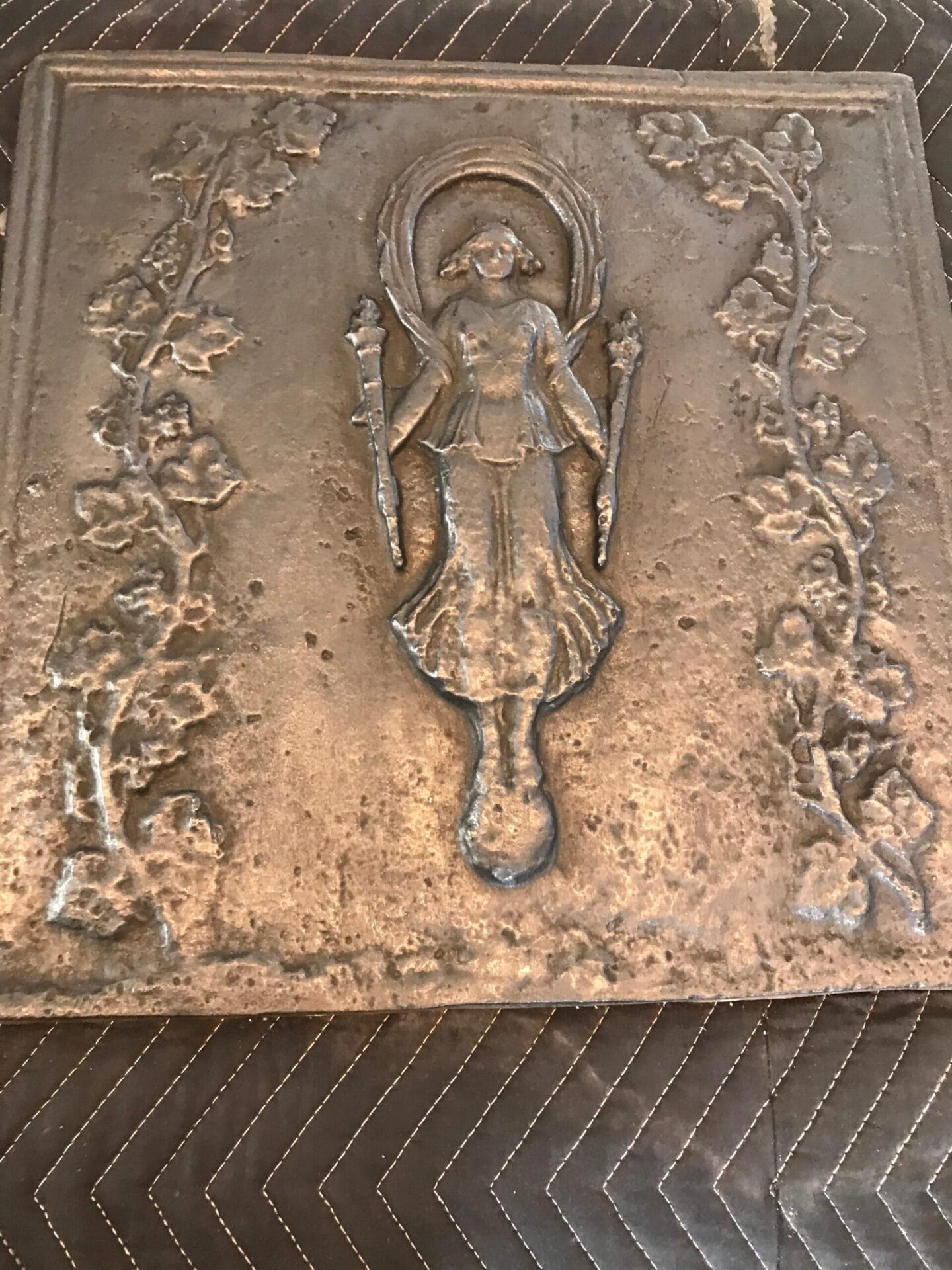
Some home-renovation details announce themselves with trumpets. A new kitchen island? Everyone sees it. A fresh front porch? Neighbors slow down, pretending they are “just walking the dog.” But a fireback behind a kitchen stove is different. It is quieter, heavier, older, and frankly more mysterious. It looks like a decorative panel, but it carries the personality of a historic object, the practicality of cast iron, and the kind of behind-the-scenes craftsmanship that makes an old house feel alive again.
The Newton fireback became a memorable design moment in the Newton Generation NEXT project, a renovation of an 1879 New England home in Newton, Massachusetts. Instead of settling for a predictable range backsplash, the homeowners chose an antique cast-iron fireback set into a field of white tile. The result was not merely “nice.” It was a small architectural plot twist: part kitchen backsplash, part historic artifact, part conversation starter, and part reminder that old-house details often do more than look pretty.
In this behind-the-scenes look at the Newton fireback, we will explore what a fireback is, why it works so beautifully in a kitchen, how the installation came together, and what homeowners can learn from the project. Spoiler alert: the star of the show weighs around 50 pounds, so this is not the sort of décor you hang with a thumbtack and optimism.
What Is a Fireback?
A fireback is a heavy plate, traditionally made of cast iron, placed at the back of a fireplace. Historically, it served two useful purposes: it protected the fireplace wall from intense heat and helped reflect warmth back into the room. Before modern heating systems, insulation, and temperature-controlled everything, that extra heat mattered. A fireback was not just decorative; it was a hard-working piece of household technology.
Firebacks were often decorated with raised designs, including coats of arms, mythological figures, floral patterns, initials, dates, religious scenes, or symbols connected to a family or region. In other words, they were the original “statement wall,” except they could survive flame, soot, and centuries of winter evenings.
From Fireplace Tool to Kitchen Focal Point
Today, many antique firebacks are no longer used inside active fireplaces. Instead, designers and homeowners repurpose them as decorative panels, wall art, or kitchen backsplashes. Behind a stove, a fireback feels especially natural because it returns the object to a place connected with heat, cooking, and the home’s daily rhythm.
That is why the Newton fireback worked so well. It did not feel like a random antique dropped into a modern kitchen for “character points.” It had a reason to be there. The range created the heat-and-cooking context. The white tile gave it contrast. The historic house gave it emotional permission to shine.
The Newton Generation NEXT Context
The Newton project was not a simple cosmetic refresh. The house, built in 1879, had deep family meaning for homeowner Liz McQuillan Delfino. It was the home where she grew up, and the renovation prepared it for a new chapter with her husband, Joe Delfino, their children, and extended family needs in mind.
The broader renovation included restoring and expanding the home while respecting its original character. That balance is one of the hardest parts of old-house work. Go too modern, and the home loses its soul. Go too historic, and everyday life starts feeling like a museum tour where nobody is allowed to touch the chairs. The best solution is usually somewhere in the middle: practical upgrades, thoughtful preservation, and a few unforgettable details that make the house feel personal.
The fireback fits that formula perfectly. It is old, useful, beautiful, and slightly unexpected. It also solves a design problem that many kitchen remodels face: what should go behind the range?
Why the Newton Fireback Stands Out
Most kitchen backsplashes are chosen from familiar materials: ceramic tile, stone slab, stainless steel, glass, marble, quartz, or porcelain. These can all look excellent. But in a historic home, a standard backsplash can sometimes feel too polished, too new, or too showroom-ready. The Newton fireback added age, texture, weight, and symbolism in one move.
The antique piece selected by the homeowners featured Fortuna, the Roman goddess associated with luck and fortune. That symbolism mattered to the family, who felt blessed by the way life had brought them back to the home. This is the difference between decoration and storytelling. A decoration says, “That looks good.” A story-driven detail says, “This belongs to us.”
A Design Detail With Real Texture
Cast iron has a visual depth that flat tile cannot easily imitate. Its dark surface, raised ornament, and aged patina catch light differently throughout the day. In the Newton kitchen, the fireback’s darker tone created a bold contrast against the clean white tile. The result was balanced: crisp enough for a fresh kitchen, old enough to honor the house, and interesting enough to make guests ask about it before they ask where the snacks are.
How the Newton Fireback Was Installed
The installation was straightforward in concept but demanding in execution. A cast-iron fireback is heavy, rigid, and not especially forgiving. Unlike a thin tile or lightweight panel, it requires planning before it touches the wall.
In the Newton project, the fireback was installed in a recess designed for it within the kitchen backsplash. That recess mattered because it allowed the fireback to sit neatly among the surrounding tile rather than looking like an afterthought. The crew applied construction adhesive to the back of the fireback, pressed it into place, and temporarily secured it with shims while the adhesive cured. Finally, they added caulking around the perimeter instead of grout.
Why Caulk Instead of Grout?
Caulk was the smarter choice because it remains flexible. A heavy cast-iron object and a tile wall may expand, contract, or shift slightly with temperature changes, normal house movement, and daily use. Grout is rigid, and rigid materials can crack when asked to absorb movement. Caulk allows a little flexibility while creating a clean finished edge.
That small decision is one of the best behind-the-scenes lessons from the Newton fireback. Great renovation work is not only about what people see. It is about choosing the right material in the right place for the right reason. The viewer sees a beautiful antique panel; the craftsperson sees weight, movement, adhesion, alignment, and future maintenance.
Practical Lessons for Homeowners
If the Newton fireback has you suddenly browsing antique architectural salvage while whispering, “I need one,” you are not alone. But before bringing home a 50-pound piece of cast iron and introducing it to your kitchen wall, consider the practical side.
1. Measure Before You Fall in Love
Antique firebacks come in many sizes and shapes. Some are rectangular, some arched, some tall and narrow, and others wide enough to make your range look underdressed. Measure the area behind your stove carefully, including the width of the range, the available height, the placement of outlets, and the depth you can accommodate.
A fireback should feel intentional, not squeezed in like a sofa through a too-small doorway. If it will sit inside a tile field, plan the recess and tile layout before installation begins.
2. Respect the Weight
Cast iron is not shy about gravity. A fireback may weigh 50 pounds or more, depending on size and thickness. That means installation should involve proper support, suitable adhesive or brackets, and usually more than one person. This is not a good time to test your “I watched one video, I am basically a contractor” confidence.
3. Think About Heat and Clearances
A fireback is heat-tolerant, but the whole wall assembly must be safe. Always consider the stove manufacturer’s clearance requirements, local building codes, ventilation needs, and the materials surrounding the range. The fireback should not interfere with appliance operation, exhaust, or cleaning access.
4. Choose a Design With Meaning
The Newton fireback succeeded because it was not only attractive; it had symbolic value. When choosing a fireback, look for a motif that connects with the home. A floral design may soften a farmhouse kitchen. A heraldic pattern may suit a formal historic house. A mythological figure may add drama. A simple geometric plate may work beautifully in a transitional kitchen.
The best antique detail is not always the rarest or most expensive. It is the one that looks like it has been waiting for your house to find it.
The Beauty of Mixing Old and New
The Newton fireback is a strong example of how historic homes can evolve without losing their identity. The kitchen around it is functional for modern family life, but the fireback adds a sense of continuity. It says, “Yes, this kitchen is new, but the house has a past.”
This mix of old and new is one of the most effective strategies in renovation design. A room filled entirely with brand-new finishes can feel clean but sometimes sterile. A room overloaded with antiques can feel heavy or impractical. But one meaningful antique element, placed with care, can make the entire room feel more layered.
Think of it like seasoning. You do not need to pour the whole spice cabinet into the soup. One excellent ingredient, used well, can change everything.
Why Firebacks Are Having a Design Moment
Firebacks appeal to today’s homeowners for several reasons. First, they offer texture in an era when many kitchens are dominated by smooth surfaces. Second, they add authenticity at a time when people are tired of interiors that look copied and pasted from the same online mood board. Third, they provide a sustainable design angle because reusing architectural salvage gives an existing object a second life.
They also bring craftsmanship into the room. Many antique firebacks were cast using molds, patterns, and foundry techniques that reflect a different era of making. Their imperfections are part of their charm. A nick, uneven edge, worn relief, or darkened patina can be more interesting than a flawless new surface.
A Small Detail With Big SEO-Friendly Lessons
For homeowners researching kitchen backsplash ideas, antique kitchen design, historic home renovation, or cast-iron fireback installation, the Newton project offers a practical blueprint. It shows how one carefully chosen element can solve multiple design goals: visual interest, historical character, heat-resistant material, and personal meaning.
That is why the phrase “Newton fireback” deserves attention beyond a single renovation scene. It represents a broader trend in home improvement: creating rooms that feel custom, collected, and rooted in real life.
Common Mistakes to Avoid With a Fireback Backsplash
A fireback can be stunning, but only if installed and styled properly. Here are a few common mistakes that can turn a brilliant idea into a cast-iron headache.
Using the Wrong Adhesive
Not every adhesive is designed for heavy material, uneven surfaces, or heat-adjacent kitchen conditions. The adhesive should be appropriate for cast iron, wall material, weight load, and the environment. When in doubt, consult a professional installer.
Skipping Temporary Support
Even strong adhesive needs time to cure. Temporary shims or braces help hold the fireback in position while the bond sets. Without support, the panel can shift, sag, or pull away from the wall.
Ignoring the Surrounding Tile Layout
The fireback should be integrated into the backsplash design. Plan tile cuts, spacing, edge treatment, and alignment before installation. A great fireback surrounded by awkward tile cuts is like wearing a tuxedo with flip-flops. Memorable, yes. Ideal, no.
Forgetting Maintenance
Cast iron can rust if exposed to moisture and neglected. In a kitchen, splatters, steam, and cleaning products are part of life. Use gentle cleaning methods, avoid abrasive chemicals, and periodically check the perimeter caulk and attachment points.
Experience Notes: Living With a Fireback-Inspired Kitchen Detail
There is something surprisingly satisfying about living with a kitchen detail that has weight, age, and a little bit of mystery. A fireback does not behave like ordinary décor. It does not fade politely into the background. It sits there with the calm confidence of an object that has already outlived trends, paint colors, cabinet hardware, and probably several generations of people arguing about where to store the good scissors.
In a kitchen inspired by the Newton fireback, the first experience is visual. The eye naturally travels to the range wall because the dark iron creates contrast. Against white tile, warm wood, stone counters, or painted cabinetry, the fireback becomes an anchor. It gives the kitchen a center. Even if the rest of the space is simple, the room feels more designed because the fireback supplies a focal point with history.
The second experience is tactile, even if you rarely touch it. You can sense the material. Cast iron looks dense. The raised design catches shadows. The surface may show small marks, worn edges, or tiny irregularities from age and casting. Those imperfections are not flaws; they are proof that the piece was made, used, moved, saved, and chosen again. In a world full of perfectly smooth finishes, that kind of texture feels refreshing.
The third experience is conversational. Guests notice it. They ask what it is. They want to know whether it came with the house, where it was found, what the design means, and whether it was hard to install. Suddenly, the kitchen backsplash is not just a backsplash. It is an opening line. The Newton homeowners chose a fireback with Fortuna, a symbol of good fortune, and that personal connection made the feature more meaningful. This is a useful lesson for anyone designing a home: when a detail carries a story, it keeps giving back long after installation day.
There is also a daily-life benefit that is harder to photograph. A fireback makes the kitchen feel collected rather than assembled. Many remodels look new for a few months and then start blending into every other kitchen online. A distinctive architectural salvage piece resists that sameness. It adds memory to a new space. It creates the feeling that the kitchen has evolved over time, even if the renovation schedule involved spreadsheets, deadlines, and at least one person asking, “Where did we put the tape measure?”
Of course, the experience is not all romance and dramatic lighting. A fireback requires respect. It is heavy. It needs secure installation. It should be cleaned gently. Grease splatter will happen because kitchens are not museum galleries, especially when someone decides to fry bacon with the enthusiasm of a county fair vendor. But that is part of the charm. The fireback is not fragile decoration; it is a durable object designed for heat, work, and use.
The biggest takeaway from the Newton fireback experience is that memorable design often comes from one brave choice. You do not need every surface to shout. You do not need ten competing focal points. You need one detail that fits the house, supports the room, and means something to the people who live there. In the Newton kitchen, the fireback did exactly that. It turned the range wall into a story, warmed up the design, and proved that sometimes the best part of a renovation is the piece that looks like it has been waiting centuries for its comeback.
Conclusion
The story behind the Newton fireback is about more than a handsome piece of cast iron. It is about thoughtful renovation, historic character, family meaning, and the kind of craftsmanship that makes an old house feel both renewed and respected. By placing an antique fireback behind the kitchen range, the Newton project transformed a practical backsplash into a design centerpiece with depth, texture, and personality.
For homeowners planning a kitchen renovation, the lesson is simple: do not overlook the small surfaces. The area behind the stove may seem like a minor detail, but with the right material and story, it can become the soul of the room. The Newton fireback shows that old objects can still do new work beautifullyand look fantastic while doing it.
Note: This article is based on real information about the Newton Generation NEXT renovation, traditional cast-iron firebacks, and practical fireback installation principles. Source links have intentionally been omitted for clean web publishing.












