
A bathroom can go from peaceful retreat to personal-lands beside the sink, a hairbrush migrates onto the counter, and suddenly twelve nearly empty lotions are holding a convention behind the faucet.
The good news is that creating an organized bathroom does not require a shopping cart full of matching plastic containers. Many of the best bathroom organizers may already be sitting in your kitchen cabinets, garage, attic, recycling bin, or that mysterious closet where unused household items go to reconsider their life choices.
Bathroom organization using repurposed items saves money, reduces waste, and adds personality that mass-produced storage often lacks. A cleaned pasta sauce jar can hold cotton swabs. An old wine rack can become towel storage. A forgotten bar cart can transform into a mobile linen station. The trick is not merely finding something that can hold other things. The trick is matching each repurposed item to the bathroom’s moisture, available space, and daily routines.
Start With Less Before Organizing More
Before converting every pickle jar in the house into a bathroom container, remove everything from the counter, drawers, shower, and under-sink cabinet. Sort the contents into daily essentials, occasional-use products, unopened backups, expired items, and things that somehow wandered into the bathroom without permission.
Dispose of expired products according to their labels and local guidelines. Combine duplicates only when the products are identical and the packaging allows safe transfer. Move rarely used items to another suitable storage area. A small bathroom should not serve as corporate headquarters for every towel, shampoo refill, and hotel soap collected since 2017.
Next, group what remains by activity:
- Dental care
- Skincare and cosmetics
- Haircare and styling
- Bath and shower supplies
- First aid
- Cleaning products
- Extra linens and paper goods
This category-based approach makes repurposed storage much easier to plan. Instead of asking, “Where can I squeeze this bottle?” you can ask, “What container would keep my morning skincare products together near the mirror?” That small change creates an organization system rather than a decorative pile.
Repurpose Glass Jars for Small Bathroom Essentials
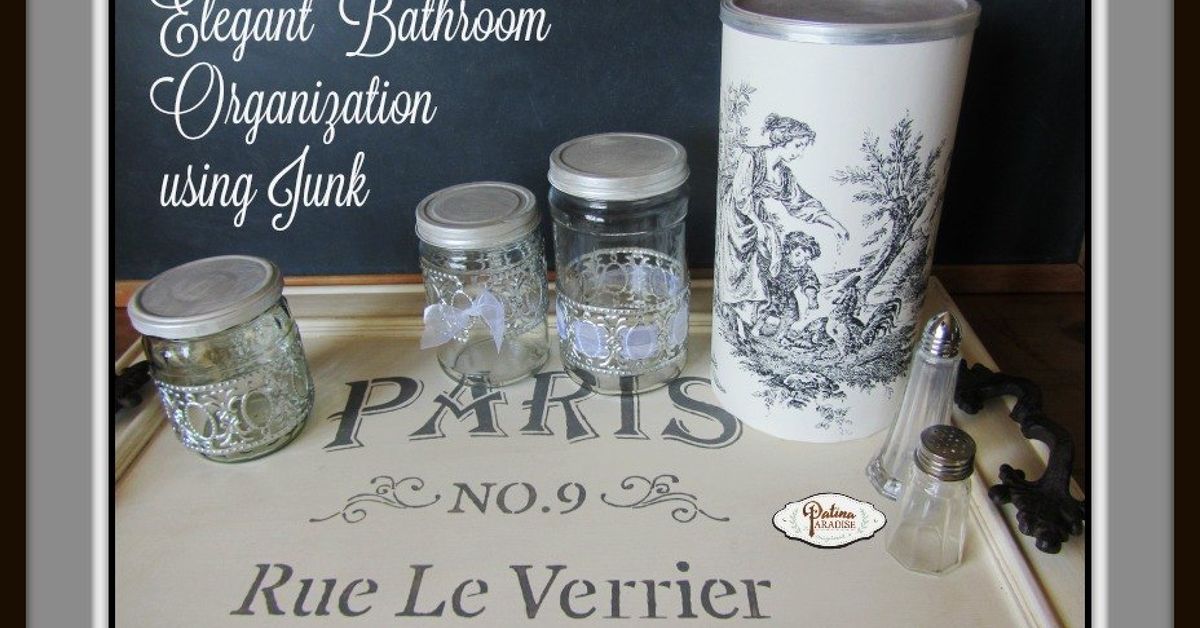
Glass jars are among the easiest items to reuse for bathroom storage. Pasta sauce jars, jam jars, candle vessels, and canning jars can hold cotton balls, cotton swabs, floss picks, makeup brushes, bath salts, reusable facial pads, hair ties, and individually wrapped personal-care products.
How to Prepare Jars for Bathroom Use
Remove labels and adhesive, wash the jars thoroughly, and allow them to dry completely. Check rims for chips or cracks before use. A damaged jar is not “rustic”; it is a tiny glass ambush.
Use open jars for tall items such as brushes and capped toothbrushes. Choose lidded jars for products that should stay protected from dust and moisture. For a coordinated look, reuse jars of similar shapes and paint only the exterior lids. Waterproof labels can identify contents while preventing the classic bathroom guessing game known as “bath salts or powdered cleanser?”
Keep glass containers on stable countertops or shelves away from the edge of the tub and shower. In bathrooms used by young children, lightweight containers are generally a safer choice for accessible areas.
Turn a Vintage Tray Into a Countertop Command Center
An unused serving tray, cake stand, divided snack tray, or shallow baking dish can create a defined home for everyday products. Place the tray beside the sink and use it for hand soap, moisturizer, perfume, or the skincare products used every morning.
The border of a tray visually contains clutter, even when the objects inside are not perfectly aligned. It also makes cleaning easier: lift one tray instead of moving seven bottles individually while questioning why every container is slightly sticky.
A tiered dessert stand is especially useful when counter space is limited. Store taller bottles on the lower level and smaller jars or rolled washcloths above. Choose washable, moisture-resistant materials and avoid valuable antique finishes that may react poorly to splashes.
Give Old Baskets a New Bathroom Job
Baskets can organize towels, toilet paper, toiletries, children’s bath toys, and product refills. A picnic basket can conceal extra paper products. A wire produce basket can hold rolled washcloths. Small woven baskets can divide categories on open shelving.
Match the basket to its location. Plastic-coated wire and washable synthetic baskets handle humid conditions better than untreated natural fibers. Wicker may work well on a dry upper shelf but can become musty if placed beside a frequently splashed tub.
Use one basket for each category rather than creating a large miscellaneous container. A giant “bathroom stuff” basket may look tidy from the outside, but inside it becomes a competitive excavation event every time someone needs nail clippers.
Create a Back-Stock Basket
Designate one repurposed basket for unopened replacements such as toothpaste, soap, shampoo, and toilet paper. Store it on a higher shelf or inside a cabinet. Keeping backups separate from active products prevents half-used bottles from multiplying across the room and makes it easier to see what actually needs to be purchased.
Convert an Old Ladder Into Vertical Towel Storage
A decorative wooden ladder can become a space-saving towel rack. Lean it securely against an open wall and drape towels over the rungs. Small hanging baskets can be attached to hold washcloths or lightweight toiletries.
Before bringing a ladder into the bathroom, clean it, sand rough areas, and apply a moisture-resistant finish suitable for indoor wood. Add nonslip pads to the feet and secure the top to the wall when necessary. The ladder should function as storage only, not as an invitation to perform surprise bathroom acrobatics.
This solution works particularly well in rental bathrooms because it adds vertical storage without requiring extensive cabinetry. It also allows damp towels to remain separated so they can dry more effectively.
Use a Wine Rack for Rolled Towels
An unused countertop or wall-mounted wine rack can hold rolled hand towels and washcloths. Each compartment keeps one towel visible and easy to grab, creating a hotel-inspired display without the hotel-inspired nightly rate.
A freestanding rack may fit on an open shelf, beside a vanity, or above a toilet if the surface is stable. Wall-mounted models must be installed with suitable anchors or attached to wall studs according to their weight and construction.
Keep only a practical number of towels in the bathroom. Overloading the rack makes clean linens harder to remove and slows air circulation. Store the remaining household supply in a linen closet or another dry area.
Roll In an Abandoned Bar Cart
A bar cart is essentially a bathroom organizer that spent its youth serving beverages. Its shelves and wheels make it ideal for towels, toilet paper, beauty products, or guest supplies.
Use the top shelf for attractive daily-use items, the middle shelf for grouped toiletries, and the bottom shelf for heavier refills or folded towels. Small baskets prevent bottles from tipping as the cart moves. Locking wheels are helpful on smooth tile floors.
A rolling cart can also create flexible storage in a shared bathroom. One family member can move grooming products closer to the mirror, then return the cart to a corner when finished. In a guest bathroom, it can serve as a welcoming station with clean towels, wrapped soap, tissues, and travel-size toiletries.
Transform Wooden Crates and Drawers Into Shelves
Wooden produce crates, sturdy wine boxes, and drawers removed from an old dresser can become wall cubbies or freestanding shelves. Arrange them horizontally for folded towels or vertically for tall bottles and baskets.
Clean and inspect reclaimed wood before use. Remove protruding nails, repair loose joints, and sand splintered surfaces. Apply a bathroom-appropriate sealer or paint so the wood is easier to wipe clean and less likely to absorb moisture.
Wall-mounted crates must be attached securely. Do not rely on a single decorative nail to support several pounds of toiletries. Use proper hardware for the wall material, and keep heavier items on lower shelves.
For a less permanent solution, stack two or three uniform crates beside the vanity. Fasten them together so they cannot shift, especially in homes with children or pets.
Reuse Kitchen Organizers Inside the Vanity
Many objects designed for kitchens work beautifully inside bathroom cabinets and drawers. A utensil tray can separate combs, razors, cosmetics, and dental products. A small lazy Susan can make bottles behind plumbing pipes easier to reach. A spice rack attached to the inside of a cabinet door can hold toothpaste, lotions, or hair products.
Magazine holders and narrow book bins can store hair dryers, flat irons, brushes, and cleaning bottles vertically. Styling tools must be unplugged and completely cool before being stored. Keep electrical cords dry and away from plumbing connections.
Repurposed food-storage containers without lids can act as washable drawer dividers. Choose shallow containers so items remain visible when the drawer opens. Visibility matters because forgotten products tend to expire quietly while their owners purchase identical replacements.
Make Tin Cans Useful Without Making Them Dangerous
Clean tin cans can hold makeup brushes, combs, capped toothbrushes, or small tubes. Cover them with waterproof adhesive paper, rope, paint, or leftover wallpaper to coordinate with the room.
Inspect every can carefully. Sharp edges must be removed or covered with protective trim. Because untreated metal may rust in humid rooms, seal the surface or keep cans in a reliably dry location. Never place a metal container where water regularly pools.
For wall storage, several decorated cans can be mounted to a sealed wooden board. This keeps small supplies off the counter while creating a customized organizer. Mount the board securely and limit each can to lightweight objects.
Repurpose Hooks, Rails, and Door Organizers
Old coat hooks, cabinet knobs, peg rails, and over-the-door shoe organizers can unlock storage on overlooked vertical surfaces. Install hooks on the back of the bathroom door for robes, towels, cleaning cloths, or toiletry bags.
A fabric shoe organizer with clear pockets can sort brushes, hair accessories, washcloths, travel products, and unopened toiletries. Avoid filling every pocket with heavy bottles, since the organizer and door hardware may not be designed for that load.
Old cabinet knobs mounted on a painted board create a decorative rack for jewelry, headbands, and lightweight towels. Position hanging storage so it does not interfere with doors, outlets, ventilation, or access to plumbing.
Turn a Small Dresser or Nightstand Into Bathroom Storage
A compact dresser, bedside table, telephone stand, or narrow bookcase can add substantial storage to a bathroom with an empty corner. Drawers conceal personal products, while shelves can display baskets and folded linens.
Measure carefully before moving furniture into the room. Leave enough clearance for doors, drawers, toilet access, and comfortable movement. Wood furniture should be sealed against moisture, and the piece should be anchored if its height or design creates a tipping risk.
A nightstand with one drawer and a lower shelf is particularly useful beside a pedestal sink. Store daily grooming items in the drawer and toilet paper or towels in a basket below. Suddenly, an awkward corner has a job and no longer stands around looking unemployed.
Use Fabric Scraps to Conceal Open Storage
A leftover curtain panel, tablecloth, or durable fabric remnant can become a sink skirt that hides baskets and cleaning supplies under a wall-mounted or pedestal sink. Attach the fabric with a tension rod, removable fasteners, or hook-and-loop tape appropriate for the surface.
Choose washable fabric and hem raw edges. Keep the material clear of heating devices, electrical outlets, and standing water. Divide the hidden area with repurposed bins so the skirt conceals an actual organization system rather than a small cave filled with falling bottles.
What Should Not Be Stored in a Humid Bathroom?
Repurposing is useful only when the stored items remain safe. Bathrooms experience moisture and temperature changes, so they are not ideal for every household product.
Medicines should be stored according to their labels, and many are better kept in a cool, dry location outside a damp bathroom cabinet. Humidity can affect some products even before their expiration dates. Cosmetics, spare razors, paper goods, and metal tools should also be protected from repeated moisture exposure. ep cleaners, medications, sharp grooming tools, and other hazardous items secured away from children and pets. Avoid storing heavy glass objects above the toilet or near the edge of a shelf. A clever organizer stops being clever when gravity becomes involved.
How to Make Repurposed Bathroom Storage Look Intentional
Repurposed organization does not need to resemble a recycling center with plumbing. A few visual rules can make unrelated objects feel coordinated:
- Limit the palette to two or three colors or finishes.
- Repeat one material, such as glass, wood, wire, or woven fiber.
- Use matching labels on containers stored together.
- Leave some open space on shelves and countertops.
- Keep daily-use products accessible and hide bulky backups.
- Group similar objects rather than scattering them around the room.
Function should remain the priority. A container that looks charming but requires removing four lids before reaching the toothpaste will not remain part of anyone’s morning routine for long.
A Simple Weekend Bathroom Organization Plan
Step 1: Declutter and Measure
Remove expired, empty, and unused products. Measure shelves, drawers, wall spaces, and the area beneath the sink.
Step 2: Shop Your Home
Collect jars, trays, baskets, boxes, hooks, small furniture, and kitchen organizers from other rooms. Choose only items that solve a specific storage problem.
Step 3: Clean and Modify
Wash containers, sand wood, cover sharp edges, seal moisture-sensitive surfaces, and remove old labels. Repair or discard anything unstable.
Step 4: Assign Storage by Point of Use
Place dental supplies near the sink, towels near the shower, hair tools near the mirror, and cleaning products in a secured cabinet.
Step 5: Test the System
Use the bathroom normally for one week. Notice which items are difficult to reach, which containers become wet, and which categories immediately become messy. Adjust the arrangement before adding decorative details.
Experience-Based Lessons From Real-World Bathroom Organizing
The most successful repurposed bathroom organization projects usually begin with restraint. People often become excited by the idea of upcycling and start saving every attractive jar, basket, box, and container. Soon, the bathroom is technically organized but contains seventeen organizers, each holding three objects. The room feels busier than it did before.
A better experience comes from selecting the fewest containers needed to support the routine. One jar for cotton swabs, one tray for skincare, and one basket for backups may solve more problems than a complete collection of tiny labeled vessels.
Another common lesson involves container size. Large baskets appear useful because they hold almost anything. Unfortunately, that is exactly what eventually happens: they hold everything. Small products disappear beneath towels, extra soap, and mystery cords. Medium-size containers assigned to specific categories tend to work better. They limit how much can accumulate and make misplaced items obvious.
Moisture is another practical teacher. A cardboard gift box may look elegant on an inspiration board, but after several weeks near a shower, it can soften, stain, or develop an unpleasant odor. Untreated wood may swell. Metal may rust. Natural-fiber baskets may become musty when pressed against a damp wall. Successful projects place delicate materials in dry zones and reserve washable plastic, sealed wood, coated wire, or glass for areas exposed to splashes.
Labels also work best when they describe clear categories. Broad labels such as “miscellaneous” or “other” merely give clutter an official address. Labels such as “dental,” “hair accessories,” “travel toiletries,” and “unopened refills” create boundaries that family members can understand.
Shared bathrooms reveal whether an organization system is genuinely convenient. When each person has a small basket, drawer, or portable caddy, products are less likely to colonize the entire countertop. A portable container also simplifies cleaning because everything can be moved at once.
Repurposed furniture can create dramatic improvements, but scale matters. A beautiful dresser that narrows the walking path or blocks a cabinet is not an upgrade. Compact pieces with legs often feel lighter in small bathrooms and make the floor easier to clean. Before moving furniture, outlining its footprint with painter’s tape provides a realistic preview.
Open storage requires discipline. Rolled towels, matching jars, and neatly grouped bottles can look inviting, but open shelves quickly expose overbuying. Closed drawers and lidded baskets are more forgiving for colorful packages and irregular objects. A balanced bathroom usually combines open storage for attractive essentials with concealed storage for backups and visual clutter.
The final lesson is that organization must survive an ordinary rushed morning. If a system requires perfect folding, complicated stacking, or transferring every purchase into a decorative container, it may become exhausting. Repurposed storage succeeds when returning an item is easier than leaving it on the counter. Beauty helps, but convenience is what keeps the bathroom organized after the photographs are taken.
Conclusion
Bathroom organization using repurposed items is not about forcing random household objects into new roles. It is about recognizing useful shapes, matching materials to the environment, and creating practical homes for the products used every day.
Glass jars can control small essentials, trays can establish countertop zones, ladders and wine racks can store towels, and carts or small furniture can add storage where cabinetry is missing. When these pieces are cleaned, modified, and positioned thoughtfully, they reduce waste while making the bathroom more functional and personal.
Begin with one cluttered area rather than attempting to transform the entire room at once. Clear the counter, organize one drawer, or create a single refill basket. Small improvements have a habit of making the rest of the bathroom jealous, which is often all the motivation needed to continue.
Note: The recommendations in this article were developed by synthesizing established organizing, upcycling, small-space storage, and product-safety guidance from Better Homes & Gardens, HGTV, Martha Stewart, Real Simple, Good Housekeeping, Apartment Therapy, Family Handyman, Country Living, Lowe’s, The Home Depot, and the U.S. Food and Drug Administration. class=”seo-json”>













