
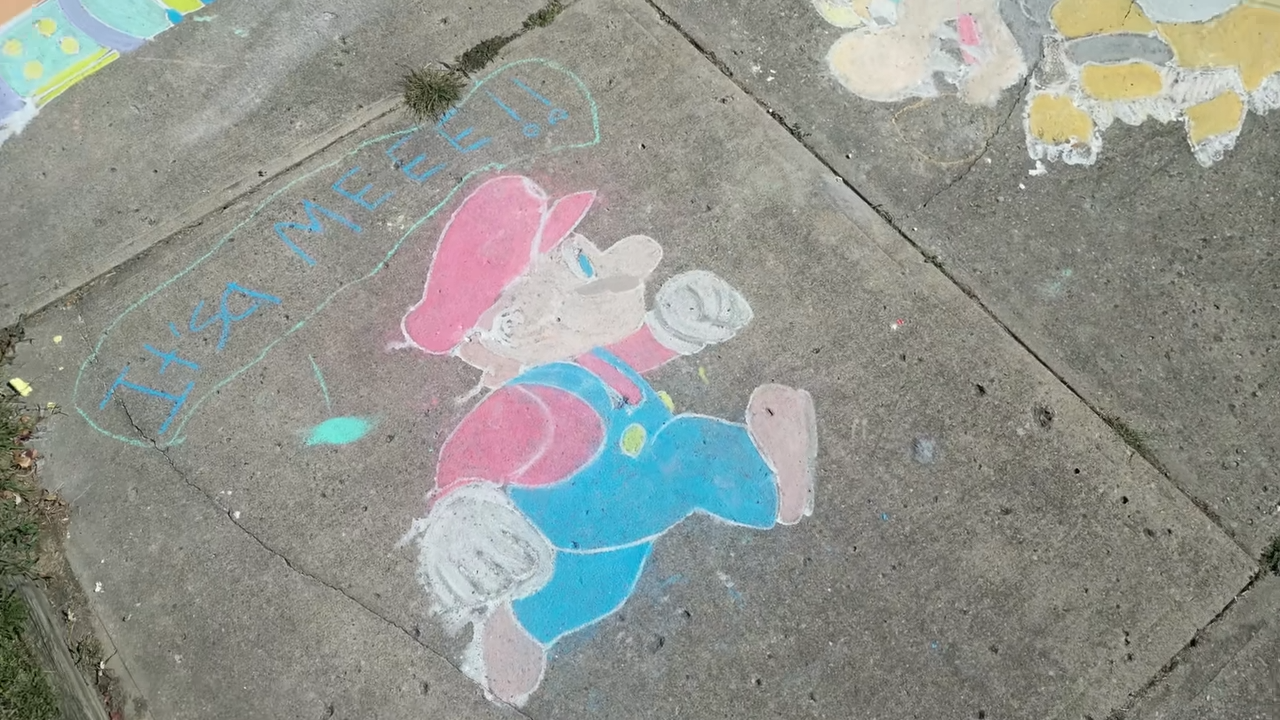
Chalk is one of humanity’s most charming art tools. It is cheap, dramatic, satisfyingly dusty, and always one surprise rain shower away from becoming a memory. But as simple as chalk looks, automating the process of drawing with chalk is anything but simple. The moment you ask a machine to do what a person does with a loose wrist, a shifting grip, and years of visual instinct, the humble chalk stick turns into an engineering challenge with opinions.
That is exactly what makes this topic so fascinating. Automated chalk drawing sits at the intersection of robotics, digital fabrication, computer vision, motion control, public art, and plain old creative stubbornness. It borrows ideas from pen plotters, wall-drawing robots, CNC systems, and even floor-marking machines. Then it adds a messy twist: chalk breaks, surfaces are uneven, dust builds up, and a sidewalk does not care about your perfect CAD file.
Still, the idea is too useful and too fun to ignore. Whether the goal is sidewalk advertising, festival art, educational demos, museum installations, school projects, or large-format public graphics, automation can turn chalk drawing from a slow, crouch-heavy task into a repeatable, scalable workflow. In other words, your knees get a break, your lines get more consistent, and your logo stops looking like it lost a fight with the pavement.
What Automating Chalk Drawing Really Means
At its core, automating chalk drawing means converting a visual design into a physical path that a machine can follow while pressing chalk against a surface. That sounds easy in one sentence and suspiciously harder in real life. The machine has to know what to draw, where to draw it, how hard to press, when to lift, and how to keep going when the chalk wears down or the surface suddenly becomes a tiny mountain range.
Most automated chalk systems follow the same broad logic. First, a design is prepared digitally. Next, that design is simplified into paths rather than shaded blobs. Then those paths are translated into machine motion. Finally, a robot, plotter, or mobile drawing system moves a chalk holder across the target surface and executes the drawing.
That workflow has already appeared in several forms. University projects have explored robots that draw image outlines on the ground with chalk, while maker builds have created radial chalkers, wall plotters, and sidewalk robots. Commercial drawing machines and large-format layout robots have also shown that precise drawing on flat surfaces is not science fiction. Chalk simply adds a more fragile tool and a more chaotic surface.
How the Chalk Automation Workflow Works
1. Start with a design that machines can understand
Machines do not think in “cute sketch of a rocket with vibes.” They think in paths, points, coordinates, and commands. That is why automated chalk drawing usually begins with a bold, high-contrast graphic. Logos, lettering, mascots, line art, and simple illustrations work especially well because they can be converted into vector paths with fewer surprises.
If the source image starts as a photo, hand sketch, or raster graphic, it normally has to be traced into cleaner shapes. This is where vectorization matters. Good tracing removes visual clutter, reduces unnecessary detail, and turns fuzzy pixels into crisp outlines a plotter can follow. For chalk, that simplification is even more important because a crumbly drawing medium is not ideal for hyper-detailed photorealism unless your machine has the patience of a saint.
2. Convert artwork into paths, not just pictures
Once the image is cleaned up, the next step is to convert it into a path-based format such as SVG or another vector-friendly structure. This stage determines whether the machine produces elegant lines or starts scribbling like it just drank three energy drinks. Clean paths make motion smoother, reduce unnecessary stops, and help keep the chalk from snapping under jerky direction changes.
Some builders use design software to auto-trace artwork. Others use computer vision methods to detect edges and contours, then convert those contours into line segments. Either way, the goal is the same: replace pixels with instructions. The better the path planning, the better the chalk result.
3. Translate paths into motion commands
Now the drawing has to become movement. That means converting the vector file into coordinates the machine can execute. In many DIY and maker setups, that means generating G-code or another motion language a controller can read. Firmware and machine-control software then break the artwork into ordered moves: go here, lower chalk, draw this line, lift, reposition, repeat.
This is where automation becomes more than “robot arm goes brrr.” Path order matters. Travel distance matters. Lift timing matters. Corner speed matters. Even the start point matters, because a large sidewalk drawing can look wonderful on screen and still end up partially on a crack, curb edge, or regrettably placed gum stain.
4. Control contact, pressure, and lift
Pen plotters are spoiled. Pens glide. Chalk does not glide; it negotiates. A chalk automation system needs a holder or dispensing mechanism that keeps the chalk stable while still allowing enough compliance to absorb bumps and minor height changes. Too much pressure and the chalk crumbles. Too little and the line fades like a shy ghost.
That is why the best automated chalk systems treat the drawing tool as an active part of the machine, not an afterthought. A spring-loaded mount, servo-based lift, passive floating head, or compliant armature can make the difference between reliable marks and tiny pastel tragedies.
The Main Machine Styles for Automated Chalk Drawing
XY gantry plotters
An XY gantry system is the cleanest way to automate chalk drawing on a flat, controlled surface. The machine moves a toolhead left-right and forward-backward across rails or belts. This style is common in plotters, engravers, and desktop CNC machines, so the design ecosystem is mature. If your goal is repeatable chalkboard graphics, workshop signage, retail displays, or test drawings on panels, an XY machine is a strong candidate.
The catch is scale. A bigger drawing requires a bigger frame, and a bigger frame means more flex, more cost, and more opportunities for alignment headaches. Great for controlled environments. Less ideal for hauling onto a sidewalk unless you also enjoy moving furniture disguised as robotics.
Polar or hanging drawbots
Polar plotters and wall drawbots suspend the drawing head from belts or strings. They are popular because they can draw large images with relatively simple hardware. They are also visually delightful, which matters because humans love machines that look like they are doing complicated math on purpose.
For chalk, this approach works especially well on vertical blackboards, chalk walls, and other mounted surfaces. The challenge is calibration. Hanging systems depend on geometry, tension, and accurate positioning. If the math is off, the drawing stretches, skews, or develops the sort of proportions usually associated with carnival mirrors.
Mobile sidewalk robots
Mobile chalk robots are the bold extroverts of this category. Instead of bringing the surface to the machine, they drive across the surface and draw directly on the ground. This is ideal for large logos, event graphics, school spirit art, outdoor promotions, and public installations.
But mobility creates its own list of problems: localization, wheel slip, uneven texture, surface debris, and the eternal question of whether the robot knows where it is or is merely feeling optimistic. Sidewalk robots need strong path planning, reliable position tracking, and a drawing mechanism that survives constant contact with rough terrain.
Why Chalk Automation Is Worth the Trouble
The biggest advantage is repeatability. If you need to draw the same design on ten campus walkways, five storefronts, or twenty event zones, a machine does not get bored, tired, or creatively reinterpret the logo halfway through. It can reproduce consistent outlines and spacing, which is valuable for branding, wayfinding, and promotional art.
Scale is the second advantage. Large-format chalk drawing is physically demanding. Automation reduces the crouching, measuring, repositioning, and guesswork required for oversized graphics. For teams that do recurring street marketing or temporary public art, that time savings matters.
Third, automation makes experimentation easier. Want to test multiple layouts? Resize a mascot? Add lettering? Mirror a design? Machines are excellent at trying again without a dramatic sigh. That makes chalk drawing more useful for educators, artists, architects, event planners, and makers who need iteration rather than one heroic manual attempt.
And finally, there is the charm factor. A drawing robot using chalk combines analog warmth with digital precision. It is hard not to love that. It feels futuristic in the most approachable way possible, like a robot that still shops at the craft store.
The Hardest Engineering Problems
Surface irregularity
Paper is flat. Sidewalks are not. Concrete joints, texture changes, tiny pebbles, slope changes, and worn patches all affect line quality. A machine that looks brilliant on a smooth panel can become wildly inconsistent outdoors. Good chalk automation often depends on passive compliance, adaptive tool mounts, or very smart assumptions about very dumb terrain.
Chalk wear and breakage
Unlike ink, chalk is a consumable stick that gets shorter, duller, and moodier during every drawing. As it wears down, the contact geometry changes. Pressure changes. Line thickness changes. If the mount does not compensate, the machine gradually turns clean strokes into weak whispers. Builders who ignore chalk wear usually rediscover it the loud way: with a broken tip.
Dust and cleanup
Chalk dust is part of the medium, but any automated system needs to respect it. Dust can affect traction, coat moving parts, and make cleanup more annoying than expected. That means good enclosure design, smart part placement, periodic maintenance, and a reasonable approach to ventilation or outdoor operation. In other words, do not build a gorgeous robot and then let it slowly season itself in chalk powder.
Calibration and accuracy
Motion systems can be highly accurate, but only when the mechanical design, motor control, and calibration match the job. Belt tension, wheel slip, step settings, frame squareness, and homing behavior all affect the drawing. The line that looked straight in software can become a gentle suggestion in real life if the machine is even slightly misaligned.
Best Use Cases for Automated Chalk Drawing
One of the strongest use cases is event and campus marketing. Temporary graphics on sidewalks are eye-catching, low-cost, and naturally time-limited. Automation makes repeated layouts far easier and more consistent.
Another smart use case is education. A chalk robot is a perfect STEM project because it combines design, electronics, coding, mechanics, and visual output. Students can see the result immediately, which is much more satisfying than watching a terminal window say “process complete” and expecting applause.
Automated chalk systems also fit public art and museum experiences, especially when the machine itself becomes part of the performance. People do not just admire the finished drawing; they watch the drawing happen. That turns process into spectacle.
Finally, there is a useful industrial cousin to chalk automation: robotic floor marking and layout. While these systems often use ink rather than chalk, the underlying lesson is the same. Digital plans can be translated onto physical surfaces with speed and repeatability. Chalk automation applies that logic to creative, educational, and promotional work.
Does Automation Replace Human Chalk Artists?
No, and it should not. The best way to think about automated chalk drawing is as a workflow tool, not a creativity eviction notice. Machines excel at outlines, repetition, scale, registration, and consistency. Humans still dominate concept, composition, improvisation, expressive texture, and the subtle choices that make art feel alive.
In practice, the strongest results often come from hybrid workflows. Let the machine lay down the base grid, outline, lettering, or repeated framework. Then let the artist step in with shading, embellishment, color blending, and the irregular touches that make chalk art feel human. That mix gives you the best of both worlds: robot discipline and artist swagger.
Experience Notes: What It’s Really Like to Automate Chalk Drawing
The first experience most people have with automated chalk drawing is surprise. On a laptop screen, the process looks clean and rational. You import an image, simplify the lines, generate paths, and imagine a neat little machine gliding across the surface like a tiny mural professional. Then the drawing starts, and reality introduces itself. The chalk squeaks. The surface pushes back. The first corner comes out thicker than expected. Suddenly you realize that chalk is not just a drawing medium; it is a personality test.
One of the most memorable parts of the process is how quickly you begin to respect mechanical details that seem boring on paper. Belt tension, wheel grip, servo timing, spring pressure, and homing accuracy all stop being abstract engineering terms and become visible in the artwork itself. If the machine lifts a fraction too late, a line drags. If the pressure is slightly off, the drawing goes from bold to faint in seconds. It feels like debugging with public embarrassment attached, which is excellent motivation.
There is also a strange joy in watching a machine handle a familiar human task. When a chalk robot starts tracing letters on concrete or building a mascot outline on a blackboard, people gather almost immediately. Children stare. Adults pretend they are only casually interested, then stand there for ten minutes. The machine becomes part art tool, part performance piece, part neighborhood celebrity. Even when the output is not perfect, the process is compelling because it turns invisible software decisions into visible marks.
Another common experience is learning to simplify your design ego. The artwork you want to draw and the artwork a chalk machine can reliably draw are not always the same thing. Fine details, delicate gradients, and tiny decorative flourishes often need to be reduced or reworked. At first that feels limiting. Later, it feels liberating. You start designing for the medium and the machine together, and the results usually get stronger. Bolder shapes, clearer lettering, smarter spacing, better contrast. The robot quietly teaches better visual discipline.
Then there is the maintenance side, which is far less glamorous and completely essential. Chalk dust gets everywhere. The holder needs cleaning. The contact point changes as the chalk shortens. Outdoor tests add wind, grit, and random texture that no simulation fully predicts. But this is also where the process becomes genuinely rewarding. Each adjustment improves both the machine and your understanding of the medium. You stop expecting perfection and start building resilience.
By the time a system is working well, the experience becomes deeply satisfying. You are no longer just drawing with chalk. You are orchestrating a complete pipeline: image prep, path logic, machine behavior, surface response, and final visual impact. It feels creative and technical at the same time. And when the last line lands cleanly, with a crisp lift and a finished design stretched across a surface that used to be blank, the result feels oddly magical. Not because the robot replaced the artist, but because the artist figured out how to teach the robot just enough.
Conclusion
Automating the process of drawing with chalk is a perfect example of how old materials and new systems can work together. The medium is ancient. The workflow is modern. And the opportunity is bigger than it first appears. From sidewalk robots and radial chalkers to plotters, vector software, and motion-control firmware, the pieces already exist. The real challenge is combining them in a way that respects chalk’s fragility while taking advantage of automation’s precision.
For artists, educators, makers, and event teams, automated chalk drawing offers a practical and creative edge. It can save time, improve consistency, scale up designs, and make the act of drawing itself part of the attraction. Most importantly, it proves that automation does not have to feel cold. Sometimes it can be dusty, playful, temporary, and wonderfully human.












