
Atopic dermatitis can be a tiny dry patch that behaves itself with moisturizer, or it can become a full-time drama queen: itching at midnight, flaring before big events, and making your skin feel like it has signed up for a reality show without your consent. If you live with eczema, you already know the routine. One day your skin is calm. The next day, your elbows, neck, hands, face, or legs are staging a protest.
The big question is not simply, “Do I have eczema?” It is: Is my atopic dermatitis controlled well enough, or do I need advanced treatment?
Advanced treatment does not mean your eczema has “failed.” It means your current plan may not be strong enough, targeted enough, or realistic enough for the severity of your symptoms. Today, dermatologists have more tools than ever: prescription topicals, wet wrap therapy, phototherapy, biologics, oral JAK inhibitors, and other systemic medications. The trick is knowing when it is time to move beyond the basic “moisturize and hope for the best” strategy.
What Is Atopic Dermatitis?
Atopic dermatitis, often called eczema, is a chronic inflammatory skin condition that causes dry, itchy, irritated, and sometimes cracked or oozing skin. It is not contagious, so you cannot “catch” it from someone else. The problem usually comes from a combination of skin barrier weakness, immune system overactivity, genetics, environmental triggers, and the famous itch-scratch cycle that deserves zero stars on Yelp.
In many people, the skin barrier does not hold moisture well. That means irritants, allergens, sweat, weather changes, fragrances, soaps, and even stress can trigger inflammation. Once the skin starts itching, scratching damages the barrier more, which leads to more inflammation, which leads to more itching. It is a loop, and not the fun roller-coaster kind.
Common Symptoms of Atopic Dermatitis
Atopic dermatitis can look different depending on age, skin tone, body area, and disease severity. Some people have small, dry patches. Others have widespread inflammation that affects sleep, mood, work, school, and daily comfort.
Typical symptoms include:
- Intense itching, especially at night
- Dry, rough, scaly, or thickened skin
- Red, brown, purple, gray, or darker patches depending on skin tone
- Cracking, bleeding, crusting, or oozing during flares
- Rashes on the face, neck, eyelids, hands, wrists, elbows, knees, ankles, or feet
- Skin that becomes thick or leathery from repeated scratching
- Frequent flares after exposure to triggers
Because atopic dermatitis can mimic other conditions, such as contact dermatitis, psoriasis, fungal infections, scabies, or drug reactions, a proper diagnosis matters. Treating the wrong rash is like trying to charge your phone with a spaghetti noodle: creative, but not helpful.
What Counts as “Basic” Treatment?
Most atopic dermatitis treatment starts with skin barrier repair and flare prevention. For mild eczema, this can work beautifully. Basic treatment usually includes a gentle daily routine, fragrance-free moisturizer, short lukewarm showers, trigger avoidance, and prescription or over-the-counter anti-inflammatory creams when needed.
Basic eczema care often includes:
- Thick moisturizers, ointments, or creams applied daily
- Fragrance-free cleansers and laundry products
- Topical corticosteroids for short-term flare control
- Topical calcineurin inhibitors for sensitive areas such as the face or eyelids
- Nonsteroidal prescription creams for inflammation and itch
- Wet wrap therapy for selected flares under medical guidance
- Trigger tracking, such as noting sweat, wool, stress, foods, dust mites, or weather changes
For many people, this approach is enough. The skin calms down, sleep improves, and moisturizer becomes a loyal friend instead of a greasy roommate. But for moderate to severe atopic dermatitis, basic care may only partially help.
Signs You May Need Advanced Treatment
You may need advanced treatment when eczema keeps breaking through a good routine. The key phrase is “good routine.” If someone uses scented soap, skips moisturizer for three weeks, and then blames the universe, the first step is still better basic care. But if you are doing the right things and your skin is still miserable, it may be time to talk with a dermatologist about stronger options.
1. Your Itch Is Controlling Your Life
Itch is not a small symptom. Severe itch can cause poor sleep, irritability, concentration problems, anxiety, and skin injury from scratching. If you wake up scratching, bleed from scratching, or plan outfits around hiding inflamed skin, your eczema may be undertreated.
2. You Have Frequent or Long Flares
A flare now and then is common. But if flares happen repeatedly, last for weeks, or return as soon as you stop topical medicine, your current plan may not be controlling the underlying inflammation.
3. Eczema Covers Large Areas of Your Body
Widespread atopic dermatitis is harder to manage with creams alone. Applying topical medication to multiple body areas every day can be exhausting, expensive, and messy. At a certain point, you are not treating your skin; you are frosting yourself like a very itchy cupcake.
4. Sensitive Areas Are Involved
Eczema on the face, eyelids, lips, hands, genitals, or neck can be especially frustrating. These areas may need special medications because stronger topical steroids are not always appropriate for long-term use on thin or sensitive skin.
5. You Keep Getting Skin Infections
Cracked and scratched skin can allow bacteria, viruses, or fungi to enter. Warning signs include increasing pain, warmth, swelling, yellow crusting, pus, fever, or rapidly spreading redness. Recurrent infections are a strong reason to get medical help.
6. Topical Steroids Are Needed Too Often
Topical corticosteroids can be very helpful when used correctly. The problem is not that they exist; the problem is relying on them constantly without a long-term plan. If you need frequent steroid bursts, cannot taper, or worry about side effects, ask about steroid-sparing options.
7. Eczema Is Affecting Mental Health or Confidence
Atopic dermatitis is visible, uncomfortable, and unpredictable. It can affect dating, work presentations, school, exercise, sleep, and social life. If your skin is taking up too much emotional real estate, that matters medically.
What Are Advanced Treatments for Atopic Dermatitis?
Advanced treatment means therapies used when standard skin care and basic prescription topicals are not enough. These options may target inflammation more precisely, treat wider disease, or reduce dependence on repeated steroid use.
Prescription Nonsteroidal Topicals
Nonsteroidal topical medications can be useful for people who need long-term control or treatment in sensitive areas. Options may include calcineurin inhibitors, PDE-4 inhibitors, topical JAK inhibitors, and newer topical anti-inflammatory creams. These treatments can help reduce itching and inflammation without being traditional corticosteroids.
They are not all interchangeable. Some are approved for certain ages, body areas, severities, or treatment durations. Your clinician may choose one based on where your eczema appears, how often it flares, and whether your skin has tolerated other medications.
Phototherapy
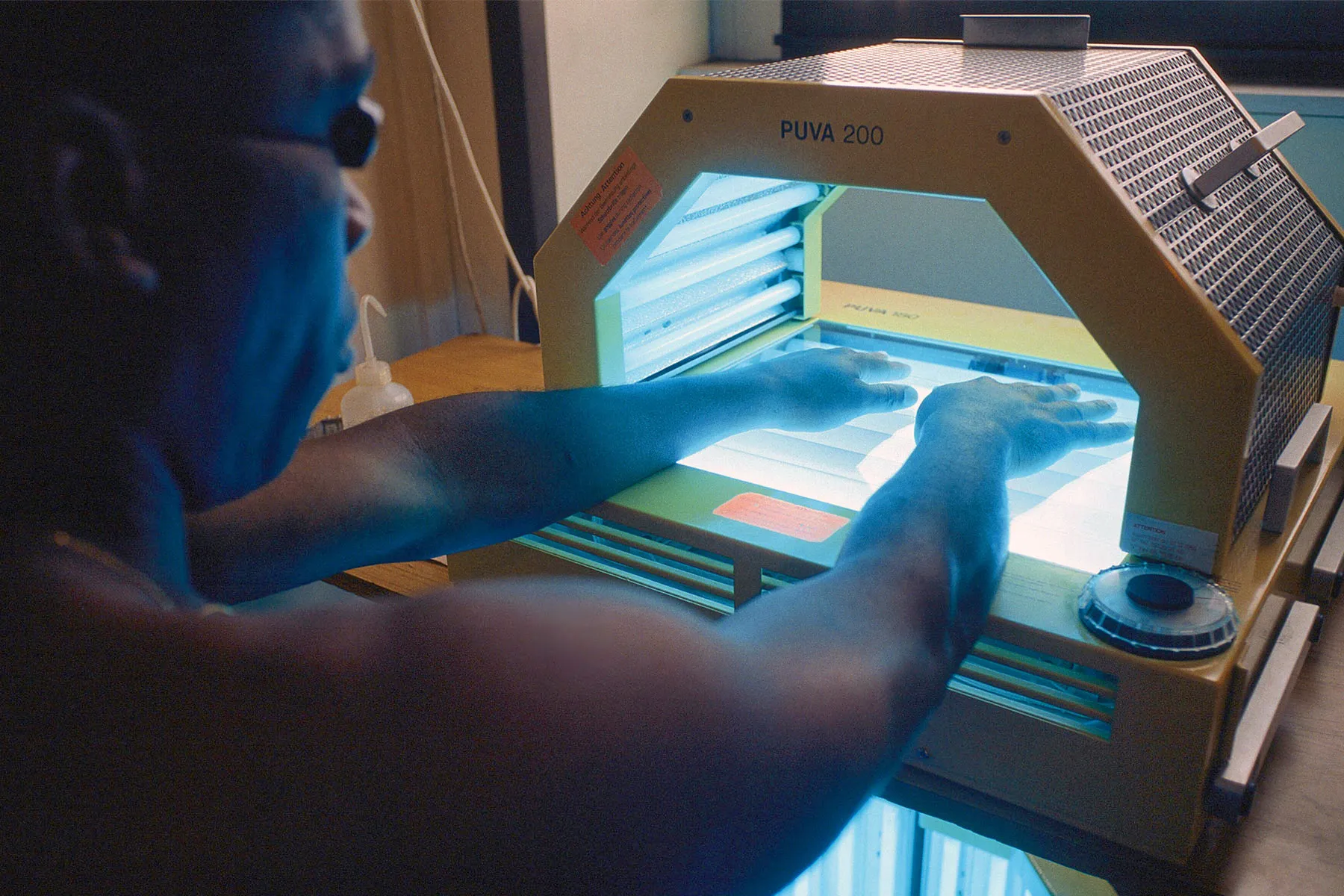
Phototherapy uses controlled ultraviolet light to reduce skin inflammation. It is not the same as “just get more sun,” which is the kind of advice that sounds free but can come with sunburn, aging, and skin cancer risk. Medical phototherapy is supervised and carefully dosed.
Phototherapy can be helpful for widespread atopic dermatitis, especially when topical treatments are not practical. The downside is convenience. It often requires multiple visits per week for a period of time, which can be difficult for people with busy schedules.
Biologics
Biologics are injectable medications designed to target specific immune pathways involved in atopic dermatitis. Instead of broadly suppressing the immune system, they focus on signals that drive eczema inflammation and itch. Examples used for moderate to severe atopic dermatitis include medications that target interleukin pathways such as IL-4, IL-13, or IL-31 signaling.
Biologics may be considered when eczema is moderate to severe, not well controlled with topical therapies, or causing major quality-of-life problems. Many patients like that biologics are not daily pills and do not require rubbing medicine over large areas of inflamed skin. However, they may require injections, insurance approval, monitoring, and patience while results build.
Oral JAK Inhibitors
Oral JAK inhibitors are pills that block certain immune signaling pathways involved in inflammation and itch. They can work quickly for some patients, especially those with severe itch. However, because they affect immune signaling more broadly, they require careful screening and discussion of risks.
Doctors may review your infection history, vaccination status, blood work, cardiovascular risk factors, cancer history, blood clot risk, and other medications before prescribing them. Oral JAK inhibitors are powerful tools, not casual “eczema vitamins.” They deserve respect, monitoring, and a clinician who knows your medical history.
Traditional Systemic Immunosuppressants
Before newer targeted therapies became widely available, dermatologists often used systemic medications such as cyclosporine, methotrexate, mycophenolate mofetil, or azathioprine for severe eczema. These medications can still be useful in certain cases, but they usually require lab monitoring and careful risk-benefit discussion.
Short courses of oral corticosteroids may occasionally be used in special circumstances, but they are generally not favored as a long-term eczema strategy because symptoms can rebound after stopping. In plain English: they may calm the fire temporarily, but the fire can come back with a tiny marching band.
How Doctors Decide Whether You Need Advanced Treatment
There is no single magic test that says, “Congratulations, you have unlocked advanced eczema therapy.” Instead, clinicians look at the whole picture: severity, body surface area, itch level, sleep loss, flare frequency, infection history, treatment response, and impact on daily life.
Your dermatologist may ask:
- How many days per week do you itch?
- Does eczema wake you at night?
- How much skin is affected?
- Which treatments have you tried, and for how long?
- Do flares return quickly after stopping medication?
- Have you had skin infections?
- Does eczema affect work, school, exercise, or relationships?
- Are you avoiding certain clothes, hobbies, or social events?
Some clinicians use scoring tools such as EASI, SCORAD, body surface area estimates, itch scales, or patient questionnaires. These tools help measure progress and can support insurance approval for advanced therapies.
Advanced Treatment Does Not Replace Skin Care
One common misunderstanding is that advanced treatment means you can throw away moisturizer and return to fragranced body wash called “Tropical Volcano Thunderstorm.” Sadly, no. Even with biologics, JAK inhibitors, or phototherapy, skin barrier care remains essential.
Moisturizer helps reduce dryness, supports barrier repair, and may lower flare frequency. Gentle cleansing reduces irritation. Trigger awareness still matters. Advanced therapy works best when it is part of a complete plan, not a solo act forced to perform in a circus.
Questions to Ask Your Dermatologist
If you think your atopic dermatitis may need advanced treatment, prepare for your appointment. A good conversation can save months of frustration.
Helpful questions include:
- Is my eczema mild, moderate, or severe?
- Am I using my current medications correctly?
- Do I need patch testing to check for allergic contact dermatitis?
- Would a nonsteroidal topical be appropriate?
- Am I a candidate for phototherapy?
- Should we discuss biologics or oral JAK inhibitors?
- What side effects should I understand?
- What monitoring or lab tests are needed?
- How long should we try a treatment before judging results?
- What should I do during a flare?
Bring photos of flares, a list of products you use, previous prescriptions, and notes about triggers. Your skin may behave politely on appointment day, because of course it would. Photos help show what really happens at 2 a.m. when your eczema turns into a raccoon with tiny cymbals.
Specific Examples: When Advanced Care Makes Sense
Example 1: The Nighttime Scratcher
A person moisturizes daily and uses prescription steroid cream during flares, but still wakes up scratching four nights a week. Their arms and neck are raw, and they feel exhausted at work. This person may need a stronger maintenance plan, a nonsteroidal topical, phototherapy, or systemic therapy.
Example 2: The Hand Eczema Worker
A nurse, hairstylist, mechanic, chef, or parent washing hands all day may have painful cracks and inflammation. If protective gloves, moisturizers, and topical prescriptions are not enough, advanced treatment or evaluation for contact allergies may be needed.
Example 3: The Steroid Roller Coaster
Someone improves every time they use topical steroids, but flares return immediately after stopping. This may signal the need for proactive maintenance therapy, steroid-sparing medication, or a systemic option depending on severity.
Example 4: The Widespread Flare Pattern
If eczema affects the trunk, arms, legs, neck, and hands, topical treatment can become impractical. When applying creams feels like repainting a house every evening, systemic treatment may be worth discussing.
Risks and Realistic Expectations
Advanced treatments can be life-changing, but they are not magic wands. Some people respond dramatically. Others improve gradually or need medication adjustments. Side effects vary by treatment. Biologics may cause injection-site reactions or eye-related symptoms in some patients. JAK inhibitors may require lab monitoring and careful risk screening. Traditional immunosuppressants may affect the kidneys, liver, blood pressure, or blood counts depending on the medication.
The goal is not perfect skin every second of life. The goal is better control: less itch, fewer flares, improved sleep, lower infection risk, and a routine you can actually follow without needing a spreadsheet, a prayer candle, and three backup alarms.
Experience Notes: What People Often Learn After Escalating Treatment
Many people with atopic dermatitis wait too long before asking about advanced treatment. They tell themselves, “It is just dry skin,” even while carrying moisturizer in every bag, desk drawer, car cup holder, and possibly one secret emergency jar behind the couch. The first experience many patients describe is relief simply from being taken seriously. When a clinician says, “This is more than a cosmetic issue,” it can feel like someone finally turned the lights on.
A common lesson is that consistency matters, but consistency has limits. People may follow every basic skin care rule: short showers, fragrance-free cleanser, thick moisturizer, cotton clothing, gentle detergent, and careful trigger tracking. That effort is valuable. But if inflammation remains active, no amount of perfect moisturizing can fully replace medical control. This is where advanced treatment can feel less like “strong medicine” and more like finally using the right size fire extinguisher.
Another experience is the emotional adjustment. Some patients feel nervous about injections, pills, lab tests, or long-term medication. That is normal. Advanced treatment can sound intimidating at first, especially when package inserts read like they were written by a very cautious lawyer trapped in a pharmacy. A good dermatologist should explain the benefits, risks, alternatives, and monitoring plan in normal human language. Shared decision-making matters because the best treatment is not only medically appropriate; it also has to fit the patient’s life.
People also learn that improvement may change daily habits in surprising ways. Better eczema control can mean sleeping through the night, wearing short sleeves again, exercising without immediate regret, washing hands without wincing, or focusing during meetings instead of silently negotiating with an itchy wrist. These may sound small to outsiders, but for someone with chronic eczema, they are major victories. Clearer skin is nice. Not being bossed around by itch is even better.
There can still be trial and error. One treatment may help itch faster than rash. Another may improve the body but not stubborn hand eczema. Insurance may request documentation of previous therapies. Some people need combination care: advanced medication plus topical maintenance plus trigger management. This does not mean treatment is failing. It means atopic dermatitis is complex and sometimes needs a layered strategy.
The most practical experience is this: track your symptoms before and after treatment. Write down itch level, sleep quality, flare days, body areas involved, and how often you use rescue medication. Take photos. These details help you and your clinician judge whether a treatment is truly working. Skin memory can be unreliable; photos and notes tell the truth, even when your eczema tries to gaslight you.
Finally, many people discover that asking for advanced treatment is not “being dramatic.” It is being proactive. If eczema is stealing sleep, comfort, confidence, or time, it deserves a serious plan.
Conclusion: So, Do You Need Advanced Treatment?
You may need advanced treatment for atopic dermatitis if your symptoms remain moderate to severe despite good skin care and appropriate topical therapy, or if itching, sleep loss, infections, sensitive-area flares, or quality-of-life problems continue. Advanced options such as nonsteroidal prescription topicals, phototherapy, biologics, oral JAK inhibitors, and systemic medications can help many people gain better control.
The right treatment depends on your age, severity, medical history, lifestyle, previous medication response, and personal comfort with risks and monitoring. Do not upgrade your treatment plan based on internet panic or bathroom-mirror frustration alone. Talk with a board-certified dermatologist or qualified healthcare professional who can evaluate your skin and build a plan that makes sense.
Atopic dermatitis may be chronic, but chronic does not mean hopeless. With the right strategy, your skin can become less chaotic, your nights can become quieter, and your moisturizer can return to being a helpful tool instead of your emotional support condiment.
Note: This article is for general educational purposes only and should not replace medical advice, diagnosis, or treatment from a licensed healthcare professional. Seek urgent care for rapidly spreading redness, fever, severe pain, swelling, pus, or signs of infection.













