
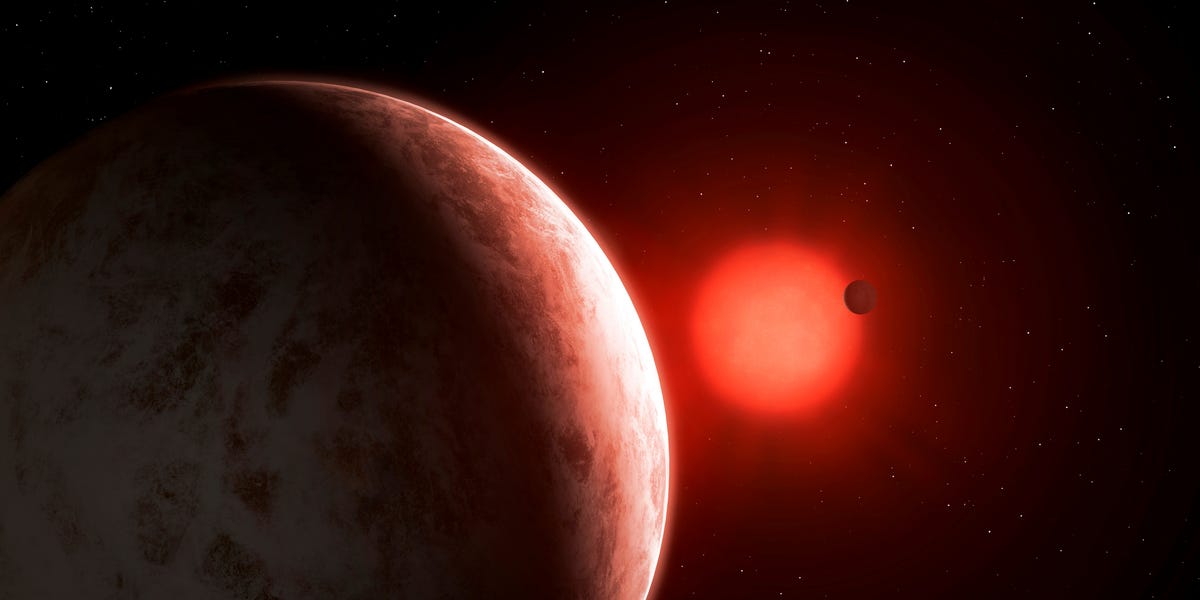
For most of human history, planets beyond our solar system lived in the “probably out there, good luck proving it” folder. Astronomers had theories, models, and plenty of confidence, but actual evidence was harder to catch than a cat in a room full of laser pointers. Then, in the 1990s, exoplanet discoveries began piling up. Today, scientists have confirmed more than 6,000 worlds orbiting other stars, and the catalog keeps growing like the universe forgot to install a storage limit.
But here is the catch: finding an exoplanet is not like spotting a bright marble floating beside a lamp. Most planets are tiny, dim, and buried in the glare of their host stars. A star can be millions or even billions of times brighter than the planet beside it. That is why astronomers usually do not “see” exoplanets directly. They notice what planets do: they tug, block light, bend light, or leave chemical fingerprints in starlight.
Recently, astronomers demonstrated a clever new strategy that combines two powerful techniques: astrometry and direct imaging. Instead of blindly pointing telescopes at promising stars and hoping a planet appears, researchers first use precise star-motion data to identify stars that appear to wobble under the gravitational pull of an unseen companion. Then they use advanced imaging instruments to look exactly where a planet is most likely to be. In simple terms, they stopped searching the whole cosmic haystack and started listening for the needle clinking.
What Is an Exoplanet?
An exoplanet is a planet outside our solar system. Some are rocky like Earth, some are gas giants like Jupiter, some are “super-Earths,” and some are strange worlds that make science fiction look shy. Astronomers have found planets orbiting single stars, binary stars, red dwarfs, Sun-like stars, and even stellar leftovers. Some are lava worlds. Some may have water. Some are so close to their stars that their years last only a few Earth days.
The big goal is not merely to count planets like cosmic bottle caps. Scientists want to understand how planetary systems form, how common Earth-like worlds may be, and whether any planets have conditions suitable for life. Every detection method adds a different piece to the puzzle. One method might reveal a planet’s size. Another might estimate its mass. Another might help study its atmosphere. The newest strategy is exciting because it can help astronomers find planets they can actually image and study in richer detail.
How Astronomers Usually Find Exoplanets
Before we appreciate the new method, it helps to know the classic planet-hunting toolbox. Astronomers have been astonishingly creative, mostly because exoplanets do not politely wave at telescopes.
The Transit Method: Looking for Tiny Dips in Starlight
The transit method is the most famous and productive exoplanet detection technique. When a planet crosses in front of its star from our point of view, it blocks a tiny fraction of the star’s light. Telescopes record that slight dimming. If the dip happens again and again at regular intervals, astronomers may be looking at an orbiting planet.
This method helped NASA’s Kepler mission revolutionize exoplanet science. It is also used by TESS, the Transiting Exoplanet Survey Satellite. Transit detections are great for measuring a planet’s size and orbit, but they require lucky alignment. If the planet does not pass between its star and Earth, we miss the show entirely. The universe, as usual, refuses to stand where we ask it to.
The Radial Velocity Method: Measuring a Star’s Wobble
The radial velocity method, sometimes called the wobble method, detects the slight back-and-forth motion of a star caused by the gravity of an orbiting planet. A planet does not simply orbit a star while the star sits still. Both objects orbit their shared center of mass. If the planet is massive enough, it makes the star wobble slightly.
Astronomers detect that wobble by studying changes in the star’s spectrum. When the star moves toward us, its light shifts slightly blue. When it moves away, the light shifts slightly red. This Doppler shift can reveal the presence of a planet and help estimate its minimum mass.
Microlensing: Using Gravity as a Magnifying Glass
Gravitational microlensing happens when a foreground star passes in front of a more distant background star. The gravity of the foreground star bends and magnifies the background starlight. If the foreground star has a planet, the planet can create a small extra bump in the light curve.
Microlensing is valuable because it can detect planets far from their host stars and even rogue planets that drift through space without a star. The downside is that these events are rare and usually happen only once. It is like the universe giving astronomers a one-night-only coupon and then shredding the receipt.
Direct Imaging: Taking a Real Picture of a Planet
Direct imaging is exactly what it sounds like: astronomers capture light from the planet itself. This is extremely difficult because the planet is usually overwhelmed by the host star’s glare. Advanced instruments such as coronagraphs and adaptive optics help block or correct the star’s light so faint companions can be seen.
Direct imaging is especially useful for young, massive planets orbiting far from their stars. These planets still glow with heat from formation, making them easier to detect in infrared light. Better yet, direct imaging can allow scientists to study the planet’s atmosphere, temperature, clouds, and chemical composition.
The New Strategy: Astrometry Plus Direct Imaging
The new approach combines astrometry with direct imaging. Astrometry is the precise measurement of a star’s position and motion across the sky. If a star appears to wiggle slightly compared with background stars, that motion may be caused by an unseen planet pulling on it.
Astrometry is not new, but modern space missions have made it dramatically more powerful. The European Space Agency’s Hipparcos mission measured star positions in the late 20th century, and Gaia later created an extraordinarily precise map of stellar positions and motions. By comparing long-term data from Hipparcos and Gaia, astronomers can identify stars whose movement suggests a hidden massive companion.
Then comes the second half of the trick: once the star-motion data says, “Something is probably tugging here,” astronomers aim high-contrast imaging instruments at the target. Instead of guessing, they search a preselected list of stars with evidence of planetary companions. That makes direct imaging more efficient and much more strategic.
HIP 99770 b: The Planet That Proved the Concept
The star HIP 99770, located about 133 light-years away in the constellation Cygnus, became the showcase for this new planet-hunting strategy. Astronomers noticed that the star’s motion, measured over decades by Hipparcos and Gaia, suggested it was being pulled by an unseen companion. The team then used the Subaru Telescope in Hawaii, along with advanced instruments such as SCExAO and CHARIS, to directly image the planet. Follow-up observations from Keck helped confirm and characterize it.
The planet, called HIP 99770 b, is a super-Jupiter: roughly 14 to 16 times the mass of Jupiter. It orbits a star nearly twice as massive as the Sun. Its orbit is much wider than Jupiter’s orbit around our Sun, yet it receives about the same amount of starlight as Jupiter because its host star is far more luminous.
HIP 99770 b is not Earth 2.0. Nobody is packing sunscreen and sandwiches for a weekend trip there. It is massive, hot, and more like a planetary heavyweight than a blue-green marble. But its discovery matters because it proves the method works. Astronomers used astrometry to predict where a planet might exist and direct imaging to see it. That is a big step toward finding more planets that can be observed in detail.
Why This Method Matters
Traditional direct imaging surveys often work like educated fishing. Astronomers choose young, nearby stars where massive planets might be visible, then they look carefully. Sometimes they catch something. Often, they do not. The new method gives them a better map of where to cast the line.
This matters because telescope time is precious. Major observatories are in high demand, and direct imaging requires sophisticated instruments, stable conditions, and careful analysis. A more targeted approach can save time and increase the chance of success. Instead of surveying hundreds of stars blindly, researchers can prioritize stars already showing signs of gravitational disturbance.
The combined method also gives scientists better information. Direct imaging can reveal atmospheric details, brightness, temperature, and chemical signatures. Astrometry can help constrain the planet’s true mass and orbit. Together, they offer a more complete portrait than either method alone.
What Astrometry Adds to the Search
Astrometry is especially useful for detecting planets in wider orbits. Radial velocity often excels at finding planets close to their stars because those planets tug more frequently and create repeated signals over short timescales. Transits also favor close-in planets because they cross their stars more often. Astrometry, however, can reveal the side-to-side motion of a star caused by a more distant planet.
That makes astrometry a valuable complement to existing methods. It can help astronomers find planets that more closely resemble the outer planets of our own solar system. Jupiter, Saturn, Uranus, and Neptune would be easy to miss with some common detection methods if another civilization were observing our solar system from far away. Astrometry offers another way to notice the architecture of planetary systems.
Why Direct Imaging Is So Powerful
Direct imaging is difficult, but when it succeeds, it is scientifically delicious. A directly imaged planet provides light that astronomers can split into a spectrum. That spectrum can reveal molecules such as water vapor, carbon monoxide, methane, or other atmospheric ingredients. In some cases, scientists can estimate cloud properties, temperature, and formation history.
This is why the new method is so exciting. It does not simply find planets; it finds planets that may be suitable for follow-up observations. A planet discovered only through a transit or radial velocity signal might remain a set of measurements on a chart. A directly imaged planet can become a world with color, heat, atmosphere, and personality. Astronomers cannot visit it, but they can interrogate its light like cosmic detectives with very expensive flashlights.
How This Could Help the Search for Earth-Like Planets
HIP 99770 b is far larger than Earth, but the method points toward the future. As telescopes become more powerful, astronomers hope to image smaller and cooler planets, including rocky worlds in habitable zones. Future observatories such as the Nancy Grace Roman Space Telescope, extremely large ground-based telescopes, and proposed missions like the Habitable Worlds Observatory may push direct imaging into a new era.
The ultimate dream is to detect a nearby Earth-like planet, image it directly, and study its atmosphere for signs of habitability. That will be much harder than imaging a super-Jupiter. A rocky planet is smaller, dimmer, and usually closer to its star, making it difficult to separate from stellar glare. But targeted astrometry could tell astronomers which stars are most likely to host planets worth imaging. In other words, before building the most powerful cosmic camera, it helps to know where to point it.
What This Means for the Future of Exoplanet Science
Exoplanet science is moving from discovery to characterization. In the early days, simply finding another planet was headline-worthy. Now the field asks deeper questions: What is the planet made of? How did it form? Does it have clouds? Does it have water? Could it support life? How common are solar systems like ours?
The astrometry-plus-imaging method supports that shift. It favors planets that can be studied after discovery. It also encourages collaboration across missions and observatories. Space-based astrometry identifies the wobble. Ground-based telescopes capture the image. Spectrographs analyze the light. Future telescopes add sharper vision. The result is not one magic tool but a smarter workflow.
This is how science often advances: not by throwing out old methods, but by combining them in better ways. The transit method, radial velocity, microlensing, astrometry, and direct imaging each have limitations. Together, they become much stronger. Astronomers did not invent a single cosmic cheat code. They invented a better strategy, and in astronomy, strategy matters almost as much as aperture.
Experience Notes: What This Discovery Feels Like From the Human Side
There is something wonderfully humbling about exoplanet hunting. You can stand under a clear night sky and see thousands of stars, yet almost none of the planets around them are visible to your eyes. They are there, but hidden. The sky looks still and peaceful, while in reality it is full of motion: stars wobbling, planets crossing, light bending, atmospheres glowing, and distant worlds circling suns we may never visit.
For anyone who has ever tried backyard astronomy, this discovery feels especially meaningful. A beginner may point a small telescope at Jupiter and feel amazed by its moons. Then they may look at a nearby star and see only a point of light. That tiny point may host planets, but the telescope shows no hint of them. The gap between what we can see and what exists is enormous. Exoplanet science lives in that gap.
The new method is exciting because it turns patience into evidence. Hipparcos and Gaia measured stars over many years. Those measurements may look like dots, tables, and coordinates, but hidden inside them are gravitational whispers. A star does not need to shout, “I have a planet!” It only needs to wobble slightly. Astronomers notice the wobble, compare decades of data, and then use powerful telescopes to search the right place. It is slow, careful, and beautifully stubborn.
Imagine trying to find a firefly next to a stadium floodlight from miles away. Now imagine that you cannot see the firefly directly at first, but you notice the floodlight swaying slightly because something is tugging on it. That is the spirit of this method. It rewards careful measurement before dramatic imaging. It is not flashy science at the beginning. It is spreadsheet science, patience science, “let’s compare this tiny movement across 25 years” science. Then, suddenly, a planet appears.
This also changes how readers can think about space exploration. Discoveries do not always come from one heroic telescope snapping one perfect picture. They often come from layers of work: one mission maps stars, another telescope blocks glare, another instrument reads spectra, and teams across countries combine the clues. The result feels almost like a detective story written in gravity and light.
For students, science fans, and casual sky-watchers, the lesson is simple: the universe rewards better questions. “Is there a planet there?” is a good question. “Which stars are already moving as if a planet is pulling them, and can we image those planets directly?” is a better one. That is why this new exoplanet search strategy matters. It shows that progress often happens when scientists stop choosing between methods and start connecting them.
The next Earth-like world may not be found by luck alone. It may be found because a star wobbled, a database remembered, and a telescope looked exactly where the numbers said to look. That is not just clever astronomy. That is humanity learning to read the fine print of the galaxy.
Conclusion
Astronomers invented a new way to look for exoplanets by combining astrometry with direct imaging, and the successful discovery of HIP 99770 b shows why the strategy is so promising. Astrometry identifies stars that appear to wobble under the pull of unseen planets. Direct imaging then gives astronomers the chance to see and study those planets more directly. This method is efficient, scientifically rich, and perfectly timed for the next generation of powerful telescopes.
The approach does not replace transit searches, radial velocity surveys, or microlensing. Instead, it adds another smart tool to the exoplanet toolbox. As astronomical instruments improve, this strategy could help scientists find more giant planets, better understand planetary systems, and eventually point future telescopes toward rocky worlds that may resemble Earth. The universe is still hiding most of its planets, but astronomers are getting much better at catching them in the act.
Note: This article is written for web publication and is based on real information from reputable astronomy sources, including NASA science resources, the NASA Exoplanet Archive, ESA Gaia mission materials, Subaru Telescope reporting, peer-reviewed exoplanet research, and established astronomy education organizations. Source links are intentionally omitted as requested.













